
The pursuit of higher efficiency in power transmission systems, particularly within the high-speed reducers of electric vehicles, has intensified the focus on parasitic losses. Among these, the power loss due to the churning or agitation of the lubricating oil constitutes a significant portion of the total loss at elevated operational speeds. Accurately predicting and minimizing this loss is therefore crucial for enhancing overall transmission efficiency and extending the driving range of electric vehicles. This article presents a comprehensive, physics-based fluid dynamics model developed to predict the churning power losses in meshing helical gears. The model is an extension of methodologies previously applied to spur gears, adapted to account for the unique geometry and engagement characteristics of helical gears.
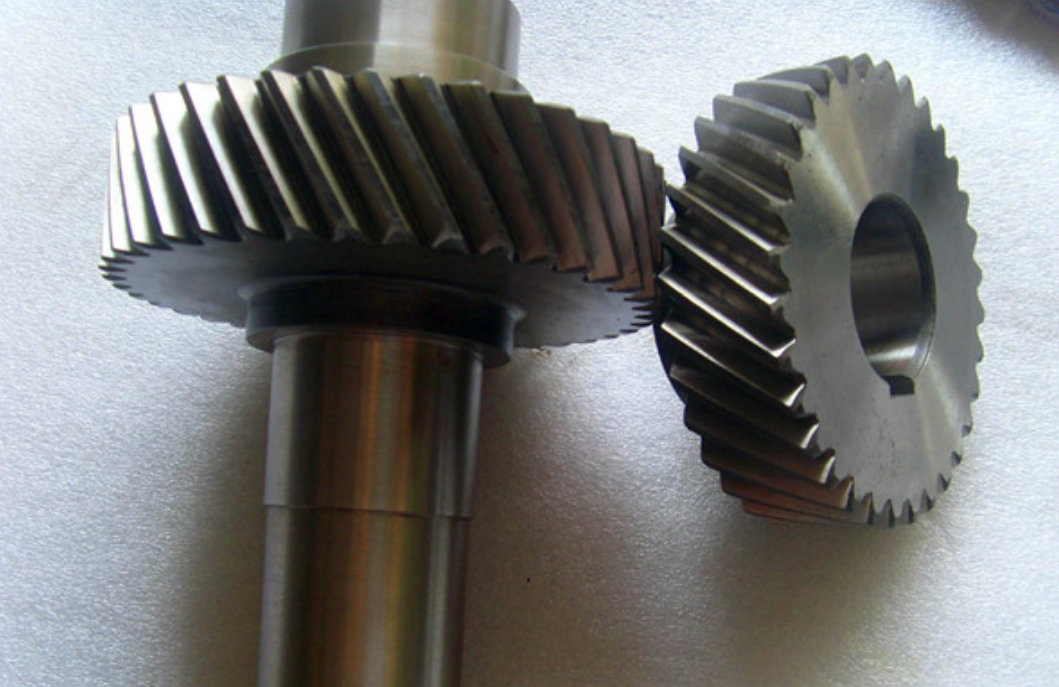
The fundamental approach decomposes the total churning power loss into three distinct physical components: the power loss due to viscous drag on the peripheral (circumferential) surfaces of the gears, the power loss due to drag on the lateral faces (sides) of the gears, and the power loss arising from the periodic squeezing (pocketing) of oil in the meshing zone. Calculating the meshing zone loss for helical gears presents a specific challenge due to their gradually engaging tooth surfaces. The model addresses this by conceptually slicing the gear pair along lines of contact, treating each slice as a thin spur gear pair. The total meshing loss is then the sum of the losses from all these individual slices. This article details the formulation of this model and systematically analyzes the influence of key operational and geometric parameters—immersion depth, rotational speed, helix angle, face width, and module—on the magnitude and distribution of churning losses.
Theoretical Model Formulation
The model is founded on fluid dynamics principles, employing several simplifying assumptions to render the complex, transient, multiphase flow problem tractable while retaining physical fidelity. The lubricant is treated as an incompressible Newtonian fluid with constant properties (density ρ and dynamic viscosity μ), neglecting transient thermal effects. The oil sump level is considered static, and gear surfaces are assumed smooth. The most significant simplification for the peripheral and face drag calculations is the treatment of the gears as equivalent disks with a radius equal to the gear’s tip radius, \( r_a \), effectively ignoring the complex flow within tooth spaces which has a minor contribution at medium to high speeds.
1. Power Loss Due to Peripheral (Circumferential) Drag
As a gear rotates through the oil sump, a thin boundary layer forms on its wetted surfaces. The shear stress within this viscous layer generates a resisting torque. The power loss for a single gear (i = 1 for pinion, i = 2 for gear) due to this effect is given by:
$$P_{dp,i} = 4 \mu B r_{a,i}^2 \omega_i^2 \phi_i$$
where:
- \( \mu \) = Dynamic viscosity of the lubricant
- \( B \) = Face width of the gear
- \( r_{a,i} \) = Tip radius of the gear
- \( \omega_i \) = Angular velocity of the gear
- \( \phi_i \) = Immersed angle, defining the wetted arc of the gear.
The immersed angle \( \phi_i \) is a function of the dimensionless immersion depth \( h / r_{a,i} \), where \( h \) is the vertical distance from the gear centerline to the oil surface (positive above centerline).
$$\phi_i =
\begin{cases}
\arccos\left(\frac{h}{r_{a,i}}\right) & \text{if } h < 0 \\
\frac{\pi}{2} & \text{if } h = 0 \\
\pi – \arccos\left(\frac{h}{r_{a,i}}\right) & \text{if } h > 0
\end{cases}$$
2. Power Loss Due to Face (Side) Drag
The drag on the gear’s side faces is modeled as flow over a flat plate. The power loss depends on whether the flow is laminar or turbulent, determined by the local Reynolds number \( Re = \rho \omega_i r_{a,i}^2 / \mu \). For the typical conditions in gearboxes, the flow is often in the turbulent regime (\( Re > 10^5 \)). The expressions are:
Laminar Flow:
$$P_{df,i}^{(L)} = \frac{0.41 \rho \nu^{0.5} U_i^{1.5} A_{df,i}}{\sin \phi_i}$$
Turbulent Flow:
$$P_{df,i}^{(T)} = \frac{0.025 \rho^{0.14} \omega_i^{2.86} r_{a,i}^{2.72} A_{df,i}}{(\sin \phi_i)^{0.14}}$$
where:
- \( \nu \) = Kinematic viscosity (\( \nu = \mu / \rho \))
- \( U_i \) = Free-stream velocity of oil relative to the gear face
- \( A_{df,i} \) = Wetted area of the gear side, \( A_{df,i} = \phi_i r_{a,i}^2 \)
The total drag loss for the gear pair is the sum of the peripheral and face losses for both the pinion and the gear.
3. Power Loss Due to Meshing Zone Pocketing
This is the most complex and often dominant component. As two helical gears mesh, the tip of one tooth and the root fillet of the mating tooth form a dynamically changing enclosed volume or “pocket.” The rotation of the gears forces oil to be periodically expelled from and drawn into these pockets, resulting in a pumping power loss.
3.1. Challenge of Helical Geometry and Slicing Method
Unlike spur gears where contact occurs simultaneously across the full face width, helical gears have a gradually changing line of contact. This means the geometry of the meshing pockets varies continuously along the face width. To model this, the helical gear pair is conceptually discretized along its face width into \( K \) thin slices perpendicular to the axis. Each slice is treated as a spur gear pair with a localized geometry defined by the instantaneous contact point within that slice. The total pocketing power loss is the aggregate of the losses computed for all \( K \) slices.
3.2. Pocket Area and Volume Calculation for a Slice
For a given slice (spur gear pair) at a discrete meshing time step \( t^{(m)} \), the cross-sectional area \( S_{ij}^{(m)} \) of a pocket (j-th pocket on gear i) is calculated using precise gear geometry. It is defined as the area of the mating gear’s tooth space minus the areas occupied by the engaging teeth of the driving gear. The volume for that slice is simply \( V_{ij}^{(m)} = S_{ij}^{(m)} \cdot \Delta B \), where \( \Delta B = B/K \) is the slice thickness.
3.3. Squeeze Flow Dynamics and Loss Calculation
From the change in pocket volume between time steps, the average oil velocity \( v_{ij}^{(m)} \) expelled from (or drawn into) the sides of the pocket is derived from the continuity equation:
$$v_{ij}^{(m)} = \frac{ \left( V_{ij}^{(m)} – V_{ij}^{(m-1)} \right) \omega_i }{ 2 S_{ij}^{(m)} \Delta \theta }$$
where \( \Delta \theta \) is the angular increment between time steps. Assuming an incompressible, inertia-dominated squeeze film, the pressure \( p_{ij}^{(m)} \) built up in the pocket is estimated using a simplified form of the energy (Bernoulli) equation:
$$p_{ij}^{(m)} = p_{ij}^{(m-1)} + \frac{1}{2} \rho \left[ \left( v_{ij}^{(m-1)} \right)^2 – \left( v_{ij}^{(m)} \right)^2 \right]$$
The instantaneous power loss from one pocket in one slice is the work done expelling the oil:
$$P_{p,ij}^{(m)} = 2 v_{ij}^{(m)} p_{ij}^{(m)} S_{ij}^{(m)}$$
Finally, the total average pocketing power loss for the helical gear pair is obtained by summing over all pockets on both gears, over all \( K \) slices, and averaging over one complete mesh cycle of \( M \) time steps:
$$P_p = \frac{1}{M} \sum_{m=1}^{M} \left[ \sum_{i=1}^{2} \sum_{j=1}^{J_i^{(m)}} \sum_{k=1}^{K} P_{p,ijk}^{(m)} \right]$$
where \( J_i^{(m)} \) is the number of active pockets on gear \( i \) at timestep \( m \).
3.4. Accounting for Air-Oil Mixture
In reality, the pockets contain an air-oil mixture. An equivalent density \( \rho_{eq} \) is used to account for the compressibility of the air phase, applying the ideal gas law under an assumed isentropic process for the air compression/expansion between time steps.
Parametric Analysis of Churning Power Loss
Using the formulated model, a detailed parametric study is conducted to understand the sensitivity of the total churning loss and its components to various design and operational parameters. A baseline helical gear pair configuration is assumed, and one parameter is varied at a time for analysis.
Influence of Immersion Depth (h)
The immersion depth directly controls the wetted area of the gear. The analysis, consistent with experimental trends from literature, shows that all three components of loss increase with deeper immersion. The peripheral drag loss increases linearly with the immersed angle \( \phi \). The face drag loss increases as the wetted side area \( A_{df} \) increases. The pocketing loss increases because a greater volume of oil is involved in the meshing zone. However, compared to other factors like speed, the influence of immersion depth is relatively moderate. Crucially, for a typical high-speed gearbox operating with oil at the centerline (h=0), the pocketing loss is found to be the dominant component.
| Parameter | Peripheral Drag Loss | Face Drag Loss | Pocketing Loss | Overall Influence |
|---|---|---|---|---|
| Immersion Depth ↑ | Increases | Increases | Increases | Moderate |
| Rotational Speed ↑ | Increases (quadratic) | Increases (~2.9 power) | Increases (strongly) | Very High |
| Helix Angle ↑ | No direct effect* | No direct effect* | Increases | Low to Moderate (at high speed) |
| Face Width ↑ | Increases (linear) | No effect* | Increases | High |
| Module ↑ | Increases (via \( r_a^2 \)) | Increases (via \( r_a^{2.72} \)) | Increases (via geometry) | High |
*Note: Peripheral and Face drag are calculated based on tip radius and immersion; they do not inherently depend on helix angle. Face width does not affect the side wetted *area* calculation, which is a function of radius and immersion angle only.
Influence of Rotational Speed (n, ω)
Rotational speed is the most influential operational parameter. The dependencies are strongly non-linear:
$$P_{dp} \propto \omega^2, \quad P_{df}^{(T)} \propto \omega^{2.86}, \quad P_{p} \propto \omega^3 \text{ (approximately)}$$
The pocketing loss exhibits a very strong cubic relationship because the squeeze velocity and resulting dynamic pressure are highly sensitive to the rate of volume change. This underscores why churning loss becomes critically important in high-speed applications like EV reducers. The dominance of the pocketing component becomes more pronounced as speed increases.
Influence of Helix Angle (β)
The helix angle of helical gears primarily affects the pocketing loss component through two mechanisms: the length of the contact line and the gradient of engagement. For a given face width, a larger helix angle results in a longer contact path and a more gradual meshing action. This modifies the rate of change of the pocket volume. The model predicts that the pocketing loss increases with helix angle. At lower speeds, this effect is minimal, and the loss is comparable to that of a spur gear (β=0°). At high speeds, however, the increase due to helix angle becomes noticeable. This implies that for high-efficiency, high-speed designs, the benefits of helical gears in noise and load sharing must be balanced against a potential increase in churning loss.
Influence of Face Width (B)
Face width has a direct and significant impact. The peripheral drag loss is directly proportional to B. The pocketing loss also increases with B, as the total volume of oil being squeezed scales with the engaged volume. Notably, the face drag loss, as modeled here, is independent of B because it is calculated per side based on the wetted annular area, which is not a function of axial length. Therefore, increasing face width for higher load capacity will lead to a clear penalty in churning loss, primarily from increased peripheral and pocketing losses.
Influence of Module (mn)
The module is a fundamental geometric parameter that scales the size of the helical gears. An increase in module leads to larger tip diameters, which dramatically increases the wetted area for peripheral and face drag losses (tip radius raised to a power of 2 to 2.72). Furthermore, it enlarges the physical size of the tooth spaces and pockets, significantly increasing the pocketing loss. The analysis shows that the module has one of the strongest influences on total churning power loss. Optimizing the module selection is therefore essential for efficiency.
| Component | Power Loss (W) | Percentage of Total |
|---|---|---|
| Peripheral Drag Loss | ~15 W | < 1% |
| Face Drag Loss | ~1,200 W | ~39% |
| Pocketing Loss | ~1,870 W | ~61% |
| Total Churning Loss | ~3,085 W | 100% |
Discussion and Model Implications
The developed fluid dynamics model provides a valuable analytical tool for understanding and predicting churning losses in helical gear pairs. The key insight from the analysis is the overwhelming contribution of the meshing zone pocketing loss, especially at high rotational speeds. This highlights that efforts to reduce churning loss should prioritize the meshing process itself.
The parametric trends offer clear guidance for energy-efficient gearbox design:
- Speed is Paramount: The cubic relationship mandates careful system-level design to avoid excessively high pinion speeds if efficiency is a top priority.
- Minimize Oil Volume: Use the minimum immersion depth necessary for adequate lubrication and cooling to reduce all loss components.
- Optimize Gear Size: Select the smallest feasible module and face width that meet the torque and durability requirements, as these have a high impact on loss.
- Evaluate Helix Angle Trade-off: Consider the efficiency penalty of high helix angles in very high-speed applications.
The model’s simplification of constant oil properties is a limitation, as lubricant viscosity decreases with temperature rise during operation, which would reduce losses. Furthermore, the assumption of a static oil level neglects the complex windage and splashing effects that can dynamically alter the wetted conditions. Future refinements could integrate thermal networks to model oil heating and employ a dynamic immersion model based on the gearbox’s internal flow.
Conclusion
This article has presented a detailed theoretical framework for analyzing churning power loss in helical gear pairs. The model decomposes the loss into peripheral drag, face drag, and meshing pocketing components, employing a slicing technique to adapt to the helical geometry. The analysis demonstrates that churning power loss increases with immersion depth, rotational speed, helix angle, face width, and module. Among these, rotational speed, face width, and module exert the most significant influence. The meshing zone pocketing loss is consistently identified as the dominant contributor to the total churning loss in high-speed helical gears. This model serves as a foundation for the preliminary design and efficiency optimization of gear transmissions, particularly in demanding applications such as electric vehicle drivetrains where minimizing parasitic losses is essential for performance and range.