
In modern mechanical and aerospace transmission systems, the demand for compact, efficient, and versatile power transmission between non-parallel and non-intersecting shafts is ever-present. One of the classic solutions to this challenge is the use of crossed-axis involute helical gear pairs, often simply referred to as spiral gears. Unlike parallel-axis helical gears, these spiral gears can transmit motion and power between shafts with an arbitrary crossing angle, and the helical angles of the two mating gears can be different in both magnitude and hand. This design offers significant flexibility, simple manufacturing processes using standard gear-cutting tools, and relatively low cost. Consequently, spiral gears find widespread application in various industrial and precision machinery.
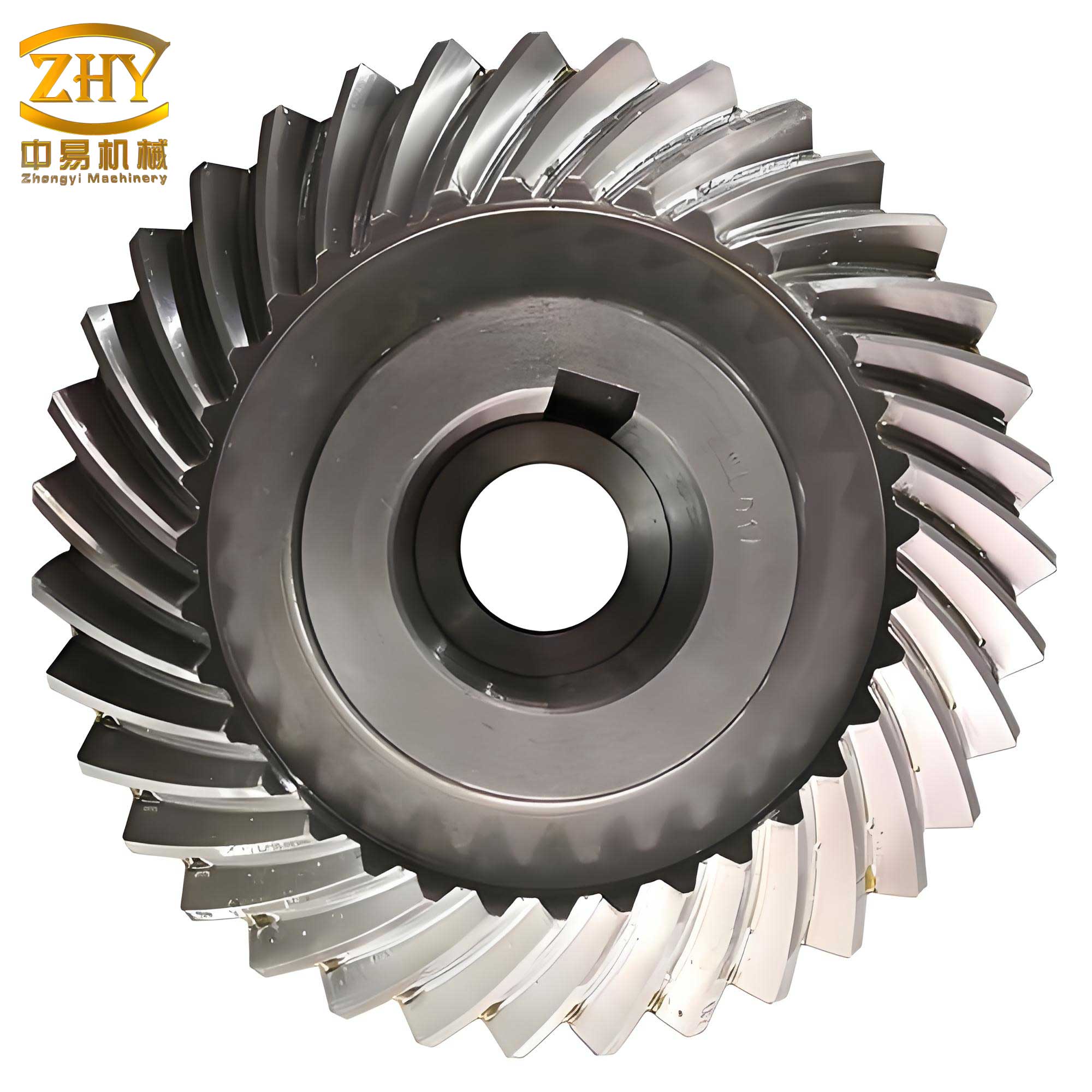
However, this flexibility comes with a fundamental mechanical characteristic: the tooth contact between a pair of crossed-axis spiral gears is theoretically a point contact, as opposed to the line contact found in parallel-axis gears. This concentrated contact leads to significantly higher contact stresses under load. Furthermore, the meshing process of spiral gears is inherently sensitive to manufacturing errors, assembly misalignments, and elastic deformations under load, which can induce dynamic impacts, vibration, and substantial fluctuation in output speed. These factors collectively contribute to a high susceptibility to contact fatigue failure, which manifests as pitting and spalling on the tooth flanks, ultimately limiting the service life and reliability of the transmission. Therefore, a comprehensive understanding of the dynamic contact behavior and fatigue performance of crossed-axis spiral gears is crucial for their optimal design and application. Moreover, tooth profile modification, a controlled alteration of the ideal tooth profile, is a well-established technique to mitigate adverse dynamic effects and improve load distribution. In this analysis, we will delve into the meshing theory, dynamic contact simulation, fatigue life prediction, and systematically investigate the influence of different profile modification parameters on the performance of crossed-axis involute spiral gears.
1. Meshing Theory and Mathematical Modeling of Crossed-Axis Spiral Gears
The foundation for analyzing any gear pair lies in a precise mathematical description of its tooth surfaces and their interaction. For crossed-axis involute spiral gears, the tooth surface is generated by a helical movement of an involute profile in the transverse plane. To derive the equations governing the meshing of two such surfaces, we establish a coordinate system framework reflecting their spatial relationship.
We define four coordinate systems: a fixed coordinate system \( O \), a fixed auxiliary coordinate system \( O_p \), a moving coordinate system \( O_1 \) attached to gear 1, and a moving coordinate system \( O_2 \) attached to gear 2. The shafts of gear 1 and gear 2 cross at an angle \( \Sigma \). The rotation angles of gear 1 and gear 2 about their own axes are denoted by \( \varphi_1 \) and \( \varphi_2 \), respectively. The transformation matrices between these coordinate systems are essential for relating points and vectors on one gear to the global frame.
The transformation from \( O_1 \) to \( O \) is given by:
$$ M_{o1} = \begin{bmatrix} \cos\varphi_1 & -\sin\varphi_1 & 0 \\ \sin\varphi_1 & \cos\varphi_1 & 0 \\ 0 & 0 & 1 \end{bmatrix} $$
The transformation from \( O_p \) to \( O \), accounting for the shaft angle, is:
$$ M_{op} = \begin{bmatrix} 1 & 0 & 0 \\ 0 & \cos\Sigma & -\sin\Sigma \\ 0 & \sin\Sigma & \cos\Sigma \end{bmatrix} $$
The transformation from \( O_2 \) to \( O_p \) is:
$$ M_{p2} = \begin{bmatrix} \cos\varphi_2 & -\sin\varphi_2 & 0 \\ \sin\varphi_2 & \cos\varphi_2 & 0 \\ 0 & 0 & 1 \end{bmatrix} $$
The transverse involute profile for each gear (i=1,2) is parameterized in its own coordinate system. Let \( r_{bi} \) be the base circle radius. A point on the involute curve can be expressed using the involute roll angle \( u_i \) and a helical motion parameter \( \theta_i \). The coordinates in system \( O_i \) are:
$$ x_i^i = r_{bi}\cos(\theta_i + u_i) + r_{bi}u_i\sin(\theta_i + u_i) $$
$$ y_i^i = r_{bi}\sin(\theta_i + u_i) – r_{bi}u_i\cos(\theta_i + u_i) $$
$$ z_i^i = p_i \theta_i $$
where \( p_i \) is the helix parameter, related to the base helix angle \( \beta_{bi} \). The parameter \( \theta_i \) varies to define the helical extent of the tooth flank.
By applying the coordinate transformations, we obtain the equations of the tooth surface \( \Sigma_1 \) of gear 1 in the fixed coordinate system \( O \):
$$ x_1^o = r_{b1}\cos(\theta_1 + u_1 + \varphi_1) + r_{b1}u_1\sin(\theta_1 + u_1 + \varphi_1) $$
$$ y_1^o = r_{b1}\sin(\theta_1 + u_1 + \varphi_1) – r_{b1}u_1\cos(\theta_1 + u_1 + \varphi_1) $$
$$ z_1^o = p_1\theta_1 $$
Similarly, the tooth surface \( \Sigma_2 \) of gear 2 is transformed into the fixed system \( O \):
$$ x_2^o = r_{b2}\cos(\theta_2 + u_2 + \varphi_2) + r_{b2}u_2\sin(\theta_2 + u_2 + \varphi_2) $$
$$ y_2^o = [r_{b2}\sin(\theta_2 + u_2 + \varphi_2) – r_{b2}u_2\cos(\theta_2 + u_2 + \varphi_2)]\cos\Sigma – p_2\theta_2\sin\Sigma $$
$$ z_2^o = [r_{b2}\sin(\theta_2 + u_2 + \varphi_2) – r_{b2}u_2\cos(\theta_2 + u_2 + \varphi_2)]\sin\Sigma + p_2\theta_2\cos\Sigma $$
The condition for conjugate contact, which ensures a common point on both surfaces shares a common surface normal, is derived from the relative velocity and surface normal vectors. The fundamental meshing equation is expressed as:
$$ \mathbf{n} \cdot \mathbf{v}^{(12)} = 0 $$
where \( \mathbf{n} \) is the common unit normal vector at the contact point and \( \mathbf{v}^{(12)} \) is the relative velocity of surface \( \Sigma_1 \) with respect to \( \Sigma_2 \). Solving this equation leads to a relationship between the surface parameters. For the specific case of involute spiral gears, this simplifies to a relation between the helical motion parameter and the involute roll angle for gear 1:
$$ \theta_1 = \tan^2\beta_{b1} (u_1 + \tan\alpha_{t1}) $$
This equation, combined with the tooth surface equations and the fixed coordinate transformation \( \mathbf{r}_1(u_1, \theta_1, \varphi_1) = \mathbf{r}_2(u_2, \theta_2, \varphi_2) \), fully defines the path of contact and the instantaneous contact points for the pair of crossed-axis spiral gears.
2. Three-Dimensional Solid Model Generation
To perform advanced finite element analysis (FEA), an accurate three-dimensional solid model is indispensable. Using the mathematical framework established above, we can generate the precise tooth geometry. For this study, a specific pair of crossed-axis spiral gears is analyzed, with its primary geometric parameters listed in the table below.
| Parameter | Symbol | Value |
|---|---|---|
| Normal Module | \( m_n \) | 3 mm |
| Normal Pressure Angle | \( \alpha_n \) | 20° |
| Number of Teeth (Gear 1) | \( z_1 \) | 25 |
| Number of Teeth (Gear 2) | \( z_2 \) | 48 |
| Helix Angle, Gear 1 (Left Hand) | \( \beta_1 \) | 40° |
| Helix Angle, Gear 2 (Left Hand) | \( \beta_2 \) | 50° |
| Shaft Angle | \( \Sigma \) | 90° |
| Face Width | \( B \) | 20 mm |
Based on the derived equations, a computational script was written to calculate dense point clouds representing the active tooth flank surfaces of both spiral gears. These point clouds were then processed in reverse engineering software to fit smooth surfaces. Finally, these surfaces were imported into a solid modeling CAD system, where they were solidified, patterned to create the full set of teeth, and assembled to create the final three-dimensional model of the gear pair. This model faithfully represents the theoretical point-contact geometry of the crossed-axis spiral gears and serves as the basis for all subsequent mechanical analyses.
3. Explicit Dynamic Contact Analysis
Understanding the transient behavior of spiral gears under operational conditions requires a dynamic analysis that captures the impact and separation events during meshing. An explicit dynamics solver is particularly suited for this task. The solid model was imported into an explicit dynamics FEA software. The material properties for the gear steel were defined (Elastic Modulus \( E = 206 \) GPa, Poisson’s ratio \( \nu = 0.3 \), Density \( \rho = 7850 \) kg/m³). The finite element mesh was generated with refined elements in the potential contact regions to ensure accuracy in stress calculations. Boundary conditions were applied: the pinion (gear 1) was given a rotational speed of 300 rpm, while the gear (gear 2) was subjected to a resisting torque of 525 N·m. All other degrees of freedom for both gears were constrained except for rotation about their respective axes. A surface-to-surface contact algorithm was defined between all potential contacting tooth flanks of the spiral gears. The analysis was run for a sufficient time to capture multiple meshing cycles.
The results from the explicit dynamic analysis provide critical insights. The contact force history for individual tooth pairs and the total contact force were extracted. The individual contact forces exhibit a characteristic pattern, rising as a tooth pair enters the load zone, reaching a peak, and then falling as it exits. The total contact force fluctuates around a mean value of approximately 14,140 N, reflecting the dynamic load sharing among the tooth pairs. The instantaneous von Mises contact stress was also monitored. The maximum value observed during the dynamic simulation was 1,302 MPa, and it consistently occurred at the tip region of the driving gear’s tooth during initial contact. This highlights a significant stress concentration in the unmodified gear tooth geometry, which is a primary driver for contact fatigue. Finally, the output rotational speed of the driven gear was calculated from the velocity of a node on its inner bore. After an initial transient, the speed stabilized at an average corresponding to 156.25 rpm, which correctly matches the theoretical speed ratio of the spiral gears. However, the speed shows periodic fluctuations. To quantify this fluctuation, the variance of the stabilized speed signal was calculated to be 88.09 (mm/s)², providing a metric for dynamic transmission error and meshing smoothness.
4. Contact Fatigue Life Prediction
Predicting the fatigue life of spiral gears is essential for design validation and maintenance planning. The fatigue life calculation is typically based on a static stress analysis under peak load, combined with material fatigue properties and an operational load spectrum. First, a static nonlinear contact analysis was performed on a single tooth pair model of the spiral gears under the peak load obtained from the dynamic analysis. This yielded the subsurface stress field. The maximum von Mises equivalent stress from this static analysis was 465 MPa, located sub-surface in the region corresponding to the dynamic hot-spot near the tooth tip. This static stress field serves as the basis for fatigue calculation.
The material’s fatigue resistance is characterized by its S-N curve (stress amplitude vs. number of cycles to failure). For the gear steel used, a standard S-N curve was constructed according to relevant industry guidelines (e.g., GL规范), typically following the form:
$$ N = C \cdot S^{-m} $$
where \( N \) is the cycles to failure, \( S \) is the stress amplitude, and \( C \) and \( m \) are material constants.
The load spectrum for fatigue calculation was derived from the dynamic analysis. The time history of the total contact force was converted into a sequence of load blocks. Each block represents the load cycle experienced by a tooth from its entry to exit from the mesh. For an input speed of 300 rpm and assuming 16 hours of daily operation, the annual number of load cycles for a tooth is calculated as:
$$ N_{annual} = 300 \, \text{rpm} \times 60 \, \text{min/hr} \times 16 \, \text{hr/day} \times 365 \, \text{days/year} \approx 1.0512 \times 10^8 \, \text{cycles} $$
This cycle count is used in conjunction with the stress state to compute damage.
The static stress results and the load spectrum were imported into a dedicated fatigue analysis software. Using the stress-life approach and the appropriate mean stress correction (e.g., Goodman or Gerber), the software calculated the fatigue life at every node in the model. The minimum predicted life was found, not surprisingly, in the high-stress region near the tooth tip of the pinion. The result was expressed as the logarithm of the life in years. The minimum logarithmic life was found to be 0.854, which corresponds to a predicted service life of:
$$ \text{Life} = 10^{0.854} \approx 7.15 \, \text{years} $$
This provides a quantitative baseline for the fatigue performance of the unmodified crossed-axis spiral gears under the specified operating conditions.
5. Influence of Tooth Profile Modification
Tooth profile modification is a critical design technique to enhance the performance and durability of spiral gears. By deliberately altering the ideal involute profile near the tip and/or root, designers aim to compensate for deflections, manufacturing errors, and misalignments, thereby achieving smoother meshing, better load distribution, and reduced dynamic stresses. For crossed-axis spiral gears, tip relief on the driving gear (pinion) is commonly applied. In this study, we investigate the influence of two key modification parameters: the relief height (\( h \)), which is the length along the profile from the tip where modification is applied, and the relief amount or thickness (\( \Delta \)), which is the maximum amount of material removed at the very tip. Based on standard design guidelines, a range of values was selected: relief height \( h = (1.05 \text{ to } 1.35)m_n \) mm and relief amount \( \Delta = 0.015 \text{ to } 0.025 \) mm. A series of modified pinion models were created with different combinations of these parameters, and the full dynamic contact and fatigue analysis pipeline was repeated for each case.
5.1 Effect on Dynamic Contact Stress
The primary goal of tip relief is often to reduce the high impact stress at the point of initial contact. The table below summarizes the maximum dynamic von Mises contact stress observed for different modification parameters.
| Relief Height \( h \) (mm) | Maximum Contact Stress (MPa) for Relief Amount \( \Delta \) (mm) | |||
|---|---|---|---|---|
| 0.015 | 0.018 | 0.021 | 0.025 | |
| 1.05 | 1112 | 1100 | 1081 | 1063 |
| 1.15 | 1135 | 1120 | 1092 | 1072 |
| 1.25 | 1196 | 1166 | 1103 | 1086 |
| 1.35 | 1205 | 1195 | 1154 | 1095 |
The results clearly show that any of the applied modifications successfully reduced the maximum dynamic contact stress compared to the unmodified case (1302 MPa). The reduction is more pronounced with a larger relief amount (\( \Delta \)) and a smaller relief height (\( h \)). A larger \( \Delta \) more effectively removes material at the point of initial impact, while a smaller \( h \) concentrates this relief more precisely at the critical contact zone. However, an excessively small \( h \) or large \( \Delta \) must be avoided to prevent excessive loss of contact ratio and potential undercutting.
5.2 Effect on Meshing Force and Output Speed Fluctuation
While modification aims to improve dynamics, its effect on the average meshing force is minimal. The total contact force remained around 14,120-14,140 N for all modified cases, showing only very slight variations with no consistent trend related to \( h \) or \( \Delta \). This indicates that profile modification primarily redistributes the load over the meshing cycle rather than altering the overall force transmission capacity.
A more sensitive indicator of dynamic performance is the smoothness of the output motion, quantified here by the variance of the output speed. The results are presented below.
| Relief Height \( h \) (mm) | Output Speed Variance for Relief Amount \( \Delta \) (mm) | |||
|---|---|---|---|---|
| 0.015 | 0.018 | 0.021 | 0.025 | |
| 1.05 | 78.04 | 79.02 | 80.54 | 80.90 |
| 1.15 | 79.59 | 79.74 | 80.23 | 81.71 |
| 1.25 | 80.65 | 80.92 | 81.09 | 82.11 |
| 1.35 | 82.43 | 82.44 | 82.56 | 82.80 |
Interestingly, the effect on speed fluctuation shows a different trend than that on contact stress. While all modifications improved upon the unmodified variance of 88.09, the best results (lowest variance, hence smoothest running) are achieved with a smaller relief amount (\( \Delta \)) and a smaller relief height (\( h \)). Increasing either parameter tends to increase the speed variance, making the transmission slightly less smooth. This suggests a trade-off: a more aggressive relief reduces impact stress but may introduce a slight disturbance in the velocity transmission, possibly due to a more abrupt transition into the fully loaded zone of the tooth flank.
5.3 Effect on Predicted Fatigue Life
The ultimate test of a modification strategy is its impact on component durability. The predicted logarithmic fatigue life (in years) for the various modification cases is summarized in the following table.
| Relief Height \( h \) (mm) | Logarithmic Fatigue Life for Relief Amount \( \Delta \) (mm) | |||
|---|---|---|---|---|
| 0.015 | 0.018 | 0.021 | 0.025 | |
| 1.05 | 1.164 | 1.301 | 1.385 | 1.470 |
| 1.15 | 1.142 | 1.269 | 1.368 | 1.446 |
| 1.25 | 1.104 | 1.226 | 1.342 | 1.427 |
| 1.35 | 1.086 | 1.207 | 1.328 | 1.404 |
All modification schemes significantly improve the predicted fatigue life compared to the unmodified baseline of 0.854 (7.15 years). The trends are clear and align well with the contact stress results: increasing the relief amount (\( \Delta \)) consistently increases fatigue life, and decreasing the relief height (\( h \)) also increases fatigue life. The most favorable combination from a pure durability standpoint in this study is a small relief height (e.g., \( h = 1.05m_n \)) with a relatively large relief amount (e.g., \( \Delta = 0.025 \) mm), yielding a logarithmic life of 1.470, which corresponds to a service life of approximately \( 10^{1.470} \approx 29.5 \) years, a more than fourfold improvement over the unmodified design.
6. Discussion and Concluding Remarks
The comprehensive analysis of crossed-axis involute spiral gears presented here, from fundamental meshing theory to advanced dynamic and fatigue simulation, provides valuable insights into their behavior and the critical role of design refinement through profile modification. The theoretical point-contact nature of these spiral gears inherently leads to high localized contact stresses, which are confirmed by the dynamic analysis showing a peak stress exceeding 1.3 GPa at the tooth tip of the unmodified pinion. This stress concentration is the primary initiator of contact fatigue, limiting the predicted service life.
The study systematically demonstrates that appropriate tip relief modification is a highly effective measure to enhance the performance of crossed-axis spiral gears. The key findings can be summarized as follows:
- Stress Reduction: Any form of tip relief applied in this study reduced the dynamic maximum contact stress. The reduction is most effective when using a larger relief amount (\( \Delta \)) and a smaller relief height (\( h \)), as this combination most directly targets the high-stress zone at initial contact.
- Dynamic Smoothness: Modification also reduces output speed fluctuation (variance), improving meshing smoothness. Contrary to the stress trend, the best smoothness is achieved with smaller values of both \( \Delta \) and \( h \). This indicates that an overly aggressive modification, while good for stress, might slightly compromise the kinematic consistency of the meshing action.
- Fatigue Life Enhancement: The most significant benefit is the dramatic improvement in predicted contact fatigue life. Life increases with increasing relief amount \( \Delta \) and decreasing relief height \( h \). This strong correlation with contact stress reduction underscores that mitigating the peak stress is paramount for durability.
- Force Transmission: Profile modification has a negligible effect on the average contact force transmitted by the spiral gears, confirming that its benefits are derived from optimizing load distribution over time rather than changing the fundamental load-carrying capacity.
These findings reveal an important engineering trade-off in the design of modified spiral gears. A modification geared primarily towards maximum fatigue life (large \( \Delta \), small \( h \)) might slightly increase speed fluctuation compared to a more moderate modification. Conversely, a modification optimized for the smoothest possible running (small \( \Delta \), small \( h \)) may not achieve the full potential fatigue life extension. Therefore, the optimal modification parameters for a specific application of crossed-axis spiral gears must be chosen by carefully weighing the priorities of durability, dynamic smoothness, and noise requirements against the operational load spectrum and expected system deflections. The methodology and results presented here provide a robust framework for making such informed design decisions, enabling the reliable and efficient use of these versatile spiral gears in demanding mechanical transmissions.