
The pursuit of high performance and longevity in modern mechanical power transmission systems has placed stringent demands on the quality of their core components. Among these, spiral bevel gears are indispensable due to their superior load-bearing capacity, smooth meshing, and high transmission efficiency, making them ideal for high-speed, heavy-load applications in aerospace, automotive, and marine industries. The final machining quality, particularly the surface integrity induced by finishing processes like grinding, is a critical determinant of their service performance and fatigue life. Grinding, while essential for achieving high precision and surface finish, inevitably introduces residual stresses into the workpiece subsurface. These stresses, if not properly controlled, can lead to detrimental effects such as premature fatigue failure, distortion, and crack initiation. Therefore, a profound understanding of the generation mechanism and influencing factors of grinding-induced residual stresses in spiral bevel gears is paramount for process optimization and reliability enhancement.
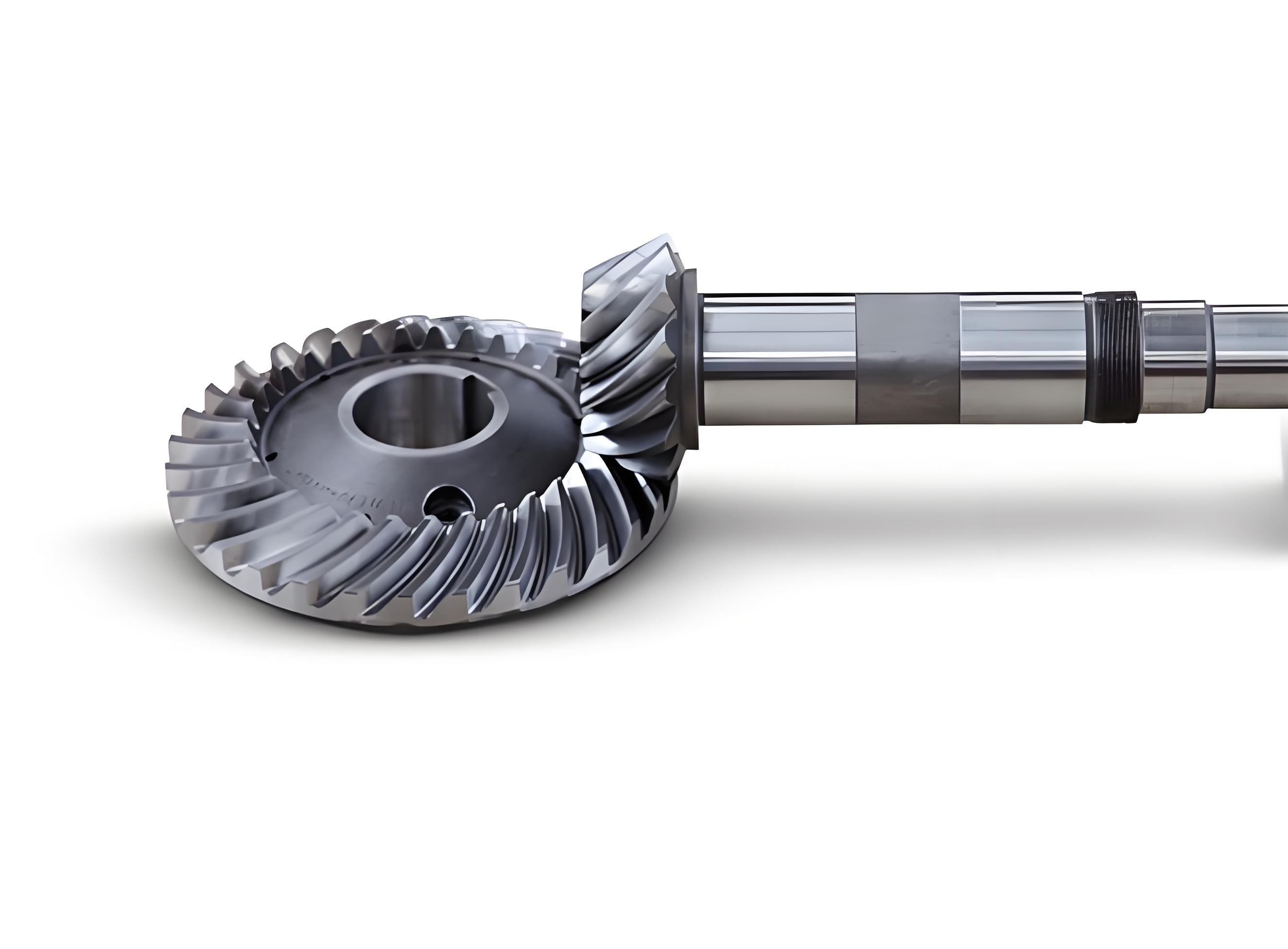
Traditional research on grinding residual stress has often relied on simplified models, such as single-grit simulations or two-dimensional thermo-mechanical coupling analyses. While these approaches provide fundamental insights, they fall short of accurately representing the complex, multi-grit, and three-dimensional nature of the actual grinding process for complex geometries like spiral bevel gears. This study addresses this gap by developing a high-fidelity finite element model that incorporates randomly distributed multiple abrasive grains to simulate the grinding of an AISI 4340 steel gear segment. Utilizing the grey relational analysis method, this work systematically investigates the influence of key grinding parameters on the resultant residual stress profile, establishes predictive models, and identifies optimal processing conditions.
1. Fundamentals and Modeling of the Grinding Process for Spiral Bevel Gears
The manufacturing of spiral bevel gears is typically based on the principle of a “virtual crown gear” or generating gear. In this conceptual framework, the grinding wheel, mounted eccentrically on a machine cradle, simulates the tooth surface of a virtual gear. The relative rolling motion between this virtual gear and the workpiece gear blank generates the desired tooth flank geometry. For the purpose of finite element analysis focused on the localized material removal and stress generation phenomena, the complex spatial motion can be effectively simplified. A critical surface segment of the gear tooth is isolated as the workpiece, and the motion of the grinding wheel is translated into a linear trajectory relative to this segment. This approach, grounded in a micro-element perspective, allows for a computationally efficient yet physically accurate simulation of the grinding mechanics and thermal loads.
1.1 Development of a Multi-Abrasive Grain Finite Element Model
To realistically capture the collective action of numerous abrasive particles on a grinding wheel, a multi-grit model is essential. Abrasive grains are modeled as conical indenters, a shape that effectively represents the cutting and plowing actions. A critical challenge is generating a random yet non-overlapping spatial distribution of these grains on the simulated wheel surface. This is achieved through the Virtual Lattice Method. The grinding wheel’s active surface area is first subdivided into a regular grid of virtual cells. A single abrasive grain is then randomly placed within the confines of each cell, ensuring a minimum separation distance between adjacent grains to prevent physical overlap while maintaining overall randomness. The model is constructed programmatically to allow for control over grain density and distribution.
The material properties assigned to the abrasive grains (modeled as analytical rigid bodies) and the workpiece are listed in the table below. The significant hardness difference justifies treating the grains as rigid bodies during simulation.
| Component | Property | Value | Unit |
|---|---|---|---|
| Abrasive Grain | Density (ρ) | 3480 | kg/m³ |
| Elastic Modulus (E) | 706 | GPa | |
| Poisson’s Ratio (ν) | 0.15 | – | |
| Thermal Conductivity (k) | 79.54 | W/(m·°C) | |
| Workpiece (AISI 4340) | Density (ρ) | 7830 | kg/m³ |
| Elastic Modulus (E) | 200 | GPa | |
| Yield Strength (σy) | 792 | MPa | |
| Poisson’s Ratio (ν) | 0.29 | – | |
| Thermal Conductivity (k) | 38 | W/(m·°C) | |
| Melting Temperature (Tm) | ~1520 | °C |
1.2 Constitutive and Damage Modeling of the Workpiece Material
The grinding process subjects the material to extreme conditions of high strain, high strain rate, and elevated temperature. To accurately model the plastic flow and potential material failure (chip formation), the Johnson-Cook (J-C) constitutive model and failure criterion are employed. The J-C flow stress model is expressed as:
$$ \sigma = \left( A + B \varepsilon^n \right) \left( 1 + C \ln \frac{\dot{\varepsilon}}{\dot{\varepsilon}_0} \right) \left[ 1 – \left( \frac{T – T_0}{T_m – T_0} \right)^m \right] $$
where \( \sigma \) is the equivalent flow stress, \( \varepsilon \) is the equivalent plastic strain, \( \dot{\varepsilon} \) is the plastic strain rate, \( \dot{\varepsilon}_0 \) is the reference strain rate (typically 1.0 s⁻¹), \( T \) is the current temperature, \( T_0 \) is the room temperature, and \( T_m \) is the melting temperature. The parameters \( A, B, n, C, \) and \( m \) are material constants representing initial yield stress, hardening modulus, hardening exponent, strain rate sensitivity, and thermal softening coefficient, respectively.
The J-C damage model calculates the equivalent failure strain \( \varepsilon_f \):
$$ \varepsilon_f = \left[ D_1 + D_2 \exp \left( D_3 \frac{p}{q} \right) \right] \left[ 1 + D_4 \ln \frac{\dot{\varepsilon}}{\dot{\varepsilon}_0} \right] \left[ 1 + D_5 \frac{T – T_0}{T_m – T_0} \right] $$
where \( p \) is the hydrostatic pressure, \( q \) is the Mises equivalent stress, and \( D_1 \) to \( D_5 \) are failure parameters. Damage accumulates incrementally, and element deletion occurs when the damage parameter \( D = \sum (\Delta \varepsilon / \varepsilon_f ) \) reaches 1.
The calibrated J-C parameters for AISI 4340 steel used in this simulation are summarized below.
| Parameter Group | Symbol | Value |
|---|---|---|
| Flow Stress | A | 792 MPa |
| B | 510 MPa | |
| n | 0.26 | |
| C | 0.014 | |
| m | 1.03 | |
| Failure | D₁ | 0.05 |
| D₂ | 3.44 | |
| D₃ | -2.12 | |
| D₄ | 0.002 | |
| D₅ | 0.61 |
1.3 Simulation Setup and Data Acquisition
The finite element simulation is conducted as a coupled temperature-displacement, dynamic explicit analysis. The workpiece bottom is fully constrained. A penalty-based friction model with a coefficient of 0.3 is defined at the grain-workpiece interface. The simulation is performed in two sequential steps: (1) the grinding pass, where the multi-grit wheel moves across the workpiece surface with predefined parameters, and (2) a cooling step, where the tool is removed, and the workpiece cools down to room temperature under natural convection conditions to allow for thermal stress relaxation and the establishment of the final residual stress state.
After the simulation, residual stress data, specifically the stress component in the grinding direction (S11), is extracted. To obtain a representative through-depth profile, data from 98 evenly spaced nodes on each layer parallel to the surface are averaged, moving from the machined surface into the bulk material.
2. Simulation Scheme and Analysis of Residual Stress Distribution
2.1 Orthogonal Experimental Design
To systematically investigate the effects of grinding parameters on residual stress in spiral bevel gears, a three-factor, four-level orthogonal experiment (L₁₆ array) was designed. The selected factors and their levels are critical operational parameters in grinding processes.
| Factor | Symbol | Level 1 | Level 2 | Level 3 | Level 4 |
|---|---|---|---|---|---|
| Grinding Speed | vs (m/s) | 10 | 15 | 20 | 25 |
| Grinding Depth | ap (mm) | 0.01 | 0.02 | 0.03 | 0.04 |
| Feed Rate | vw (m/min) | 3.0 | 3.5 | 4.0 | 4.5 |
The response variables are the maximum compressive residual stress (S₁) and the maximum tensile residual stress (S₂) observed in the subsurface layer after grinding and cooling.
2.2 Characteristic Distribution of Grinding Residual Stress
The finite element simulations reveal a characteristic residual stress profile for ground spiral bevel gears. The surface consistently exhibits a state of residual compressive stress. This compressive stress reaches its maximum magnitude not at the very surface, but slightly below it, in the so-called “subsurface layer.” As the depth from the surface increases, this compressive stress gradually diminishes, transitions through zero, and becomes residual tensile stress at greater depths. Eventually, the stress attenuates and approaches zero in the unaffected bulk material.
This distribution is the result of the competing thermo-mechanical effects during grinding. The mechanical effect, dominated by the plowing and extrusion of abrasive grains, induces plastic compression near the surface, leading to compressive stresses upon elastic recovery. Concurrently, the intense frictional heat generation causes thermal expansion, which is constrained by the cooler subsurface material, creating compressive thermal stresses. During cooling, the rapidly contracting surface layer is restrained by the underlying material, which can induce tensile stresses at the surface. However, in many grinding regimes for hard steels, the mechanical effect and the final phase of cooling often prevail, resulting in a net compressive layer at the surface with a tensile balancing region underneath.
A single-factor analysis, where grinding depth (ap) was varied while other parameters were held constant, clearly demonstrates its significant influence. As ap increases from 0.01 mm to 0.04 mm, both the surface/sub-surface compressive stress and the deeper tensile stress increase substantially. This is attributed to the increased volumetric material removal rate, which leads to higher grinding forces (enhancing the mechanical effect) and greater heat generation per unit time (enhancing the thermal effect). The results of the full orthogonal experiment are shown in the table below.
| Exp. No. | vs (m/s) | ap (mm) | vw (m/min) | Max Compressive Stress S₁ (MPa) | Max Tensile Stress S₂ (MPa) |
|---|---|---|---|---|---|
| 1 | 10 | 0.01 | 3.0 | -235.9 | 12.4 |
| 2 | 10 | 0.02 | 3.5 | -266.5 | 12.7 |
| 3 | 10 | 0.03 | 4.0 | -295.4 | 14.2 |
| 4 | 10 | 0.04 | 4.5 | -363.6 | 26.7 |
| 5 | 15 | 0.01 | 3.5 | -249.1 | 12.2 |
| 6 | 15 | 0.02 | 3.0 | -285.2 | 11.9 |
| 7 | 15 | 0.03 | 4.5 | -332.9 | 22.7 |
| 8 | 15 | 0.04 | 4.0 | -356.9 | 20.9 |
| 9 | 20 | 0.01 | 4.0 | -287.4 | 11.6 |
| 10 | 20 | 0.02 | 4.5 | -321.7 | 18.3 |
| 11 | 20 | 0.03 | 3.0 | -335.2 | 17.1 |
| 12 | 20 | 0.04 | 3.5 | -357.6 | 20.6 |
| 13 | 25 | 0.01 | 4.5 | -279.3 | 9.1 |
| 14 | 25 | 0.02 | 4.0 | -347.6 | 22.2 |
| 15 | 25 | 0.03 | 3.5 | -347.9 | 23.8 |
| 16 | 25 | 0.04 | 3.0 | -342.3 | 20.5 |
3. Grey Relational Analysis of Grinding Parameters
3.1 Principles and Calculation of Grey Relational Degree
Grey relational analysis (GRA) is a method for assessing the degree of correlation between factors in a system with incomplete information. It is particularly useful for multi-objective optimization where the relationship between parameters and responses is complex. In this context, the goal is to analyze the correlation between the grinding parameters (comparability sequences) and the desired residual stress outcomes (reference sequence).
The first step is data preprocessing or normalization. Since residual compressive stress on the surface is generally beneficial for fatigue resistance (a “larger-is-better” or positive indicator), and residual tensile stress is detrimental (“smaller-is-better” or negative indicator), they are normalized differently.
For the negative indicator (S₂, tensile stress):
$$ y_i(k) = \frac{\max x_i^0(k) – x_i^0(k)}{\max x_i^0(k) – \min x_i^0(k)} $$
For the positive indicator (S₁, compressive stress, treated as its absolute value):
$$ y_i(k)’ = \frac{x_i^0(k) – \min x_i^0(k)}{\max x_i^0(k) – \min x_i^0(k)} $$
Here, \( x_i^0(k) \) is the original data for the k-th response in the i-th experiment.
Next, the grey relational coefficient \( \gamma \) is calculated for each response in each experiment, measuring the proximity between the normalized comparability sequence and an ideal reference sequence (value of 1 after normalization).
$$ \gamma \big( x_0(k), x_i(k) \big) = \frac{ \min\limits_i \min\limits_k | x_0(k) – x_i(k) | + \zeta \max\limits_i \max\limits_k | x_0(k) – x_i(k) | }{ | x_0(k) – x_i(k) | + \zeta \max\limits_i \max\limits_k | x_0(k) – x_i(k) | } $$
where \( \zeta \) is the distinguishing coefficient, typically set to 0.5.
Finally, the overall grey relational grade \( G_i \) for the i-th experimental combination is obtained by averaging the coefficients for all responses (here, two: S₁ and S₂):
$$ G_i = \frac{1}{h} \sum_{k=1}^{h} \gamma \big( x_0(k), x_i(k) \big) $$
where \( h \) is the number of responses. A higher grey relational grade indicates that the corresponding parameter combination yields a result closer to the ideal, thus representing a better overall performance in balancing the multi-objectives.
3.2 Analysis of Grey Relational Results
The calculated grey relational grades for each of the 16 orthogonal trials are listed below. The higher the grade, the more favorable the parameter combination is considered for achieving high compressive stress and low tensile stress simultaneously.
| Exp. No. | Normalized S₁ (y’) | Normalized S₂ (y) | Relational Coef. for S₁ (γ₁) | Relational Coef. for S₂ (γ₂) | Grey Relational Grade (G) |
|---|---|---|---|---|---|
| 1 | 0.0000 | 0.8138 | 0.3333 | 0.7286 | 0.5310 |
| 2 | 0.2402 | 0.7975 | 0.3969 | 0.7117 | 0.5543 |
| 3 | 0.4662 | 0.7099 | 0.4836 | 0.6328 | 0.5582 |
| 4 | 1.0000 | 0.0000 | 1.0000 | 0.3333 | 0.6667 |
| 5 | 0.1036 | 0.8262 | 0.3581 | 0.7420 | 0.5501 |
| 6 | 0.3867 | 0.8403 | 0.4491 | 0.7579 | 0.6035 |
| 7 | 0.7601 | 0.2311 | 0.6757 | 0.3940 | 0.5349 |
| 8 | 0.9483 | 0.3327 | 0.9063 | 0.4283 | 0.6673 |
| 9 | 0.4032 | 0.8570 | 0.4559 | 0.7776 | 0.6167 |
| 10 | 0.6720 | 0.4778 | 0.6039 | 0.4892 | 0.5465 |
| 11 | 0.7778 | 0.5487 | 0.6924 | 0.5256 | 0.6090 |
| 12 | 0.9535 | 0.3474 | 0.9149 | 0.4338 | 0.6744 |
| 13 | 0.3397 | 1.0000 | 0.4309 | 1.0000 | 0.7155 |
| 14 | 0.8748 | 0.2593 | 0.7998 | 0.4030 | 0.6014 |
| 15 | 0.8774 | 0.1679 | 0.8031 | 0.3753 | 0.5892 |
| 16 | 0.8338 | 0.3525 | 0.7506 | 0.4357 | 0.5931 |
By averaging the grey relational grades for each level of every factor, the main effect can be evaluated. The factor with the largest range (difference between max and min average grade per level) has the most significant influence on the combined residual stress outcome.
| Factor | Level 1 Avg. | Level 2 Avg. | Level 3 Avg. | Level 4 Avg. | Range (Max-Min) |
|---|---|---|---|---|---|
| Grinding Speed (vs) | 0.5776 | 0.5890 | 0.6117 | 0.6248 | 0.0472 |
| Grinding Depth (ap) | 0.6033 | 0.5764 | 0.5728 | 0.6504 | 0.0776 |
| Feed Rate (vw) | 0.5842 | 0.5920 | 0.6109 | 0.6159 | 0.0317 |
The analysis of the main effects leads to the following conclusions:
- Order of Influence: The range values clearly show that grinding depth (ap) has the most pronounced effect on the comprehensive residual stress state, followed by grinding speed (vs), and then feed rate (vw).
- Optimal Parameter Combination: Within the tested ranges, the highest average grey relational grade for each factor points to the optimal level: vs at Level 4 (25 m/s), ap at Level 4 (0.04 mm), and vw at Level 4 (4.5 m/min). Therefore, the combination (vs=25 m/s, ap=0.04 mm, vw=4.5 m/min) is identified as the theoretically optimal set for maximizing beneficial compressive stress while managing tensile stress in the grinding of these spiral bevel gears.
- Trend Analysis: The grey relational grade generally increases with increasing grinding speed and feed rate. For grinding depth, the grade dips slightly at medium depths (0.02-0.03 mm) but peaks at the largest depth (0.04 mm), suggesting a complex non-linear interaction, but the highest performance is achieved at the maximum material removal rate under these conditions.
4. Development and Validation of a Predictive Model
4.1 Regression Model Based on Response Surface Methodology
To quantify the relationship between the grinding parameters and the comprehensive performance index (grey relational grade G), a second-order response surface model was fitted to the orthogonal experimental data using regression analysis. Insignificant terms (p-value > 0.05) were iteratively removed to obtain a parsimonious and statistically significant model. The final predictive equation is:
$$
G = 0.967 – 0.00552 \, v_s + 6.09 \, a_p – 0.2058 \, v_w + 261.1 \, a_p^2 – 0.9072 \, v_s a_p + 0.0084 \, v_s v_w
$$
Where G is the predicted grey relational grade, vs is in m/s, ap is in mm, and vw is in m/min.
The model’s statistical adequacy was confirmed through Analysis of Variance (ANOVA). The high F-value (35.73) and an exceedingly low p-value (< 0.0001) indicate the model is highly significant. The coefficient of determination R² is 95.97%, and the adjusted R²adj is 93.29%, demonstrating that the model explains over 93% of the variation in the grey relational grade, confirming excellent fit and predictive capability.
4.2 Model Validation and Confirmation Experiments
The accuracy of the predictive model was first checked by comparing its predictions for the 16 original experimental conditions against the calculated grades. The close agreement, with minimal residuals, validates the model’s reliability within the design space.
To practically confirm the findings of the grey relational analysis, the predicted optimal parameter set (vs=25 m/s, ap=0.04 mm, vw=4.5 m/min), labeled as Confirmation Experiment 0, was simulated. Furthermore, three additional control experiments were conducted by varying one parameter at a time from this optimal set. The results are summarized below.
| Exp. ID | vs (m/s) | ap (mm) | vw (m/min) | Max Comp. Stress S₁ (MPa) | Max Tens. Stress S₂ (MPa) | Grey Grade G |
|---|---|---|---|---|---|---|
| 0 (Optimal) | 25 | 0.04 | 4.5 | -396.5 | 32.0 | 0.699* |
| 1 (Control) | 20 | 0.04 | 4.5 | -367.0 | 27.6 | 0.671 |
| 2 (Control) | 25 | 0.03 | 4.5 | -372.3 | 29.2 | 0.665 |
| 3 (Control) | 25 | 0.04 | 4.0 | -361.9 | 23.0 | 0.650 |
*Predicted value from the model for the optimal set was 0.702, showing excellent agreement with the simulated result.
The confirmation experiment validates the optimization outcome: the identified optimal parameter set yields the highest compressive residual stress (-396.5 MPa) among all tested combinations, including the control groups. While the tensile stress is not the absolute lowest, the grey relational grade, which balances both objectives, is highest for this combination. The control experiments show that deviating from any of the optimal parameters (lower speed, lower depth, or lower feed) results in a lower compressive stress and, crucially, a lower overall grey relational grade. This confirms that the grey relational analysis successfully identified a parameter set that provides a globally superior compromise for the residual stress state in ground spiral bevel gears.
5. Conclusion
This study has systematically investigated the influencing factors of grinding-induced residual stress in spiral bevel gears through an integrated approach of advanced finite element modeling and grey relational analysis. The establishment of a random multi-abrasive grain model via the virtual lattice method provided a more realistic simulation of the grinding process compared to conventional single-grit models.
The key findings are summarized as follows:
- The residual stress profile in ground AISI 4340 steel spiral bevel gears is characterized by a compressive layer at the surface, with maximum compression occurring in the subsurface. The stress transitions to tension with increasing depth before dissipating.
- Among the grinding parameters studied, the grinding depth (ap) exerts the most significant influence on the magnitude and distribution of residual stresses, followed by grinding speed (vs) and then feed rate (vw). Increasing any of these parameters generally leads to an increase in both surface compressive and subsurface tensile stresses, though the rate of increase varies.
- Grey relational analysis proved to be an effective tool for multi-objective optimization of the grinding process for spiral bevel gears. By transforming the dual objectives (maximize compressive stress, minimize tensile stress) into a single comprehensive grey relational grade, the optimal parameter combination within the tested range was identified as: vs = 25 m/s, ap = 0.04 mm, vw = 4.5 m/min.
- A highly accurate second-order response surface model was developed to predict the grey relational grade based on grinding parameters. The model’s statistical significance and the successful confirmation experiments validate the robustness of the analysis methodology.
This research provides a practical framework and specific guidance for optimizing grinding parameters to control residual stresses in spiral bevel gears, thereby contributing to the enhancement of their fatigue life and operational reliability in demanding applications. The methodology combining a realistic multi-particle model with grey relational analysis can be extended to study other hard-to-machine materials and complex geometries.