
In mechanical systems, the gear shaft plays a critical role in transmitting motion, torque, or bending moments while supporting rotating components. Failures in gear shafts can lead to reduced transmission accuracy, increased noise and vibration, and even system-wide breakdowns. Understanding the root causes of such failures is essential for preventing recurrence and ensuring operational safety. In this analysis, I investigate a case of delayed cracking in a gear shaft fabricated from 18CrNiMo7-6 steel, which occurred after carburizing, quenching, and tempering heat treatments, followed by a five-day static period. The primary focus is on identifying the failure mechanism, particularly emphasizing hydrogen-induced delayed brittle cracking, and proposing preventive measures based on material characterization and stress analysis.
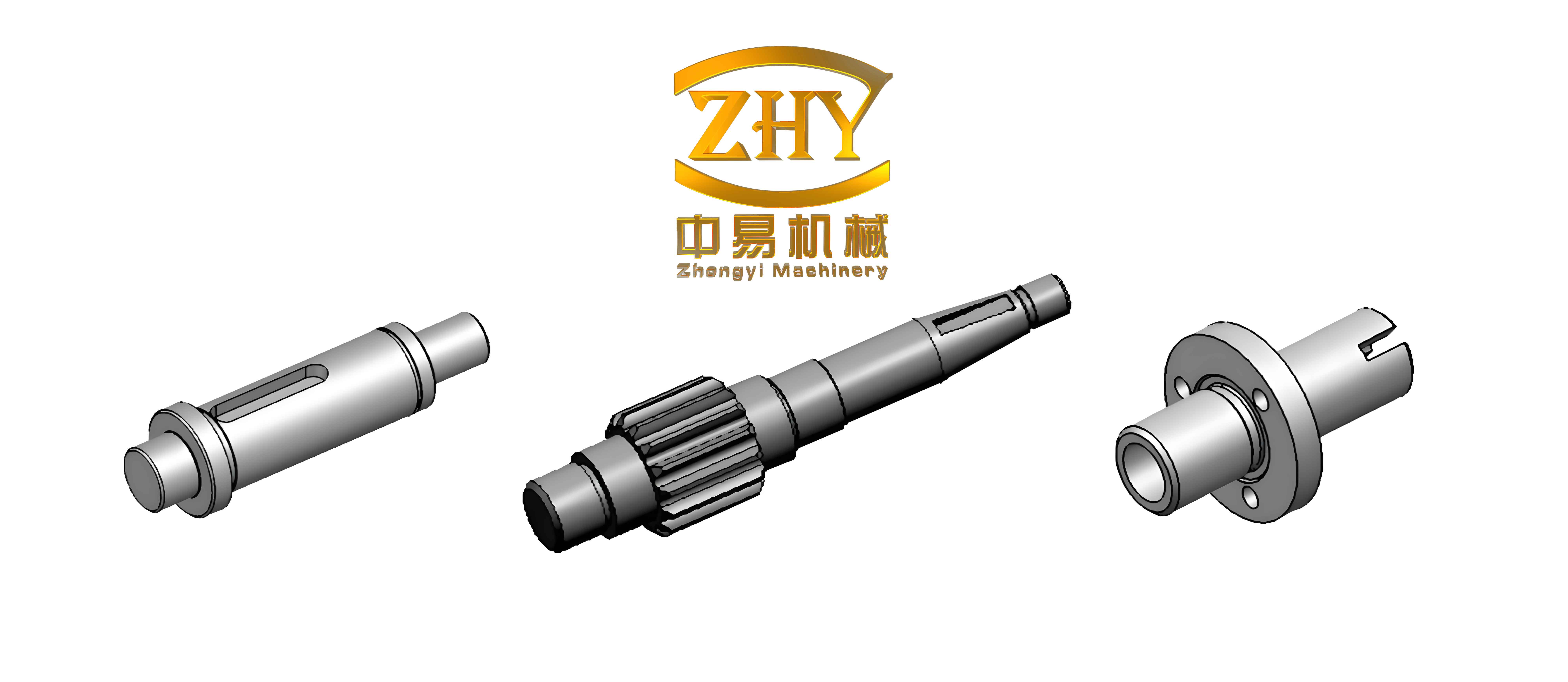
The gear shaft underwent a standard manufacturing process involving normalizing, tempering, turning, carburizing, quenching, and low-temperature tempering. Macroscopic examination of the fracture surface revealed that the crack initiated from the interior of the gear shaft, approximately 4.5 mm from the surface near the tooth root. A large-scale, elongated defect, measuring about 2.6 mm in length and 0.28 mm in width, was observed at the origin site. This defect acted as a stress concentrator, facilitating crack propagation under residual stresses. Microscopic analysis using scanning electron microscopy (SEM) showed that the fracture near the origin exhibited a mixed mode of intergranular and cleavage features, with localized tear ridges (often referred to as “chicken claw” marks), which are indicative of hydrogen embrittlement. In contrast, the later stages of crack propagation displayed ductile dimple features, suggesting a transition in failure mode as the crack extended away from the stress concentration zone.
Energy-dispersive X-ray spectroscopy (EDS) was employed to analyze the chemical composition at the fracture origin. The defect area showed high concentrations of oxygen and aluminum, confirming the presence of an alumina (Al₂O₃) inclusion. No corrosive elements were detected in the adjacent intergranular fracture zones, ruling out stress corrosion cracking as a contributing factor. Microstructural examination of cross-sections near the fracture site revealed no abnormalities in the base material or the carburized layer. The base microstructure consisted of tempered martensite, and the carburized layer was free of network carbides, indicating that the heat treatment process was conducted appropriately.
Hardness testing was performed on the gear shaft cross-section to assess the material’s mechanical properties. The results, summarized in Table 1, show the hardness gradient from the surface to the core. The effective case depth, defined as the distance from the surface to where the hardness reaches 550 HV0.5, was approximately 2.0 mm, meeting the technical requirement of 2.1 mm. The core hardness was about 417 HV0.5, equivalent to a tensile strength of 1392 MPa and a Rockwell hardness of 43 HRC, which aligns with specifications. However, the high strength of the gear shaft material increases its susceptibility to hydrogen embrittlement, as higher-strength steels are more prone to brittle fracture under low hydrogen concentrations.
| Distance from Surface (mm) | Hardness (HV0.5) | Remarks |
|---|---|---|
| 0.0 | 750 | Surface |
| 0.5 | 720 | Carburized Layer |
| 1.0 | 680 | Carburized Layer |
| 1.5 | 620 | Carburized Layer |
| 2.0 | 550 | Case Depth Boundary |
| 2.5 | 500 | Transition Zone |
| 3.0 | 450 | Transition Zone |
| 3.5 | 417 | Core Material |
| 4.0 | 417 | Core Material |
Hydrogen content measurements were taken from samples near the surface and core of the gear shaft. Both locations showed hydrogen concentrations below 1 ppm (1 × 10⁻⁶), which is relatively low. However, in high-strength steels like 18CrNiMo7-6, even trace amounts of hydrogen can accumulate at stress concentration sites, such as inclusions, leading to embrittlement. The hydrogen-induced delayed cracking mechanism can be described by the following equations, which model hydrogen diffusion and accumulation:
$$ \frac{\partial C}{\partial t} = D \nabla^2 C – \frac{D}{RT} \nabla \cdot (C \nabla \sigma_h) $$
where \( C \) is the hydrogen concentration, \( D \) is the diffusion coefficient, \( R \) is the gas constant, \( T \) is the temperature, and \( \sigma_h \) is the hydrostatic stress. This equation accounts for stress-driven hydrogen migration to regions of high triaxial stress, such as the vicinity of inclusions. The threshold stress intensity factor for hydrogen-induced cracking, \( K_{IH} \), can be expressed as:
$$ K_{IH} = K_{IC} \left(1 – \alpha \frac{C_H}{C_0}\right) $$
where \( K_{IC} \) is the fracture toughness, \( C_H \) is the local hydrogen concentration, \( C_0 \) is a reference concentration, and \( \alpha \) is a material constant. In this gear shaft, the alumina inclusion acted as a potent stress raiser, reducing the effective \( K_{IH} \) and promoting crack initiation under residual tensile stresses.
Residual stress analysis is crucial for understanding the failure. In carburized and quenched components, the carburized layer typically exhibits compressive residual stresses, while the transition zone to the core experiences tensile stresses. The crack origin in this gear shaft was located in the core region, where residual tensile stresses are prevalent. The stress concentration factor \( K_t \) due to the elongated inclusion can be approximated by:
$$ K_t = 1 + 2\sqrt{\frac{a}{\rho}} $$
where \( a \) is the inclusion length and \( \rho \) is the root radius of the defect. For the observed inclusion dimensions, \( K_t \) would be significantly high, amplifying the local stress and facilitating hydrogen accumulation. This aligns with the microscopic observations of intergranular fracture near the origin.
Further microstructural analysis confirmed that the base material of the gear shaft had a tempered martensitic structure with no evidence of overheating or decarburization. The carburized layer showed a gradual hardness transition, as illustrated in Table 1, which is desirable for fatigue resistance but does not mitigate hydrogen embrittlement risks. The presence of large-scale non-metallic inclusions, such as the alumina stringer, is a material quality issue that must be addressed through stringent control during steel production.
To quantify the risk of hydrogen embrittlement in gear shafts, I developed a model based on hydrogen trapping at inclusions. The effective hydrogen concentration \( C_{\text{eff}} \) at a trap site can be related to the applied stress \( \sigma \) and the trap binding energy \( E_b \) by:
$$ C_{\text{eff}} = C_0 \exp\left(\frac{E_b + \sigma V_a}{RT}\right) $$
where \( V_a \) is the activation volume. For alumina inclusions, \( E_b \) is high, leading to substantial hydrogen accumulation even at low bulk concentrations. This explains why the gear shaft failed despite the low measured hydrogen content. The delayed nature of the cracking is typical of hydrogen embrittlement, where time-dependent diffusion and accumulation processes lead to failure after a latent period.
Preventive measures for such failures in gear shafts involve multiple approaches. First, material quality must be rigorously controlled to minimize the presence of large inclusions. This can be achieved through improved steelmaking practices, such as vacuum degassing and inclusion shape control. Second, non-destructive testing (NDT) methods, such as ultrasonic or eddy current inspection, should be employed to detect internal defects in gear shafts before they are put into service. These techniques can identify inclusions that are not visible in routine metallographic exams. Third, heat treatment processes can be optimized to reduce residual tensile stresses; for instance, by incorporating stress relief annealing or cryogenic treatment. However, altering the core hardness may not be feasible if mechanical properties are specified for operational requirements.
In terms of design, increasing the fillet radii at critical sections of the gear shaft can reduce stress concentrations. Additionally, surface treatments like shot peening can introduce compressive stresses that counteract hydrogen ingress. The overall strategy should focus on a holistic approach combining material selection, processing, and inspection to enhance the durability of gear shafts.
In conclusion, the failure of the gear shaft was unequivocally attributed to hydrogen-induced delayed brittle cracking initiated at a large-scale alumina inclusion. The high strength of the material, combined with residual tensile stresses and local hydrogen accumulation, created conditions conducive to embrittlement. Through comprehensive analysis, including fractography, hardness testing, and hydrogen measurement, I identified the root causes and proposed actionable preventive measures. Future work should involve implementing NDT protocols and material specifications to mitigate such risks in critical components like gear shafts.
The implications of this study extend beyond the specific gear shaft analyzed here. Hydrogen embrittlement is a pervasive issue in high-strength steels used in aerospace, automotive, and industrial applications. By understanding the interplay between inclusions, stress, and hydrogen, engineers can design more robust systems. Further research could explore the effects of alloy composition on hydrogen trapping behavior or develop advanced coatings to barrier hydrogen diffusion. Ultimately, ensuring the reliability of gear shafts requires a multidisciplinary approach integrating materials science, mechanical engineering, and quality assurance.