
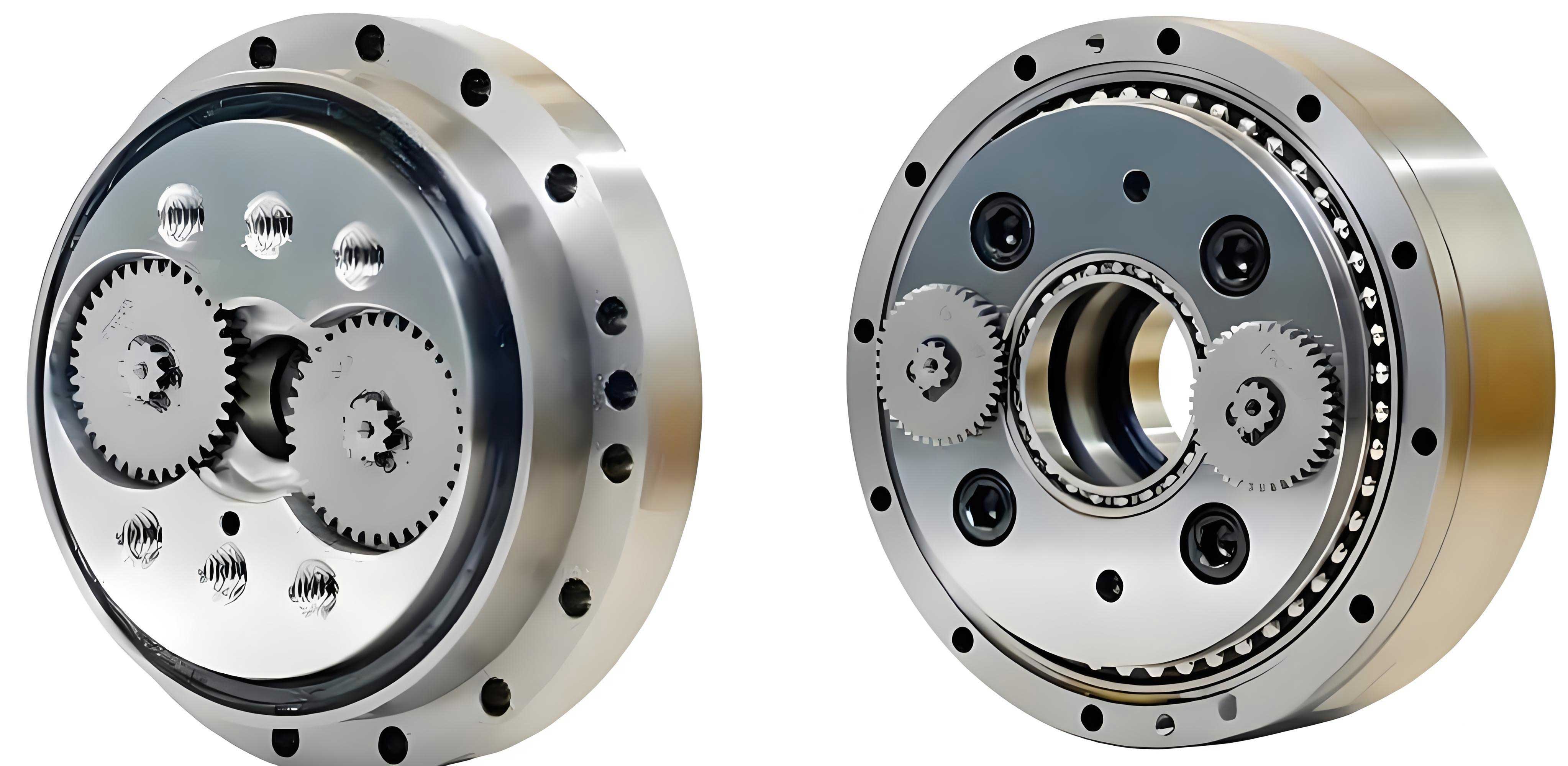
The rotary vector reducer, a precision transmission device evolved from the cycloidal pinwheel reducer, is renowned for its exceptional load-bearing capacity, high transmission accuracy, minimal backlash, compact size, and high efficiency. As a core component of this sophisticated system, the cycloidal pinwheel mechanism operates under complex loading conditions. The distribution of contact forces within this mechanism significantly influences the overall performance of the rotary vector reducer, impacting critical factors such as service life, vibration, and noise. Therefore, conducting a transient contact analysis of the cycloidal pinwheel is of paramount importance for the design and reliability assessment of rotary vector reducers. This investigation focuses on understanding how variations in operational load affect the meshing characteristics, including the number of contacting tooth pairs and the resultant stress fields.
Theoretical Modeling of Cycloidal-Pin Meshing
To analyze the load-bearing characteristics, we first establish the theoretical mechanical model for the cycloidal pinwheel pair, considering practical modifications applied to the cycloidal tooth profile. The analysis is based on a rotary vector reducer model with a total transmission ratio of $i_z = 121$. Key geometric parameters include the number of cycloidal gear teeth $Z_b = 39$, the number of pin teeth $Z_p = 40$, the pin center circle radius $r_p = 64 \text{ mm}$, and the pin radius $r_{rp} = 3 \text{ mm}$. Profile modifications, namely the equidistant modification $\Delta r_{rp} = +0.01 \text{ mm}$ and the移距 modification $\Delta r_p = -0.01 \text{ mm}$, are incorporated to optimize contact and compensate for manufacturing and assembly tolerances.
The initial clearance between a cycloidal tooth and a pin tooth along the common normal direction, accounting for these modifications, is given by:
$$
\Delta(\phi_i) = \Delta r_{rp}\left(1 – \frac{\sin \phi_i}{\sqrt{1 + K_1^2 – 2K_1 \cos \phi_i}}\right) – \Delta r_p\left(\frac{1 – K_1 \cos \phi_i – \sqrt{1 – K_1^2} \sin \phi_i}{\sqrt{1 + K_1^2 – 2K_1 \cos \phi_i}}\right)
$$
where $K_1$ is the shortening coefficient (here, $K_1 = 0.8125$), and $\phi_i$ is the angle between the line connecting the geometric center of the i-th pin and the rotating arm of the cycloidal gear.
Under an output torque $T_{out}$, elastic deformations occur at the contact interfaces between the cycloidal gear and pins, and between the pins and the pin housing. This causes the cycloidal gear to rotate slightly backward relative to the input motion. The total elastic deformation $\delta_i$ along the common normal at a potential contact point $i$ is assumed to be proportional to the deformation at the initially contacting tooth pair:
$$
\delta_i = \frac{\sin \phi_i}{\sqrt{1 + K_1^2 – 2K_1 \cos \phi_i}} \delta_{max}
$$
where $\delta_{max}$ is the maximum deformation at the first contacting tooth pair. Contact is established only at positions where the total deformation exceeds the initial clearance ($\delta_i > \Delta(\phi_i)$). The contact force $F_i$ for an active tooth pair is related to this effective deformation. The condition for static equilibrium, where the sum of the moments from all contact forces balances the applied output torque, is used to solve iteratively for the force distribution and the number of simultaneously engaged tooth pairs $N_{mesh}$.
Once the contact forces are determined, the Hertzian contact stress $\sigma_H$ for the line contact between the cylindrical pin and the cycloidal tooth flank can be estimated for evaluation:
$$
\sigma_H = 0.418 \sqrt{\frac{E_e F_i}{\rho_0 C}} \leq \sigma_{HP}
$$
In this formula, $E_e$ represents the equivalent elastic modulus, $\rho_0$ is the equivalent radius of curvature, $C$ is the effective contact length (equal to the width of the gear), and $\sigma_{HP}$ is the allowable contact stress for the material (GCr15, with $\sigma_{HP} = 1902 \text{ MPa}$ at 62 HRC). The theoretical analysis is performed for multiple load levels: $0.5T_{out}$, $T_{out}$, $2T_{out}$, and $3T_{out}$, where $T_{out} = 412 \text{ N·m}$ is the rated output torque for the rotary vector reducer.
| Pin Tooth Number, i | Meshing Force, $F_i$ (N) | Contact Stress, $\sigma_H$ (MPa) |
|---|---|---|
| 1 | 0 | 0 |
| 2 | 0 | 0 |
| 3 | 361.684 | 205.443 |
| 4 | 910.827 | 556.340 |
| 5 | 1025.157 | 901.526 |
| 6 | 939.143 | 1148.438 |
| 7 | 741.630 | 1178.171 |
| 8 | 472.514 | 980.352 |
| 9 | 152.668 | 552.281 |
| 10 | 0 | 0 |
The theoretical calculation for the rated load indicates that 7 tooth pairs (from pin #3 to #9) are simultaneously in contact, with the maximum contact stress occurring at pin #7. The calculated stress is below the material’s allowable limit, confirming the basic design adequacy of the rotary vector reducer’s cycloidal stage.
Finite Element Modeling and Transient Dynamics Setup
To capture the dynamic meshing process and complex contact interactions more accurately than the simplified theoretical model, a detailed finite element analysis (FEA) is conducted. A three-dimensional model of the cycloidal pinwheel mechanism is created, simplified by representing the crankpin’s eccentric section with a single eccentric key and appropriately shortening non-critical lengths. The model is then imported into Ansys Workbench for transient dynamic analysis.
The primary components—the cycloidal gear and the 40 pins—are modeled as deformable bodies with material properties of GCr15 bearing steel: Young’s modulus $E = 219 \text{ GPa}$, Poisson’s ratio $\nu = 0.3$, and density $\rho = 7830 \text{ kg/m}^3$. The eccentric key and the pin housing are treated as rigid bodies to reduce computational cost while focusing on the contact regions of interest. The SOLID185 element is used for meshing. A refined mesh with an element size of 0.5 mm is applied to the tooth profiles of the cycloidal gear and the pin surfaces, while a coarser mesh is used elsewhere, resulting in a high-quality model with over 260,000 elements.
Forty “surface-to-surface” contact pairs are defined between the pins (contact surfaces) and the cycloidal gear (target surface). The friction coefficient is set to 0.13, and the augmented Lagrange method is used for robust contact resolution. Boundary conditions simulate the standard operation of the rotary vector reducer: the pin housing is fixed, a rotational velocity corresponding to the input speed ($61.261 \text{ rad/s}$) is applied to the eccentric key’s central axis, and an output torque load ($M = 226.6 \text{ N·m}$, representing 55% of the total $T_{out}$ acting on a single cycloidal gear in a two-stage design) is applied to the connection between the eccentric key and the cycloidal gear’s bearing bore. The analysis simulates a complete meshing cycle—the time for the cycloidal gear to advance by one pin pitch—which is approximately 0.1 seconds.
| Parameter | Setting / Value |
|---|---|
| Analysis Type | Transient Structural (Ansys) |
| Element Type | SOLID185 |
| Material (Gear & Pins) | GCr15 Steel |
| Contact Type | Surface-to-Surface, Frictional |
| Friction Coefficient | 0.13 |
| Solver Method | Augmented Lagrange |
| Input Speed | 61.261 rad/s |
| Simulated Output Torque per Gear | 226.6 N·m |
| Simulation Time (One Cycle) | ~0.1119 s |
| Load Cases | 0.5, 1, 2, 3 x $T_{out}$ |
Results and Discussion of Meshing Characteristics
Evolution of Meshing Tooth Pairs and Stress
The transient analysis reveals the dynamic nature of the load sharing within the rotary vector reducer’s cycloidal stage. Over one complete meshing cycle, the number of simultaneously engaged tooth pairs $N_{mesh}$ is not constant but varies periodically with time. This variation is intrinsically linked to the changing contact geometry and load distribution as the cycloidal gear rotates.
A key observation is the inverse relationship between $N_{mesh}$ and the magnitude of the meshing stresses (both equivalent von Mises stress and contact pressure). When more tooth pairs share the load, the force on each individual pair is reduced, leading to lower stress levels. Conversely, when fewer teeth are in contact, the load concentration increases, resulting in higher stress peaks. This fundamental load-sharing principle is clearly captured by the finite element model of the rotary vector reducer.
The applied output torque has a significant and systematic effect. As the load increases from $0.5T_{out}$ to $3T_{out}$, the range of pin teeth that participate in meshing expands, and the average number of contacting pairs per cycle increases. Under higher loads, the elastic deformation of the cycloidal gear becomes more pronounced, allowing pins that were initially out of contact (due to manufacturing modifications and clearances) to deflect into engagement. This phenomenon is detailed in the table below.
| Load Multiplier (x $T_{out}$) | Typical Range of Engaged Pin Teeth | Approx. Min/Max $N_{mesh}$ in Cycle | Trend in Max Contact Stress |
|---|---|---|---|
| 0.5 | Pins #2 – #5 | 2 to 4 pairs | Lowest |
| 1.0 (Rated) | Pins #3 – #7 | 3 to 5 pairs | Moderate |
| 2.0 | Pins #4 – #10 | 4 to 7 pairs | High |
| 3.0 | Pins #5 – #13 | 6 to 9 pairs | Highest |
Comparison of Theoretical and FEA Contact Stresses
Comparing the FEA results with the theoretical Hertzian calculations provides valuable insight. For the rated load condition ($T_{out}$), the theoretical model predicts the maximum contact stress to be $1178.17 \text{ MPa}$ at pin #7. The transient FEA, capturing the dynamic engagement and more accurate deformation, yields a lower peak value of approximately $699.37 \text{ MPa}$ at a different instant and pin location. While the absolute values differ—a common occurrence due to the simplifying assumptions in the theoretical model (e.g., ignoring detailed structural features like the output pin holes and assuming uniform stiffness)—the overall trend is consistent.
Both methods show that the contact stress distribution among the engaged teeth follows a similar pattern: the stress rises to a peak within the engagement zone and then falls. Furthermore, both analyses confirm that increasing the load on the rotary vector reducer leads to an increase in the calculated contact stresses. The finite element analysis, by simulating the complete transient process, offers a more comprehensive view of stress fluctuations throughout the meshing cycle.
| Load (x $T_{out}$) | Theory: $N_{mesh}$ | FEA: $N_{mesh}$ | Theory: Max $\sigma_H$ (MPa) | FEA: Max $\sigma_H$ (MPa) |
|---|---|---|---|---|
| 0.5 | 6 | 3 | ~590 | ~320 |
| 1.0 | 7 | 3 | 1178 | 637 |
| 2.0 | 8 | 4 | ~1660 | ~860 |
| 3.0 | 9 | 6 | ~2030 | ~1100 |
Stress Distribution Along the Tooth Profiles
The finite element analysis allows for a detailed examination of stress distribution along the path of contact. Analyzing the equivalent stress along the tooth profile length $L$ of the cycloidal gear reveals critical areas. Stress concentrations are consistently observed in two regions: near the tooth root and in the transition zone between the root and the tip. This transition zone is often close to the point of inflection on the cycloidal curve, where the local curvature is very high. These regions are most susceptible to fatigue damage, such as pitting, under the cyclic loading experienced in a rotary vector reducer.
The stress magnitude in these critical zones scales with the applied load. For instance, at a specific point in the transition zone ($L = 14.102 \text{ mm}$), the equivalent stress increases from approximately $220 \text{ MPa}$ at $0.5T_{out}$ to about $513 \text{ MPa}$ at $3T_{out}$. This nonlinear increase underscores the importance of considering overload conditions in the design of a robust rotary vector reducer.
Stress Distribution Along the Pin Tooth Length
The analysis of stress along the axial length $L_b$ of the most heavily loaded pin provides another crucial insight. The stress distribution typically exhibits a “double-peak” pattern, with higher equivalent stresses at both ends of the pin and lower stress in the middle. This pattern suggests a “two-point” contact condition, where the pin contacts the cycloidal gear near its ends, possibly due to slight misalignment or bending.
As the load on the rotary vector reducer increases, the overall stress level along the pin increases. However, the ratio of the peak stress at the ends to the average stress in the middle shows a slight decreasing trend. This indicates that under very high loads, the contact pressure tends to distribute more uniformly along the pin’s length, gradually mitigating the severe two-point concentration. Nevertheless, this effect is relatively small within the studied load range, and the ends of the pins remain the critical locations for stress evaluation.
The average equivalent stress in the central region ($2 < L_b < 7 \text{ mm}$) for pin #6 under rated load is about $242 \text{ MPa}$, while the peak stress at the ends is $382 \text{ MPa}$. The stress increase ratio $R$, defined as $R = | \sigma(L_b) – \sigma_{av} | / \sigma_{av}$, can be used to quantify this concentration. The trend of decreasing $R$ at the very ends under higher loads supports the observation of a gradual shift toward more uniform loading.
Conclusion
This comprehensive study, employing both theoretical mechanics and detailed nonlinear finite element transient analysis, elucidates the complex load-bearing meshing characteristics of the cycloidal pinwheel mechanism within a rotary vector reducer. The key findings are as follows:
1. The meshing process is inherently dynamic. The number of simultaneously engaged tooth pairs varies periodically during operation. An inverse correlation exists between this number and the magnitude of meshing stresses; higher concurrent contact leads to lower individual tooth pair stress.
2. The operational load is a dominant factor. Increasing the output torque causes a significant increase in both the number of engaged tooth pairs and the level of contact and equivalent stress. The finite element analysis and theoretical model show consistent trends regarding the effect of load, though absolute stress values differ due to modeling assumptions.
3. Critical stress locations are identified. For the cycloidal gear, high stresses concentrate near the tooth root and the root-to-tip transition zone. For the pins, a “double-peak” stress distribution along their length is common, with the ends being the most critical areas, even though very high loads slightly promote a more uniform distribution.
4. The transient finite element method provides a powerful and detailed tool for analyzing the nonlinear contact behavior, dynamic load sharing, and complex stress fields within the rotary vector reducer. It captures phenomena that simplified theoretical models cannot, such as the time-varying engagement and detailed stress contours.
These insights contribute to a deeper understanding of the performance and failure modes of the cycloidal drive. The methodologies and results presented offer valuable guidance for the design, analysis, and manufacturing optimization of high-performance rotary vector reducers, ultimately aiming to enhance their load capacity, longevity, and operational reliability.