
In the realm of power transmission, helical gears are indispensable components renowned for their smooth operation, high load-carrying capacity, and reduced acoustic emissions compared to their spur gear counterparts. The fundamental source of their superior performance lies in the gradual, oblique engagement of their teeth. However, this very advantage introduces complex dynamic phenomena. The time-varying nature of the meshing stiffness, stemming from the changing number and length of contact lines during rotation, acts as a primary source of parametric excitation within the gear system. This excitation can lead to significant vibrations, particularly when external excitations coincide with the system’s natural frequencies, a condition known as primary resonance. Therefore, accurately characterizing the meshing stiffness of helical gears and understanding its influence on system stability is not merely an academic exercise but a critical undertaking for ensuring the reliability and longevity of countless mechanical systems in automotive, aerospace, and industrial applications.
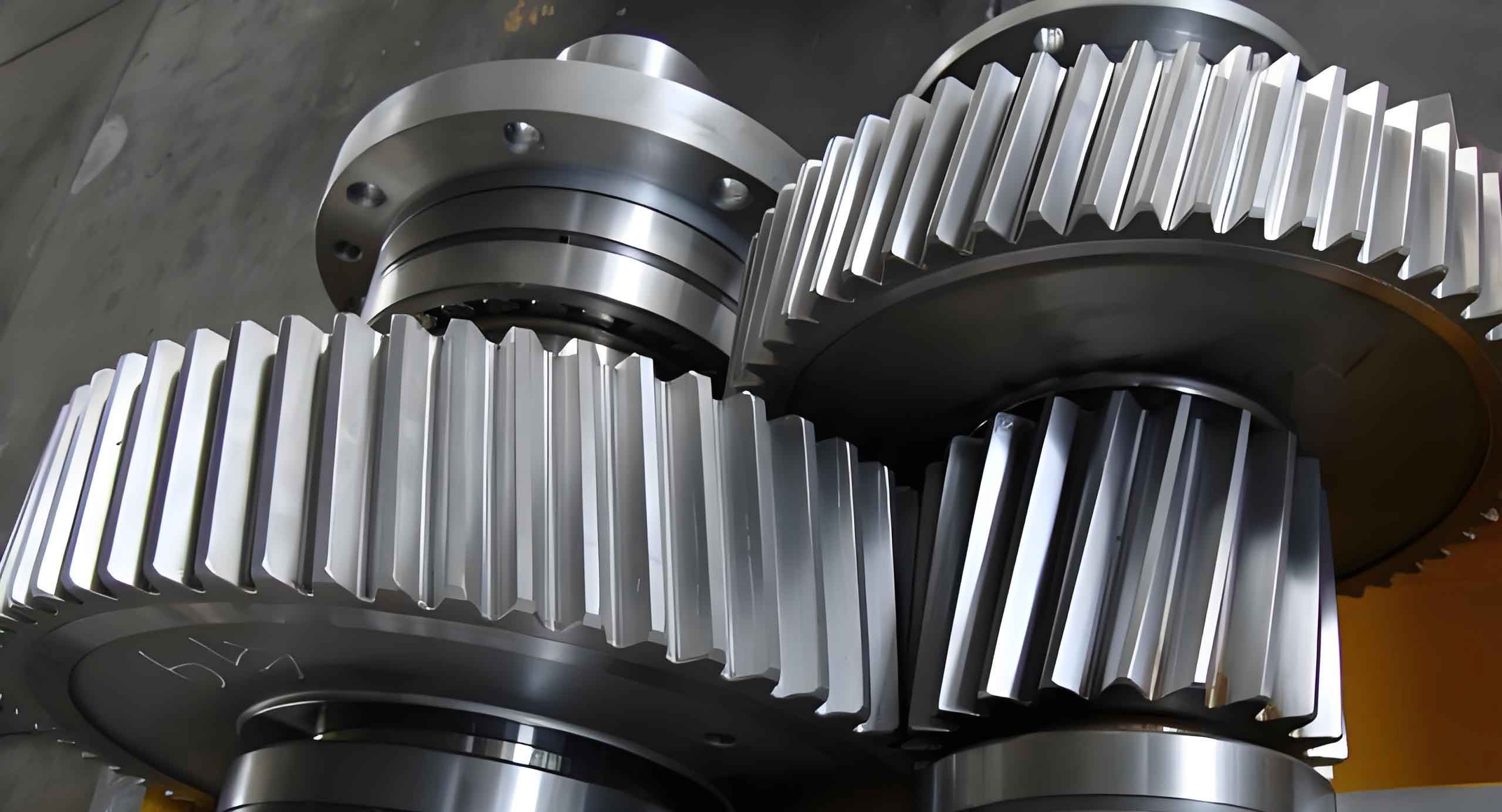
The core of the dynamic analysis of helical gears rests upon a precise model of their meshing stiffness. The traditional ISO 6336 standard provides a foundation for calculating mesh stiffness, but its application to the dynamic, time-varying case requires careful consideration of the unique geometry of helical teeth. Unlike spur gears, where contact lines are parallel to the axis, the contact lines in helical gears are inclined and their total length varies periodically as teeth enter and exit the mesh region. This variation is governed by the gear’s transverse contact ratio and overlap ratio. An accurate dynamic model must encapsulate this periodic fluctuation, as it directly dictates the parametric excitation force.
This analysis presents a comprehensive methodology, starting from the geometrical derivation of contact line variation to the formulation of a nonlinear dynamic model and its subsequent analysis for primary resonance. The goal is to elucidate the intricate relationship between the design parameters of helical gears, the resulting meshing stiffness fluctuation, and the dynamic stability of the transmission system under various loading conditions.
1. Analytical Modeling of Time-Varying Meshing Stiffness for Helical Gears
The calculation of the instantaneous mesh stiffness for a pair of helical gears can be approached by considering the gear set as a stack of infinitesimally thin spur gear slices, each offset by a specific angle. The total mesh stiffness at any angular position is proportional to the sum of the stiffness contributions from all concurrent contact lines. This requires two key pieces of information: the instantaneous total length of all contact lines and the stiffness per unit length of a single tooth pair.
1.1 Variation of Total Contact Line Length
The engagement pattern of helical gears is best visualized on the plane of action. Let $$p_{bt}$$ represent the base pitch, $$B$$ the face width, and $$\beta_b$$ the base helix angle. The total contact ratio $$\varepsilon_{\gamma}$$ is the sum of the transverse contact ratio $$\varepsilon_{\alpha}$$ and the face contact ratio $$\varepsilon_{\beta}$$. During meshing, the number of tooth pairs in contact alternates between $$n_{max} = \lceil \varepsilon_{\gamma} \rceil$$ and $$n_{min} = \lfloor \varepsilon_{\gamma} \rfloor$$, where $$\lceil \cdot \rceil$$ and $$\lfloor \cdot \rfloor$$ denote the ceiling and floor functions, respectively.
The parameter $$\mu$$ defines the position of the leading point of contact along the path of contact, ranging from $$0$$ to $$\varepsilon_{\gamma} p_{bt}$$. The length of a single contact line, $$l(\mu)$$, depends on the relative magnitudes of $$\varepsilon_{\alpha}$$ and $$\varepsilon_{\beta}$$.
Case 1: When $$\varepsilon_{\beta} \leq \varepsilon_{\alpha}$$
$$
l(\mu) =
\begin{cases}
\mu / \sin \beta_{b}, & \mu \leq L_{2};\\
B / \cos \beta_{b}, & L_{2} < \mu \leq \varepsilon_{\alpha} p_{bt};\\
(\varepsilon_{\gamma} p_{bt} – \mu) / \sin \beta_{b}, & \varepsilon_{\alpha} p_{bt} < \mu \leq \varepsilon_{\gamma} p_{bt}
\end{cases}
$$
where $$L_{2} = B \tan \beta_{b}$$.
Case 2: When $$\varepsilon_{\beta} \geq \varepsilon_{\alpha}$$
$$
l(\mu) =
\begin{cases}
\mu / \sin \beta_{b}, & \mu \leq \varepsilon_{\alpha} p_{bt};\\
\varepsilon_{\alpha} p_{bt} / \sin \beta_{b}, & \varepsilon_{\alpha} p_{bt} < \mu \leq \varepsilon_{\beta} p_{bt};\\
(\varepsilon_{\gamma} p_{bt} – \mu) / \sin \beta_{b}, & \varepsilon_{\beta} p_{bt} < \mu \leq \varepsilon_{\gamma} p_{bt}
\end{cases}
$$
The number of tooth pairs in contact, $$n(\mu)$$, within one base pitch is:
$$
n(\mu) =
\begin{cases}
\lceil \varepsilon_{\gamma} \rceil, & \mu \leq d_{\varepsilon_{\gamma}} p_{bt};\\
\lceil \varepsilon_{\gamma} \rceil – 1, & d_{\varepsilon_{\gamma}} p_{bt} < \mu \leq p_{bt}
\end{cases}
$$
where $$d_{\varepsilon_{\gamma}}$$ is the fractional part of $$\varepsilon_{\gamma}$$.
Consequently, the total contact line length $$L_b(\mu)$$ over one period $$p_{bt}$$ is the sum of the lengths of all individual contact lines from the participating tooth pairs:
$$
L_b(\mu) = \sum_{i=0}^{n(\mu)-1} l(\mu + i \cdot p_{bt}), \quad \mu \in [0, p_{bt}].
$$
This function $$L_b(\mu)$$ is periodic with period $$p_{bt}$$ and its waveform directly influences the shape of the stiffness fluctuation.
1.2 Meshing Stiffness per Unit Length
For a single tooth pair, the mesh stiffness per unit length of contact line varies along the path of contact. It is lower near the tip and root regions and higher around the pitch point. This variation can be approximated by a parabolic or a truncated sinusoidal function. Based on validated models, a suitable approximation for the dimensionless stiffness per unit length $$k_u(\mu)$$ is given by:
$$
k_u(\mu) = \alpha_k + (1 – \alpha_k) \sin\left(\pi \frac{\mu – 0.5 p_{bt}}{w}\right)
$$
for $$\mu$$ within the single-pair contact region, and $$k_u(\mu)=1$$ in the double-pair contact region, where $$\alpha_k$$ is the ratio of minimum to maximum unit stiffness (often around 0.55-0.8) and $$w$$ is a width parameter. A simpler yet effective model for the dynamic analysis of helical gears treats $$k_u(\mu)$$ as a symmetric function derived from the potential energy method, normalized by its maximum value.
1.3 Total Time-Varying Meshing Stiffness
Assuming the load is uniformly distributed along the contact lines, the instantaneous mesh stiffness $$K_m(\mu)$$ of the helical gear pair is obtained by summing the product of the contact line length and the unit stiffness for all simultaneously engaged tooth pairs:
$$
K_m(\mu) = K_{max} \sum_{i=0}^{n(\mu)-1} \left[ l(\mu + i \cdot p_{bt}) \cdot k_u(\mu + i \cdot p_{bt}) \right], \quad \mu \in [0, p_{bt}].
$$
Here, $$K_{max}$$ is the maximum possible mesh stiffness, which can be estimated using the ISO 6336-1 standard, accounting for tooth bending, shear, and Hertzian contact deformations. The function $$K_m(\mu)$$ is periodic and can be represented in the dynamic model as:
$$
K_m(t) = K_0 + \Delta K \cos(\omega_m t + \phi) + \text{higher harmonics…}
$$
where $$K_0$$ is the mean stiffness, $$\Delta K$$ is the stiffness fluctuation amplitude, and $$\omega_m$$ is the gear meshing frequency ($$= z \times \text{rotational speed}$$).
1.4 Parametric Influence on Stiffness Fluctuation
The amplitude of stiffness fluctuation is a critical parameter for dynamic analysis. We define a stiffness fluctuation factor $$\delta$$:
$$
\delta = \frac{K_{max} – K_{min}}{K_{avg}}
$$
where $$K_{avg}$$ is the average mesh stiffness. This factor $$\delta$$ is profoundly influenced by the contact ratios of the helical gears. The following table summarizes the effect of key geometrical parameters on contact ratios and the resulting stiffness behavior.
| Parameter | Effect on Transverse Ratio ($$\varepsilon_{\alpha}$$) | Effect on Face Ratio ($$\varepsilon_{\beta}$$) | Impact on Stiffness Fluctuation ($$\delta$$) |
|---|---|---|---|
| Increase Helix Angle ($$\beta$$) | Slight Decrease | Significant Increase | Generally Decreases. Smoother transition as more teeth are in constant contact. |
| Increase Face Width ($$B$$) | No Effect | Linear Increase | Decreases. Larger $$ \varepsilon_{\beta}$$ promotes more uniform load sharing. |
| Increase Module ($$m_n$$) | Decrease | Decrease (for fixed B) | Increases. Fewer teeth in contact, larger jump between $$n_{max}$$ and $$n_{min}$$. |
| Number of Teeth ($$z$$) | Increase | No Direct Effect | Decreases. Higher $$\varepsilon_{\alpha}$$ leads to more uniform contact. |
In essence, a total contact ratio ($$\varepsilon_{\gamma}$$) close to an integer minimizes the stiffness fluctuation because the change in the number of contact teeth is minimal. Conversely, a fractional part of $$\varepsilon_{\gamma}$$ near 0.5 typically leads to larger fluctuation. This analytical method provides a rapid and accurate way to determine $$\delta$$ for different helical gear designs prior to dynamic simulation.
2. Nonlinear Dynamic Modeling and Primary Resonance Analysis
To investigate the dynamic response, particularly the primary resonance, the geared system is often reduced to a single-degree-of-freedom model focusing on the torsional vibration along the line of action. This model incorporates the key nonlinearities: the time-varying mesh stiffness $$K_m(t)$$, the static transmission error excitation, and most importantly, the backlash nonlinearity.
2.1 Model Formulation
The equation of motion for the dynamic transmission error $$x$$ (the relative displacement of the gears along the line of action) can be derived using Lagrange’s equation or Newton’s second law. Considering masses and inertias of the gears and shafts, the model simplifies to:
$$
m_e \ddot{x} + c \dot{x} + K_m(t) \cdot g(x) = F_m + F_a \cos(\omega t).
$$
Where:
- $$m_e$$ is the equivalent mass: $$1/m_e = 1/m_1 + 1/m_2 + r_{b1}^2/J_1 + r_{b2}^2/J_2$$.
- $$c$$ is the equivalent damping coefficient.
- $$K_m(t) = K_0 [1 + \delta \cos(\omega_m t)]$$ represents the time-varying mesh stiffness (considering the fundamental harmonic).
- $$g(x)$$ is the nonlinear displacement function due to backlash.
- $$F_m$$ is the average force due to the transmitted torque.
- $$F_a \cos(\omega t)$$ represents external load fluctuations, with $$\omega$$ often equal to $$\omega_m$$ or a related frequency.
The backlash function $$g(x)$$ is critical. For moderate vibrations where teeth do not lose contact entirely, it can be approximated by a cubic polynomial to capture the softening/hardening spring characteristics:
$$
g(x) \approx d_1 x + d_2 x^3 = d_1 (x + \gamma x^3).
$$
where $$\gamma = d_2/d_1$$. A typical fit yields $$d_1 \approx 0.463$$ and $$\gamma \approx 0.0346$$.
Substituting the expressions for $$K_m(t)$$ and $$g(x)$$ into the equation of motion, and introducing dimensionless time $$\tau = \omega_n t$$ with $$\omega_n = \sqrt{d_1 K_0 / m_e}$$, we obtain the standard form for nonlinear analysis:
$$
\ddot{x} + 2\zeta \dot{x} + (1 + \delta \cos(\Omega \tau)) (x + \gamma x^3) = P_0 + P_1 \cos(\Omega \tau).
$$
Where:
- $$\zeta = c / (2 m_e \omega_n)$$ is the damping ratio.
- $$\Omega = \omega_m / \omega_n$$ is the dimensionless excitation frequency.
- $$P_0 = F_m / (d_1 K_0)$$ is the dimensionless static load.
- $$P_1 = F_a / (d_1 K_0)$$ is the dimensionless dynamic load amplitude.
- Dots now denote derivatives with respect to $$\tau$$.
This is a parametrically and externally excited Duffing-type equation, ideal for studying primary resonance ($$\Omega \approx 1$$).
2.2 Perturbation Analysis using the Method of Multiple Scales
To obtain an analytical solution for the primary resonance, we employ the method of multiple scales. We introduce a small bookkeeping parameter $$\epsilon << 1$$ and scale the system parameters to reflect that damping, nonlinearity, stiffness fluctuation, and dynamic load are small effects:
$$
\zeta = \epsilon \hat{\zeta}, \quad \gamma = \epsilon \hat{\gamma}, \quad \delta = \epsilon \hat{\delta}, \quad P_1 = \epsilon \hat{P}_1.
$$
The excitation frequency is tuned near the linear natural frequency (≈1):
$$
\Omega = 1 + \epsilon \sigma.
$$
Here, $$\sigma$$ is the detuning parameter. We seek a solution in the form:
$$
x(\tau; \epsilon) = x_0(T_0, T_1) + \epsilon x_1(T_0, T_1) + \cdots,
$$
where $$T_0 = \tau$$ is the fast scale and $$T_1 = \epsilon \tau$$ is the slow scale. The time derivatives become:
$$
\frac{d}{d\tau} = D_0 + \epsilon D_1 + \cdots, \quad \frac{d^2}{d\tau^2} = D_0^2 + 2\epsilon D_0 D_1 + \cdots,
$$
with $$D_n = \partial / \partial T_n$$.
Substituting the scaled parameters and expansion into the governing equation and collecting terms of like powers of $$\epsilon$$ yields:
Order $$\epsilon^0$$:
$$
D_0^2 x_0 + x_0 = P_0.
$$
The solution is: $$x_0 = A(T_1) e^{i T_0} + \bar{A}(T_1) e^{-i T_0} + P_0$$, where $$A$$ is a complex amplitude and $$\bar{A}$$ is its conjugate.
Order $$\epsilon^1$$:
$$
\begin{aligned}
D_0^2 x_1 + x_1 = &-2D_0D_1x_0 – 2\hat{\zeta} D_0 x_0 – \hat{\gamma} x_0^3 \\
&-\hat{\delta} \cos(\Omega \tau) (x_0 + \gamma x_0^3) + \hat{P}_1 \cos(\Omega \tau).
\end{aligned}
$$
Substituting $$x_0$$ into the right-hand side and using $$\cos(\Omega \tau) = \frac{1}{2}(e^{i\Omega\tau} + e^{-i\Omega\tau})$$, we collect terms that are secular (i.e., proportional to $$e^{i T_0}$$), as they would lead to unbounded growth. Eliminating these secular terms yields the solvability condition.
Expressing the complex amplitude in polar form, $$A = \frac{1}{2} a e^{i \beta}$$, and introducing the phase difference $$\phi = \beta – \sigma T_1$$, we obtain the modulation equations governing the slow-time evolution of the amplitude $$a$$ and phase $$\phi$$:
Amplitude Equation:
$$
a’ = -\hat{\zeta} a + \frac{\hat{\delta} P_0 – \hat{P}_1}{2} \sin \phi
$$
Phase Equation:
$$
a \phi’ = \sigma a – \frac{3\hat{\gamma}}{8} a (a^2 + 4P_0^2) – \frac{\hat{\delta} P_0 – \hat{P}_1}{2} \cos \phi
$$
where prime (‘) denotes derivative with respect to $$T_1$$.
2.3 Steady-State Response and Stability
The steady-state primary resonance response corresponds to the fixed points of the modulation equations: $$a’ = 0$$ and $$\phi’ = 0$$. This leads to the frequency-response equation:
$$
\left[ \hat{\zeta} a \right]^2 + \left[ \sigma a – \frac{3\hat{\gamma}}{8} a (a^2 + 4P_0^2) \right]^2 = \left[ \frac{\hat{\delta} P_0 – \hat{P}_1}{2} \right]^2.
$$
This is a cubic equation in $$a^2$$ for a given detuning $$\sigma$$, indicating the potential for the jump phenomenon and hysteresis, which are hallmarks of nonlinear systems.
The stability of a steady-state solution $$(a_0, \phi_0)$$ is determined by examining the eigenvalues of the Jacobian matrix of the modulation equations. The condition for stability is:
$$
\left[ \sigma – \frac{3\hat{\gamma}}{8} (3a_0^2 + 4P_0^2) \right] \left[ \sigma – \frac{3\hat{\gamma}}{8} (a_0^2 + 4P_0^2) \right] + \hat{\zeta}^2 > 0.
$$
Violation of this condition marks the boundary where the steady-state solution becomes unstable, often leading to bifurcations and complex dynamic behavior.
3. Parametric Study of Primary Resonance in Helical Gears
Using the analytical framework established above, we can systematically investigate the influence of key operational and design parameters on the primary resonance of helical gear systems. The following analysis is based on a representative set of parameters: $$P_0=0.215$$, $$\hat{P}_1=0.2$$, $$\hat{\delta}=0.2$$, $$\hat{\zeta}=0.1$$, $$\hat{\gamma}=0.0346$$, and $$\epsilon=0.02$$.
3.1 Effect of External Load Fluctuation ($$\hat{P}_1$$)
The amplitude $$\hat{P}_1$$ of the external torque fluctuation is a major driver of forced vibration. The frequency-response curves for different values of $$\hat{P}_1$$ reveal significant trends. As $$\hat{P}_1$$ increases, the peak amplitude of the primary resonance increases substantially. Furthermore, the frequency range over which multiple stable solutions exist (the hysteresis region) widens, and the critical frequency at which the jump phenomenon occurs shifts to a higher value. This implies that systems experiencing large load variations are more prone to severe resonant vibrations and sudden jumps in amplitude, which can be detrimental to the gear’s health. In essence, increased load fluctuation degrades the stability margin of the helical gear transmission.
3.2 Effect of Mesh Stiffness Fluctuation ($$\hat{\delta}$$)
The parameter $$\hat{\delta}$$, derived directly from the geometry of the helical gears, encapsulates the intensity of parametric excitation. Interestingly, the analysis shows a somewhat counter-intuitive initial result: for a given static load, a larger stiffness fluctuation $$\hat{\delta}$$ can lead to a slight reduction in the peak resonant amplitude and a narrowing of the unstable hysteresis region. This suggests that the parametric excitation interacts with the nonlinearity in a stabilizing manner for this specific regime. However, this effect is secondary to a more critical finding: as the excitation frequency $$\Omega$$ increases beyond the primary resonance peak, the system becomes highly sensitive to even very small values of $$\hat{\delta}$$. In high-frequency operation, a minuscule amount of mesh stiffness variation, which is always present in real helical gears, can be sufficient to trigger instability and large-amplitude vibrations. Therefore, while a larger $$\hat{\delta}$$ might not worsen resonance at its peak, it critically lowers the threshold for instability at super-resonant frequencies.
3.3 Effect of Static Load ($$P_0$$)
The dimensionless static load $$P_0$$ represents the mean torque being transmitted. Its influence is profoundly beneficial for stability. Increasing $$P_0$$ has several effects: (1) It decreases the peak amplitude of the primary resonance. (2) It shrinks the size of the unstable hysteresis region. (3) It shifts the entire frequency-response curve to the right, meaning the resonant peak occurs at a higher frequency. Physically, a higher static load increases the mean deflection, pushing the operating point further into the mesh and reducing the effective impact of backlash nonlinearity. This “pre-loading” effect stiffens the system on average and dampens the violent nonlinear response. Thus, helical gear transmissions operating under higher, steady loads generally exhibit better dynamic stability, though at the cost of increased resonant frequency.
| Parameter | Increase Leads to… | Effect on Peak Amplitude | Effect on Hysteresis Region | Effect on System Stability |
|---|---|---|---|---|
| Dynamic Load ($$\hat{P}_1$$) | Increased forced vibration | Significant Increase | Widening | Degrades |
| Stiffness Fluctuation ($$\hat{\delta}$$) | Increased parametric excitation | Slight Decrease (at peak) | Narrowing (at peak) | Degrades at High Frequencies |
| Static Load ($$P_0$$) | Increased mean mesh force | Decrease | Shrinking | Improves |
| Damping ($$\hat{\zeta}$$) | Increased energy dissipation | Decrease | Shrinking | Improves |
4. Synthesis and Design Implications
The interplay between the geometric design of helical gears and their dynamic response is clearly established through this coupled stiffness-dynamics analysis. The proposed methodology for calculating mesh stiffness provides an efficient bridge between gear geometry (module, pressure angle, helix angle, face width) and the key dynamic parameter $$\delta$$. Designers can use this approach to tailor the contact ratios ($$\varepsilon_{\alpha}, \varepsilon_{\beta}$$) to achieve a $$\delta$$ value that promotes dynamic stability for the intended operating range.
For instance, to minimize the risk of primary resonance instability:
- Maximize Overlap Ratio: Design helical gears with a sufficiently high helix angle and/or face width to ensure $$\varepsilon_{\beta} > 1.5$$. This promotes multiple tooth contact and minimizes the periodic change in total contact line length, thereby reducing $$\delta$$.
- Avoid Integer Total Contact Ratios: While a total ratio $$\varepsilon_{\gamma}$$ near an integer minimizes $$\delta$$, it can create a different dynamic condition with a very sharp stiffness change. A design with $$\varepsilon_{\gamma}$$ slightly above an integer (e.g., 2.1) is often a good compromise, providing low fluctuation without an abrupt stiffness transition.
- Account for Load Spectrum: The analysis confirms that systems under high static load are more stable. However, if the application involves significant low-frequency torque fluctuations ($$\hat{P}_1$$), the resonant amplitude can still be large. In such cases, increasing system damping or detuning the mesh frequency from major excitations becomes crucial.
- Beware of High-Speed Operation: The most critical insight is the vulnerability at super-resonant frequencies. Even with a well-designed, low-$$\delta$$ gear pair, high-speed operation can excite instability. This underscores the importance of a full dynamic analysis across the entire operational speed range, not just near the fundamental resonance.
In conclusion, the dynamic behavior of helical gear transmissions is a classic example of a parametrically excited nonlinear system. The accurate prediction of the time-varying mesh stiffness, as demonstrated here, is the essential first step. Integrating this stiffness model into a nonlinear dynamic framework allows for a profound understanding of the primary resonance phenomenon. The key finding is that system stability is not governed by a single parameter but by the delicate balance between geometric-induced stiffness fluctuation ($$\delta$$), static load ($$P_0$$), dynamic load fluctuation ($$\hat{P}_1$$), and damping. This holistic understanding enables the design of quieter, more reliable, and higher-performance helical gear drives for advanced mechanical systems.