
The pursuit of higher power density and reliability in gear transmissions necessitates advanced manufacturing techniques. One critical method to enhance performance is lead modification, which intentionally alters the tooth flank geometry along the face width of a helical gear to compensate for deflections under load and ensure uniform stress distribution. Among various finishing processes, form grinding stands out for its efficiency and ability to generate complex flank modifications. However, a fundamental challenge arises when applying this process to helical gears with lead modification: the inevitable introduction of a principle error on the ground tooth surface, limiting the achievable precision.
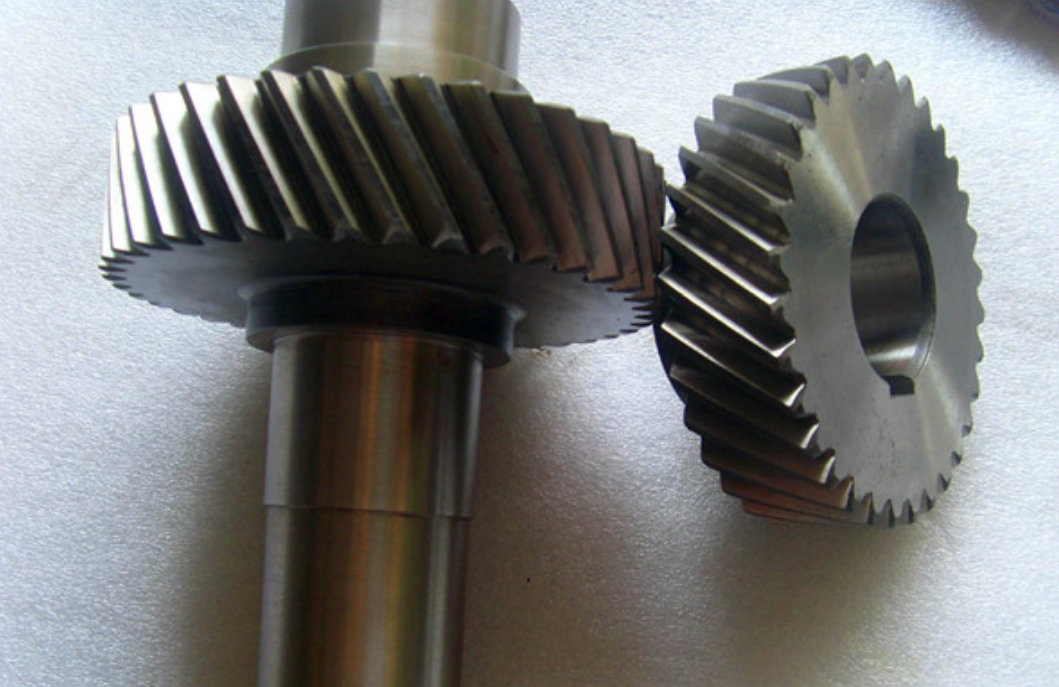
This inherent error stems from the kinematic deviation between the standard helical motion and the modified grinding path required for lead crowning. To address this limitation and push the boundaries of grinding accuracy for modified helical gears, this article delves into a comprehensive analysis. The core of our discussion is the establishment of a precise error model based on a thorough investigation of the error generation mechanism, followed by the proposition of an effective control strategy. We will employ a point-vector family digital enveloping method to model the instantaneous contact line between the grinding wheel and the helical gear. By assembling these contact lines along the planned grinding path, a simulated tooth surface is constructed, allowing for a detailed assessment of the principle error. We will dissect the error’s origin from three key perspectives: the spatial morphology of the contact line and the influences of the X-axis and C-axis modification motions. A validated mathematical model for calculating this principle error will be presented. Finally, to mitigate the error, a joint optimization methodology targeting both the grinding wheel installation angle and its profile will be introduced and its efficacy demonstrated through simulation.
Trajectory Planning for Form Grinding Helical Gears with Lead Modification
Kinematic Model of the Form Grinding Process
The process is typically executed on a five-axis CNC form grinding machine. The primary relative motion between the grinding wheel and the helical gear workpiece can be described using a spatial engagement coordinate system, consisting of four Cartesian frames: $O_f(x_f, y_f, z_f)$ (gear inertial frame), $O_g(x_g, y_g, z_g)$ (gear frame), $O_p(x_p, y_p, z_p)$ (wheel inertial frame), and $O_s(x_s, y_s, z_s)$ (wheel frame). The gear frame $O_g$ performs a screw motion relative to $O_f$, involving a rotation $\xi$ about the $z_f$-axis and a translation $z_m$ along it. The wheel frame $O_s$ rotates by an angle $\phi$ about the $y_p$-axis relative to $O_p$. The initial relationship between $O_f$ and $O_p$ is defined by the center distance $a$ and the wheel installation angle $\Gamma$. The coordinate transformation from the wheel frame to the gear inertial frame is given by:
$$
\mathbf{R}_i^{(f)} = \mathbf{M}_{fs} \mathbf{R}_i^{(s)}
$$
where the transformation matrix $\mathbf{M}_{fs}$ is:
$$
\mathbf{M}_{fs} = \begin{bmatrix}
\cos\phi & 0 & -\sin\phi & a \\
\sin\Gamma\sin\phi & \cos\Gamma & \sin\Gamma\cos\phi & 0 \\
\cos\Gamma\sin\phi & -\sin\Gamma & \cos\Gamma\cos\phi & 0 \\
0 & 0 & 0 & 1
\end{bmatrix}
$$
Planning the Grinding Path for Lead Modification
Lead modification, such as crowning, is achieved by superimposing additional motions onto the standard helical grinding path. Primarily, two axes are utilized: an additional radial movement of the wheel (X-axis) and an additional rotation of the gear about its own axis (C-axis). The X-axis motion introduces an equal amount of modification on both flanks of a tooth space, while the C-axis motion introduces opposite amounts. Their combination can realize arbitrary lead modification profiles.
The relationship between the X-axis additional displacement $\Delta x$ and the normal modification amount $\delta_n$ at a specific point is:
$$
\Delta x = \frac{\delta_n}{\cos\beta \sin\psi}
$$
where $\beta$ is the helix angle of the helical gear, and $\psi$ is the angle between the generating line of the gear profile at the pitch circle and the horizontal direction.
The relationship between the C-axis additional rotation $\Delta c$ (in radians) and the modification amount $\delta_n$ is:
$$
\Delta c = \frac{2\delta_n}{m_n z_g \cos\alpha_\tau}
$$
where $\alpha_\tau$ is the transverse pressure angle, $m_n$ is the normal module, and $z_g$ is the number of teeth.
For a parabolic lead crowning with total modification $\delta$ over face width $b$, the modification $\delta_n$ at a distance $l$ from the face width center is:
$$
\delta_n = \delta – \delta \left( \frac{2l}{b} \right)^2
$$
The required $\Delta x$ and $\Delta c$ are calculated based on the desired modification for the left and right flanks and then superimposed onto the standard grinding trajectory.
Calculation of the Tooth Surface Contact Line
Determining the instantaneous contact line between the grinding wheel and the modified helical gear flank is crucial for error analysis. We employ a point-vector family digital enveloping method, which avoids the complexity of solving traditional engagement equations.
- Discretization: The wheel axial profile is discretized into a series of points with associated normal vectors, forming point-vectors $(\mathbf{R}_i^{(s)})$. Each point-vector is rotated about the wheel axis ($y_s$) to create a trace, which is itself discretized. This forms a family of point-vectors on the wheel surface.
- Coordinate Transformation: The entire point-vector family is transformed into the gear inertial frame $O_f$ using $\mathbf{M}_{fs}$. For a grinding position with lead modification, the center distance $a$ in $\mathbf{M}_{fs}$ is replaced by $(a + \Delta x)$ and the subsequent gear rotation includes $\Delta c$.
- Helical Projection: The transformed point-vectors are projected onto a calculation plane (e.g., $z_g=0$) via a screw motion about the gear axis $z_g$. The projection uses the matrix $\mathbf{M}_t(\xi’)$, where $\xi’ = \xi + \Delta c$:
$$
\mathbf{R}_i^{(g)} = \mathbf{M}_t(\xi’) \mathbf{R}_i^{(f)}, \quad \mathbf{M}_t(\xi’) = \begin{bmatrix}
\cos\xi’ & \sin\xi’ & 0 & 0 \\
-\sin\xi’ & \cos\xi’ & 0 & 0 \\
0 & 0 & 1 & 0 \\
0 & 0 & 0 & 1
\end{bmatrix}
$$This results in a planar family of point-vectors for each original wheel profile point.
- Enveloping & Profile Generation: For each planar family, the point with the shortest directed distance to the gear body is identified as the envelope point (the gear profile point). Connecting these points yields the gear’s transverse profile at that axial section.
- Contact Line Reconstruction: Each envelope point is mapped back to its original spatial coordinates on the wheel surface before projection. The set of all these spatial contact points for a given grinding wheel position constitutes the instantaneous contact line between the wheel and the modified helical gear tooth flank.
Modeling the Principle Error in Form Grinding Modified Helical Gears
Tooth Surface Simulation and Error Evaluation
By calculating the contact line at numerous positions along the planned grinding path and combining them, a simulated ground tooth surface of the lead-modified helical gear is constructed. The accuracy is evaluated by extracting transverse profiles from this simulated surface and comparing them to the ideal modified flank geometry. A typical evaluation involves extracting profiles at several sections along the face width and quantifying the profile slope deviation $f_{H\alpha}$.
Consider a helical gear with the parameters and a parabolic lead crowning as specified in the table below:
| Category | Parameter | Value |
|---|---|---|
| Helical Gear | Normal Module $m_n$ (mm) | 3 |
| Number of Teeth $z_g$ | 70 | |
| Helix Angle $\beta$ (°) | 20 | |
| Normal Pressure Angle $\alpha_n$ (°) | 20 | |
| Face Width $b$ (mm) | 40 | |
| Lead Crowning Amount $\delta$ (μm) | 20 | |
| Grinding Wheel | Tip Diameter $d_w$ (mm) | 231.5116 |
| Wheel Width $b_w$ (mm) | 32 | |
| Installation Angle $\Gamma$ (°) | 20 | |
| Machine Setting | Center Distance $a$ (mm) | 227.4945 |
Simulation results for the right flank typically show that the profile error is predominantly a slope deviation. The error distribution across the face width often reveals a twisting pattern: the profile at one end of the helical gear may have a negative slope error, the profile at the center may have a positive error, and the profile at the opposite end may have a positive error, resulting in a significant total twist error (e.g., 24.7 μm in one case). This twist is the manifestation of the principle error inherent to the process when grinding a lead-modified helical gear with a fixed wheel profile and standard kinematic adjustments.
Mechanism Analysis and Mathematical Modeling of Principle Error
The principle error originates from two primary sources when grinding a lead-modified helical gear: the spatial morphology of the contact line and the effect of the X-axis modification motion. The C-axis motion has a negligible effect on slope error.
1. Error Induced by Contact Line Morphology
The contact line is a spatial curve. When grinding a specific transverse profile (e.g., at one end of the gear), different points on this profile (tip, pitch, root) are generated by different contact lines located at different axial positions along the helical gear. At each axial position, the lead modification amount $\delta_n$ is different. Therefore, the effective modification applied varies across the profile height, causing a profile slope error.
Let $L_z$ be the axial length (height) of the contact line on the helical gear flank. Let $L_a$ and $L_f$ be the portions of this length corresponding to the profile segments from the pitch point to the tip and root, respectively. Let $g(a)$, $g(r)$, and $g(f)$ represent the lead modification amounts at the axial positions corresponding to the tip, pitch, and root contact lines. The total profile slope deviation $f_{Hr}$ and its components at the tip $f_{Ha}$ and root $f_{Hf}$ for a profile at one end can be modeled as:
$$
\begin{aligned}
f_{Hr} &= g(a) – g(f) \\
f_{Ha} &= g(a) – g(r) \\
f_{Hf} &= g(r) – g(f)
\end{aligned}
$$
For parabolic crowning, if the profile is at a distance $d$ from the face width center, these modification amounts are:
$$
\begin{aligned}
g(a) &= \delta – \delta \left( \frac{2(d \pm L_a)}{b} \right)^2 \\
g(r) &= \delta – \delta \left( \frac{2d}{b} \right)^2 \\
g(f) &= \delta – \delta \left( \frac{2(d \mp L_f)}{b} \right)^2
\end{aligned}
$$
The sign depends on which end of the helical gear is being considered. The error is directly proportional to the contact line height $L_z$. Minimizing $L_z$ is a key to reducing this error component.
2. Error Induced by X-axis Additional Motion
The X-axis motion $\Delta x$ changes the effective center distance. For an involute profile, a change in center distance does not alter the profile shape but translates it along the line of action. However, because the pressure angle varies from the root to the tip of an involute helical gear, the normal direction translation $\Delta x_n$ at different points is not equal for a given radial motion $\Delta x$.
The relationship between the required profile modification $\Delta x_r$ (in the transverse plane) and the machine X-axis motion $\Delta x$ is $\Delta x_r = \Delta x \cos\beta \sin\psi$. The normal direction displacements at the tip and root are:
$$
\begin{aligned}
\Delta x_a &= \Delta x \sin\alpha_a \\
\Delta x_f &= \Delta x \sin\alpha_f
\end{aligned}
$$
where $\alpha_a$ and $\alpha_f$ are the angles between the profile normal and the horizontal at the tip and root, respectively. Consequently, the X-axis motion induces a profile slope error:
$$
f_{Hr} = \Delta x_a – \Delta x_f = \Delta x (\sin\alpha_a – \sin\alpha_f)
$$
This error is inherent to the involute geometry of the helical gear and the radial modification strategy.
3. Error Induced by C-axis Additional Motion
The C-axis rotation $\Delta c$ essentially rotates the entire transverse profile. The tangential displacements at the tip and root are:
$$
\begin{aligned}
\Delta x_a &= r_a \Delta c \\
\Delta x_f &= r_f \Delta c
\end{aligned}
$$
where $r_a$ and $r_f$ are the tip and root radii. The resulting slope error is:
$$
f_{Hr} = \Delta x_a – \Delta x_f = \Delta c (r_a – r_f)
$$
Since the difference $(r_a – r_f)$ is relatively small (twice the addendum), this component is usually minor compared to the others.
The following table summarizes the key factors and equations for the principle error components in form grinding a lead-modified helical gear.
| Error Source | Main Cause | Governing Equation for Slope Error $f_{Hr}$ | Key Influencing Factor |
|---|---|---|---|
| Contact Line Morphology | Spatial height of contact line over which variable modification is integrated. | $f_{Hr} = g(a) – g(f)$ $g(a), g(f)$ from crowning function. |
Contact line axial length $L_z$. |
| X-axis Motion | Variable normal displacement due to changing pressure angle along the involute profile of the helical gear. | $f_{Hr} = \Delta x (\sin\alpha_a – \sin\alpha_f)$ | Difference in pressure angles ($\alpha_a – \alpha_f$). |
| C-axis Motion | Different tangential displacement at tip and root due to rotation. | $f_{Hr} = \Delta c (r_a – r_f)$ | Total tooth depth ($r_a – r_f$). |
Principle Error Control Method and Validation
Based on the error mechanism analysis, a two-stage control strategy is proposed to minimize the principle error when form grinding a lead-modified helical gear.
1. Controlling Error from Contact Line Morphology
The goal is to minimize the axial height $L_z$ of the contact line. This can be achieved by optimizing the grinding wheel installation angle $\Gamma$. For a standard helical gear, the nominal $\Gamma$ equals the helix angle $\beta$. However, a slight deviation from this nominal angle can significantly shorten the contact line. An optimization search within a feasible range (e.g., $\beta \pm 2.5^\circ$) is performed. For each candidate $\Gamma$, the contact line is calculated, and its axial projection length $L_z$ is determined. The optimal angle $\Gamma_{opt}$ is the one that yields the minimum $L_z$. For the example helical gear with $\beta=20^\circ$, the optimal angle was found to be $\Gamma_{opt} \approx 17.96^\circ$, significantly reducing $L_z$ and thus the associated error component.
2. Controlling Error from X-axis Motion via Wheel Profile Optimization
To address the residual error (primarily from the X-axis effect) after contact line optimization, the grinding wheel profile itself is optimized. The ideal wheel profile for grinding a perfect lead-modified helical gear varies along the face width. A compensation profile is derived.
- Calculate the required wheel profile for multiple (e.g., 21) transverse sections along the face width of the target helical gear using the digital enveloping method in reverse. This yields a point cloud of wheel profiles.
- For each discrete point on the gear profile, there is a corresponding set of points (a “cloud”) on the candidate wheel profiles. The optimal wheel point is selected from this cloud using an error-averaging criterion. Let the coordinates of points in one cloud be $[x(i), y(i)]$. Identify the feature points with maximum and minimum x-coordinates: $(x_1, y_1)$ where $x_1 = \max(x(i))$, and $(x_2, y_2)$ where $x_2 = \min(x(i))$.
- The optimal wheel profile point $(x_n, y_n)$ is the midpoint between these two extremes:
$$
\begin{aligned}
x_n &= (x_1 + x_2) / 2 \\
y_n &= (y_1 + y_2) / 2
\end{aligned}
$$ - Repeat for all gear profile points, then fit a smooth curve through the resulting optimal points $(x_n, y_n)$ to obtain the compensated grinding wheel profile.
3. Simulation Validation and Results
The effectiveness of the joint optimization is validated using the helical gear parameters from Table 1.
Stage 1 – Installation Angle Optimization: Setting $\Gamma = 17.96^\circ$ dramatically reduces the twisting error. Simulation shows the profile slope errors at the two ends become very small (e.g., -0.49 μm and 0.57 μm), but a residual error remains at the face width center (e.g., 8.2 μm). This confirms that the contact-line-induced error is largely eliminated, leaving the X-axis-motion-induced error as the dominant contributor.
Stage 2 – Wheel Profile Optimization: Using the optimized $\Gamma$ and the recalculated compensated wheel profile, the grinding simulation is repeated. The results show a further significant reduction in the maximum profile error across the entire flank of the helical gear. For the example, the maximum error is reduced from 12.4 μm (with standard settings) to approximately 4.43 μm after the joint optimization—a reduction of about 64%. The residual error is more uniformly distributed.
| Condition | Max Profile Error (μm) | Twist Error (μm) | Primary Error Source |
|---|---|---|---|
| Standard Grinding ($\Gamma = \beta$) | 12.4 | 24.7 | Contact Line Morphology & X-axis Motion |
| After $\Gamma$ Optimization ($\Gamma = 17.96^\circ$) | 8.2 | ~1.1 | X-axis Motion |
| After Joint ($\Gamma$ & Profile) Optimization | 4.43 | ~0.75 | Residual/Uncorrected Components |
Conclusion
The form grinding of helical gears with lead modification inherently introduces a principle error on the tooth flank, manifesting primarily as a profile slope deviation and surface twist. This analysis has systematically deconstructed the origin of this error, identifying the spatial morphology of the grinding contact line and the kinematic effect of the X-axis modification motion as the two dominant contributors for a helical gear. A mathematical model quantifying these error components has been established. Crucially, a two-stage error control methodology has been proposed and validated. The first stage optimizes the grinding wheel installation angle to minimize the axial length of the contact line, effectively neutralizing the error stemming from its morphology. The second stage employs an error-averaging algorithm to optimize the grinding wheel profile itself, compensating for the residual error induced by the X-axis motion. Simulation results demonstrate that this joint optimization strategy can reduce the maximum profile error significantly, by approximately 64% in the presented case, thereby greatly enhancing the precision attainable in the form grinding of lead-modified helical gears. This approach provides a clear theoretical foundation and a practical tool for achieving high-precision manufacturing of advanced helical gear components.