
In the context of semi-suspended electric locomotive drive systems, the interface between the driving gear shaft and the bearing has been identified as a critical area prone to fretting wear. This phenomenon, characterized by relative oscillatory motion with amplitudes on the micrometer scale, often leads to significant damage and premature failure of components. Through a combination of experimental analysis and numerical simulation, this study investigates the influence of interference fit on fretting wear behavior, with a particular focus on the driving gear shaft. The primary objective is to determine an optimal interference range that minimizes wear while ensuring the operational integrity of the bearing system. Finite element analysis (FEA) models are developed to simulate the contact mechanics and wear patterns under varying interference conditions, and theoretical calculations are employed to validate the results. Additionally, the effects of temperature variations on bearing clearance are examined to provide a comprehensive understanding of the system’s behavior under real-world operating conditions. The findings offer valuable insights for optimizing the design of drive assemblies in electric locomotives, ultimately enhancing reliability and service life.
Fretting wear is a common issue in mechanical systems subjected to vibrational or cyclic loading, and it is especially prevalent in press-fitted assemblies such as the driving gear shaft and bearing interface. The driving gear shaft, which transmits torque and supports rotational motion, experiences complex stress distributions during operation. When the interference between the gear shaft and the bearing inner ring is insufficient, micro-slip occurs at the contact surface, leading to fretting wear. This wear manifests as surface damage, including pits, cracks, and material transfer, which can compromise the structural integrity of the gear shaft and lead to catastrophic failures. In this study, macroscopic and microscopic examinations of damaged gear shaft specimens revealed distinct wear bands with features indicative of fretting, such as localized deformation and oxidative wear. Energy-dispersive X-ray spectroscopy (EDS) analysis further confirmed material transfer between the gear shaft and the bearing inner ring, underscoring the mutual nature of the wear process.
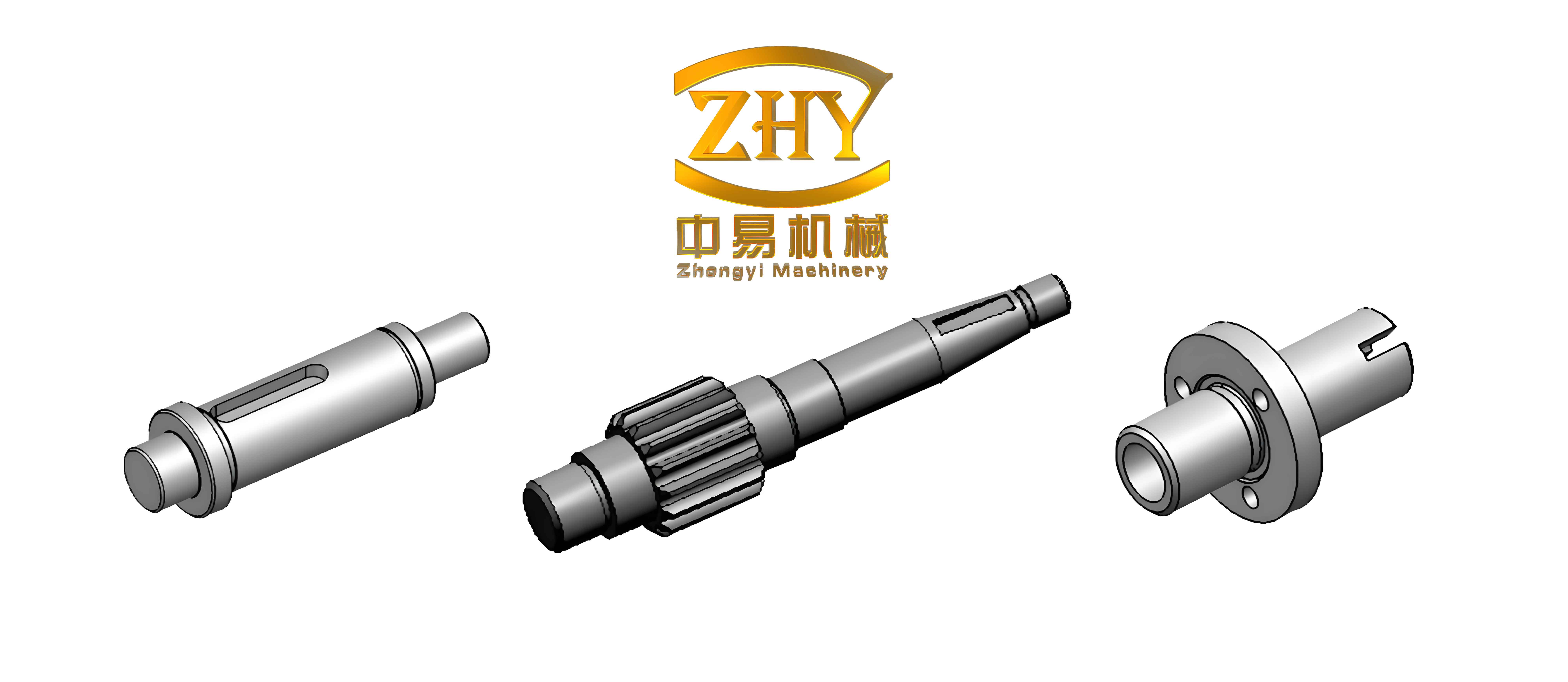
The driving gear shaft is subjected to various loads, including bending stresses from gear meshing and torsional stresses from coupling elements. The interaction between the gear shaft and the bearing is critical, as any relative motion can exacerbate wear. The initial design specifications for the gear shaft and bearing interference fit ranged from 0.023 mm to 0.065 mm. However, analysis of field data showed that gear shafts with interference values at the lower end of this range (0.023–0.040 mm) exhibited severe fretting wear, whereas those with higher interference (0.040–0.065 mm) remained relatively undamaged. This correlation suggests that increasing the interference fit can mitigate fretting wear by reducing micro-slip at the interface. To quantify this effect, a theoretical framework based on elastic thick-walled cylinder theory is applied, and finite element simulations are conducted to model the stress and displacement fields under different interference conditions.
The deformation of the bearing inner ring due to interference fit can be described by the following equation, which accounts for the geometry and material properties of the assembly:
$$ \Delta_s = \frac{2I}{D_s} \left[ \frac{ \left( \frac{D_s}{D_1} \right)^2 – 1 }{ \left( \frac{D_s}{D_1} \right)^2 + 1 } + \nu_b \right] + \frac{E_b}{E_s} \left[ \frac{ \left( \frac{D_s}{D_1} \right)^2 + 1 }{ \left( \frac{D_s}{D_1} \right)^2 – 1 } – \nu_b \right] $$
where \( \Delta_s \) is the deformation of the bearing inner ring, \( I \) is the interference magnitude, \( D_s \) is the outer diameter of the bearing inner ring, \( D_1 \) is the inner diameter of the bearing inner ring, \( \nu_b \) is the Poisson’s ratio of the bearing material, \( E_b \) is the Young’s modulus of the bearing material, and \( E_s \) is the Young’s modulus of the gear shaft material. For a nominal interference increase of 0.06 mm, this equation yields a deformation of approximately 0.0293 mm, indicating a reduction in bearing clearance.
To further investigate the impact of interference on the driving gear shaft, finite element models were developed using ANSYS software. The models simplified the gear shaft and bearing assembly to focus on the critical contact regions, with mesh sizes of 3 mm to balance computational efficiency and accuracy. The simulations considered interference values ranging from the original design range (0.023–0.065 mm) to an optimized range (0.040–0.082 mm). The results demonstrated that higher interference values significantly reduced the relative displacement at the interface, thereby decreasing the propensity for fretting wear. The table below summarizes the key parameters used in the analysis:
| Parameter | Value |
|---|---|
| Bearing Outer Ring Outer Diameter (D₂) [mm] | 200 |
| Bearing Inner Ring Inner Diameter (D₁) [mm] | 110 |
| Bearing Thermal Expansion Coefficient (τ_b) [10⁻⁶/°C] | 12.5 |
| Gear Shaft Thermal Expansion Coefficient (τ_g) [10⁻⁶/°C] | 11.6 |
| Bearing Young’s Modulus (E_b) [MPa] | 208,000 |
| Gear Shaft Young’s Modulus (E_s) [MPa] | 210,000 |
| Bearing Poisson’s Ratio (ν_b) | 0.3 |
| Gear Shaft Poisson’s Ratio (ν_s) | 0.3 |
| Interference Increase (I) [mm] | 0.06 |
| Bearing Inner Ring Outer Surface Diameter (D_s) [mm] | 132.5 |
| Bearing Outer Ring Inner Diameter (D_h) [mm] | 180.5 |
| Ambient Temperature (T_a) [°C] | 20 |
| Operating Temperature (T_o) [°C] | 90 |
| Gear Shaft Diameter (d₁) [mm] | 110 |
| Housing Thermal Expansion Coefficient (τ_h) [10⁻⁶/°C] | 11.18 |
| Bearing Roller Diameter (D) [mm] | 24 |
The finite element analysis revealed that for an interference increase of 0.06 mm, the maximum deformation of the bearing inner ring outer surface was 0.029 mm, which aligns closely with the theoretical value of 0.0293 mm (error of 1.024%). This consistency validates the accuracy of the simulation approach. Moreover, the simulations highlighted that increasing the interference fit within the proposed range (0.040–0.082 mm) effectively reduces micro-slip amplitudes, thereby mitigating fretting wear on the gear shaft without compromising the bearing’s functionality.
Temperature variations during operation also play a crucial role in the behavior of the gear shaft and bearing assembly. As the system heats up, differential thermal expansion between components can alter the interference fit and bearing clearance. The change in bearing clearance due to temperature rise is given by:
$$ \Delta_T = \tau_b \left[ D_h (T_o – T_a) – D_s (T_o – T_a) \right] $$
where \( \Delta_T \) is the thermal deformation, \( \tau_b \) is the bearing thermal expansion coefficient, \( T_o \) is the operating temperature, \( T_a \) is the ambient temperature, \( D_h \) is the bearing outer ring inner diameter, and \( D_s \) is the bearing inner ring outer surface diameter. For an operating temperature of 90°C and ambient temperature of 20°C, this equation yields a clearance change of 0.042 mm. Additionally, the expansion of bearing rollers due to temperature is calculated as:
$$ \Delta_T = \tau_b D (T_o – T_a) $$
where \( D \) is the roller diameter. This results in a roller expansion of 0.021 mm. When combined with the interference effects, the total deformation of the bearing inner ring outer surface due to both interference and temperature is 0.142 mm, while the bearing outer ring inner surface expands by 0.140 mm. The net change in bearing clearance is therefore -0.019 mm, indicating a slight reduction that remains within the acceptable operational range (0.04–0.15 mm) specified by manufacturers.
To validate these findings, a full-scale experimental test was conducted on a locomotive drive assembly with a gear shaft and bearing pair selected to achieve an interference fit of 0.060–0.065 mm. The assembly underwent rigorous running-in and line tests, simulating actual operating conditions. After accumulating 1 million kilometers of service, the drive assembly was disassembled and inspected. The results showed no abnormal wear on the gear shaft, with surface conditions and dimensions meeting all specifications. This experimental confirmation underscores the practicality of the proposed interference range for reducing fretting wear in driving gear shaft applications.
In conclusion, this study demonstrates that optimizing the interference fit between the driving gear shaft and the bearing is an effective strategy for mitigating fretting wear. Through theoretical analysis, finite element simulation, and experimental validation, it is established that an interference range of 0.040–0.082 mm significantly reduces micro-slip and wear while maintaining bearing performance. The integration of thermal effects into the analysis ensures that the recommendations are robust under real-world operating conditions. These insights provide a foundation for enhancing the design and maintenance of electric locomotive drive systems, with potential applications in other industries where fretting wear is a concern. Future work could explore the effects of surface treatments or lubricants on further extending the service life of the gear shaft and bearing assemblies.
The driving gear shaft is a critical component in power transmission systems, and its durability directly impacts the overall reliability of the machinery. Fretting wear, if left unaddressed, can lead to premature failure and increased maintenance costs. By systematically analyzing the relationship between interference fit and wear, this research offers a proactive approach to design optimization. The use of advanced simulation tools like ANSYS allows for precise modeling of complex interactions, enabling engineers to predict and prevent potential issues before they manifest in the field. As technology advances, the integration of real-time monitoring and adaptive control systems could further enhance the longevity of gear shaft assemblies, paving the way for more efficient and sustainable transportation solutions.
In summary, the key to minimizing fretting wear in the driving gear shaft lies in controlling the interference fit with the bearing. The proposed range of 0.040–0.082 mm, derived from rigorous analysis and testing, provides a practical guideline for manufacturers and maintenance teams. By adhering to these specifications, the lifecycle of drive components can be extended, reducing downtime and operational costs. This study not only addresses a specific engineering challenge but also contributes to the broader understanding of tribological phenomena in mechanical systems. The methodologies employed here can be adapted to other applications, making this work a valuable reference for researchers and practitioners alike.