
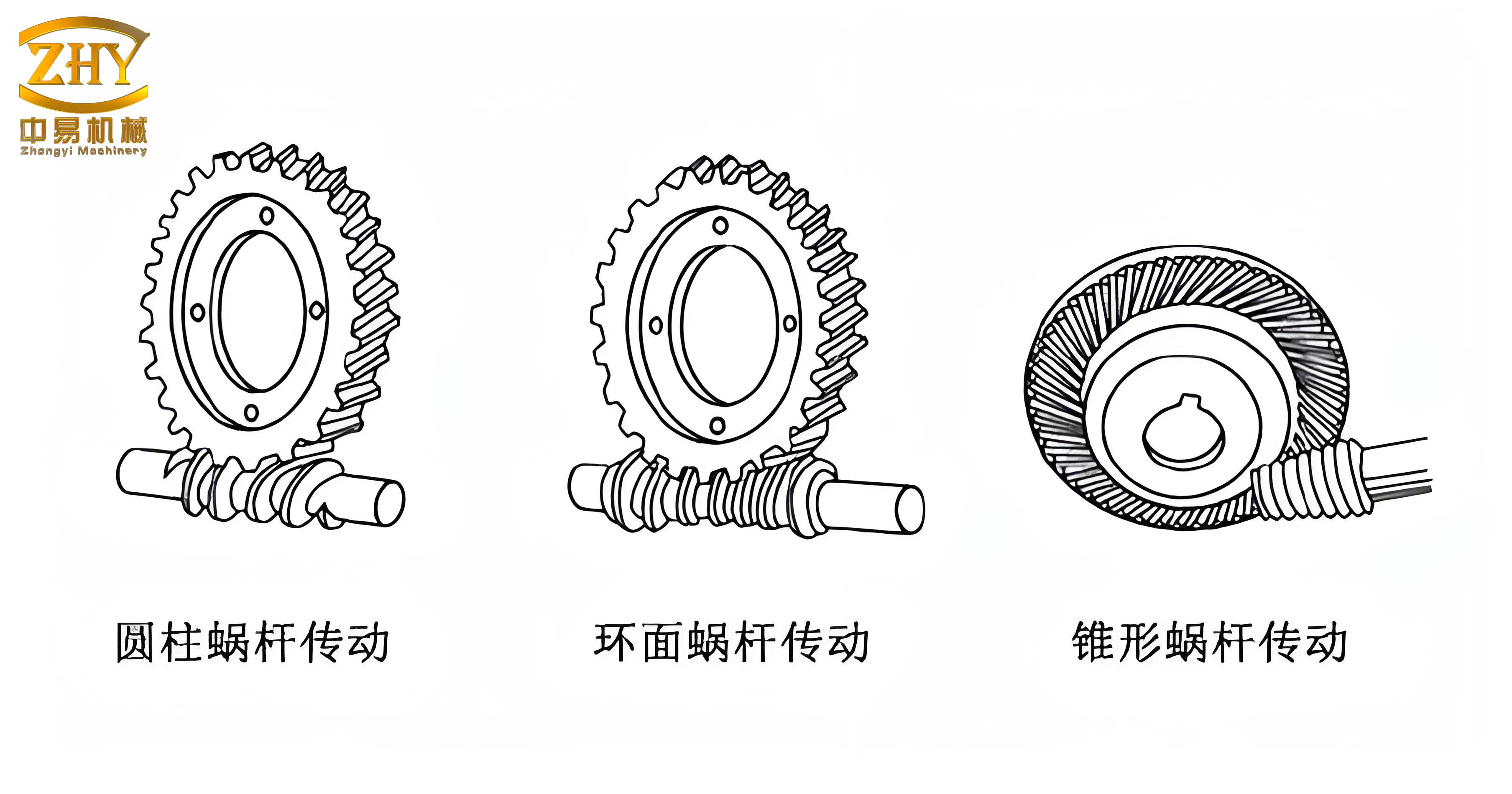
In the field of mechanical engineering, the lubrication of screw gear systems has always been a critical area of research due to their unique operational characteristics. Screw gears, often consisting of bronze or brass worms paired with steel worm wheels, are widely used in applications requiring high torque transmission, compact design, and smooth operation. However, the sliding friction-dominated contact in screw gear assemblies poses significant challenges, including high contact pressures, substantial sliding velocities, and difficulty in forming effective oil wedges. This necessitates lubricants that exhibit exceptional oiliness, viscosity-temperature performance, thermal oxidation stability, and most importantly, extreme pressure (EP) and anti-wear properties. In our investigations, we have focused on borate-based additives as a promising solution for enhancing screw gear lubricants, given their multifunctional capabilities.
Our research began with an exploration of borate EP anti-wear agents, which are synthesized through a specific process known as the “potassium hydroxide-aqueous solution method.” This method involves reacting high-base petroleum sulfonate calcium, polyisobutylene succinimide, and boric acid to produce colloidal borate dispersions in oil. The chemical reactions can be summarized as follows. First, the alkaline component in the sulfonate reacts with boric acid to form calcium tetraborate: $$4H_3BO_3 + CaCO_3 \rightarrow CaB_4O_7 + CO_2 + 6H_2O.$$ Subsequently, calcium tetraborate reacts with potassium hydroxide solution to yield a mixture of potassium metaborate and calcium metaborate: $$CaB_4O_7 + 2KOH \rightarrow 2KBO_2 + Ca(BO_2)_2 + H_2O.$$ Through centrifugal separation to remove larger particles, the amorphous borate particles, with average diameters less than 0.1 μm, are uniformly dispersed in the oil with the aid of dispersants, forming a stable colloidal solution. This synthesis process is crucial for ensuring the effectiveness of borates in screw gear applications, as the fine particle size facilitates physical adsorption on metal surfaces.
The performance characteristics of borate additives are remarkable, particularly for screw gear systems. We conducted extensive testing to evaluate their EP and anti-wear properties. When added to base oils at a boron content of 0.6%, borates demonstrated superior EP performance compared to traditional sulfur-phosphorus (S-P) and lead-sulfur (Pb-S) type lubricants. For instance, the film strength of borate-containing oils was found to be three times that of Pb-S oils and twice that of S-P oils. This can be quantified using the load-carrying capacity parameter, often expressed in terms of the Four-Ball Wear Test results. Let $d_{292}^{60}$ represent the wear scar diameter in mm after 60 minutes at 292 N load; borate-based oils typically show significantly lower values, indicating enhanced anti-wear performance. Moreover, borates exhibit excellent oxidation stability, which is vital for the longevity of screw gear lubricants. In thermal oxidation tests at 163°C for 50 hours, borate-containing oils showed minimal changes, as summarized in Table 1.
| Item | Thermal Oxidation Stability (163°C, 50 h) | Copper Catalyst Weight Loss / % | Benzene Insolubles / % | Viscosity Increase at 100°C / % |
|---|---|---|---|---|
| S-P Type Oil | 5.700 | 0.34 | 14.8 | |
| Borate-Containing Oil | 0.018 | 0.15 | 4.9 |
In addition to EP and oxidation stability, borates offer outstanding anti-corrosion and anti-rust properties. They show no corrosive effects on copper at high temperatures or on steel at low temperatures, making them ideal for screw gear systems where mixed metals are present. The mechanism behind borate’s action differs from classical EP theories, which often involve chemical film formation through reactions with metal surfaces. Instead, we align with the deposition film theory proposed by researchers like J.H. Adams. The colloidal borate particles, due to their sub-micron size, undergo physical adsorption on sliding surfaces under the influence of generated electrical charges, forming an elastic deposition film. This film is not uniform but preferentially forms on contact areas during screw gear meshing, as confirmed by electron microscopy studies at magnifications up to 96,000×. The film’s elasticity helps in cushioning impacts and reducing friction, which is critical for the sliding contacts in screw gear operations.
To mathematically model the friction reduction, we can consider the coefficient of friction $\mu$ in screw gear systems. With borate additives, $\mu$ is often reduced due to the deposition film. Experimental data from tribological tests show that borate-based oils achieve lower friction coefficients compared to conventional lubricants. For example, in tests using a copper-steel friction pair, borate-containing formulations yielded $\mu$ values as low as 0.037, whereas base oils without additives had $\mu$ around 0.128. This reduction can be expressed as: $$\Delta \mu = \mu_{\text{base}} – \mu_{\text{borate}},$$ where $\Delta \mu$ represents the improvement in friction reduction. Furthermore, the load-carrying capacity can be related to the EP properties through the Hertzian contact stress model for screw gear teeth: $$\sigma_H = \sqrt{\frac{F_n E^*}{\pi R}},$$ where $\sigma_H$ is the maximum contact stress, $F_n$ is the normal load, $E^*$ is the equivalent elastic modulus, and $R$ is the effective radius of curvature. Borate deposition films help in distributing these stresses, thereby preventing scuffing and wear.
Moving to the practical application in screw gear lubricants, our development focused on formulating borate-based EP worm gear oils. We used base oils produced through solvent de-asphalting, solvent refining, solvent dewaxing, and clay supplementary refining processes, specifically HVI120BS and HVI650 grades. The primary challenge was selecting appropriate oiliness agents and addressing foam stability issues inherent to borate additives. Oiliness agents are essential for reducing friction in screw gear systems, where sliding motion predominates. We evaluated several commercial oiliness agents, including organic borates, phosphate esters, esters, and oleic acid epoxy esters, based on their performance in Four-Ball tests and friction coefficient measurements. The results are summarized in Table 2.
| Agent ID | Four-Ball Wear $d_{292}^{60}$ / mm | Friction Coefficient $f$ (Terry Oiliness Machine) | Friction Coefficient $\mu$ (Copper-Steel Pair) |
|---|---|---|---|
| Base Oil | 0.832 | 0.128 | – |
| Oiliness Agent 1 | 0.728 | 0.112 | 0.143 |
| Oiliness Agent 2 | 0.399 | 0.108 | – |
| Oiliness Agent 3 | 0.364 | 0.100 | 0.099 |
| Oiliness Agent 4 | 0.624 | 0.110 | 0.184 |
| Oiliness Agent 5 | 0.364 | 0.102 | 0.037 |
| Oiliness Agent 6 | 0.728 | 0.108 | – |
Given the high alkalinity of borates, we prioritized oiliness agents with low neutralization values to avoid precipitation. Agent 3 and Agent 5 showed promising results for copper-steel friction reduction, but Agent 3 also exhibited a synergistic effect on foam suppression, making it the preferred choice for our screw gear oil formulations. Foam formation is a significant concern with borate additives due to the presence of ionic and non-ionic surfactants used in their production. These surfactants lower surface tension and stabilize foam, which can lead to oil overflow in screw gear reducers. We tested various anti-foam agents, such as T901 and T902, but found that combining borates with Agent 3 effectively resolved foam issues. This is attributed to the adsorption of surfactants by unsaturated olefins in Agent 3, increasing surface tension and enhancing anti-foam performance. The foam test results are detailed in Table 3.
| Additive System | Anti-Foam Agent / ppm | Addition Method | Foam Tendency / mL-mL (24°C-93°C-Post 24°C) |
|---|---|---|---|
| Borate Composite | T901 50 | A | 560/450-600/200-500/400 |
| Borate Composite | T901 50 | B | 500/350-550/25-450/300 |
| Borate Composite | T902 50 | A | 500/370-290/0-450/30 |
| Borate Composite | T902 50, T901 30 | A | 430/300-80/20-290/210 |
| Borate + Agent 5 (0.5%) | T901 50 | A | 420/300-600/130-500/360 |
| Borate + Agent 5 (0.5%) | T901 50 | B | 350/250-430/10-470/380 |
| Borate + Agent 5 (0.5%) | T902 50 | A | 350/250-500/120-470/300 |
| Borate + Agent 5 (0.5%) | T902 50, T901 30 | A | 380/295-460/0-480/320 |
| Borate + Agent 3 | T901 50 | A | 90/50-190/0-70/30 |
After optimizing the formulation, we developed borate-based EP screw gear oils in viscosity grades such as 220 and 320. These oils underwent comprehensive quality assessments, including physical-chemical tests and bench evaluations using screw gear rigs. The results, compared against military specification MIL-L-18486B(OS) and contractual requirements, are presented in Table 4. All parameters met the standards, with excellent performance in viscosity index, pour point, flash point, corrosion protection, rust prevention, and EP properties. For instance, the Four-Ball EP indices exceeded 392 N, and screw gear efficiency tests showed values above 73%, confirming the suitability for high-load applications. The oils also demonstrated low noise and temperature rise in screw gear reducers, which are critical for operational efficiency.
| Parameter | Viscosity Grade N220 | Viscosity Grade N320 | MIL-L-18486B(OS) Specification | Contractual Requirements (N220/N320) | Test Method |
|---|---|---|---|---|---|
| Kinematic Viscosity at 40°C / mm²·s⁻¹ | 218.7 | 314.7 | 198-242 / 288-352 | 198-242 / 288-352 | GB/T 265 |
| Viscosity Index, ≥ | 103 | 105 | 120 | 100 | GB/T 2541 |
| Pour Point, ≤ / °C | -13 | -15.7 | -12.2 | -12.2 | GB/T 3535 |
| Flash Point, ≥ / °C | 274 | 295.9 | 177 | 180 | GB/T 267 |
| Sulfur Content, ≤ / % | 0.45 | 0.76 | 1.25 | 1.25 | GB/T 267 |
| Water Content, ≤ / % | None | None | 0.0 | Trace | GB/T 260 |
| Neutralization Value, ≤ / mg KOH·g⁻¹ | 0.04 | 0.03 | 0.30 | 0.30 | GB/T 4945 |
| Saponification Value, ≤ / mg KOH·g⁻¹ | 12.21 | 10.31 | 25.0 | 25.0 | GB/T 8021 |
| Copper Strip Corrosion (100°C), ≤ | 1a | 1a | Slight tarnish | 1级 | GB/T 5096 |
| Rust Prevention (D665B) | No rust | No rust | No rust | No rust | – |
| Four-Ball EP Index, ≥ / N | 418 | 447 | 392 | 392 | GB/T 3142 |
| Foam Performance / mL-mL (24°C-93°C-Post 24°C) | 40/50-15/0-80/30 | 50/30-0/0-30/20 | 300/100-25/25-300/100 | – | GB/T 12579 |
| Screw Gear Efficiency, ≥ / % | 73.5 | 73.0 | – | 74.0 / 73.0 | Bench Test |
| Screw Gear Scuffing Load, ≥ / N·m | 770 | 680 | – | 680 | Bench Test |
In practical applications, our borate-based screw gear oils have been successfully deployed in various industrial settings, particularly in elevator traction machines in South China. Long-term usage over 3600 hours in screw gear reducers, such as those in port trailer rear axles, demonstrated significant advantages: high load-carrying capacity, excellent anti-wear and anti-scuffing performance, superior rust and corrosion protection, thermal stability, low noise, and reduced temperature rise. Post-operation inspections revealed clean gear surfaces with no signs of pitting, fatigue wear, or corrosion, and the oil properties remained stable without significant degradation. This underscores the effectiveness of borates in extending the service life of screw gear systems.
However, we acknowledge a limitation of borate additives: sensitivity to water ingress. If water content exceeds 5% in the lubricant system, borates can crystallize out, forming hard particles that increase friction and lead to additive failure. Our tests indicate that water content below 1% has negligible impact, while 1-3% allows continued use with caution. To mitigate this, we are researching improved dispersant systems and composite formulations with other EP agents to enhance water tolerance. This is crucial for screw gear applications in humid environments or where water contamination is possible.
From a theoretical perspective, the performance of borates in screw gear lubricants can be further analyzed through tribological models. The wear rate $W$ in sliding contacts can be expressed by the Archard equation: $$W = k \frac{F_n L}{H},$$ where $k$ is the wear coefficient, $F_n$ is the normal load, $L$ is the sliding distance, and $H$ is the hardness of the softer material. Borate deposition films reduce $k$ by providing a protective layer, thereby minimizing wear in screw gear teeth. Additionally, the film formation process can be described by adsorption kinetics, where the surface coverage $\theta$ of borate particles follows a Langmuir-type relation: $$\theta = \frac{K C}{1 + K C},$$ where $K$ is the adsorption equilibrium constant and $C$ is the concentration of borates in the oil. This model helps in optimizing additive concentrations for maximum performance in screw gear systems.
In conclusion, our research confirms that borates are a highly effective EP anti-wear additive for screw gear lubricants. Their unique synthesis process yields colloidal dispersions with exceptional properties, including high load-carrying capacity, oxidation stability, and corrosion protection. Through careful formulation with compatible oiliness agents and foam suppressants, we have developed borate-based screw gear oils that meet rigorous standards and perform reliably in real-world applications. The deposition film mechanism of borates offers a non-reactive, elastic barrier that reduces friction and wear in the sliding contacts characteristic of screw gear assemblies. While water sensitivity remains a challenge, ongoing efforts aim to enhance durability through composite additives. Overall, borates represent a versatile and environmentally friendly solution for advancing screw gear lubrication technology, contributing to improved efficiency and longevity in mechanical transmissions.
Future work will focus on exploring nano-borate composites and their synergistic effects with traditional additives, as well as developing predictive models for screw gear life extension using borate-enriched lubricants. We believe that continued innovation in this area will further solidify the role of borates in meeting the demanding requirements of modern screw gear systems across industries such as automotive, manufacturing, and robotics.