
In the mechanical industry, herringbone gears and pinions are widely used in gear reduction boxes subjected to heavy loads. Whether a herringbone gear can be hobbed depends not only on the specifications and capacity of the machine tool but also crucially on the dimensions of the gear’s undercut (or relief groove). The width of this undercut is a critical parameter in the hobbing process, as it is related to the hob diameter, depth of cut, workpiece helix angle, and the curvature radius of the addendum circle (related to the number of teeth). Determining the feasibility of hobbing and the required undercut dimensions is therefore a significant concern for both design and process engineers.
While various design manuals specify minimum widths for the relief groove when hobbing herringbone gears, such as in the old JB标准, and the current GB标准, several practical issues remain with these standards, especially with the advent of new high-strength materials that allow for more compact designs.
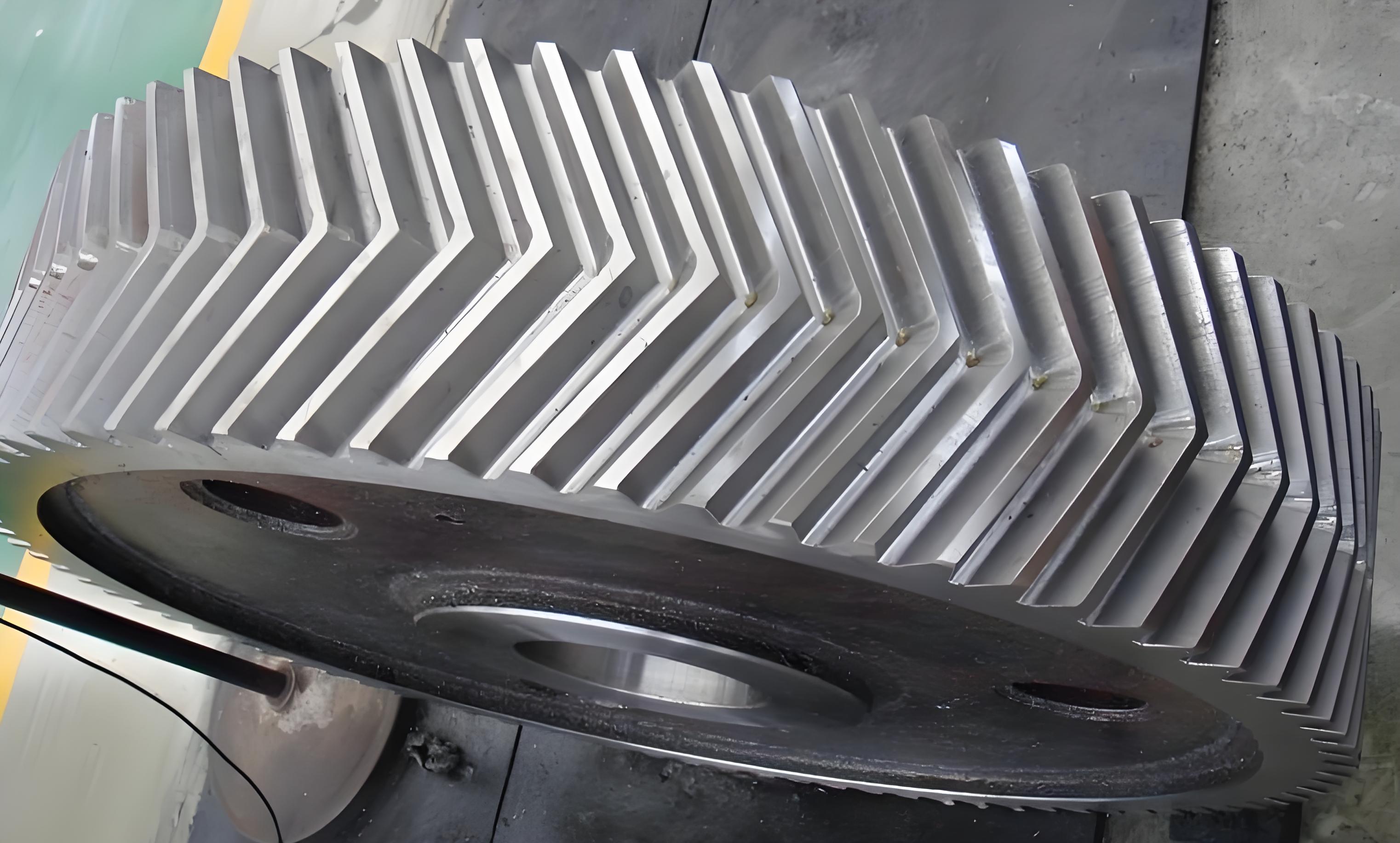
Table 1 summarizes the minimum undercut widths (B_min) from one common standard, showing the dependency on the module (m_n) and helix angle (β). However, this table has notable shortcomings:
- The values for B_min when β = 0° are arguably too small for practical hobbing setup and run-out.
- The standard does not specify which hob diameter standard (e.g., GB/T 6083, JB/T 3227) the values are based on. A larger hob diameter requires a greater approach and overtravel distance, thus a larger B_min. Newer and older standards sometimes list identical B_min values despite different standard hob dimensions being prevalent.
- The table does not account for the depth of cut, which varies with different gear standards (e.g., different addendum coefficients) and directly influences the required undercut.
- The relationship is given against the workpiece helix angle (β), not the hob setup angle (δ). The relative helical direction between the hob and the gear affects the required setup angle and, consequently, the minimum undercut width.
| Normal Module m_n | Helix Angle β | |||||
|---|---|---|---|---|---|---|
| 0° | 15° | 20° | 25° | 30° | ≥35° | |
| 2 to 3 | 10 | 12 | 14 | 16 | 18 | 21 |
| 3.5 to 4 | 12 | 14 | 16 | 18 | 20 | 24 |
| 4.5 to 5 | 14 | 16 | 18 | 20 | 22 | 26 |
| 5.5 to 6 | 16 | 18 | 20 | 22 | 24 | 28 |
| 7 to 8 | 18 | 20 | 22 | 24 | 26 | 31 |
| 9 to 10 | 20 | 22 | 24 | 26 | 28 | 34 |
As modern design trends push for smaller gearboxes with unchanged torque capacity, the designed undercut is often smaller than the standard values. The question arises: is the standard’s minimum undercut still valid, and can the herringbone gear still be hobbed? While precise formulas exist, they are often cumbersome for quick evaluation. In this article, I present a practical and approximate calculation method derived from the geometric relationships of the hobbing process.
Geometric Relationship and Approximate Calculation Method
Figure 1 illustrates the scenario when hobbing a herringbone gear. When hobbing a helical gear, the hob axis must be set at a specific installation angle (δ) relative to the gear axis to align the hob’s lead direction with the gear’s tooth direction.
- When the hob and gear have the same helical hand, the installation angle is: $$δ = |β – γ_h|$$
- When the hob and gear have opposite helical hands, the installation angle is: $$δ = |β + γ_h|$$
Where β is the gear helix angle and γ_h is the hob’s lead angle. For a single-thread hob, γ_h is small. As the number of teeth and helix angle increase, more hob teeth engage in cutting, distributed around the finishing teeth. A larger installation angle δ reduces the number of finishing teeth in contact, potentially requiring a longer hob. Therefore, the operator typically aligns the workpiece with the central portion of the hob.
The required undercut width is fundamentally the sum of the hob’s approach length (l_a), overtravel length (l_o), and additional safety margins. Calculating these lengths precisely is complex and depends on many factors. For urgent production needs, a simplified model focusing on the critical geometry is more practical.
The key limiting factor is preventing the hob from interfering with the opposite helical section’s addendum circle. We analyze the cross-section through the gear axis and a critical point Q on the lower section’s addendum (see conceptual Figure 1). The hob axis is tilted by angle δ, so its cross-section in the plane containing point Q is an ellipse. The semi-minor axis is the hob radius (R_h), and the semi-major axis is R_h / cosδ.
The approach distance l_a, from where the hob first contacts the tooth flank to the full depth position, can be derived from the ellipse equation at the point corresponding to the depth of cut (h). This distance l_a increases with the installation angle δ. From geometric analysis, the value of l_a is given by:
$$l_a = \sqrt{R_h^2 – (R_h – h)^2 \cdot \cos^2δ}$$
Where:
- R_h is the hob radius.
- h is the total depth of cut (from blank to root diameter).
- δ is the hob installation angle.
The critical condition for the minimum undercut width B_min occurs when the finishing tooth of the hob, starting at the top of the upper helical section, has just fully exited the bottom of that same section. At this moment, the entering end of the hob is at its maximum possible intrusion into the space of the lower helical section. To avoid collision with the addendum circle of the lower section at point Q’, we must consider the distance l_b from the exit point to the theoretical interference point Q’. This distance l_b is derived similarly, considering the geometry from the bottom of the cut in the upper section to the addendum of the lower section.
An approximate formula for the limiting undercut width B_lim (without safety margins) is found by combining l_a and l_b. Assuming the lower tooth is treated as a rack for a conservative estimate, the limiting width is:
$$B_{lim} = \sqrt{R_h^2 – (R_h – h)^2}$$
This simplified form arises from the trigonometric simplification when considering the worst-case path. In reality, the addendum circle’s curvature and common chamfering practices mean the hob may not actually contact point Q’.
For a practical and safe hobbing operation, additional lengths must be added to B_lim:
- Overtravel (l_o): The distance the hob continues past the theoretical exit point to ensure a clean, fully formed tooth. This depends on the helix angle β and hob diameter D_h.
- Additional Approach (Δl_a): A safety margin for initial engagement and setup.
Based on empirical data, these additional lengths can be approximated:
- For β ≤ 15°, l_o + Δl_a ≈ 3 * m_n (m_n is normal module).
- For 15° < β ≤ 25°, l_o + Δl_a ≈ 4 * m_n.
- For β > 25°, l_o + Δl_a ≈ 5 * m_n.
Therefore, the practical formula for the minimum undercut width B_min for a herringbone gear becomes:
$$B_{min} = B_{lim} + (l_o + Δl_a) = \sqrt{R_h^2 – (R_h – h)^2} + K \cdot m_n$$
Where K is 3, 4, or 5 as defined above.
The hob’s working length (L_w) must also be sufficient. According to gear hob design standards, the working length is typically L_w = π * m_n * 10, which is adequate for most cases. For special cases with very high tooth counts or large helix angles, a custom calculation is needed. For standard hobs (e.g., GB/T 6083), L_w ranges from ~80mm for m_n=6 to ~150mm for m_n=16. During cutting, the distance from the hob’s center to its end, often taken as L_w/2, should be greater than the calculated l_a to ensure the central finishing teeth are used. This gives a check: l_a < L_w / 2.
Using the common standard hob diameter (D_h = 100mm for many mid-range modules) and substituting into the formula, we get a very useful approximate calculation:
$$B_{min} \approx \sqrt{50^2 – (50 – h)^2} + K \cdot m_n$$
Where h is in mm. This method, based on my experience, often yields results 3-10mm smaller than the values listed in the GB standard, providing valuable space savings in compact herringbone gear designs without compromising manufacturability.
Production Example
Let’s validate the method with a practical example.
Gear Parameters:
- Normal Module, m_n = 10 mm
- Helix Angle, β = 30° (Right-Hand for one section, Left-Hand for the other)
- Pressure Angle, α_n = 20°
- Depth of cut, h ≈ 2.25 * m_n = 22.5 mm (typical for full-depth teeth).
Solution:
We plan to use a standard right-hand hob, D_h = 160 mm (R_h = 80 mm). Hobbing the right-hand section:
- Installation angle δ = |β – γ_h| ≈ β = 30° (since γ_h is very small).
- Factor K = 5 (since β = 30° > 25°).
Apply the approximate formula:
$$B_{min} = \sqrt{80^2 – (80 – 22.5)^2} + 5 \times 10$$
$$B_{min} = \sqrt{6400 – (57.5)^2} + 50$$
$$B_{min} = \sqrt{6400 – 3306.25} + 50 = \sqrt{3093.75} + 50$$
$$B_{min} \approx 55.62 + 50 = 105.62 \text{ mm}$$
For the left-hand section using the same right-hand hob, the installation angle would be δ = |β + γ_h| ≈ 30°, resulting in a similar or slightly larger value due to a marginally different l_a calculation. In practice, using a left-hand hob for the left-hand section would give the same result as above. Interference from the addendum circle curvature and common chamfering is typically not an issue at this calculated width.
Comparison with Standard:
For m_n = 10 mm and β = 25° (the closest value in Table 1), the standard lists B_min = 34 mm. Our calculated value for a 30° helix angle is approximately 106 mm. This seems like a massive discrepancy, but it highlights a critical point. The standard values are likely intended for very small, standardized hobs or a different calculation basis (perhaps only considering a minimal approach). The realistic calculation considering a full-sized hob (D_h=160mm) and proper overtravel yields a significantly larger, more practical value. This confirms that the simplified table values can be dangerously optimistic for actual production, especially for larger module herringbone gears. Our derived formula provides a more reliable and conservative estimate that ensures successful hobbing.
Discussion and Factors for Refinement
The approximate formula $$B_{min} = \sqrt{R_h^2 – (R_h – h)^2} + K \cdot m_n$$ serves as an excellent starting point. For more precise planning, especially for high-value or custom herringbone gears, the following factors can be incorporated:
- Exact Hob Geometry: Using the exact hob diameter and lead angle in the full formula for l_a: $$l_a = \sqrt{R_h^2 – (R_h – h)^2 \cdot \cos^2δ}$$ where δ = |β ± γ_h|.
- Overtravel Calculation: A more accurate overtravel can be estimated based on the axial feed and the need to clear the tooth fully: $$l_o \approx \frac{\pi \cdot m_n}{\tanβ}$$ This accounts for the axial distance needed to traverse one circular pitch of the helical tooth.
- Addendum Circle Curvature: For gears with a low number of teeth, the addendum circle curvature is significant. The point of potential interference (Q’) is not on the gear’s centerline. A more complex 3D model or simulation might be used to verify clearance in critical cases.
- Hob Wear and Regrinding: The usable length of the hob decreases after regrinding. The minimum undercut calculation should be based on the smallest expected working length of the hob in the tool’s life cycle.
Table 2 below provides a quick reference for selecting the factor K and compares the order of magnitude results from the approximate method versus a typical standard for common helix angles.
| Helix Angle β | Factor K | Approx. Overtravel + Margin (for m_n=10) | Typical B_lim (for D_h=160mm, h=22.5mm) | Approximate B_min (mm) | Standard B_min (from Table 1, m_n=10) | Note |
|---|---|---|---|---|---|---|
| 0° – 15° | 3 | 30 mm | ~56 mm | ~86 mm | 20-22 mm | Major difference; standard likely insufficient. |
| 15° – 25° | 4 | 40 mm | ~56 mm | ~96 mm | 24-26 mm | Standard values are far too low for practical hobbing with standard hobs. |
| > 25° | 5 | 50 mm | ~56 mm | ~106 mm | 28-34 mm | Practical calculation is essential for design. |
In conclusion, the design of the undercut for a herringbone gear is a critical interface between design intent and manufacturing feasibility. Relying solely on tabulated standard values can lead to designs that are unmanufacturable with standard hobbing processes. The approximate calculation method developed here, centered on the fundamental geometry of the hob-gear interaction, provides a robust and practical tool for engineers. It emphasizes the strong dependence on the hob diameter ($$R_h$$) and depth of cut ($$h$$) through the term $$\sqrt{R_h^2 – (R_h – h)^2}$$, and the importance of the helix angle via the empirical factor K. By applying this method, designers can optimize the size of herringbone gear transmissions with greater confidence, ensuring both compactness and producibility. For final validation on critical components, especially those with large modules, high helix angles, or low tooth counts, this calculation should be supplemented with a detailed setup drawing or CNC simulation to guarantee clearance throughout the entire hobbing cycle.