
Abstract: Straight spur gears in speed-increasing drives are critical components in wind turbines and various power transmission systems. Their design and modification often rely on empirical knowledge developed for speed-reducing drives. However, due to the influence of sliding friction at the meshing point, the meshing characteristics of speed-increasing gears differ significantly from those of speed-reducing gears. Therefore, the design experience of speed-reducing gears cannot be directly applied to speed-increasing gears. This study focuses on the most widely used involute straight spur gears and employs both the critical section method and finite element meshing simulation to comparatively analyze tooth root bending stresses under speed-increasing and speed-reducing conditions. The results show that under the same transmission power, the bending stress of the larger gear in the dedendum meshing zone decreases, while it increases in the addendum meshing zone by up to 27.8% when operating in speed-increasing mode compared to speed-reducing mode. The trend for the smaller gear is opposite. This work provides essential theoretical support for the design and modification of speed-increasing straight spur gears and the establishment of dedicated design methodologies for such transmissions.
1. Introduction
Speed-increasing gear drives are widely used in wind turbine gearboxes, industrial speed increasers, special vehicles, and medical equipment. Among various gear types, involute straight spur gears are the most fundamental and common. Despite their extensive application, the fundamental research on speed-increasing straight spur gears has not received sufficient attention compared to their speed-reducing counterparts. The design and manufacturing of speed-increasing gears frequently follow the standards and empirical rules developed for speed-reducing gears. Due to the presence of sliding friction between meshing tooth surfaces, which reverses direction depending on whether the gear is driving or driven, the meshing behavior of straight spur gears differs markedly between speed-increasing and speed-reducing operations. Consequently, the performance and failure modes of speed-increasing straight spur gears cannot be accurately predicted using speed-reducing design approaches.
Previous studies have investigated the influence of tooth friction on contact stress, bending stress, and dynamic behavior of gears. Researchers have shown that the effect of sliding friction on tooth root bending stress is non-negligible, especially in the addendum and dedendum regions. However, comprehensive comparisons between speed-increasing and speed-reducing drives for straight spur gears, considering the entire meshing cycle, remain limited. This paper aims to fill this gap by systematically analyzing the tooth root bending stress of involute straight spur gears under both operational modes using analytical and numerical methods.
We focus on a pair of straight spur gears with a large gear (gear) and a small gear (pinion). In speed-increasing operation, the large gear is the driving element, while in speed-reducing operation, the small gear drives. The tooth engagement is divided into two regions based on the pitch point: the dedendum region (from the tooth root to the pitch circle) and the addendum region (from the pitch circle to the tooth tip). Within each region, the direction of the sliding friction force is opposite between speed-increasing and speed-reducing modes. This reversal alters the resultant force on the tooth and consequently the root bending stress distribution.
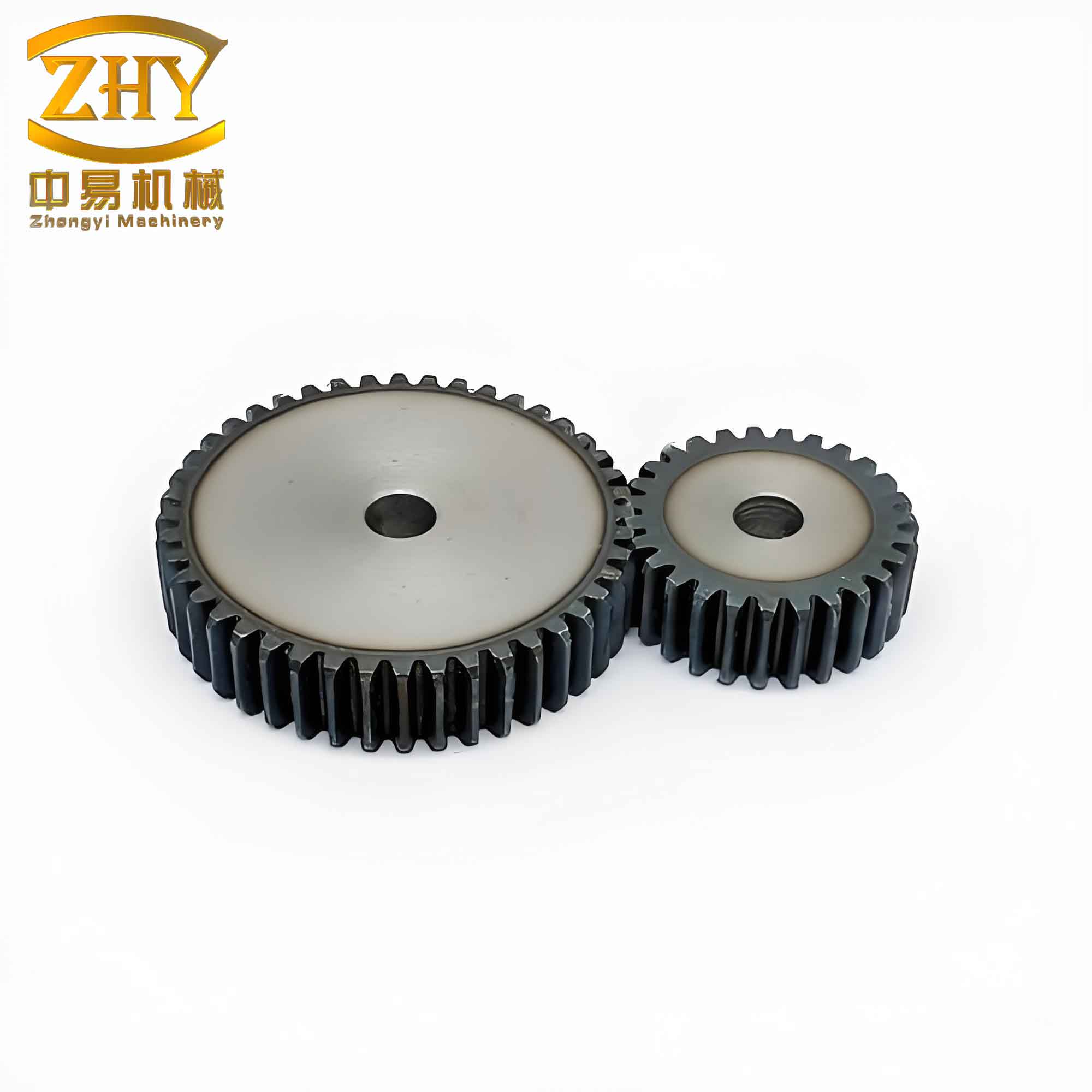
Figure 1 illustrates the typical geometry of involute straight spur gears used in this study.
2. Meshing Characteristics of Straight Spur Gears
2.1 Friction Force Direction in Different Meshing Zones
When a straight spur gear pair meshes, the relative sliding velocity at a contact point A (outside the pitch point) generates a friction force. For the large gear (gear), when the contact point is in the dedendum region, the relative velocity of the small gear with respect to the large gear is directed towards the root of the large gear. Under speed-increasing operation (large gear driving), the friction force on the large gear points towards its root circle, and on the small gear also points towards its root circle. In speed-reducing operation (large gear driven), the directions reverse, and both friction forces point towards the respective addendum circles. Conversely, when the contact point is in the addendum region, the friction direction is opposite: in speed-increasing mode, both friction forces point towards the addendum circles; in speed-reducing mode, they point towards the root circles. At the pitch point, relative sliding is zero, so no friction force exists.
2.2 Normal Force Including Friction Effect
The equilibrium of forces on the driving gear considering friction yields a modified expression for the normal tooth force. Let $T_2$ be the torque on the large gear, $r_{b2}$ the base circle radius of the large gear, $\mu$ the coefficient of friction, and $\alpha_2$ the pressure angle at the contact point. The nominal normal force without friction is $F_{n0}=T_2 / r_{b2}$. With friction, the actual normal force $F_n$ becomes:
$$F_n = \frac{F_{n0}}{1 \pm \mu \tan \alpha_2}$$
where the ‘+’ sign applies when the friction force on the large gear acts towards the addendum (i.e., driving gear addendum region or driven gear dedendum region), and the ‘−’ sign applies when the friction force acts towards the dedendum (driving gear dedendum region or driven gear addendum region). This variation is summarized in Table 1.
| Operation mode | Meshing zone | Large gear role | Friction direction on large gear | Normal force $F_n$ |
|---|---|---|---|---|
| Speed-increasing | Addendum | Driving | Towards addendum | $F_{n0}/(1+\mu\tan\alpha_2)$ |
| Speed-increasing | Dedendum | Driving | Towards dedendum | $F_{n0}/(1-\mu\tan\alpha_2)$ |
| Speed-reducing | Addendum | Driven | Towards dedendum | $F_{n0}/(1-\mu\tan\alpha_2)$ |
| Speed-reducing | Dedendum | Driven | Towards addendum | $F_{n0}/(1+\mu\tan\alpha_2)$ |
| Both | Pitch point | Any | None | $F_{n0}$ |
3. Analytical Bending Stress Calculation Using the Critical Section Method
3.1 Critical Section and Bending Moment
The traditional 30° tangent method is used to locate the critical section at the tooth root. The tooth root bending stress is calculated by considering the bending moment caused by the normal force and the friction force about the critical section center H. Let $l_1$ be the lever arm of the normal force and $l_2$ the lever arm of the friction force relative to H. The bending moment $M$ is:
$$M = F_n (l_1 \cos\alpha_A \pm \mu l_2 \sin\alpha_A)$$
where $\alpha_A$ is the angle between the normal force and the horizontal, and the sign depends on whether the friction moment adds to or subtracts from the normal moment. The bending stress $\sigma_b$ is then:
$$\sigma_b = \frac{M}{W} \cdot Y_s$$
where $W = b s^2 / 6$ is the section modulus ($b$ = face width, $s$ = tooth thickness at critical section), and $Y_s$ is the stress correction factor.
3.2 Combined Expression for Bending Stress
Combining the normal force expression, the bending stress for the large gear at any meshing point can be written in a unified form:
$$\sigma_b = \frac{6 F_{n0} (l_1 \cos\alpha_A \pm \mu l_2 \sin\alpha_A) Y_s}{b s^2 (1 \pm \mu \tan\alpha_2)}$$
The ‘+’ signs in both numerator and denominator are used when the friction force on the large gear points towards the addendum (i.e., driving in addendum zone or driven in dedendum zone). The ‘−’ signs are used for the opposite case.
3.3 Geometry of Lever Arms
The coordinates of the contact point A on the large gear are expressed in a Cartesian system centered at the gear center O$_2$. The radial distance $r_A$ varies from the start of active profile (SAP) to the tooth tip. The expressions for $l_1$ and $l_2$ are derived as functions of $r_A$ and the geometry of the critical section. Let $l_i$ be the distance from O$_2$ to the critical section center H. Then:
$$l_1 = Y_A – l_i – X_A \tan\alpha_A$$
$$l_2 = l_1 + \frac{X_A}{\tan\alpha_A} + X_A \tan\alpha_A$$
where $X_A$ and $Y_A$ are the coordinates of point A.
3.4 Bending Stress Variation along the Tooth Profile
Using the analytical expressions, we computed the bending stress for a specific straight spur gear pair (parameters in Table 2) under constant torque $T_2 = 150$ N·m with friction coefficient $\mu = 0.1$. The results are plotted in terms of the instantaneous pressure angle $\alpha_2$ at the contact point.
| Parameter | Pinion | Gear |
|---|---|---|
| Module (mm) | 2 | 2 |
| Number of teeth | 20 | 63 |
| Pressure angle (°) | 20 | 20 |
| Elastic modulus (GPa) | 210 | 210 |
| Poisson’s ratio | 0.3 | 0.3 |
| Addendum coefficient | 1.0 | 1.0 |
| Dedendum coefficient | 1.25 | 1.25 |
The analytical curve shows that in the dedendum region (smaller $\alpha_2$), the bending stress under speed-increasing operation is lower than that under speed-reducing operation. In the addendum region (larger $\alpha_2$), the trend reverses: speed-increasing stress exceeds speed-reducing stress. At the pitch point, the stresses are equal since friction is absent. This behavior directly results from the friction force direction and the resulting change in the net bending moment.
4. Finite Element Analysis of Straight Spur Gears
4.1 Modeling and Simulation Setup
To validate the analytical results and capture the effects of load sharing, contact deformation, and meshing impact, we performed finite element simulations using Abaqus. A five-tooth model of the straight spur gear pair was created with refined mesh in the tooth contact region (element size 0.02 mm along the profile). The total mesh count was approximately 750,000 elements. The friction coefficient was set to 0.1. The large gear was rotated at 20 rad/s, and six different torque levels (10, 30, 50, 80, 100, 150 N·m) were applied. For each torque, both speed-increasing (large gear driving) and speed-reducing (small gear driving) cases were simulated while maintaining the same transmitted power.
4.2 Maximum Bending Stress Comparison
The maximum tooth root bending stress (maximum principal stress) was extracted at the critical section for a complete meshing cycle. The results are summarized in Tables 3 and 4 for the large gear and small gear, respectively.
| Large gear torque (N·m) | Speed-increasing stress (MPa) | Speed-reducing stress (MPa) | Increase ratio (%) |
|---|---|---|---|
| 10 | 7.13 | 6.12 | 16.5 |
| 30 | 24.98 | 20.57 | 21.4 |
| 50 | 40.14 | 32.59 | 23.2 |
| 80 | 56.32 | 47.21 | 19.3 |
| 100 | 78.63 | 61.54 | 27.8 |
| 150 | 117.61 | 104.34 | 12.7 |
| Large gear torque (N·m) | Speed-increasing stress (MPa) | Speed-reducing stress (MPa) | Decrease ratio (%) |
|---|---|---|---|
| 10 | 8.21 | 8.85 | -7.2 |
| 30 | 25.82 | 29.48 | -12.4 |
| 50 | 43.14 | 48.66 | -11.3 |
| 80 | 69.05 | 79.58 | -13.2 |
| 100 | 88.21 | 94.21 | -6.4 |
| 150 | 137.09 | 150.06 | -8.6 |
The FEA results confirm the analytical trend: for the large gear, speed-increasing bending stress is consistently higher than speed-reducing stress, with an increase ranging from 12.7% to 27.8%. For the small gear, the opposite occurs: speed-increasing stress is 6.4% to 13.2% lower than speed-reducing stress. The variation is more pronounced for the large gear, indicating that it is more sensitive to the friction-induced load changes.
4.3 Bending Stress Evolution during One Meshing Cycle
We also extracted the bending stress at 40 equally spaced contact positions along the tooth profile for three torque levels (10, 80, 150 N·m). The stress evolution (not plotted here) shows that in the dedendum zone, speed-increasing stress is lower; in the addendum zone, it is higher. The maximum stress occurs near the single-tooth contact point where the load is fully taken by one pair and meshing impact is present. These findings align with the analytical predictions.
5. Discussion
The discrepancy between speed-increasing and speed-reducing bending stresses in straight spur gears originates from the reversal of the friction force direction relative to the normal force. When the driving gear meshes in its addendum zone, the friction force adds to the bending moment, increasing the stress; conversely, when meshing in the dedendum zone, the friction force subtracts from the moment, lowering the stress. This effect is reversed when the same gear acts as the driven element. Since the maximum bending stress in a typical meshing cycle occurs in the addendum region (where the lever arm is longer and often the friction effect is detrimental), the driving gear (speed-increasing large gear) experiences a higher risk of tooth root fatigue failure. Therefore, directly using speed-reducing gear designs for speed-increasing applications may lead to underestimation of the bending stress, especially for the larger gear.
This study highlights the necessity of developing dedicated design criteria for speed-increasing straight spur gears. Factors such as the friction coefficient, load level, and gear geometry need to be considered to ensure adequate bending strength. The analytical expression derived in this work can serve as a basis for incorporating friction effects into standard design formulas as per ISO 6336.
6. Conclusion
We have conducted a comprehensive comparative analysis of tooth root bending stress in involute straight spur gears under speed-increasing and speed-reducing drives. The key conclusions are:
- For any gear tooth, the direction of the sliding friction force reverses between speed-increasing and speed-reducing operations, and also differs between the dedendum and addendum zones.
- The normal tooth force is modified by friction: it increases in zones where friction opposes the torque direction and decreases where friction assists.
- For the larger gear (driving in speed-increasing mode), the bending stress in the addendum region is significantly higher (up to 27.8% in this study) than in speed-reducing mode, while the stress in the dedendum region is lower. The opposite trend holds for the small gear.
- Finite element simulations validate the analytical results and show that the maximum bending stress follows the predicted pattern across various torque levels.
- Direct application of speed-reducing gear design to speed-increasing straight spur gears may lead to underestimation of the bending strength of the larger gear, increasing the risk of tooth root fracture.
- Further work is needed to establish a dedicated design methodology for speed-increasing spur gears, incorporating friction effects, load sharing, and dynamic factors.
This investigation provides essential insights for engineers designing straight spur gears for speed-increasing transmissions, particularly in wind energy and other high-power applications where reliability is critical.