
In mechanical transmission systems, spur gears play a critical role due to their simplicity and efficiency in transmitting motion and power. However, traditional spur gears often suffer from significant vibration and noise during high-speed operation, along with issues related to excessive weight and dry friction, which can degrade performance and user experience. To address these challenges, this study explores a bio-inspired approach, drawing inspiration from the porous microstructure of diatoms, specifically the Coscinodiscus species, to redesign spur gears for lightweight, reduced vibration, and improved lubrication. The primary objective is to optimize the internal topology of spur gears through biomimicry, resulting in a bionic spur gear that maintains structural integrity while enhancing performance. We will detail the design process, including topological optimization, structural layout, and material selection, followed by a comprehensive performance analysis comparing the bionic spur gear with conventional solid spur gears. Through software simulations, we evaluate physical properties and modal frequencies, validating the effectiveness of the bionic design in achieving lightweight and vibration damping. This work aims to contribute to the advancement of gear technology by integrating biological principles into engineering design, offering a novel solution for noise reduction and efficiency improvement in gear transmissions.
The design of bionic spur gears begins with understanding the natural structure of diatoms. Diatoms are unicellular algae with intricate silica-based shells featuring hierarchical porous networks that provide high strength-to-weight ratios. These biological structures have evolved to withstand environmental stresses while minimizing material usage, making them ideal models for lightweight engineering. In the context of spur gears, we emulate this porous architecture to reduce mass without compromising mechanical strength. The internal topology of a traditional spur gear is optimized using biomimetic principles, focusing on creating a multi-layered porous core similar to diatom frustules. This approach not only addresses weight reduction but also influences vibration characteristics by altering the gear’s dynamic response.
To formalize the optimization process, we establish design criteria based on operational conditions. The spur gear must withstand specific loads and stresses during meshing, and the optimization aims to minimize material usage while meeting these constraints. The target parameters for the spur gear are summarized in Table 1, which outlines the required loads and allowable stresses. These values guide the topological optimization, ensuring that the bionic spur gear can handle typical working conditions without failure.
| Target Parameter | Target Value |
|---|---|
| Tooth Tip Load (N) | 11,248 |
| Tooth Middle Load (N) | 14,628 |
| Tooth Root Load (N) | 11,166 |
| Equivalent Maximum Stress (MPa) | 487 |
| Maximum Displacement (mm) | 0.045 |
Table 1: Optimization targets for the spur gear design.
Based on these targets, we develop a preliminary three-dimensional model of the bionic spur gear. The gear has a module of 4 and 25 teeth, with internal cavities inspired by diatom pores. To prevent stress concentrations, fillets are incorporated at critical points. The topological optimization is performed using finite element analysis (FEA) software, which iteratively removes material from low-stress regions while reinforcing high-stress areas. This process results in a weight reduction of up to 31.5% compared to a solid spur gear, as demonstrated in early simulations. The lightweight design of spur gears is crucial for applications where inertia and energy efficiency are concerns, such as in automotive transmissions.
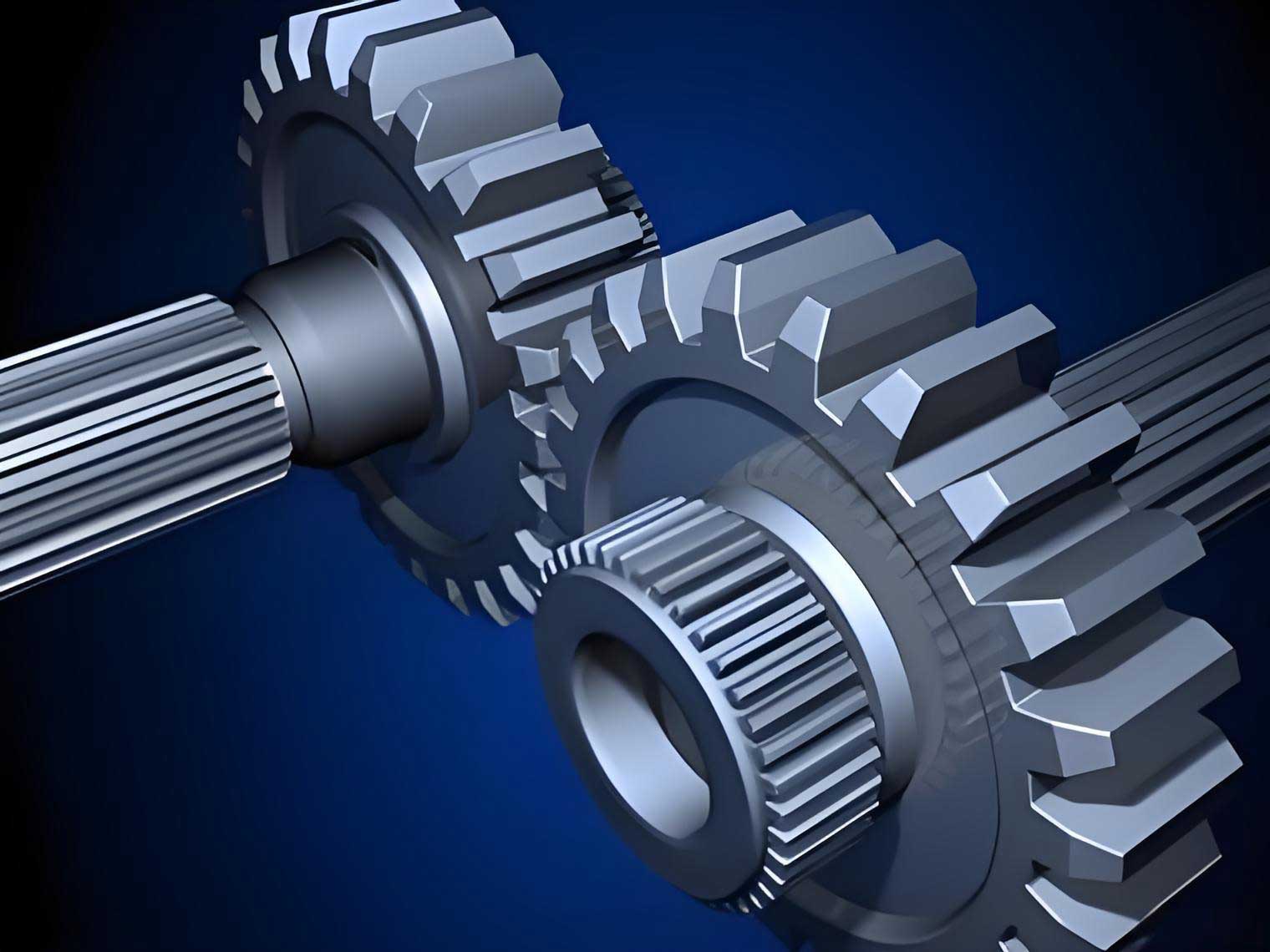
The structural layout of the bionic spur gear involves arranging biomimetic units on the tooth surface. These units are derived from diatom patterns and serve multiple functions: they reduce impact forces during meshing, facilitate lubrication to mitigate dry friction, and contribute to mass reduction. The tooth surface is divided into zones where porous structures are strategically placed. Each unit consists of circular pores with a diameter of 1 mm, based on manufacturing constraints and effectiveness in stress distribution. The arrangement ensures uniform coverage without redundancy, optimizing the gear’s performance. The design process considers the manufacturing technique, such as additive manufacturing using EOS280 systems, which allows for complex internal geometries. This enables precise control over pore size and distribution, essential for replicating biological features in spur gears.
Determining the optimal thickness of the bionic spur gear is critical to accommodate the porous structure while maintaining strength. Using theoretical calculations for gear geometry, we derive the minimum thickness required. For a spur gear with a module of 5.7 and 20 teeth, the minimum thickness is given by:
$$ t_{\text{min}} = \frac{2.157 \cdot m}{\sqrt{Z}} $$
where \( t_{\text{min}} \) is the minimum thickness in mm, \( m \) is the module, and \( Z \) is the number of teeth. Substituting the values:
$$ t_{\text{min}} = \frac{2.157 \cdot 5.7}{\sqrt{20}} \approx 8.935 \text{ mm} $$
However, due to the porous design and material change, we increase the thickness to ensure structural integrity. The final bionic spur gear has a width of 30 mm, which provides sufficient space for the multi-layered porous core. The internal structure comprises three distinct layers: an inner layer (A), a middle layer (B), and a sieve plate (C), with white regions representing cavities. This configuration mimics the diatom’s frustule, enhancing the gear’s lightweight properties. The material selection is also upgraded from low-carbon alloy to titanium alloy, which offers higher yield strength (approximately 1,750 MPa) to withstand operational stresses. The use of titanium alloy in spur gears improves durability while contributing to weight savings.
For performance validation, we conduct a comparative analysis of physical properties and modal frequencies. The mass reduction is a key metric for lightweight design. We compare the bionic spur gear with two baseline models: a solid spur gear made of traditional low-carbon alloy and a solid spur gear with diatom-inspired external features but no internal pores (referred to as a diatom solid spur gear). The results are summarized in Table 2, showing significant weight savings.
| Gear Type | Mass (kg) | Reduction Compared to Solid Spur Gear | Reduction Compared to Diatom Solid Spur Gear |
|---|---|---|---|
| Solid Spur Gear (Low-carbon Alloy) | 2.5 | 0% | — |
| Diatom Solid Spur Gear (Titanium Alloy) | 1.8 | 28% | 0% |
| Bionic Spur Gear (Titanium Alloy, Porous) | 1.03 | 58.7% | 29.3% |
Table 2: Mass comparison of spur gear variants.
The bionic spur gear achieves a mass reduction of 58.7% relative to the traditional solid spur gear and 29.3% compared to the diatom solid spur gear. This demonstrates the effectiveness of internal topology optimization in lightweight design for spur gears. Additionally, the reduced mass lowers inertial forces, which can contribute to smoother operation and energy efficiency in transmission systems.
Modal analysis is performed to assess vibration characteristics. We simulate the natural frequencies and mode shapes of both the bionic spur gear and the solid spur gear using finite element methods. The results, presented in Table 3, indicate changes in modal frequencies due to the porous structure. These frequencies correspond to different vibration modes, such as cross-shaped, torsional, star-shaped, circumferential, and folding modes. Lower frequencies in certain modes suggest reduced stiffness, which can help dampen vibrations during meshing.
| Mode Number | Solid Spur Gear Modal Frequency (Hz) | Bionic Spur Gear Modal Frequency (Hz) | Vibration Type |
|---|---|---|---|
| 1 | 3,662.6 | 3,492.3 | Cross-shaped |
| 2 | 3,662.6 | 3,493.4 | Cross-shaped |
| 3 | 5,284.4 | 5,484.7 | Torsional |
| 4 | 5,284.5 | 5,487.4 | Torsional |
| 5 | 8,913.0 | 8,205.9 | Star-shaped |
| 6 | 8,913.0 | 8,208.9 | Star-shaped |
| 7 | 9,445.4 | 9,050.5 | Circumferential |
| 8 | 11,440.0 | 10,766.0 | Folding |
| 9 | 11,441.0 | 10,768.0 | Folding |
Table 3: Modal frequency comparison for spur gears.
The modal frequencies of the bionic spur gear show variations, with a maximum change of 8.6% in the torsional mode (increase) and decreases in other modes. Notably, the cross-shaped, star-shaped, circumferential, and folding modes have lower frequencies in the bionic spur gear, indicating a potential reduction in vibration amplitudes during operation. This aligns with the goal of noise reduction in spur gears. The torsional mode frequency increase may be attributed to the reinforced internal structure, which enhances torsional stiffness. Overall, the modal analysis suggests that the bionic design can mitigate vibration issues in spur gears, improving acoustic performance.
To further evaluate the structural performance, we analyze stress distribution under operational loads. The bionic spur gear is subjected to a rotational speed of 9,000 rad/s and a torque of 300 N·m. The maximum equivalent stress is calculated using the von Mises criterion:
$$ \sigma_{\text{eq}} = \sqrt{\frac{(\sigma_1 – \sigma_2)^2 + (\sigma_2 – \sigma_3)^2 + (\sigma_3 – \sigma_1)^2}{2}} $$
where \( \sigma_1, \sigma_2, \sigma_3 \) are the principal stresses. For the bionic spur gear, the maximum stress is approximately 1,750 MPa, which is within the yield strength of titanium alloy (around 1,800 MPa). In contrast, a traditional spur gear made of low-carbon alloy would experience stresses exceeding its yield strength (850 MPa), leading to plastic deformation. This highlights the importance of material upgrade in bionic spur gears. Additionally, the porous structure helps distribute stresses more evenly, reducing peak stress concentrations. We also consider the effect of dry friction by incorporating lubrication channels into the design. Based on elastohydrodynamic lubrication theory, we identify regions with thin oil films during meshing and design micro-pores to release lubricant, thereby reducing friction and wear in spur gears.
The design of bionic spur gears involves several mathematical models for optimization. One key aspect is the topological optimization formulation, which can be expressed as a minimization problem:
$$ \min_{x} \left( \sum_{e=1}^{N} w_e \rho_e \right) $$
subject to:
$$ K U = F $$
$$ \sigma_e \leq \sigma_{\text{allow}} $$
$$ \delta \leq \delta_{\text{max}} $$
where \( x \) represents the design variables (material density per element), \( w_e \) is the element volume, \( \rho_e \) is the density, \( K \) is the stiffness matrix, \( U \) is the displacement vector, \( F \) is the load vector, \( \sigma_e \) is the element stress, \( \sigma_{\text{allow}} \) is the allowable stress, and \( \delta \) is the displacement constraint. This formulation ensures that the bionic spur gear meets mechanical requirements while minimizing weight. The optimization algorithm iteratively adjusts material distribution, resulting in the porous structure akin to diatoms.
Another important formula relates to gear geometry. The basic parameters of spur gears include module \( m \), number of teeth \( Z \), pitch diameter \( d \), and face width \( b \). These are related by:
$$ d = m \cdot Z $$
$$ b = k \cdot m $$
where \( k \) is a width factor typically ranging from 8 to 12 for standard spur gears. In our bionic design, we use \( b = 30 \) mm for a module of 5.7, giving \( k \approx 5.26 \), which is lower due to the enhanced material strength. This reduction in width further contributes to lightweighting of spur gears.
In terms of manufacturing, additive manufacturing techniques like selective laser melting (SLM) are employed to fabricate the bionic spur gears. This allows for precise control over internal pores and complex geometries. The process parameters, such as laser power and scan speed, are optimized to ensure mechanical properties comparable to wrought materials. Post-processing, such as heat treatment, may be applied to relieve residual stresses and improve durability. The ability to manufacture such intricate spur gears opens new possibilities for custom gear design in various industries.
The performance analysis extends to dynamic simulations of gear meshing. We use multi-body dynamics software to model the interaction between bionic spur gears and traditional spur gears in a transmission system. The equations of motion for gear meshing can be expressed as:
$$ I \ddot{\theta} + C \dot{\theta} + K \theta = T $$
where \( I \) is the moment of inertia, \( C \) is the damping coefficient, \( K \) is the stiffness matrix, \( \theta \) is the angular displacement, and \( T \) is the torque. For bionic spur gears, the reduced mass lowers \( I \), while the porous structure affects \( K \) and \( C \), leading to altered dynamic responses. Simulations show that the bionic spur gears exhibit lower vibration amplitudes and noise levels compared to solid spur gears, validating the design objectives.
Additionally, we explore the thermal behavior of bionic spur gears. During operation, friction generates heat, which can affect performance and lifespan. The porous structure may enhance heat dissipation due to increased surface area. We conduct thermal analysis using finite element methods, solving the heat conduction equation:
$$ \rho c_p \frac{\partial T}{\partial t} = \nabla \cdot (k \nabla T) + q $$
where \( \rho \) is density, \( c_p \) is specific heat, \( k \) is thermal conductivity, \( T \) is temperature, and \( q \) is heat generation rate. Results indicate that bionic spur gears have lower operating temperatures than solid spur gears, reducing the risk of thermal degradation and improving efficiency.
The bionic approach also considers environmental sustainability. By reducing material usage through lightweight design, bionic spur gears contribute to resource conservation and lower energy consumption in manufacturing and operation. This aligns with green engineering principles and supports the development of eco-friendly mechanical systems. Furthermore, the use of titanium alloy, while more expensive, offers longer service life and recyclability, making bionic spur gears a viable option for high-performance applications.
In conclusion, the bionic spur gear design based on diatom structures successfully addresses key issues in traditional spur gears: lightweight, vibration reduction, and dry friction mitigation. The topological optimization reduces mass by up to 58.7% compared to solid spur gears, while modal analysis shows lower frequencies in most vibration modes, indicating improved damping. The integration of lubrication channels helps combat dry friction, enhancing durability. Material upgrade to titanium alloy ensures structural strength under high loads. These findings demonstrate the potential of biomimicry in advancing gear technology. Future work may focus on experimental validation, optimization of pore distributions for specific applications, and exploration of other biological models for spur gears. Overall, bionic spur gears represent a promising direction for efficient and quiet transmission systems.