
In the field of mechanical transmission systems, worm gears play a pivotal role due to their ability to provide high reduction ratios, compact design, and smooth operation. Among various types, the ZC3 worm gear, characterized by its concave-convex tooth profile engagement, is widely recognized for its low friction coefficient, minimal wear, high transmission efficiency, and reliability. The accurate calculation of mesh stiffness in worm gears is fundamental for dynamic analysis, as the time-varying nature of mesh stiffness generates excitation forces that lead to vibrations and impacts within the system. This article, from a first-person perspective, delves into a comprehensive study on determining the mesh stiffness of ZC3 worm gears based on the finite element method (FEM). The methodology is applied to a specific case involving the renovation project of a 1-meter telescope at the Maidanak Observatory in Uzbekistan, focusing on the worm gear drive system of the right ascension axis. Throughout this discussion, the term “worm gears” will be emphasized to underscore its significance in power transmission applications.
The dynamics of worm gear systems are often analyzed using lumped mass methods, where the meshing relationship between the worm and worm wheel is equivalent to a spring-damper unit. The stiffness of this spring, which varies with time, is a critical parameter influencing system performance. Factors such as tooth profile, center distance, and loading torque affect mesh stiffness, and while extensive research exists for spur and helical gears, studies on worm gears, particularly ZC3 types, are scarce due to the complexity of their tooth surfaces, which are typically enveloped by worm hobbing tools. This work aims to bridge that gap by proposing a FEM-based approach for calculating the time-varying mesh stiffness of ZC3 worm gears, leveraging loaded contact analysis to simulate the quasi-static meshing process. The results provide a foundation for subsequent dynamic analyses in the telescope renovation project.
The core concept revolves around modeling the worm gear pair as an equivalent spring-damper system in the direction of the mesh line. Under quasi-static conditions, the mesh stiffness corresponds to the time-varying stiffness of this spring. For a worm gear pair, the mesh stiffness \( k_n \) can be expressed as:
$$ k_n = \frac{F_n}{\delta_n} $$
where \( F_n \) is the normal contact force on the tooth flank, and \( \delta_n \) is the comprehensive elastic deformation. In meshing, multiple tooth pairs may engage simultaneously, so the equivalent normal force is the sum of individual contact forces:
$$ F_n = \sum_{i=1}^{n} F_i $$
with \( n \) being the number of engaged teeth. The comprehensive elastic deformation is equivalent to the relative displacement of the worm and worm wheel along the mesh line. From static loaded contact analysis, this relative displacement \( e_{LT} \) is given by:
$$ e_{LT} = R_{wg} \left( \theta_{wg} – \frac{z_{wg}}{z_w} \theta_w \right) $$
where \( R_{wg} \) is the pitch radius of the worm wheel, \( \theta_{wg} \) and \( \theta_w \) are the rotation angles of the worm wheel and worm, respectively, and \( z_{wg} \) and \( z_w \) are the number of teeth on the worm wheel and the number of starts on the worm, respectively. Due to manufacturing tolerances, such as the slightly larger tooth thickness of the worm hob compared to the mating worm, and modeling errors, a backlash exists, leading to a relative displacement even under no load. To account for this, a small load is applied to simulate the no-load displacement \( e_{NLT} \), and the comprehensive elastic deformation is adjusted as:
$$ \delta_n = e_{LT} – e_{NLT} $$
This formulation allows for the extraction of mesh stiffness from finite element simulations, which involve constructing detailed geometric models, applying appropriate boundary conditions, and solving for contact forces and displacements.
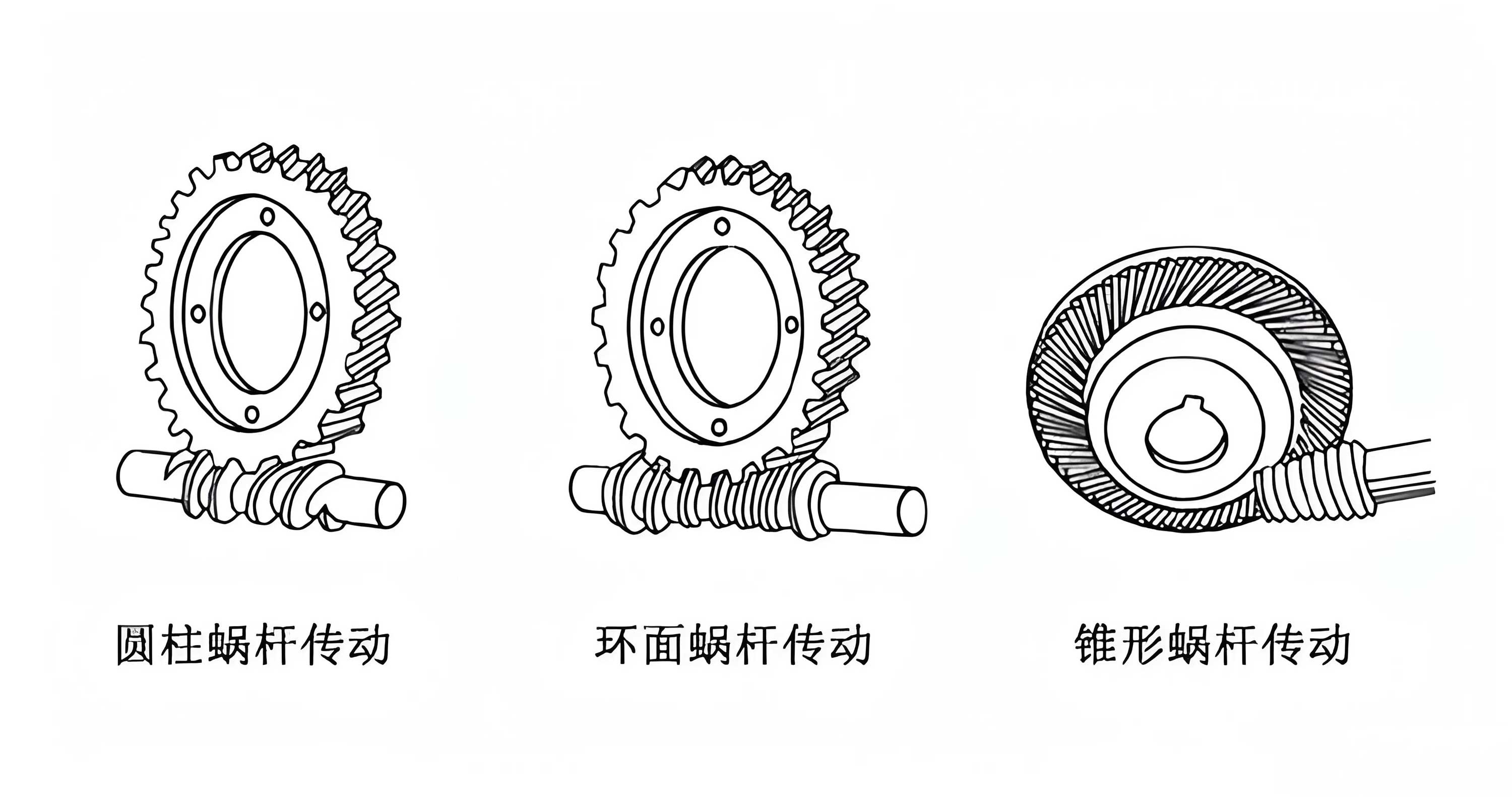
To implement this, the finite element software Workbench is utilized. The geometric model of the ZC3 worm is created in CATIA by sweeping a cutter profile to form the helical tooth surface. For the worm wheel, the tooth surface is generated via an envelope method, where the worm hob—similar to the worm but with modifications in axial profile arc radius, addendum, and tooth thickness—is used to mathematically derive discrete data points on the worm wheel tooth flank. These points are imported into CATIA, and reverse engineering techniques are applied to fit surfaces, which are then used to cut the wheel blank, resulting in a precise 3D solid model. This process ensures accuracy in representing the complex geometry of worm gears, which is essential for reliable mesh stiffness calculations.
Mesh discretization employs 8-node hexahedral isoparametric elements, as they facilitate contact state verification and judgment. Due to the intricate shape of the worm wheel, it is partitioned into subdomains to allow for mapped meshing. The worm, with its consistent axial cross-section, is divided into segments along one pitch length, and 2D meshes on cross-sections are extruded to form the 3D mesh. The finite element model for the worm gears includes coupling constraints between reference points on the axes and the worm/worm wheel bodies, enabling the application of rotational boundary conditions such as torques and fixed supports. For instance, the worm wheel is subjected to a nominal torque, while the worm is constrained rotationally, simulating the transmission loading. The contact between tooth flanks is defined as frictional, with properties derived from material data.
To validate the accuracy of this FEM-based approach for mesh stiffness calculation, a comparison is made with established methods for spur gears, as literature on worm gears is limited. A spur gear pair with known parameters is analyzed using the same methodology, and the results are juxtaposed with an analytical formula from prior research. The spur gears have 22 teeth each, a module of 3 mm, face width of 20 mm, material elasticity of 207 GPa, and Poisson’s ratio of 0.3. The analytical mesh stiffness per unit width \( k_i(r_i) \) is given by:
$$ k_i(r_i) = (a_0 + a_1 x_i) + (a_2 + a_3 x_i) \frac{r_i – R_i}{(1 + x_i) m} $$
where \( R_i \) is the pitch radius of gear \( i \), \( r_i \) is the distance from the mesh point to the gear center \( O_i \), \( x_i \) is the profile shift coefficient, and \( a_0, a_1, a_2, a_3 \) are fitting coefficients defined as:
$$ a_0 = 3.867 + 1.612 z_i – 0.0291 z_i^2 + 0.0001553 z_i^3 $$
$$ a_1 = 17.06 + 0.728 z_i – 0.01728 z_i^2 + 0.00009999 z_i^3 $$
$$ a_2 = 2.637 – 1.222 z_i + 0.02217 z_i^2 – 0.0001179 z_i^3 $$
$$ a_3 = -6.33 – 1.033 z_i + 0.02068 z_i^2 – 0.000113 z_i^3 $$
The FEM model for the spur gears is built similarly, with structured hexahedral meshing and applied torques. The mesh stiffness curve obtained from FEM shows a deviation of approximately 5.36% from the analytical curve, confirming the method’s precision. This validation step reinforces confidence in applying the technique to worm gears, despite their more complex geometry.
Following validation, the method is applied to the ZC3 worm gears from the Maidanak Observatory telescope project. The geometric parameters are summarized in the table below, highlighting key dimensions essential for modeling worm gears in transmission systems.
| Parameter | Value |
|---|---|
| Worm Type | ZC3 |
| Number of Worm Starts (z_w) | 1 |
| Number of Worm Wheel Teeth (z_{wg}) | 246 |
| Axial Pressure Angle (α_{x1}) | 23° |
| Hand of Helix | Right |
| Center Distance (a) | 640 mm |
| Worm Pitch Diameter (d_1) | 60 mm |
| Module (m) | 4.929 mm |
| Profile Shift Coefficient | 0.757 |
The material properties are also critical for finite element analysis, as they influence the elastic deformation and contact behavior in worm gears. The table below lists these properties.
| Component | Material | Young’s Modulus (E) | Poisson’s Ratio (μ) | Density (ρ) |
|---|---|---|---|---|
| Worm Wheel | ZQSn10-1 | 1.1 × 10^11 Pa | 0.33 | 8300 kg/m³ |
| Worm | 20CrMnTi | 2.12 × 10^11 Pa | 0.29 | 7686 kg/m³ |
In the finite element simulation, a nominal torque of 960 N·m is applied to the worm wheel to represent the operating load, while a small torque of 16 N·m is used for the no-load condition to determine \( e_{NLT} \). The contact analysis reveals the distribution of normal contact forces across multiple tooth pairs as a function of the worm wheel rotation angle. For these worm gears, the contact ratio is calculated to be ε = 1.38, indicating alternating single-tooth and double-tooth contact zones during meshing. In double-tooth contact zones, the normal forces on the leading tooth pair decrease gradually as the trailing pair engages, resulting in a more stable force distribution. This behavior is characteristic of worm gears and influences the overall mesh stiffness.
The mesh stiffness curve derived from the simulation exhibits distinct periodicity, correlating with the meshing cycle of the worm gears. The minimum mesh stiffness occurs in the double-tooth contact zone, precisely at the point where the leading tooth pair exits engagement, with a value of 104.4 MN/m. At this instant, the comprehensive elastic deformation is maximal, leading to reduced stiffness. Conversely, the maximum mesh stiffness is observed in the middle of the single-tooth contact zone, reaching 219.7 MN/m, where deformation is minimal. This pattern underscores the time-varying nature of stiffness in worm gears, which must be accounted for in dynamic models to predict vibration responses accurately.
To further elucidate the computational process, the equations governing mesh stiffness calculation are reiterated with emphasis on their application to worm gears. The normal contact force \( F_n \) is obtained from finite element results as the sum of forces on engaged tooth flanks. The relative displacement \( e_{LT} \) is computed using the rotational angles from the simulation, and the no-load displacement \( e_{NLT} \) is subtracted to yield \( δ_n \). The stiffness is then \( k_n = F_n / δ_n \). For multiple engaged pairs, the effective stiffness can be modeled as springs in parallel, but the direct calculation from forces and displacements is preferred for accuracy. This approach is robust for worm gears, given their complex contact patterns.
The implications of these findings for the telescope renovation project are substantial. By quantifying the mesh stiffness of the worm gears, engineers can refine the dynamic analysis of the drive system, optimizing parameters to minimize vibrations and enhance pointing accuracy. The periodic stiffness variation may excite resonant frequencies, so incorporating this data into a lumped parameter model allows for simulation of transient responses under operational loads. Additionally, the method can be extended to other types of worm gears, facilitating broader applications in industries where precision motion control is critical.
In conclusion, this study presents a validated finite element method for calculating the time-varying mesh stiffness of ZC3 worm gears, leveraging loaded contact analysis and detailed geometric modeling. The results demonstrate clear periodicity in stiffness, with minima and maxima associated with double-tooth and single-tooth contact zones, respectively. The application to a real-world telescope project underscores the practical relevance of this research, providing a foundation for dynamic analysis and design improvements. Future work could explore the effects of lubrication, thermal expansion, and wear on mesh stiffness in worm gears, further enhancing the understanding of these essential transmission components.
The methodology described here is not limited to ZC3 worm gears but can be adapted to other worm gear types, such as ZA or ZI, by adjusting the geometric modeling steps. Moreover, the integration of this approach with multi-body dynamics software could enable real-time simulation of worm gear systems under varying operating conditions. As worm gears continue to be integral in applications ranging from astronomy to automotive systems, accurate stiffness calculations remain paramount for ensuring reliability and performance.
Throughout this article, the focus on worm gears has been deliberate, highlighting their unique challenges and importance in mechanical engineering. The finite element method proves to be a powerful tool for unraveling the complexities of mesh stiffness, offering insights that drive innovation in transmission design. By embracing such computational techniques, researchers and engineers can push the boundaries of what is possible with worm gears, paving the way for more efficient and robust systems in the future.