
In the manufacturing of spiral bevel gears, carburizing is a critical heat treatment process that significantly influences the surface hardness, microstructure, and ultimately, the operational lifespan of these gears. As a specialist in producing spiral bevel gears for automotive rear axles, our facility has encountered intermittent quality issues where certain gear teeth surfaces, after sandblasting, exhibit irregular, light-colored spots. We refer to these anomalies as “white spots.” This article delves into a comprehensive investigation of these white spots, their detrimental effects on spiral bevel gear performance, and the development of robust preventive measures.
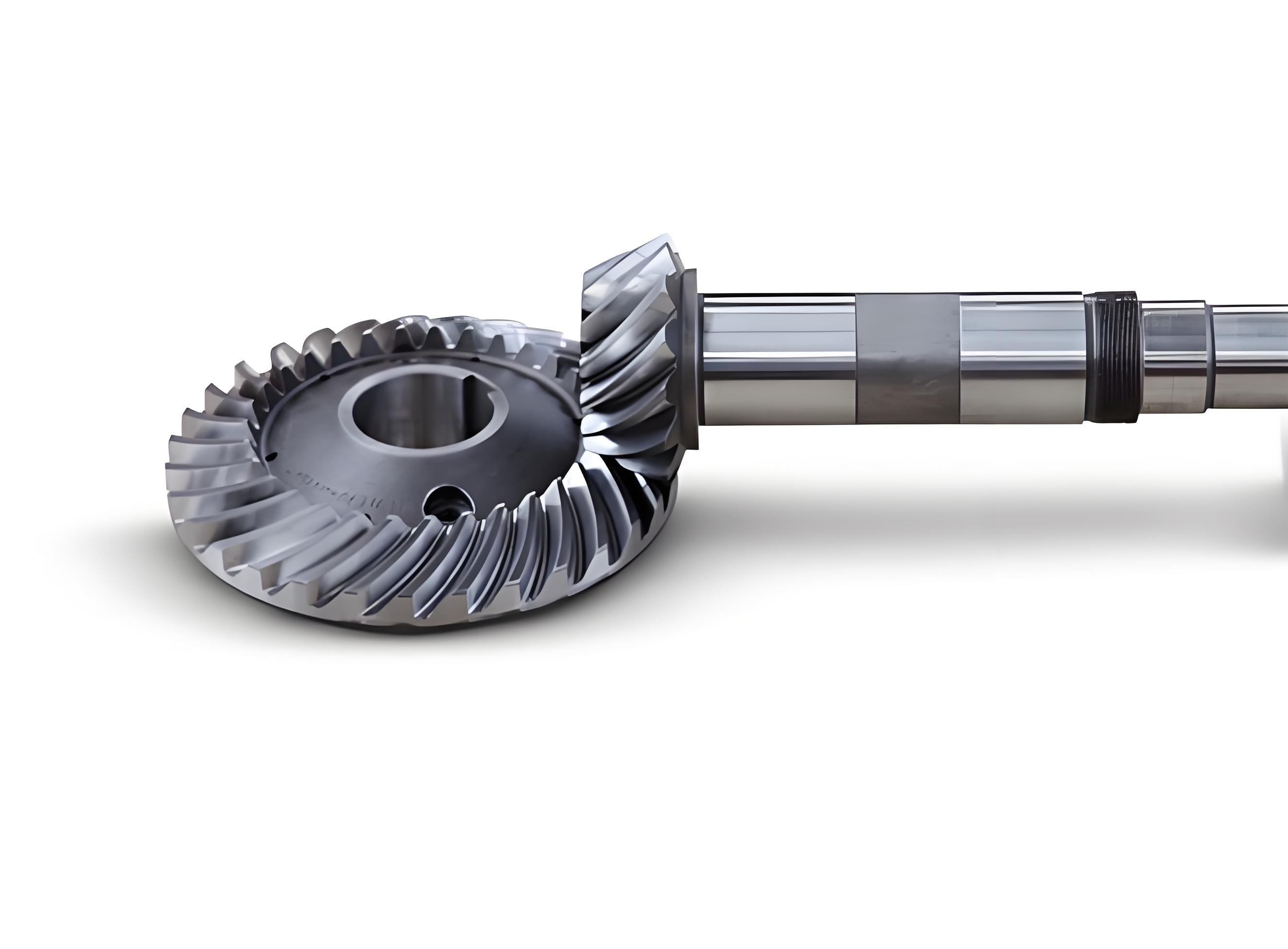
The performance and durability of spiral bevel gears are paramount in power transmission systems, particularly in automotive applications. The carburizing process enriches the surface layer of these spiral bevel gears with carbon, facilitating the formation of a hard, wear-resistant case while maintaining a tough core. Any inhomogeneity in this case depth or microstructure can lead to premature failure, noise, and reduced efficiency. The sporadic appearance of white spots on our spiral bevel gears presented a significant challenge, prompting an extensive root cause analysis.
1. Phenomenon and Initial Observations of White Spots
White spots on spiral bevel gears typically manifest as elliptical, faint discolorations on the tooth flanks after the final sandblasting operation. Their sporadic and unpredictable nature made initial diagnosis difficult. A serendipitous event provided the first clue: during a production batch, a power outage occurred while a load of spiral bevel gears was at approximately 300°C in the preheating zone of the carburizing furnace. The gears were held for about 30 minutes before being removed to prevent potential oxidation. Upon subsequent re-carburizing of this same batch, a remarkable absence of white spots was noted. This incident suggested a potential link between a pre-carburizing thermal exposure and the mitigation of the defect.
Intentionally designed experiments were then conducted where spiral bevel gears underwent a controlled pre-heat treatment before carburizing. The results consistently showed a dramatic reduction in the occurrence of white spots. This confirmed that a thermal process prior to carburizing could effectively prevent the defect, leading us to hypothesize that the root cause was related to surface contaminants volatilized or altered by this heat.
2. In-Depth Root Cause Investigation
A meticulous examination revealed that the shape and distribution of the white spots closely resembled the residue patterns left by evaporating water droplets on a surface. This pointed decisively towards the role of residual cleaning fluids. Spiral bevel gears undergo multiple machining operations—turning, milling, grinding—each requiring cooling and lubrication with oil-based fluids. Despite subsequent cleaning, microscopic residues of oil and water can remain on the tooth surfaces.
The core problem is analogous to the formation of soft spots in quenching, where localized areas exhibit lower hardness due to non-martensitic transformation products like troostite. In carburizing, surface contaminants like oil films can lead to non-uniform carbon absorption. The hydrocarbon-based lubricants, primarily mixtures of alkanes, cycloalkanes, and additives, undergo complex pyrolysis upon entering the high-temperature carburizing atmosphere.
If oil residue is present when the spiral bevel gear enters the furnace, the following sequence occurs: as the gear heats up, but before it reaches the optimal carburizing temperature (typically 900-950°C), the oil film decomposes. The decomposition of saturated hydrocarbons (alkanes) in an oxygen-lean or neutral atmosphere can be simplistically represented as:
$$ C_nH_{2n+2} \rightarrow nC_{(s)} + (n+1)H_{2(g)} $$
However, this is a gross simplification. The actual process is a multi-stage reaction network. At intermediate temperatures, unsaturated hydrocarbons like alkenes (e.g., $C_3H_6$) are formed. These are highly reactive and prone to polymerization:
$$ n\,C_3H_6 \xrightarrow{\Delta} (C_3H_6)_n $$
The polymerized compounds are precursors to tars and soot. Furthermore, cracking reactions produce lighter gases and solid carbon (soot or carbon black). The critical issue is that this carbon deposition occurs before the gear surface is hot enough for efficient atomic carbon diffusion into the steel. This layer of soot or carbon black acts as a physical barrier, impeding the subsequent absorption of active carbon atoms from the furnace atmosphere during the proper carburizing stage. Consequently, the areas originally covered by oil residue develop a shallower effective case depth compared to clean areas. The elliptical shape correlates with the droplet morphology of the residual cleaning fluid.
It is also important to note that geometry inherently affects carburizing depth. For spiral bevel gears, the concave root fillet region is known to carburize slightly slower than the convex tip or flank due to diffusion dynamics. The effect can be modeled considering the surface curvature’s influence on carbon flux. The diffusion equation in a curved coordinate system highlights this:
$$ \frac{\partial C}{\partial t} = D \left( \frac{\partial^2 C}{\partial r^2} + \frac{1}{r} \frac{\partial C}{\partial r} \right) $$
where $C$ is carbon concentration, $t$ is time, $D$ is the diffusion coefficient, and $r$ is the radial coordinate in a curved geometry. For a concave surface, the flux geometry can lead to a marginally shallower case. However, the white spot defect is a more severe, localized shallowing superimposed on this inherent geometric gradient.
3. Experimental Methodology for Validation
To quantitatively assess the impact of white spots, a metallurgical analysis was conducted on several defective spiral bevel gears. The gears were manufactured from standard carburizing steel grade 20CrMnTi (a Chinese grade similar to AISI 8620), with a specified case depth requirement of 1.0-1.2 mm. The carburizing was performed in sealed quench pit furnaces.
Sample Preparation: Five passive spiral bevel gears exhibiting visible white spots were selected from production. Transverse sections were cut through the identified white spot regions and adjacent normal areas on the tooth flank. These samples were mounted, polished, etched with nital, and examined under a metallurgical microscope.
Measurement: The effective case depth was measured as the distance from the surface to the point where the hardness corresponds to 550 HV (or microstructure transition). Measurements were taken specifically within the white spot ellipse and in an immediately adjacent, unaffected region on the same tooth.
| Sample ID | Case Depth at White Spot (mm) | Case Depth at Normal Area (mm) | Depth Deficiency (%) |
|---|---|---|---|
| WS-01 | 0.75 | 1.15 | 34.8 |
| WS-02 | 0.82 | 1.15 | 28.7 |
| WS-03 | 0.87 | 1.15 | 24.3 |
| WS-04 | 0.91 | 1.16 | 21.6 |
| WS-05 | 0.91 | 1.16 | 21.6 |
The data unequivocally shows a significant reduction in case depth at the white spot locations, ranging from 20% to 35% shallower than the specification-compliant adjacent zones. Microstructural analysis of these spots often revealed a higher proportion of non-martensitic transformation products, confirming the localized reduction in hardenability due to lower carbon content.
4. Development and Evaluation of Preventive Measures
The solution centers on ensuring absolutely clean, dry, and oil-free surfaces on spiral bevel gears before they enter the carburizing furnace. We systematically evaluated several degreasing and drying techniques.
4.1. Method A: Manual Wiping
Manually drying each spiral bevel gear with a lint-free cloth after washing. While this can be effective for removing visible water droplets, it is labor-intensive, inconsistent for complex tooth geometries of spiral bevel gears, and unsuitable for high-volume production. It also does not guarantee removal of thin, invisible oil films.
4.2. Method B: Elevated Cleaning Bath Temperature
Increasing the temperature of the aqueous cleaning solution (typically containing $Na_3PO_4$, $Na_2CO_3$, and surfactants) from ambient to 60-70°C. This reduces water surface tension and promotes faster drying, thereby minimizing droplet residue. Testing showed a reduction in white spot frequency, but not complete elimination. This method was deemed only marginally acceptable for non-critical components and not robust enough for high-quality spiral bevel gears.
4.3. Method C: Thermal Baking / Pre-oxidation Treatment
This method involves loading the cleaned spiral bevel gears into a furnace (e.g., a pit or batch furnace) and holding them at an elevated temperature with active air circulation and exhaust. The goal is to volatilize and combust any residual hydrocarbons before carburizing. We conducted a designed experiment across a temperature range:
| Baking Temperature (°C) | Baking Time (min) | Furnace Atmosphere | Observation Post-Baking | Subsequent Carburizing Result |
|---|---|---|---|---|
| 100 | 30 | Air (fan on) | Visible oily residue, slight darkening | Some soot, white spots present |
| 200 | 30 | Air (fan on) | Surface tacky, significant smoke | Heavy soot deposition, white spots |
| 300 | 30 | Air (fan on) | Less smoke, but black carbonaceous deposits | Reduced but persistent white spots |
| 400 | 30 | Air (fan on) | Minimal visible emissions, clean surface | Negligible soot, white spots eliminated |
| 500 | 30 | Air (fan on) | Clean surface, slight oxide tint possible | No white spots, potential for slight decarburization if over-exposed |
The results are clear. Baking below approximately 400°C is ineffective because the temperature is below the boiling point and complete combustion range of many lubricant fractions. Incomplete combustion leads to pyrolytic carbon (soot) deposition on the spiral bevel gear surface, which itself becomes a carburizing barrier. The soot particles, with diameters in the range of $1 \times 10^{-7}$ to $5 \times 10^{-7}$ m, provide numerous nucleation sites for carbon deposition but in a non-reactive, blocking form.
At 400-450°C, the temperature exceeds the final boiling points of most machining oils (which typically have a distillation range ending around 350°C). This ensures complete volatilization and oxidation of the residues. The reaction for a generic hydrocarbon in excess air can be summarized as:
$$ C_xH_y + \left(x + \frac{y}{4}\right) O_2 \xrightarrow{400-450^\circ C} x\,CO_{2(g)} + \frac{y}{2} H_2O_{(g)} $$
The gaseous products are effectively removed by the furnace exhaust. A temperature above 500°C is not recommended for spiral bevel gears prior to carburizing, as it risks surface oxidation and the onset of decarburization, which is counterproductive. The optimal baking condition was established as $(450 \pm 20)^\circ \text{C}$ for 30 minutes with forced air circulation. Implementing this as a standard pre-treatment stage for all spiral bevel gears virtually eliminated the white spot defect in production.
5. Extended Discussion on Carburizing Uniformity in Spiral Bevel Gears
The case of white spots highlights a broader challenge: achieving perfect carburizing uniformity on complex geometries like spiral bevel gears. Factors influencing this include:
- Surface Cleanliness: As detailed, this is paramount.
- Furnace Atmosphere Circulation: Poor circulation can create stagnant zones with varied carbon potential ($a_C$), governed by the equilibrium: $$ 2CO \rightleftharpoons C_{(in \, Fe)} + CO_2 $$ The carbon potential $a_C$ is related to the ratio: $$ a_C \propto \frac{P_{CO}^2}{P_{CO_2}} $$. Uniform gas flow is essential for all spiral bevel gears in a load.
- Part Geometry: The concave root area of a spiral bevel gear naturally has a slightly lower carbon flux. The characteristic diffusion length $\delta$ can be approximated for different curvatures. For a surface with principal radii of curvature $R_1$ and $R_2$, the effective diffusion challenge differs from a flat plane. This inherent variation must be accounted for in process design, but it should be consistent and predictable, unlike the random defect caused by contamination.
- Material Homogeneity: Variations in alloying elements like Chromium and Manganese can affect carbon diffusivity $D_C$, described by an Arrhenius equation: $$ D_C = D_0 \exp\left(-\frac{Q}{RT}\right) $$ where $D_0$ is a pre-exponential factor and $Q$ is the activation energy, which is composition-dependent.
Process control for spiral bevel gears must therefore integrate stringent cleaning, precise thermal profiling, and atmosphere management. Statistical Process Control (SPC) charts for case depth measurements from different zones of spiral bevel gears (tip, flank, root) are essential for monitoring long-term uniformity.
6. Conclusion and Best Practice Recommendations
Based on our extensive investigation into the white spot defect, the following conclusions and recommendations are formulated for the reliable carburizing of spiral bevel gears:
- Root Cause: The primary cause of the white spot defect on carburized spiral bevel gears is the presence of residual oil-in-water emulsion droplets on the gear surface prior to furnace entry. The pyrolysis of this contamination forms a layer of carbonaceous soot that locally inhibits carbon absorption during the initial heating phase, leading to shallow, non-uniform case depth.
- Criticality: This defect directly compromises the surface hardness and fatigue resistance of the spiral bevel gear, posing a significant risk to the service life and reliability of the entire gear assembly.
- Optimal Prevention Method: A dedicated thermal baking pre-treatment is the most effective and practical solution. The recommended parameters for spiral bevel gears are:
- Temperature: $(450 \pm 20)^\circ \text{C}$
- Time: 30 minutes (for batch loads; time may scale with load density)
- Atmosphere: Air with active circulation and exhaust to remove volatilized contaminants.
This process cleanly removes hydrocarbons without causing oxidation or decarburization of the spiral bevel gear surface.
- Process Integration: This baking step should be a mandatory, controlled operation in the production flow for spiral bevel gears, positioned immediately after final cleaning and inspection, and before loading into the carburizing furnace.
- Quality Assurance: Regular metallurgical audits, including case depth profiling and microstructural analysis on sampled spiral bevel gears, should be maintained to ensure the continued effectiveness of the preventive measure.
In summary, the quality of carburized spiral bevel gears is exquisitely sensitive to surface condition. By understanding the chemical and physical mechanisms of contamination-induced defects and implementing a simple, controlled thermal pre-cleaning process, manufacturers can achieve the high level of carburizing uniformity required for demanding applications, ensuring the longevity and performance of these critical power transmission components. The spiral bevel gear, with its complex geometry, thus demands not only advanced manufacturing but also meticulous preparatory care to realize its full engineering potential.