
Spur cylindrical gears represent quintessential transmission components with extensive applications across industries, most notably in the rapidly evolving automotive sector. The escalating demand for high-precision, high-strength gears has intensified the focus on their manufacturing processes. Conventionally, high-strength cylindrical gears are predominantly produced via the “forging blank—machining” route. This traditional approach suffers from significant drawbacks, including elevated heating temperatures, multiple processing steps, prolonged production cycles, and low material yield. Critically, the subsequent machining operations sever the forged blank’s continuous grain flow lines, severely undermining the mechanical properties, particularly in the critical tooth root region where bending fatigue resistance is paramount.
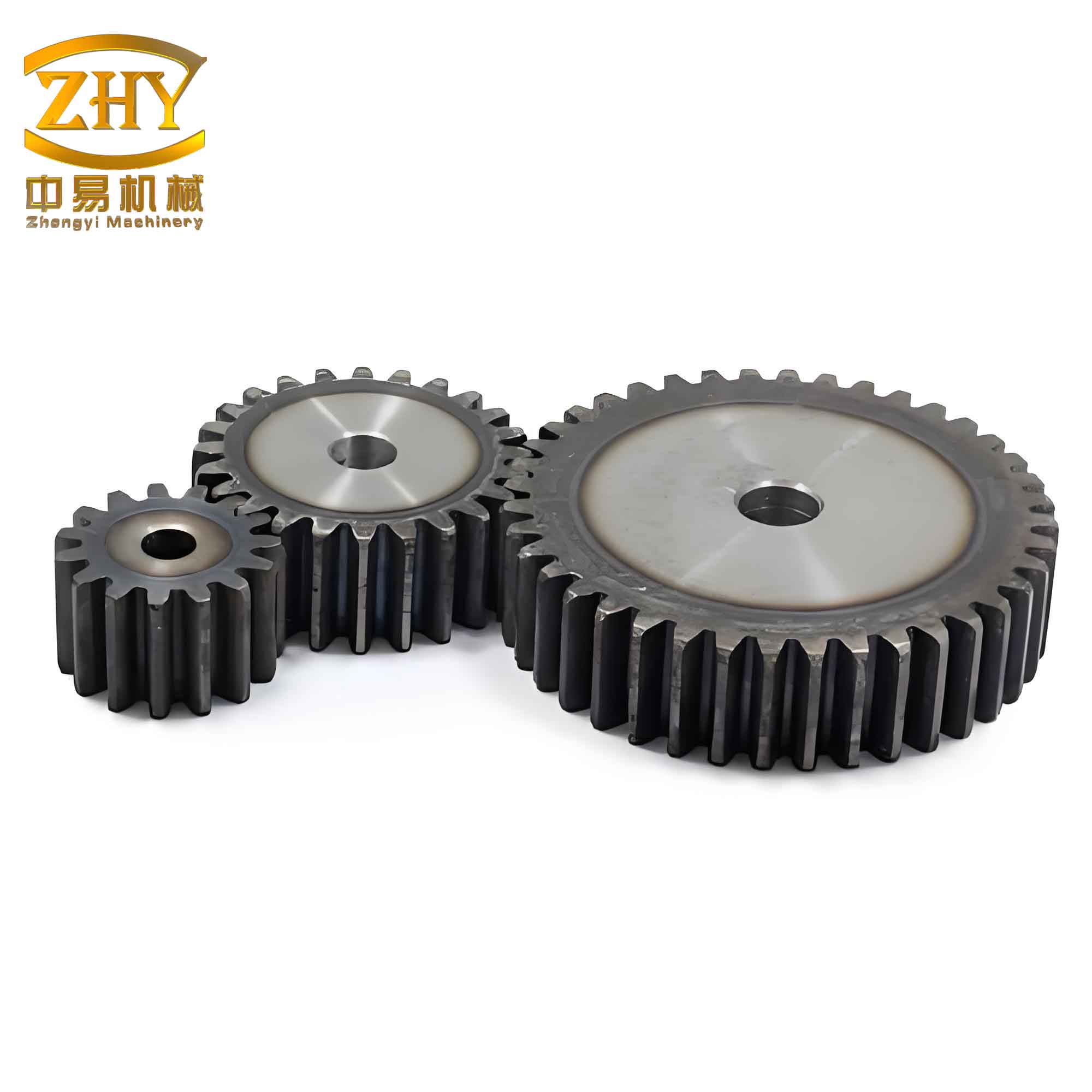
In response, precision plastic forming technologies have emerged as a promising alternative to replace traditional cutting for spur cylindrical gear fabrication. This paradigm shift offers substantial benefits: drastically improved material utilization, reduced production costs, enhanced efficiency, and superior product quality. Gears produced via precision forging exhibit a dense and uniform microstructure, continuous and rationally distributed metal flow lines, increased wear resistance, and superior bending strength and fatigue life. Despite these advantages, the widespread adoption of precision forging for complex spur cylindrical gears has been hindered by formidable technical challenges. The intricate geometry, featuring sharp corners and tight interdental spaces, makes complete die filling difficult. Furthermore, the process typically requires exceptionally high forming loads, imposing stringent demands on press capacity and die design, often leading to accelerated tool wear or failure. Consequently, for many years, the precision forging of spur cylindrical gears remained largely confined to laboratory-scale research.
To overcome these persistent limitations, particularly the prohibitive forming loads in the final forging stage, this research introduces an innovative two-step cold precision forging process. This novel methodology is founded on the synergistic coupling of two established principles: inward flow (or inward relief) and mandrel exchange. The core innovation lies in integrating these concepts into a cohesive two-stage sequence, designed to maintain a free material flow path throughout the entire deformation process, thereby effectively mitigating peak forging loads.
The principle of inward flow involves creating a designated cavity or relief zone within the workpiece or die during deformation. This cavity acts as a “pressure sink,” allowing material to flow radially inward, which reduces the pressure required to force material into the complex peripheral tooth cavities. The principle of mandrel exchange involves strategically changing the size or shape of the central mandrel between forming stages. This exchange controls the flow of material around the central bore and can prevent a sudden, drastic increase in load at the end of the forging stroke when the tooth cavities are nearly full. By coupling these methods, the proposed process ensures that the billet always has an available space to flow into, preventing the hydrostatic pressure from rising to extreme levels. This study employs rigorous three-dimensional finite element analysis (FEA) using DEFORM-3D software to simulate this novel coupled process. The simulation meticulously analyzes metal flow patterns, effective strain distribution, and the critical load-stroke relationship, providing deep insights into the deformation mechanics. A comparative analysis with the traditional single-step closed-die forging process quantitatively highlights the advantages of the proposed method in significantly reducing the required forging load for manufacturing spur cylindrical gears.
Process Design and Die Configuration for Cylindrical Gear Forging
The proposed two-step cold precision forging process for spur cylindrical gears consists of a pre-forging stage and a final forging stage. The die configuration for each stage is strategically designed to implement the coupled inward flow and mandrel exchange strategy.
The Coupled Two-Step Forging Process
The sequence begins with the pre-forging stage. In this step, a billet is deformed using a die assembly featuring a lower pad with a specific, protruding boss. The primary objective of this stage is not to form the complete gear teeth but to produce a preform. This preform has a distinctive feature: a recess or cavity on its bottom face, created by the shape of the boss on the lower pad. The geometry of this boss is a critical design parameter, influencing both the preform shape and the subsequent final forging behavior.
Following pre-forging, the process enters the final forging stage. Here, the key “exchange” element is executed. The lower pad with the boss is replaced with a flat pad. Simultaneously, the central mandrel is exchanged for one with a smaller diameter. This setup change fundamentally alters the material flow conditions for the final stage. The preform, with its pre-existing bottom cavity, is now placed on the flat pad. As the final forging proceeds, material is forced to fill the remaining intricate details of the tooth cavities. Crucially, the combined effect of the smaller mandrel and the cavity on the preform provides ample internal space for material to flow into radially. This continuous availability of free flow space prevents the drastic pressure buildup typically seen in the final moments of closed-die forging, thereby controlling the peak load. An additional benefit is that the recess on the gear’s end face may not be completely filled at the end of the stroke, potentially serving as a machined chamfer and eliminating a secondary machining operation, moving closer to net-shape production of the spur cylindrical gear.
Experimental Design: Boss Geometry Variants
Recognizing the paramount importance of the boss geometry on the pre-forging pad, three distinct designs (Type A, B, and C) were conceived for investigation. The shape and dimensions of this boss directly influence the stress state, material flow uniformity, and the final load requirements. The geometry of the flat pad used in the second stage remains constant. The dimensions of the gear model used in the simulation are as follows: number of teeth, Z = 18; module, m = 1.5 mm; pressure angle, α = 20°; profile shift coefficient, x = 0; bore diameter = 11.5 mm. The key parameters of the three boss types are summarized in the table below.
| Pad Type | Top Angle | Top Radius | Bottom Radius | Primary Design Feature |
|---|---|---|---|---|
| Type A | 30° | Sharp (0 mm) | Sharp (0 mm) | Simple conical boss with sharp edges. |
| Type B | 55° | Sharp (0 mm) | Sharp (0 mm) | Wider-angled conical boss, still sharp. |
| Type C | 55° | R3 mm | R3 mm | Wider-angled boss with filleted top and bottom edges. |
| Final Stage Pad | Flat | N/A | N/A | Flat surface with a larger bore to accommodate the smaller final mandrel. |
Finite Element Modeling and Simulation Setup
A three-dimensional finite element model was developed to simulate the cold forging process for the spur cylindrical gear. Due to the 18-fold symmetry of the gear, a 10-degree sector (representing half of one tooth) was modeled to optimize computational efficiency while maintaining accuracy. The model components are defined as follows:
- Workpiece: The initial billet is a hollow cylinder, modeled as a plastic deformable body using AISI-1045 (cold) material properties. The flow stress behavior of the material is critical for accurate simulation and can be represented by a constitutive model like:
$$ \bar{\sigma} = K \cdot (\bar{\epsilon})^n $$
where $\bar{\sigma}$ is the flow stress, $\bar{\epsilon}$ is the effective strain, $K$ is the strength coefficient, and $n$ is the strain-hardening exponent. - Tooling (Punch, Die, Mandrels, Pads): All tools are defined as rigid bodies. This is a standard assumption in metal forming simulation as the elastic deformation of hardened tool steel is negligible compared to the large plastic deformation of the workpiece.
- Friction: The interaction at the tool-workpiece interfaces is modeled using the shear friction model, defined by a constant friction factor, $m$. For cold forging with lubricant, a value of $m=0.12$ was applied.
$$ \tau = m \cdot k $$
where $\tau$ is the frictional shear stress and $k$ is the shear yield strength of the workpiece material ($k \approx \bar{\sigma} / \sqrt{3}$). - Mesh: The workpiece is discretized using tetrahedral elements with automatic remeshing capabilities enabled to handle the large shape changes without compromising mesh quality.
Finite Element Simulation Results and In-Depth Analysis
Material Flow and Velocity Field Evolution
The simulation of the Type A pad process provides a clear visualization of the deformation mechanics. In the pre-forging stage, as the punch descends, the material is constrained by the die wall, the central mandrel, and the boss on the lower pad. The presence of the boss promotes radial outward flow at the billet’s bottom, enhancing the filling of the lower tooth corners. The velocity field at this stage shows the highest material velocity (approximately 1.68 mm/s) directed into the tooth cavities, facilitated by this boss-induced flow.
Upon switching to the final stage setup (smaller mandrel, flat pad), the deformation continues. The velocity field reveals a pivotal shift: material now flows significantly into the central region around the smaller mandrel and into the pre-formed cavity at a speed (~1.59 mm/s) comparable to the tooth-filling speed. This confirms the active “inward flow” effect. In the final moments of forging, when the tooth cavities are nearly full, the excess material is predominantly directed into the end-face cavity at a high velocity (~4.81 mm/s). The process concludes with the teeth fully filled and the cavity partially filled, achieving the desired geometry for the spur cylindrical gear without excessive pressure.
Effective Strain Distribution Analysis
The distribution of effective strain at the end of the forging process is a critical indicator of deformation uniformity and potential for defects. The simulations for the three pad types reveal distinct patterns:
- Type A Pad: Exhibits severe strain localization (up to ~5.73 mm/mm) around the sharp top and bottom edges of the conical boss. This concentration is due to intense shear and redundant work caused by the abrupt geometry change, leading to non-uniform deformation and potentially higher tool stresses.
- Type B Pad: The increased top angle (55°) reduces the severity of strain concentration. Although a high-strain zone (~14.2 mm/mm) persists, its area is smaller than in Type A. The wider angle provides a gentler flow path, improving strain distribution around the boss region for the cylindrical gear preform.
- Type C Pad: Demonstrates the most uniform strain distribution. The introduction of R3 mm fillets at the stress concentration points virtually eliminates localized peaks. The maximum effective strain is a uniform ~7.37 mm/mm around the boss contour. This uniform deformation is highly desirable as it leads to more consistent mechanical properties in the forged cylindrical gear and reduces the risk of localized damage or crack initiation.
The progression from Type A to Type C underscores a fundamental principle in die design for cylindrical gear forging: eliminating sharp corners and incorporating generous fillets is essential for promoting uniform material flow and minimizing harmful strain concentrations.
Forming Load Analysis and Comparative Assessment
The load-stroke curve is the most direct metric for evaluating the efficiency and feasibility of a forging process. The simulation results yield compelling comparative data.
Comparison with Traditional Closed-Die Forging: The traditional single-step process for a similar spur cylindrical gear shows a characteristic two-phase curve. An initial gradual load rise is followed by an extremely steep, almost vertical, spike in the final 0.03 mm of stroke (e.g., from 5.47 kN to 9.03 kN). This spike represents the point where the material has nowhere left to flow, causing hydrostatic pressure to skyrocket. In contrast, the proposed two-step coupled process completely avoids this spike. The final stage load rises smoothly and peaks at approximately 4.6 kN—nearly 50% lower than the traditional method’s peak load. Furthermore, the average load throughout the deformation is reduced by roughly 30%. This dramatic reduction significantly lowers press tonnage requirements and die stress, enhancing process viability and tool life for cylindrical gear production.
Effect of Boss Geometry on Load: Analyzing the load curves for the three pre-forging pad types offers further insight. The table below summarizes the key load-stroke characteristics:
| Pad Type | Avg. Pre-forging Load | Pre-forging Stroke | Final Forging Peak Load | Final Stroke | Key Observation |
|---|---|---|---|---|---|
| Type A | Base Reference | Longest | ~4.6 kN | ~3.1 mm | Lowest pre-forge load, longest stroke. |
| Type B | ≈ +15% vs. A | ≈ -0.4 mm vs. A | ~4.6 kN | ~3.1 mm | Higher pre-load, shorter pre-stroke. |
| Type C | ≈ +15% vs. B | ≈ -0.4 mm vs. B | ~4.6 kN | ~3.1 mm | Highest pre-load, shortest pre-stroke. |
The data reveals a clear trade-off: larger boss volume (from A to C) increases the average load in the pre-forging stage but reduces the required stroke to achieve the preform. Crucially, the final forging peak load remains essentially identical (~4.6 kN) for all three types. This indicates that while boss design affects the first stage, the decisive factor for minimizing the final load is the successful implementation of the coupled inward flow and mandrel exchange principle in the second stage. For industrial application, Type C is recommended despite its slightly higher pre-forging load, as its superior strain uniformity translates to better product quality and reduced die wear for the final cylindrical gear.
Discussion on Process Mechanics and Advantages
The success of this novel two-step process for spur cylindrical gears can be attributed to the sophisticated control of stress triaxiality and material flow paths. In a closed-die cavity, as filling approaches completion, the triaxiality (the ratio of hydrostatic stress to equivalent stress) increases dramatically:
$$ \text{Triaxiality} = \frac{\sigma_m}{\bar{\sigma}} $$
where $\sigma_m$ is the mean (hydrostatic) stress. High triaxiality leads to extremely high forming pressures. The coupled process actively manages this by providing an alternative flow destination (the central and cavity regions), thereby limiting the rise in $\sigma_m$. The mandrel exchange is particularly effective; the smaller final mandrel creates an annular gap, facilitating inward radial flow and relieving pressure.
The process also optimizes the filling sequence for the cylindrical gear teeth. The pre-forging stage initiates filling from the bottom and middle regions. The final stage then completes the filling of the top corners while the inward flow mechanism is active. This controlled sequence prevents the formation of a dead-metal zone or laps in the difficult-to-fill upper tooth corners. The mathematical relationship for material volume constancy governs the process at each step:
$$ V_{\text{initial billet}} = V_{\text{preform teeth}} + V_{\text{preform cavity}} = V_{\text{final gear teeth}} + V_{\text{final partial cavity}} $$
The design ensures $V_{\text{final partial cavity}} > 0$, which is the volume that remains unfilled to act as the pressure relief.
Conclusion
This comprehensive numerical investigation substantiates the significant potential of the two-step cold precision forging process based on coupled inward flow and mandrel exchange for manufacturing high-quality spur cylindrical gears. The key conclusions are:
- The process successfully eliminates the drastic load spike characteristic of traditional closed-die forging. By maintaining a free material flow path into a central cavity and around a smaller mandrel during final forging, the peak forming load is reduced by approximately 50%.
- The geometry of the pre-forging boss significantly influences strain distribution but not the final peak load. A design incorporating large fillets (Type C) promotes uniform deformation, minimizes strain concentrations, and is therefore recommended for industrial implementation to produce robust cylindrical gears.
- The process ensures complete filling of the complex tooth profile while naturally leaving a small, controlled cavity on the gear end-face, contributing to net-shape manufacturing goals for the cylindrical gear.
- The substantial reduction in required forming force directly translates to lower press capacity requirements, reduced die stresses, extended tool life, and ultimately, a more economical and reliable production route for precision spur cylindrical gears.
This work provides a validated theoretical and simulation-based framework for a practical advanced forging process. The findings offer crucial guidance for process designers and engineers aiming to overcome the historical challenges associated with the precision cold forging of complex components like spur cylindrical gears, paving the way for its broader industrial adoption.