
In modern automotive engineering, the refinement of vehicle Noise, Vibration, and Harshness (NVH) represents a critical frontier in defining perceived quality and driver comfort. Among the various subsystems contributing to NVH, the Electric Power Steering (EPS) system stands out due to its proximity to the occupant and its direct interaction with the driver. Friction-induced noise within the EPS, particularly stemming from the worm gears in a Column-assist EPS (C-EPS) configuration, poses a significant and persistent challenge. This article consolidates practical experience and systematic methodologies for diagnosing, analyzing, and mitigating such noise, offering a detailed technical roadmap for engineers.
EPS systems have largely superseded hydraulic systems due to their energy efficiency and superior tunability. However, the integration of an electric motor, a reduction gearbox (typically a worm gear set), and associated electronics into the steering column introduces new potential sources of undesirable acoustic phenomena. In C-EPS systems, where the worm gears are located inside the passenger compartment, any generated noise is transmitted more directly and is therefore more readily perceived. Controlling this friction-induced noise is not merely about comfort; it is integral to achieving a premium driving experience and meeting stringent customer expectations.
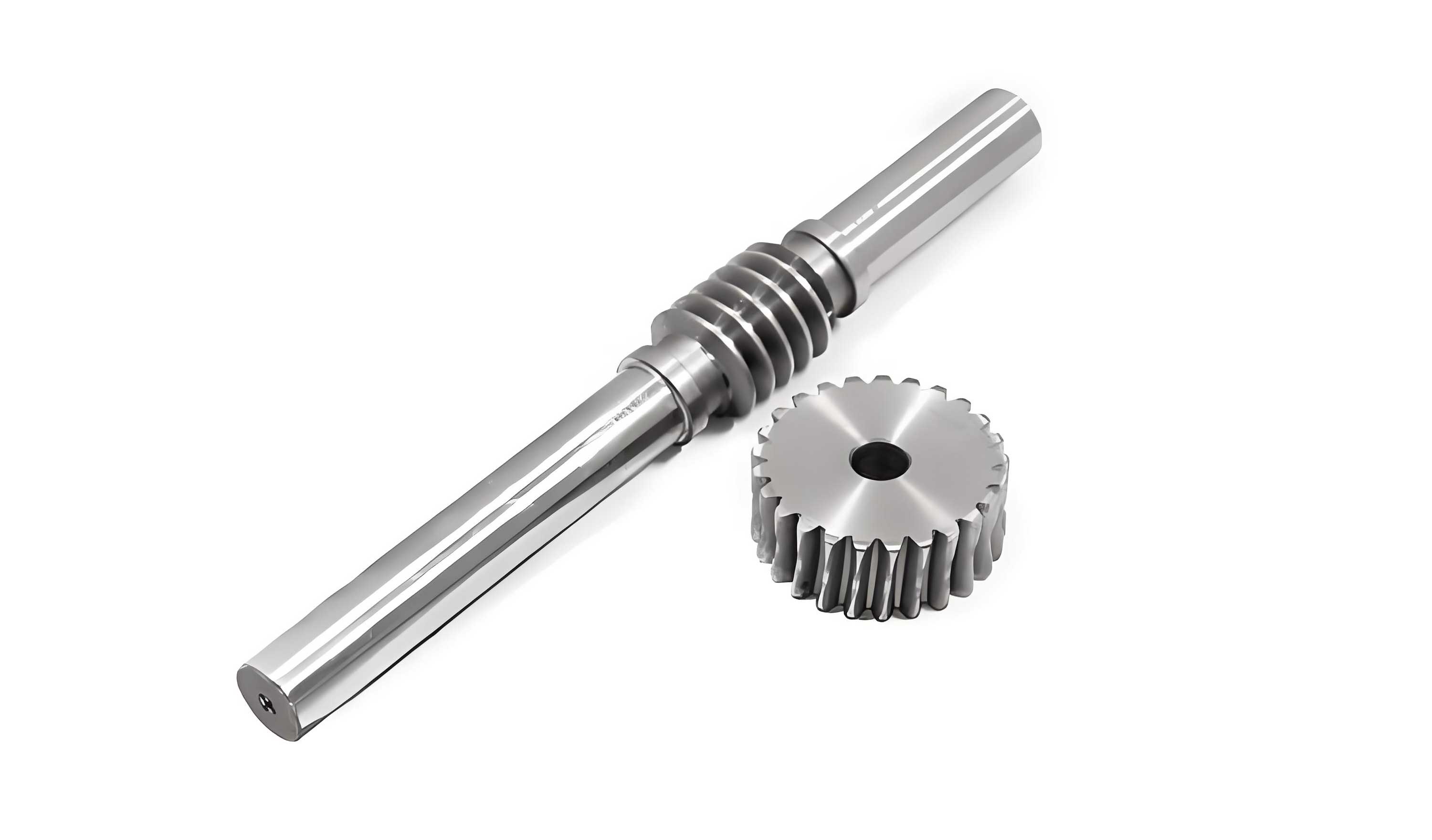
Classification of Anomalous Noises in EPS Systems
An effective control strategy begins with precise classification. Noises in EPS systems can be categorized based on their operational trigger, each pointing to different underlying mechanisms and components.
| Noise Category | Operational Condition | Typical Characteristics | Primary Suspect Components |
|---|---|---|---|
| Rotational Noise | Continuous, smooth rotation of the steering wheel. | Constant whirring, grinding, or grating sounds. | Motor bearings, worm gears, intermediate shaft joints. |
| Bump-Induced Noise | Vehicle traversing uneven road surfaces. | Intermittent clicks, clunks, or rattles caused by impacts. | Intermediate shaft splines, universal joints, worm gear backlash. |
| Reversal/Impact Noise | Rapid steering wheel reversal around a center point. | Sharp click or knock at the moment of direction change. | Lash in the worm gears or shaft couplings, component deflection. |
Friction-induced noise from the worm gear pair primarily falls under the Rotational Noise category, though its manifestation can be distinct. It often appears as a low-frequency “stick-snap” or “grating” sensation during very slow-speed maneuvers (e.g., parking), or as a high-frequency “squeal” or “chirping” during faster, on-center saw-tooth steering inputs, with the latter frequently exacerbated at low ambient temperatures.
Fundamental Mechanism: The Stick-Slip Phenomenon
The root cause of the friction-induced noise in worm gears is the stick-slip phenomenon. This occurs at the sliding contact interface between the worm (steel) and the worm wheel (polymer composite). Stick-slip is a cyclical process governed by the difference between static ($\mu_s$) and kinetic ($\mu_k$) coefficients of friction within an elastic mechanical system.
The governing dynamics can be simplified as a mass-spring-damper system where the friction interface provides a non-linear force. When the driving force applied through the system elasticity is insufficient to overcome the static friction, the interface “sticks,” and elastic energy builds up in the components (e.g., torsion bar, housing). Once the accumulated force exceeds $\mu_s$, the interface breaks free and “slips,” resulting in a rapid release of energy and a sudden jump in velocity. This slip event excites high-frequency vibrations in the surrounding structures, which are perceived as audible noise. The process then repeats. The condition for stick-slip to occur is:
$$
\mu_s > \mu_k
$$
And the system must possess sufficient compliance (spring constant $k$) to allow energy storage. The frequency of the stick-slip cycle is often low, but the acoustic emission is typically high-frequency, related to the natural modes of the excited components. Therefore, the core strategy for noise mitigation revolves around minimizing the difference between static and kinetic friction, ensuring smooth transition, and damping the resultant vibrations.
A Systematic Control Methodology for Worm Gear Friction Noise
Based on the stick-slip mechanism, a multi-faceted approach is essential. Control must be exerted over dimensional geometry, material tribology, lubrication science, and assembly precision.
1. Dimensional Control and Optimization of the Worm Gear Pair
Precise geometry is the foundation for uniform load distribution and smooth meshing. Inconsistent contact patterns lead to localized high pressure, increasing the propensity for friction spikes and noise.
a) Worm Wheel Form Tolerance Control: Injection-molded polymer worm wheels can suffer from significant radial runout due to molding imbalances. A common finding in problematic components was the use of a 4-gate injection system, leading to uneven material flow and cooling, thus high runout. Upgrading to a balanced 6-gate or higher system dramatically improves concentricity and reduces runout (e.g., from over 0.15mm to under 0.05mm T.I.R.). Reduced runout ensures the worm gears maintain a consistent center distance during rotation, preventing cyclic variation in contact pressure.
b) Worm Thread Profile Optimization: The worm, as the driving member, must have a smooth, well-finished profile. A critical issue is the presence of sharp edges or burrs on the thread crest after machining. These act as microscopic cutting tools, scoring the worm wheel surface and creating discontinuities that initiate stick-slip. A controlled chamfer or radius (e.g., 0.1mm ±0.03mm) must be specified and verified on the worm thread crest. Furthermore, the worm’s lead accuracy and profile deviation must be tightly controlled to ensure a conjugate fit with the wheel.
| Critical Dimension | Control Objective | Typical Tolerance | Measurement Method |
|---|---|---|---|
| Worm Wheel Outside Diameter Runout | Minimize to ensure concentric rotation | ≤ 0.05 mm | Dial indicator on V-blocks |
| Worm Thread Crest Chamfer/Radius | Eliminate sharp edges to prevent scoring | 0.10 ± 0.03 mm | Optical comparator / Profile projector |
| Worm Lead Error | Ensure smooth, predictable engagement | ≤ 0.015 mm over 360° | Lead checking instrument |
| Housing Center Distance | Ensure correct theoretical mesh | ± 0.02 mm | Coordinate Measuring Machine (CMM) |
2. Material Selection for the Worm Wheel
The worm wheel material is the primary variable in the friction pair. Its properties directly influence the friction coefficient, wear resistance, dimensional stability under load and temperature, and ultimately, noise generation. Common materials are fiber-reinforced polyamides (nylons).
| Material | Key Composition | Friction Coeff. (vs. Steel) | Dimensional Stability | Temp. Range Performance | Typical Application Note |
|---|---|---|---|---|---|
| PA66 | Polyamide 66, unreinforced | Moderate | Good | Good at low T, softens at high T | Cost-effective, widely used |
| PA66+GF30 | PA66 with 30% Glass Fiber | Low to Moderate | Excellent | Well-balanced high & low T | High strength, good overall choice |
| PA12+GF | Polyamide 12 with Glass Fiber | Low | Very Good | Excellent low T toughness | Good for low-noise applications |
| PA46+CF | PA46 with Carbon Fiber | Very Low | Outstanding | Superior high T strength | High performance, higher cost |
| POM | Polyoxymethylene (Acetal) | Low | Good | Poor high T resistance | Good friction, but not common for high-load worm gears |
The selection involves critical trade-offs:
1. Friction and Wear: A lower inherent friction coefficient reduces the driving force for slip. Materials like PA46+CF or PA12+GF offer advantages. Wear resistance ensures the contact geometry remains stable over the product’s life, preventing noise degradation.
2. Dimensional Stability (Water Absorption): Polyamides absorb moisture, which swells the plastic and effectively reduces the worm gear backlash. Excessive swelling can lead to a pre-loaded mesh, dramatically increasing friction and noise. Materials with lower moisture absorption (e.g., PA12, POM) or those with high fiber content (which constrains swelling) are preferred. The change in center distance due to swelling $\Delta C$ can be modeled as a function of moisture absorption $\alpha$ and wheel geometry.
3. Thermal Stability: Under-hood or in-cabin temperatures vary widely. The material must retain its mechanical strength and creep resistance across the range (-40°C to 120°C). PA66+GF generally shows good retention, while some materials like standard PA6G may soften excessively at high temperatures.
4. Mechanical Strength: The material must withstand the high contact stresses and torque loads without permanent deformation or fatigue failure.
Durability and noise bench tests are indispensable for final material selection. A standard test involves running multiple worm gear pairs through a defined “run-in” cycle under load, followed by a noise assessment protocol across a temperature spectrum.
3. Selection and Application of Specialized Grease
The lubricant is the mediator at the worm gear interface. Its primary role is to maintain a separating film, minimizing metal-to-polymer contact and smoothing the transition between static and kinetic friction.
Key considerations include:
1. Quantity: Insufficient grease leads to starved contacts and film breakdown. Based on validation experience, a minimum mass of lubricant (e.g., >16g for a typical C-EPS worm gear set) is required to ensure complete coverage of the worm threads and wheel teeth after assembly and during operation.
2. Compatibility: The grease must be chemically compatible with the worm wheel polymer to prevent swelling, softening, or degradation. It must also not separate or react with residual processing oils on metal components.
3. Rheological Properties: The grease must have a suitable base oil viscosity and a thickener system that provides stable performance across the operational temperature range. At low temperatures, it must not channel or become too stiff to flow into the contact zone. At high temperatures, it must not thin out excessively or bleed oil rapidly. A lithium complex or polyurea thickener with a synthetic hydrocarbon or ester base oil is common.
4. Additive Package: Anti-wear (AW) and extreme pressure (EP) additives are crucial to protect surfaces during boundary lubrication conditions, which are prevalent in the high-sliding worm gear contact. Friction modifiers can also help reduce the $\mu_s / \mu_k$ ratio.
The selection process involves tribological testing, such as pin-on-disk tests with the actual material pair, and full system noise and durability validation.
4. Assembly Process: Selective Fitting (Group Matching)
Even with tight component tolerances, cumulative variation can lead to inconsistent mesh quality. A selective assembly or group matching process is highly effective for high-precision worm gears.
The principle is to measure and classify components into discrete groups based on a critical dimension, then assemble parts from the same or corresponding groups.
Process Flow:
1. 100% inspect the housing center distance ($C_h$) and sort into groups (e.g., Group A: $C_{h,min}$ to $C_{h,mid}$, Group B: $C_{h,mid}$ to $C_{h,max}$).
2. 100% inspect the worm wheel’s effective operating pitch diameter or a proxy dimension ($D_w$) and sort into corresponding groups.
3. The worm is manufactured to a “zero-setting” target dimension with minimal tolerance.
4. At assembly, an operator selects a housing from Group A, installs a “zero” worm, and then installs a worm wheel from the corresponding Group A. This ensures the operational backlash is minimized and consistent across all assemblies.
The goal is to control the operational backlash $B_o$ within a very narrow window:
$$
B_o = C_h – (r_{worm} + r_{wheel})
$$
where $r_{worm}$ and $r_{wheel}$ are the effective operating radii. By controlling $C_h$ and $r_{wheel}$ through grouping, $B_o$ is stabilized, eliminating units with excessive lash (causing impact noise) or insufficient lash (causing pre-load and high friction noise).
Conclusion and Future Perspectives
Controlling friction-induced noise in C-EPS worm gears is a multi-disciplinary challenge requiring a holistic and systematic approach. The fundamental strategy is to promote smooth, stable sliding at the gear interface by minimizing the stick-slip tendency. This is achieved through the synergistic control of four pillars: 1) Precision Dimensional Geometry, 2) Optimized Tribo-material Selection, 3) Tailored Lubrication, and 4) Controlled Assembly Process. Mastering these elements allows for the development of EPS systems that meet the highest standards of acoustic comfort.
Future work should focus on deepening the understanding of the synergistic interactions between these pillars:
1. Advanced Tribo-pairing Studies: Systematic research into the friction, wear, and noise performance of novel polymer composites (e.g., with solid lubricant fillers like PTFE or graphite) against variously coated or finished worm surfaces (e.g., nitrided, DLC-coated).
2. Model-Based Predictive Design: Developing high-fidelity multi-body dynamics simulation models that incorporate non-linear friction models for the worm gears. These models could predict noise propensity in the virtual design phase, guiding geometry and material choices before physical prototyping.
3. Enhanced Validation Protocols: Creating more representative and accelerated bench tests and vehicle-level assessment procedures that accurately correlate with customer perception of worm gear noise, particularly for subtle, low-speed stick-slip events.
By continuing to refine these methodologies, the automotive industry can further elevate the refinement of electric power steering, making friction-induced noise from worm gears a relic of the past.