
Worm gears represent a cornerstone of power transmission systems across a vast spectrum of industries, including but not limited to, material handling, packaging, automation, and renewable energy. Their unique configuration, featuring a threaded worm engaging with a toothed wheel, offers distinct advantages: high reduction ratios in a single stage, compact design, smooth and quiet operation due to sliding contact, and inherent self-locking capability under certain conditions. This makes worm gears an indispensable solution for applications requiring significant speed reduction and torque multiplication. However, the very mechanism that provides these benefits—the sliding contact between the worm and the wheel—is also the primary source of their most significant operational challenge: the generation of considerable frictional heat.
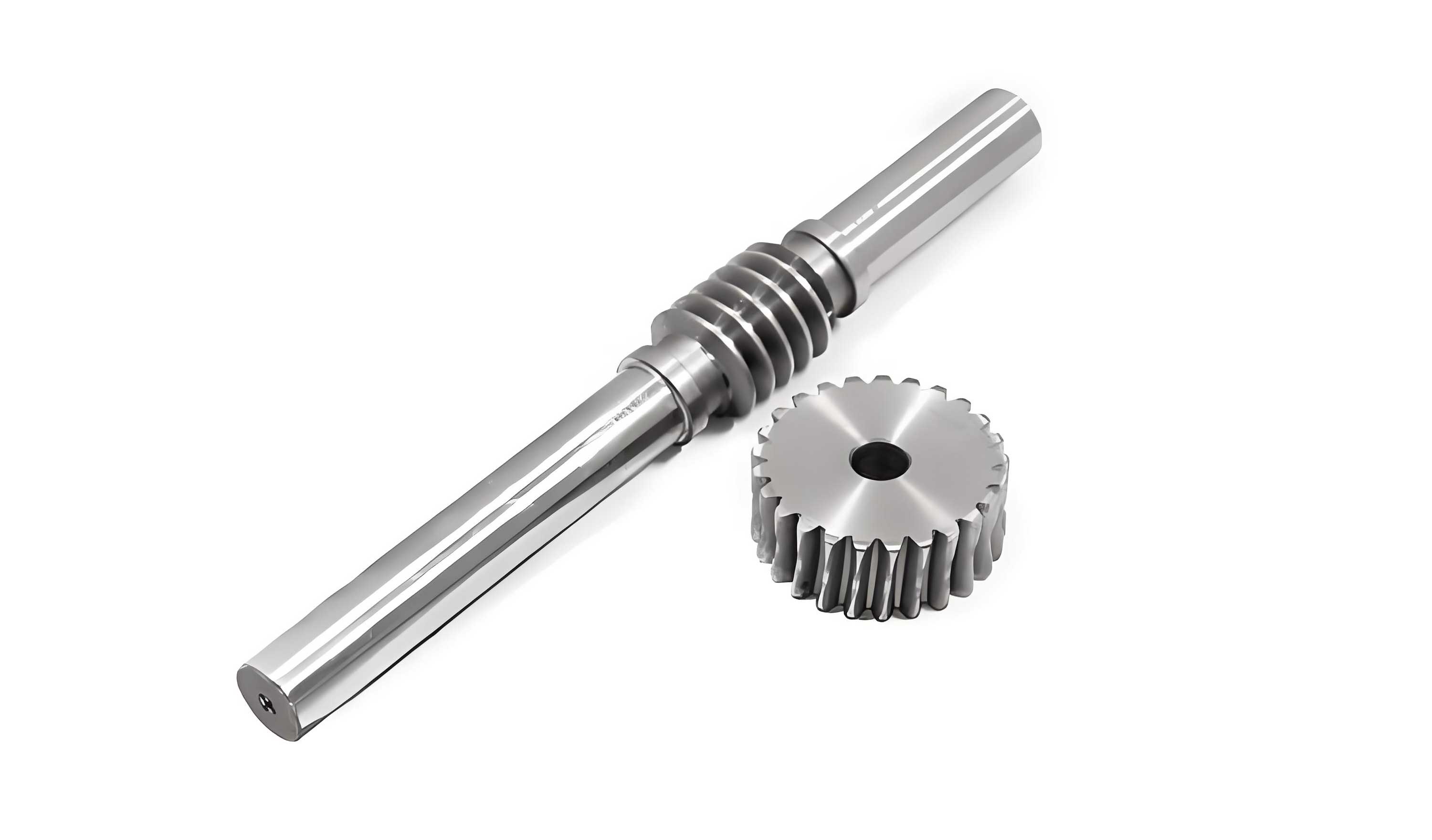
The efficiency of worm gear drives is inherently lower compared to other gear types, with a substantial portion of the input power being converted into thermal energy. This heat generation elevates the temperature of the gearbox components, primarily the lubricating oil and the shafts. While lubricants are specifically formulated to reduce friction, carry away heat, and protect surfaces, their performance degrades exponentially with temperature. Excessive temperature in worm gears leads to accelerated oxidation of the lubricant (oil breakdown), loss of viscosity, and the formation of harmful deposits. Concurrently, the thermal expansion of components can alter critical gear meshing clearances, leading to increased wear, pitting, and in severe cases, catastrophic failure. Therefore, continuous monitoring of both lubricant temperature and shaft bearing temperatures is not merely a maintenance recommendation but a critical condition-monitoring practice for ensuring reliability, preventing unplanned downtime, and extending the service life of worm gear units.
Traditionally, temperature assessment in industrial worm gears has been relegated to periodic manual checks using handheld infrared thermometers or point-of-use dial thermometers. This approach is labor-intensive, prone to human error, and fails to provide real-time, continuous data necessary for predictive maintenance. It also poses safety risks for personnel working near operating machinery. The need for an automated, integrated, and accurate monitoring system is evident. This article details the design, implementation, and validation of an embedded temperature detection system specifically tailored for worm gear reducers. The system leverages modern sensor technology and microcontroller processing to provide real-time, multi-point temperature monitoring with data logging, communication, and alarm capabilities, offering a significant technological step forward from traditional methods for safeguarding worm gears.
System Architecture and Overall Design
The primary objective of the designed system is to autonomously and continuously measure the temperature of the lubricating oil and the output/input shafts of a worm gear reducer. The system must provide local visualization, alert operators to abnormal conditions, and enable data export for further analysis. The core philosophy is a non-intrusive or minimally intrusive installation that does not require permanent modification to the gearbox housing for basic functionality.
The overall system architecture is built around a central processing unit that coordinates data acquisition, processing, and output. The conceptual layout involves three primary sensing nodes feeding data to a central controller, which then drives various output peripherals. The lubricant temperature is measured directly within the oil sump, while the shaft temperatures are measured remotely at the bearing housing or shaft end covers. The block diagram below illustrates the interconnection of these core modules:
System Functional Block Diagram:
[Temperature Sensors] –> [Signal Conditioning] –> [Microcontroller Unit (MCU)] –> [Output Modules]
Output Modules include: [Local Display], [Audible/Visual Alarm], [Data Storage], [Communication Interface].
For the worm gear monitoring application, the specific component choices are as follows:
- Sensing Layer:
- Oil Temperature: A DS18B20 programmable digital temperature sensor is employed. Its sealed, rugged probe form factor is ideal for direct immersion in the lubricant.
- Shaft Temperature (Dual Points): Two MLX90614 infrared temperature sensors are used. These non-contact sensors measure the thermal radiation emitted from the surface of the shaft end caps or bearing housings, providing an indirect but accurate measurement of shaft temperature without physical contact.
- Processing & Control Layer: An STM32F407ZGT6 microcontroller serves as the system brain. This ARM Cortex-M4 based MCU was selected for its high computational performance, ample memory, multiple communication peripherals (USART, SPI, I2C), and robust industrial pedigree.
- Communication & Interface Layer:
- A W5500 hardware TCP/IP embedded Ethernet controller provides network connectivity, allowing the system to be integrated into factory networks for remote monitoring.
- An LCD1602 alphanumeric display offers local readout of all temperatures.
- Alerting Layer: A buzzer and multi-color LEDs form a combined audible and visual alarm system triggered by configurable temperature thresholds.
Hardware Circuit Design and Component Selection
The hardware design translates the architectural blocks into a reliable electronic circuit. Power integrity, signal integrity, and robustness in an industrial environment were key considerations.
1. Microcontroller Unit (MCU) Core Circuit:
The STM32F407ZGT6 requires a stable 3.3V supply. The core circuit includes an 8MHz external high-speed crystal oscillator for the primary clock, a 32.768kHz external low-speed crystal for the Real-Time Clock (RTC), a reset circuit with debouncing, and a standard Serial Wire Debug (SWD) programming interface. Decoupling capacitors are placed near every power pin of the MCU to filter high-frequency noise.
2. Temperature Sensor Interfaces:
DS18B20 Interface: This sensor uses a proprietary 1-Wire communication protocol. Only a single data line plus ground is required. A 4.7kΩ pull-up resistor is connected between the data line and the 3.3V supply to ensure proper logic levels. The sensor can be powered directly from the data line (“parasite power”) but in this design, it is connected to the 3.3V rail for more reliable operation. The conversion formula from the raw 16-bit digital output to temperature is defined by the sensor:
$$ \text{Temperature (°C)} = \frac{\text{Raw Digital Value}}{16} $$
The resolution is configurable from 9 to 12 bits (0.5°C to 0.0625°C). For worm gear monitoring, a 12-bit resolution (0.0625°C) is used for maximum precision.
MLX90614 Interface: This IR sensor communicates via the I2C (Inter-Integrated Circuit) protocol. The I2C bus consists of a Serial Clock (SCL) line and a Serial Data (SDA) line, both pulled up to 3.3V with 4.7kΩ resistors. The sensor has a 7-bit slave address. It provides two temperature readings in its RAM: the object temperature (TO) from the IR thermopile and the ambient sensor die temperature (TA). The read values are in Kelvin, represented as 16-bit integers. The conversion formulas are critical:
$$ T_o = 0.02 \times B_o – 273.15 $$
$$ T_a = 0.02 \times B_a – 273.15 $$
where \( B_o \) and \( B_a \) are the raw 16-bit digital readings for object and ambient temperature, respectively, and 0.02 is the digital resolution in Kelvin per Least Significant Bit (LSB).
3. Alarm and Indication Module:
The alarm circuit is straightforward. An NPN transistor (e.g., 2N3904) is used as a switch to drive the buzzer, which requires a higher current than the MCU GPIO pin can source. The base of the transistor is connected to the MCU pin via a current-limiting resistor (e.g., 1kΩ). When the pin is set high, the transistor saturates, completing the buzzer’s circuit to ground. For visual alarms, LEDs are connected to MCU pins through appropriate series resistors (e.g., 220Ω). Software can control these to be steady or blinking under fault conditions related to the worm gears’ temperature.
4. Display Module:
The LCD1602 operates in 4-bit mode to save GPIO pins. It requires connection for data lines (D4-D7), Register Select (RS), Read/Write (R/W, tied low for write-only), and Enable (E). A potentiometer is included in the circuit to adjust the display contrast. The backlight is powered through a current-limiting resistor.
5. Ethernet Communication Module:
The W5500 chip implements the TCP/IP stack in hardware, offloading this task from the main MCU. It interfaces with the STM32 via the SPI (Serial Peripheral Interface) bus. The circuit includes the W5500, an RJ45 connector with integrated magnetics, and necessary passive components. This module allows the worm gear temperature data to be served via simple web pages or sent to a SCADA system using Modbus TCP.
6. Power Supply Circuit:
The system is designed for 24VDC industrial supply, which is common in factory settings. A step-down DC-DC converter (e.g., LM2596) first reduces this to a stable 5V. A low-dropout linear regulator (e.g., AMS1117-3.3) then provides the clean 3.3V rail for the MCU and sensitive digital circuits. Input protection includes a polarity protection diode, a fuse, and bulk capacitors for filtering.
Software Design and Algorithm Implementation
The software brings the hardware to life, orchestrating all tasks. It is developed in C language using a bare-metal or RTOS (Real-Time Operating System) approach, prioritizing reliability and deterministic timing.
Main Program Flow:
The software follows a super-loop or a multitasking RTOS structure. Key tasks include:
- System Initialization: Configures all MCU peripherals (GPIO, Timers, I2C, SPI, USART), initializes the LCD, W5500, and sets up initial variables and alarm thresholds.
- Sensor Data Acquisition: A periodic task reads all three temperature sensors.
- For the DS18B20, the 1-Wire protocol is bit-banged via a GPIO pin following strict timing sequences to initiate conversion and read the scratchpad memory.
- For the MLX90614, the I2C peripheral is used to send the device address and command to read the specific RAM locations (\(B_o\) and \(B_a\)), then the conversion formulas are applied.
- Data Processing & Alarm Check: The raw temperatures are filtered (e.g., using a moving average filter) to reduce noise. The processed values are compared against user-defined high-temperature thresholds for the oil and each shaft. If any threshold is exceeded, the alarm flag is set.
- Display Update: The LCD is updated with the latest temperature values and system status (e.g., “OK” or “ALARM”).
- Communication Handler: Services the Ethernet stack, responding to HTTP requests or sending data via a predefined industrial protocol.
- Alarm Activation: If the alarm flag is active, this task activates the buzzer and controls the LED flashing pattern.
Key Software Algorithms:
A critical algorithm is the handling of the I2C communication with the MLX90614. The flowchart involves:
- Initiating an I2C Start condition.
- Sending the 7-bit slave address (e.g., 0x5A) with the Write bit.
- Sending the command byte corresponding to the RAM address of \(T_o\) (e.g., 0x07).
- Issuing a Repeated Start condition.
- Sending the slave address with the Read bit.
- Reading two data bytes (low byte, high byte) for the temperature, sending Acknowledges appropriately.
- Issuing a Stop condition.
The two bytes are combined into a 16-bit integer \(B_o\), and the formula \(T_o = 0.02 \times B_o – 273.15\) is computed.
Mechanical Integration with Worm Gear Reducers
The physical installation is designed for versatility to accommodate different sizes and models of worm gears.
1. Oil Temperature Sensor Mounting:
The DS18B20 is housed in a modified drain plug or a specially machined port plug. The probe extends into the oil sump. The sealing is achieved using standard O-rings or crush washers compatible with the lubricant. This provides a direct, immersion-style measurement at a critical location within the worm gearbox.
2. Shaft Temperature Sensor Mounting:
The MLX90614 sensors are mounted on adjustable magnetic bases or small articulated arms. They are positioned perpendicular to, and at a fixed distance from (e.g., 20-50 mm), the surface whose temperature is to be measured—typically the bearing housing or the shaft end cover, which is in thermal equilibrium with the shaft. Care is taken to ensure the sensor’s field of view is filled by the target surface and to avoid measuring reflected radiation from other hot objects. This non-contact method is ideal for rotating machinery like worm gear shafts.
The following table summarizes the sensor mounting strategy:
| Measurement Point | Sensor Type | Mounting Method | Key Consideration |
|---|---|---|---|
| Lubricant Oil | DS18B20 (Contact) | Immersion in modified drain/oil fill plug | Sealing integrity, chemical compatibility of probe sheath with oil |
| Input/Output Shaft (Bearing Area) | MLX90614 (Non-Contact) | Adjustable bracket pointing at housing/end cap | Target surface emissivity, sensor-to-target distance, clean view |
Experimental Calibration and Performance Analysis
To validate the accuracy and reliability of the system, comprehensive calibration tests were performed against traceable temperature standards. A precision thermal calibration bath (oil medium) was used as the reference.
Calibration Procedure:
- The DS18B20 probe was directly immersed in the stabilized oil bath.
- The MLX90614 sensor was rigidly mounted above the oil surface, perpendicular to it, at a fixed distance of 2 cm. The oil surface emissivity was set to a known value (≈0.95) in the sensor’s configuration.
- The bath temperature was set at various points across the expected operating range of worm gears (e.g., 20°C to 90°C).
- At each setpoint, after thermal equilibrium was reached, readings from the system under test were recorded and compared to the reference standard thermometer of the bath.
Results and Error Analysis:
The data from a representative calibration run is presented below. The error is calculated as: \( \text{Error} = T_{\text{System}} – T_{\text{Reference}} \).
| Reference Bath Temperature (°C) | System Reading (°C) | Absolute Error (°C) |
|---|---|---|
| 20.00 | 19.94 | -0.06 |
| 30.00 | 29.88 | -0.12 |
| 40.00 | 39.81 | -0.19 |
| 50.00 | 49.80 | -0.20 |
| 60.00 | 59.75 | -0.25 |
| 70.00 | 69.88 | -0.12 |
| 80.00 | 80.06 | +0.06 |
| Reference Bath Temperature (°C) | Sensor 1 Reading (°C) | Abs. Error 1 (°C) | Sensor 2 Reading (°C) | Abs. Error 2 (°C) |
|---|---|---|---|---|
| 20.00 | 20.09 | +0.09 | 20.08 | +0.08 |
| 30.00 | 30.11 | +0.11 | 30.10 | +0.10 |
| 40.00 | 40.10 | +0.10 | 40.12 | +0.12 |
| 50.00 | 50.14 | +0.14 | 50.13 | +0.13 |
| 60.00 | 60.15 | +0.15 | 60.16 | +0.16 |
| 70.00 | 70.07 | +0.07 | 70.10 | +0.10 |
| 80.00 | 79.98 | -0.02 | 80.03 | +0.03 |
Discussion of Performance:
The experimental results demonstrate the high accuracy of the monitoring system, which is fully suitable for condition monitoring of worm gears.
- The DS18B20 exhibited a maximum absolute error of 0.25°C, which is within its specified accuracy and more than sufficient for detecting the significant temperature rises associated with worm gear problems (often 20-30°C above ambient).
- The MLX90614 sensors showed a maximum absolute error of 0.16°C. The slight positive bias is consistent and can be compensated in software if higher absolute accuracy is required. The non-contact measurement introduces an uncertainty related to the target surface emissivity; however, for painted metal housings typical of worm gearboxes, emissivity is stable and known.
The combined system uncertainty for detecting a significant fault condition is negligible. The system’s resolution (0.0625°C for DS18B20, ~0.01°C for MLX90614) far exceeds the requirement for trending and alarm generation.
The thermal time constant of the worm gear system itself is much larger than the sampling period of this system (which can be sub-second), meaning the monitoring provides a real-time representation of thermal status. The relationship between power loss, heat generation, and temperature rise in worm gears can be modeled by the heat balance equation:
$$ P_{\text{loss}} = h \cdot A \cdot (T_{\text{oil}} – T_{\text{ambient}}) + m \cdot c \cdot \frac{dT}{dt} $$
where \( P_{\text{loss}} \) is the power lost as heat (related to inefficiency), \( h \) is the heat transfer coefficient, \( A \) is the surface area, \( m \) is the mass, \( c \) is the specific heat, and \( \frac{dT}{dt} \) is the rate of temperature change. By monitoring \( T_{\text{oil}} \) and \( T_{\text{ambient}} \) over time, this system provides the data needed to assess the health of the worm gears indirectly through thermal performance.
Industrial Application and Value Proposition
The implementation of this temperature monitoring system addresses a clear gap in the maintenance of worm gear drives. Its value extends beyond simple temperature reading.
1. Predictive Maintenance: Continuous logging of temperature data allows for the establishment of healthy operational baselines for specific worm gear units. Algorithms can detect not just absolute threshold breaches, but also abnormal rates of temperature increase, which are early indicators of lubrication failure, misalignment, or overload.
2. Energy Efficiency Monitoring: Since the temperature of a worm gearbox is directly correlated to its efficiency losses, trending this data can indicate when efficiency is degrading, prompting maintenance that can save significant energy costs in large-scale operations.
3. Safety and Downtime Reduction: Automatic alarms enable immediate response to overheating conditions, potentially preventing a minor issue from escalating into a major failure that causes prolonged unplanned downtime and safety hazards.
4. Data Integration: The Ethernet interface is crucial for modern Industry 4.0 environments. Temperature data from multiple worm gear units across a plant can be aggregated in a central dashboard, enabling fleet-level analysis and maintenance planning.
Future Enhancements:
The modular design allows for several augmentations:
- Integration of vibration sensors for a more comprehensive health assessment of the worm gears.
- Addition of lubricant level or condition sensors.
- Implementation of wireless communication modules (LoRa, NB-IoT) for hard-to-reach installations.
- Development of advanced analytics software using machine learning to predict remaining useful life based on thermal and operational history.
Conclusion
This article has presented a detailed exposition on the design and realization of a dedicated, microcontroller-based temperature monitoring system for worm gear reducers. The system successfully integrates contact and non-contact temperature sensing technologies to provide accurate, real-time measurements of both lubricant and shaft temperatures—two critical health indicators for worm gears. The hardware design centered on the powerful STM32F407 microcontroller ensures reliable data acquisition and processing, while the inclusion of an Ethernet module facilitates seamless integration into industrial networks. The software architecture provides robust control, alarm management, and data handling. Comprehensive calibration verified the system’s measurement accuracy, with errors well within acceptable limits for industrial condition monitoring. The mechanical installation strategy emphasizes practicality and non-intrusiveness. By enabling continuous, automated thermal monitoring, this system represents a significant tool for advancing from preventive to predictive maintenance strategies for worm gear drives, ultimately enhancing reliability, safety, and operational efficiency in countless industrial applications.