
In the realm of mechanical engineering, gears serve as critical transmission components, particularly in applications such as tractors and industrial machinery. The performance and longevity of these gears are heavily dependent on their surface hardness and core toughness, which are typically achieved through carburizing and subsequent heat treatment processes. However, these processes often introduce significant distortions and dimensional changes, collectively referred to as heat treatment defects. These defects, including warpage, size variation, and shape irregularities, can compromise gear precision, leading to noise, vibration, and premature failure. As such, understanding and controlling heat treatment defects is paramount for ensuring product quality and reliability. In this analysis, I will delve into the multifaceted nature of heat treatment defects in carburized gears, drawing from extensive experimental studies and industrial practices. The focus will be on systematic factors influencing distortion, practical strategies for minimization, and corrective measures for salvaging affected components. Throughout this discussion, the term “heat treatment defects” will be repeatedly emphasized to underscore its centrality in gear manufacturing challenges.
Our investigation centers on gears manufactured from low-alloy carburizing steels, such as 20CrMnTi, which are widely used due to their good hardenability and wear resistance. The standard process involves gas carburizing at temperatures around 920°C to 940°C, followed by direct quenching or reheat quenching to achieve a case depth of 1.0–1.4 mm. Despite optimized parameters, heat treatment defects persistently occur, with key deformations observed in the bore dimensions, tooth profile, and runout. For instance, the distortion of splined bores is a common issue, often manifesting as shrinkage, expansion, or conical shapes. These heat treatment defects are not merely consequences of the thermal cycle; they stem from a complex interplay of design, material properties, and processing history. By adopting a holistic view—from design to final machining—we can better predict and manage these defects. The following sections will detail our experimental approach, quantify deformation behaviors, analyze causative factors using tables and formulas, and propose effective countermeasures. Emphasizing “heat treatment defects” throughout, this comprehensive review aims to provide actionable insights for engineers and metallurgists striving to enhance gear performance.
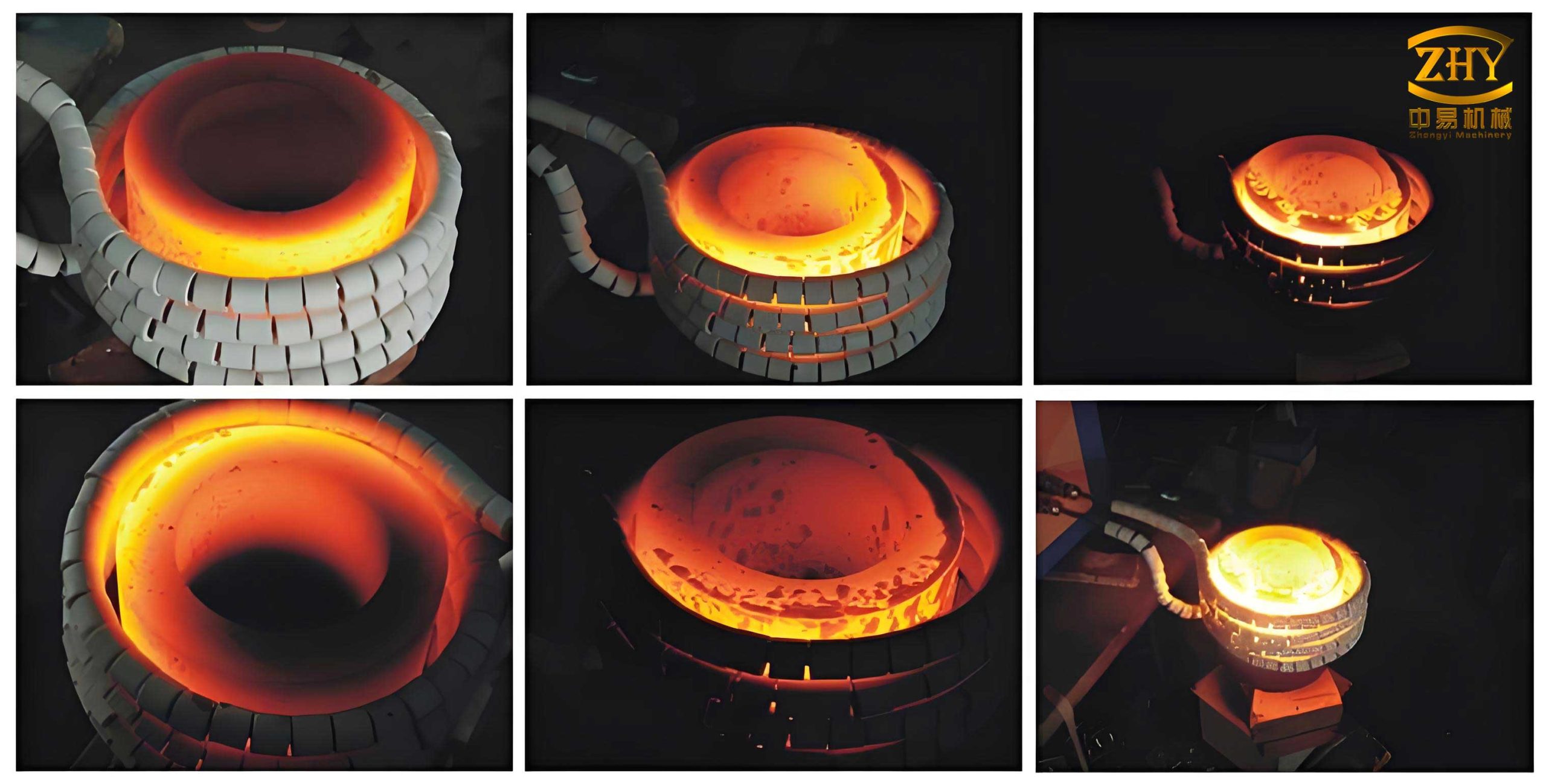
To systematically study heat treatment defects, we conducted a series of experiments on splined gear components. The gears were fabricated from 20CrMnTi steel, with carburizing performed in a 75 kW pit-type furnace using kerosene as the carburizing agent. The process curve involved heating to 920°C for carburizing, followed by a diffusion period and direct quenching in oil at approximately 850°C. Key dimensions, including spline bore diameter (measured at upper, middle, and lower sections), tooth thickness via chordal thickness, and runout, were recorded before and after heat treatment. Statistical analysis revealed that bore diameters typically shrink, but the magnitude varies with geometry, while tooth thickness tends to increase, leading to growth in chordal dimension. For example, the average increase in chordal dimension ranged from 0.02 to 0.08 mm for modules of 2.5 to 4.5. These variations underscore the pervasive nature of heat treatment defects, which necessitate precise tolerance allocation between cold and hot processes. The data below summarizes typical deformation patterns, highlighting how heat treatment defects manifest in splined bores.
| Gear Type | Bore Section | Average Shrinkage (-) or Expansion (+) | Remark |
|---|---|---|---|
| Type I (Thin-thick wall) | Upper (thin) | -0.05 to -0.12 | Conical bore formed |
| Type I (Thin-thick wall) | Lower (thick) | +0.01 to +0.05 | May exhibit slight expansion |
| Type II (Uniform thin wall) | All sections | -0.08 to -0.15 | Uniform shrinkage |
| Type III (Thick-thin-thick) | Middle (thin) | -0.04 to -0.10 | Barrel-shaped or hourglass |
| Type IV (Thick-thin taper) | Upper (thick) | -0.02 to -0.06 | Inverse taper bore |
The observed deformations are classic examples of heat treatment defects, driven by non-uniform cooling and phase transformations. To quantify these effects, we can model the underlying stresses. The total distortion in gears arises from two primary sources: thermal stress and transformation stress. Thermal stress, denoted as $\sigma_{th}$, develops due to temperature gradients during heating and cooling, and can be approximated by:
$$\sigma_{th} = E \cdot \alpha \cdot \Delta T$$
where $E$ is the Young’s modulus (typically 210 GPa for steel), $\alpha$ is the coefficient of thermal expansion (about $12 \times 10^{-6}$ /°C), and $\Delta T$ is the temperature difference between surface and core. During quenching, rapid cooling of the surface relative to the core induces compressive stresses on the surface and tensile stresses in the core, leading to shape changes. Transformation stress, $\sigma_{tr}$, arises from volumetric changes associated with austenite-to-martensite transformation, which has a higher specific volume. This can be expressed as:
$$\sigma_{tr} = K \cdot \Delta V \cdot f_m$$
where $K$ is a material constant, $\Delta V$ is the volume change per unit mass (approximately 4% for full martensite), and $f_m$ is the martensite fraction. The combined effect results in residual stresses that manifest as heat treatment defects. For splined bores, the net dimensional change $\Delta D$ can be estimated as:
$$\Delta D = \int (\epsilon_{th} + \epsilon_{tr}) \, dA \approx \frac{(\sigma_{th} + \sigma_{tr}) \cdot L}{E}$$
where $L$ is a characteristic length (e.g., bore diameter). These formulas illustrate how heat treatment defects are intrinsically linked to material properties and process parameters.
Beyond stresses, numerous factors exacerbate heat treatment defects. We categorize them into design, material, preprocessing, machining, and heat treatment parameters. Each factor contributes to distortion variability, making control challenging. The following table outlines key factors and their impacts on heat treatment defects, providing a framework for analysis.
| Factor Category | Specific Element | Effect on Distortion | Mechanism |
|---|---|---|---|
| Design | Wall thickness uniformity | High impact | Non-uniform cooling induces stress gradients |
| Geometric transitions | Moderate impact | Sharp changes act as stress concentrators | |
| Material | Steel grade (e.g., 20CrMnTi vs. 18CrMnTi) | Significant | Hardenability differences alter transformation kinetics |
| Carbon content variation | Moderate | Affects martensite start temperature and stress | |
| Banding or segregation | High | Creates anisotropic properties, increasing irregular distortion | |
| Preprocessing | Forging quality | High | Poor grain flow or incomplete filling leads to inhomogeneity |
| Normalizing consistency | Moderate | Inadequate stress relief or coarse structure raises defect susceptibility | |
| Machining | Cold working precision | Critical | Insufficient tolerance allocation amplifies post-heat treatment errors |
| Surface integrity (e.g., tearing) | Moderate | Stress risers from machining aggravate distortion upon heating | |
| Heat Treatment | Quenching temperature | High | Higher temperatures increase thermal gradients and transformation strain |
| Cooling medium (oil temperature) | Moderate | Variations in cooling rate affect stress magnitude | |
| Fixturing (orientation, packing) | Significant | Influences heat transfer and gravitational sagging | |
| Atmosphere control | Low | Minor impact on distortion, but affects case uniformity |
Design plays a pivotal role in mitigating heat treatment defects. As observed, gears with asymmetric wall thickness—such as those with a thin flange on one side and a thick hub on the other—exhibit pronounced conical bore distortion. This is because the thin section cools faster, contracting more, while the thick section retains heat longer, potentially expanding. To minimize such heat treatment defects, designers should aim for symmetrical geometries and gradual transitions. For instance, increasing the wall thickness in thin regions by even 10–20% can reduce distortion by promoting more uniform cooling. Additionally, incorporating compensation features, such as extra stock in critical areas, allows for predictable shrinkage during heat treatment. These proactive measures address heat treatment defects at the source, reducing reliance on corrective actions later.
Material selection and quality are equally critical in controlling heat treatment defects. Steels with narrow hardenability bands, such as those specified with Jominy curve limits, exhibit more consistent transformation behavior, leading to lower distortion scatter. Chemical composition variations, especially in carbon and alloying elements like chromium and manganese, alter the martensitic transformation temperature $M_s$, which influences transformation stresses. The $M_s$ can be estimated using empirical formulas:
$$M_s (°C) = 539 – 423C – 30.4Mn – 17.7Ni – 12.1Cr – 7.5Mo$$
where element symbols represent weight percentages. A lower $M_s$ results in greater undercooling and higher transformation stresses, exacerbating heat treatment defects. Furthermore, material defects like banding or non-metallic inclusions act as stress concentrators, promoting irregular distortion. Therefore, stringent material certification and preprocessing, such as homogenization annealing, are essential to mitigate these heat treatment defects.
Preprocessing steps, notably forging and normalizing, significantly influence the severity of heat treatment defects. Proper forging refines the grain structure and reduces chemical segregation, but inconsistent forging temperatures or die design can introduce residual stresses that amplify during heat treatment. Normalizing, intended to homogenize the microstructure, must be uniformly applied; otherwise, localized soft or hard spots lead to differential responses during carburizing and quenching. For example, gears with non-uniform prior microstructure show erratic bore distortions, as evidenced by microstructural analysis revealing mixed ferrite-pearlite bands. Such preprocessing inconsistencies are direct contributors to heat treatment defects, underscoring the need for controlled thermal cycles.
Machining practices also play a role in exacerbating or alleviating heat treatment defects. Cold working operations, such as broaching or turning, impart residual stresses that can relax during heating, causing additional distortion. Moreover, if machining tolerances are not adjusted to account for anticipated heat treatment defects, the final gear may fall out of specification. A common practice is to oversize bores by 0.05–0.10 mm for gears prone to shrinkage, based on historical deformation data. Surface finish matters too: rough or torn surfaces from dull tools act as nucleation sites for stress relief distortions. Thus, maintaining high machining accuracy and surface integrity is crucial to minimize subsequent heat treatment defects.
The heat treatment process itself is the primary stage where heat treatment defects become manifest. Key parameters include quenching temperature, cooling rate, and fixturing. Our experiments show that direct quenching from carburizing temperature tends to produce less distortion than reheat quenching, as it avoids an additional thermal cycle. However, the quenching temperature must be carefully controlled: lower temperatures (e.g., 820–840°C) promote bore shrinkage but with better consistency, while higher temperatures (above 860°C) lead to expansion and increased ovality. The relationship between quenching temperature $T_q$ and bore diameter change $\Delta D$ can be modeled as:
$$\Delta D = a \cdot (T_q – T_{ref}) + b$$
where $a$ and $b$ are empirical constants, and $T_{ref}$ is a reference temperature (e.g., 850°C). For 20CrMnTi gears, we found $a \approx 0.0005$ mm/°C and $b \approx -0.05$ mm, indicating that each 10°C increase in $T_q$ reduces shrinkage by about 0.005 mm, potentially shifting towards expansion. Cooling medium conditions also affect heat treatment defects; oil temperature stability is vital, as fluctuations alter viscosity and cooling speed. Contaminated oil, such as with water or soot, can cause erratic cooling, leading to unpredictable distortions—a severe form of heat treatment defects. Fixturing, such as stacking gears horizontally or hanging them vertically, influences distortion patterns. Horizontal stacking may induce sagging due to gravity, while vertical hanging reduces ovality but requires more furnace space. Optimizing these parameters is essential to suppress heat treatment defects.
To actively reduce heat treatment defects, several preventive strategies can be employed. These include process modifications and design adjustments. One effective method is the use of compensation rings or shims placed on thin sections during quenching to equalize cooling rates. Another is controlled cooling, such as interrupted quenching or marquenching, which reduces thermal gradients. Additionally, implementing low-pressure carburizing with high-pressure gas quenching offers more uniform case hardening with minimal distortion. However, these advanced techniques may not be accessible to all manufacturers, so simpler approaches like preheating fixtures or using tailored quenching oils are valuable. The goal is to stabilize the distortion pattern, making heat treatment defects predictable and manageable through cold machining compensations.
Despite best efforts, heat treatment defects sometimes result in out-of-tolerance components. Various corrective measures exist to salvage such gears, each with its applicability and limitations. These methods target specific distortion modes, such as bore shrinkage or expansion. The table below summarizes common corrective techniques for heat treatment defects, along with their effectiveness and constraints.
| Method | Applicable Defect | Procedure | Max Correction (mm) | Remarks |
|---|---|---|---|---|
| Sizing (Cold挤压) | Bore shrinkage | Force a mandrel through bore to expand it | 0.03–0.05 | Limited by material springback; risk of tool breakage |
| Annealing + Re-broaching | Excessive shrinkage or distortion | Annealing to soften, then re-machine bore | 0.10–0.20 | May affect case hardness; requires requenching |
| Localized Heating (e.g., induction) | Bore expansion | Induction heat bore followed by air or oil cool | 0.02–0.06 | Precise control needed; can induce new stresses |
| Electrochemical Machining (ECM) | Bore size adjustment | Electrolytic material removal in controlled bath | 0.01–0.10 per pass | Good for complex shapes; sensitive to electrolyte concentration |
| Peening or Coining | Minor shape irregularities | Localized plastic deformation to reshape | <0.02 | Risk of surface damage; suitable for non-critical areas |
Among these, electrochemical correction is particularly interesting for addressing heat treatment defects, as it allows precise, non-contact material removal. The material removal rate $R$ in ECM can be described by Faraday’s law:
$$R = \frac{I \cdot M}{n \cdot F \cdot \rho}$$
where $I$ is current, $M$ is molar mass, $n$ is valence, $F$ is Faraday’s constant, and $\rho$ is density. By controlling current density and electrolyte composition (e.g., sodium nitrate solutions), we can selectively remove material from oversized bores, correcting heat treatment defects without introducing mechanical stresses. However, this method requires careful parameter optimization to avoid over-correction or surface roughening.
Another promising approach for mitigating heat treatment defects is the use of simulation tools. Finite element analysis (FEA) can model thermal and phase transformation stresses during quenching, predicting distortion patterns. The governing heat transfer equation during quenching is:
$$\rho c_p \frac{\partial T}{\partial t} = \nabla \cdot (k \nabla T) + Q_{tr}$$
where $\rho$ is density, $c_p$ is specific heat, $k$ is thermal conductivity, and $Q_{tr}$ is the heat source due to phase transformation. Coupled with mechanical analysis, FEA helps optimize process parameters virtually, reducing trial-and-error in addressing heat treatment defects. For instance, simulations can identify optimal fixturing orientations or quenching media temperatures to minimize bore distortion. As computational power grows, such predictive tools become invaluable in proactive management of heat treatment defects.
In conclusion, heat treatment defects in carburized gears are multifaceted challenges stemming from design, material, and process interactions. Through systematic analysis, we have identified key factors—such as geometric asymmetry, material inconsistencies, and quenching parameters—that exacerbate these defects. By implementing preventive measures like design optimization, material control, and process stabilization, we can significantly reduce the incidence and severity of heat treatment defects. When defects occur, corrective techniques like cold sizing, annealing, or electrochemical machining offer viable salvage options. Ultimately, a holistic approach integrating cold and hot working tolerances is essential for producing precision gears. The persistent focus on “heat treatment defects” throughout this discussion highlights their critical role in gear manufacturing. Future advancements in simulation and advanced processing technologies promise further reductions in heat treatment defects, enhancing gear reliability and performance across industries.
To further illustrate the interplay of factors, consider the cumulative effect of multiple variables on overall distortion. A regression model for bore diameter change $\Delta D$ might incorporate design factor $X_d$, material factor $X_m$, and process factor $X_p$:
$$\Delta D = \beta_0 + \beta_1 X_d + \beta_2 X_m + \beta_3 X_p + \epsilon$$
where $\beta$ coefficients represent sensitivity weights, and $\epsilon$ is error. Empirical data fitting can yield specific values, aiding in prediction and control of heat treatment defects. For example, $X_d$ could be wall thickness ratio, $X_m$ hardenability index, and $X_p$ quenching temperature deviation. Such models empower manufacturers to pre-adjust processes, turning heat treatment defects from unpredictable nuisances into manageable variables. As we continue to refine these approaches, the battle against heat treatment defects will increasingly shift from reactive correction to proactive prevention, ensuring higher quality and efficiency in gear production.