
The reliable operation of automotive drivetrains is paramount to vehicle safety and performance. At the heart of many drive axle systems, particularly in heavy-duty applications, lie spiral bevel gears, which are responsible for transmitting power at a right angle while managing significant torque loads. Their failure, therefore, can lead to catastrophic driveline breakdowns. This article presents a detailed, first-person perspective investigation into the root cause analysis of a premature failure observed in a vehicle’s main reducer spiral bevel gear during rigorous bench testing. Our exploration extends far beyond the initial findings, delving into the metallurgical principles, heat treatment science, and systemic quality control measures essential for preventing such failures. The analysis underscores that the integrity of these critical components is not merely a function of material selection but is profoundly governed by the precise execution of manufacturing and thermal processing protocols.
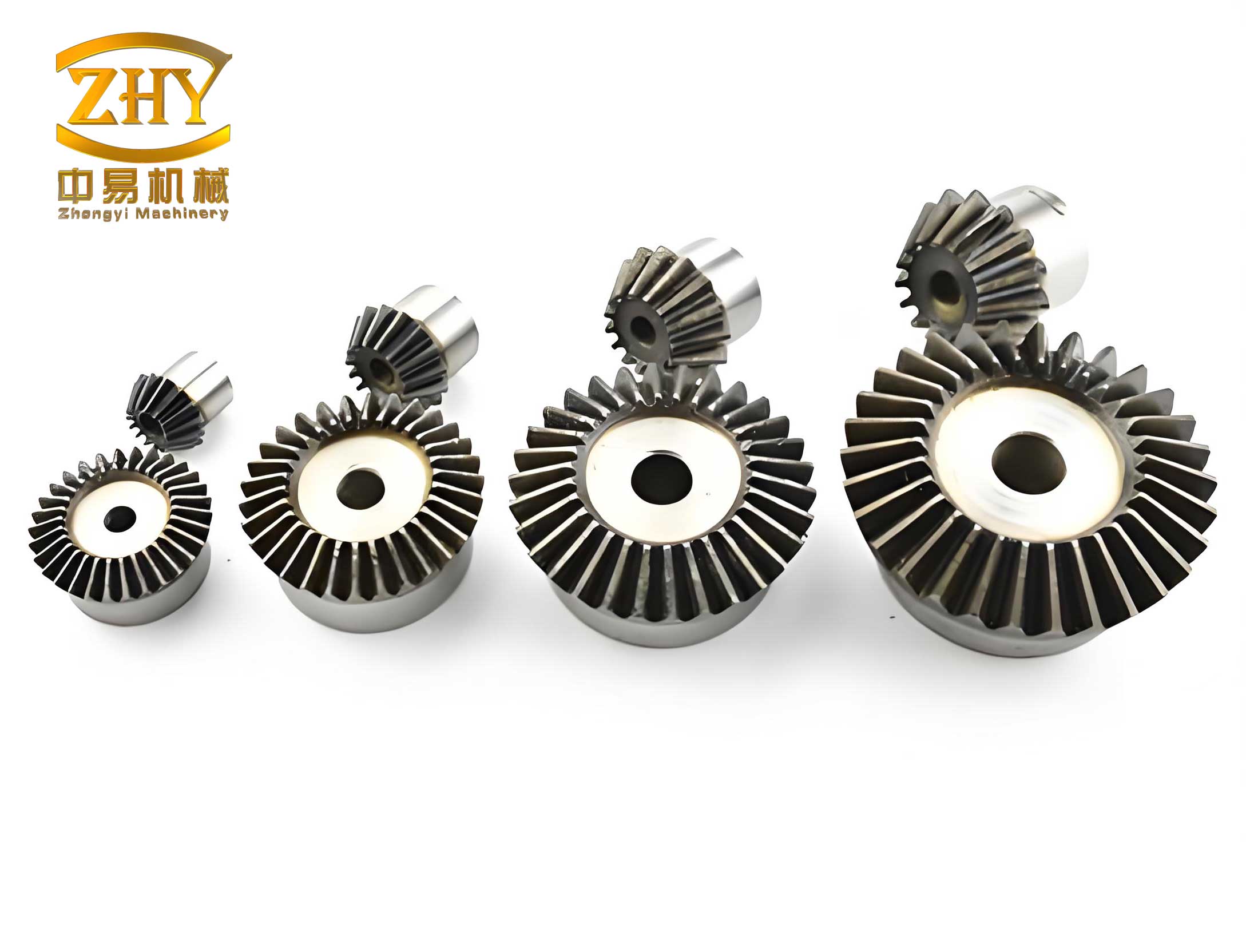
The subject of our investigation was a case-hardened spiral bevel gear manufactured from alloy steel 20CrMnMoH, designed for a high-torque application. The gear successfully endured a significant portion of its qualification test, surpassing the minimum requirements for overall gear performance. However, the test was abruptly terminated following a torsional fracture at the pinion shaft section, occurring under a load of 39,000 N·m. Subsequent visual examination revealed a complex failure scenario involving two distinct modes within the same component: a ductile shear failure at the shaft and a brittle fracture with spalling in the gear teeth region. This co-existence immediately suggested a sequence of events, where the initial brittle fracture of the teeth likely created an imbalance or shock load, culminating in the final ductile failure of the shaft. Our focus, therefore, shifted decisively to uncovering the origin of the brittle fracture in the teeth.
The initial macroscopic examination provided crucial clues. The fracture surface on the gear teeth exhibited a rough, granular texture characteristic of brittle failure, with no visible signs of plastic deformation. This stood in stark contrast to the shaft’s fracture, which showed a characteristic shear lip. Guided by standard failure analysis principles—which often posit that brittle fractures initiate first due to their lower energy requirement—we hypothesized that the teeth were the primary failure site. To validate this and determine the root cause, a comprehensive suite of理化检验 (physical and chemical testing) was undertaken on samples extracted from the failed tooth region.
The first step was to verify the material’s conformity to specifications. Chemical composition analysis was performed using Inductively Coupled Plasma (ICP) spectroscopy. The results, summarized in Table 1, confirmed that the material composition was within the specified limits of GB/T5216-2004 (equivalent to H-grade guaranteed hardenability steel standards). This ruled out gross material misalloying as a direct cause.
| Element | C | Si | Mn | Cr | Mo | S | P |
|---|---|---|---|---|---|---|---|
| Measured (wt%) | 0.226 | 0.243 | 1.09 | 1.30 | 0.244 | 0.0062 | 0.016 |
| Specification (GB/T5216-2004) | 0.17-0.23 | 0.17-0.37 | 0.85-1.20 | 1.05-1.40 | 0.20-0.30 | ≤0.035 | ≤0.035 |
Surface and core hardness measurements were also within the acceptable range (Surface: 60.5-61.5 HRC; Core: 30-31.5 HRC), as was the effective case depth of approximately 1.59 mm. However, hardness alone is an insufficient indicator of quality for high-performance bevel gears. The true revelation came from microscopic examination. The microstructure of the carburized case was found to consist of coarse, acicular (needle-like) martensite with a high proportion of retained austenite. When evaluated against standard rating charts (e.g., QC/T262-1999), this structure was classified as a level 6, which is deemed unacceptable for critical gearing applications. Even more critically, the prior austenite grain size was examined. The case showed a mixed grain size of 9.5 to 7.5, while the core exhibited a severe disparity, with grains ranging from grade 8 down to an extremely coarse grade 3.5. The presence of such coarse grains, particularly in the core, is a definitive indicator of overheating during the austenitization phase of heat treatment.
The relationship between grain size and mechanical properties is fundamental. The Hall-Petch equation provides a quantitative link between grain diameter (d) and yield strength ($\sigma_y$):
$$
\sigma_y = \sigma_0 + k_y \cdot d^{-1/2}
$$
where $\sigma_0$ is the friction stress and $k_y$ is the strengthening coefficient. This inverse relationship means that coarse grains (large d) lead to lower yield strength. Furthermore, coarse grains significantly reduce toughness and fatigue resistance, as they offer less resistance to crack propagation. The transition from ductile to brittle behavior occurs at a higher temperature in coarse-grained materials, making them prone to brittle fracture even under nominally ductile loading conditions. This perfectly explains the observed brittle fracture in the gear teeth of the bevel gear.
The mechanism of grain growth is thermally activated, following an Arrhenius-type relationship. The kinetics can be described by the empirical grain growth equation:
$$
d^n – d_0^n = K \cdot t \cdot \exp\left(-\frac{Q}{RT}\right)
$$
where $d$ is the final grain size, $d_0$ is the initial grain size, $n$ is the grain growth exponent (typically ~2), $K$ is a material constant, $t$ is time, $Q$ is the activation energy for grain boundary diffusion, $R$ is the gas constant, and $T$ is the absolute temperature. The exponential dependence on temperature ($T$) is critical. Even a slight overshoot in the austenitizing temperature, whether during carburizing or the subsequent reheat for quenching, can cause a disproportionate and rapid coarsening of the austenite grains. These coarse grains are then inherited by the martensitic structure upon quenching, leading to the observed coarse, brittle microstructure.
A second, critical defect was identified at the tooth root surface: an excessively deep non-martensitic layer, measuring approximately 47.55 µm. This layer, often appearing dark under an optical microscope, typically consists of oxides and transformation products like troostite or bainite. It forms during carburizing when oxygen from the atmosphere diffuses into the steel, oxidizing alloying elements like chromium and manganese at the austenite grain boundaries. This locally depletes the alloy content, reducing the hardenability and causing these regions to transform into non-martensitic phases during quenching. The depth of this layer is a direct function of furnace atmosphere control. A deep non-martensitic layer acts as a stress concentrator and a preferential site for fatigue crack initiation, severely compromising bending fatigue strength—the primary loading mode at the tooth root of bevel gears.
The combined effect of these two defects—coarse grain structure and deep non-martensitic layer—creates a synergistic path to failure. The coarse microstructure provides a low-toughness matrix with low crack propagation resistance. The non-martensitic layer at the surface, being softer and less durable, readily initiates micro-cracks under cyclic contact and bending stresses. Once initiated, these cracks propagate rapidly through the coarse-grained, brittle martensite, leading to tooth fracture. The sequence of failure modes observed (brittle tooth fracture followed by ductile shaft failure) is a direct consequence of this synergy. Table 2 summarizes the key failure mechanisms and their root causes identified in this analysis.
| Observed Defect | Metallurgical Cause | Process Root Cause | Primary Effect on Gear Performance |
|---|---|---|---|
| Coarse Acicular Martensite | Austenite grain coarsening | Overheating during austenitization (Carburizing or Reheat) | Reduced toughness, lower fatigue strength, increased brittle fracture risk. |
| Mixed/Coarse Prior Austenite Grain Size (Grade 3.5-8) | Excessive grain growth | Poor temperature control in furnace; Temperature exceeding Ac3 by too large a margin. | Severely degraded fracture toughness and impact resistance; promotes unstable crack growth. |
| Deep Non-Martensitic Surface Layer (~48 µm) | Surface oxidation & alloy depletion | Uncontrolled oxidizing atmosphere during carburizing; Low furnace atmosphere carbon potential. | Creates stress concentrator; drastically reduces bending and contact fatigue life. |
Based on this detailed failure analysis, a comprehensive set of corrective and preventive actions can be formulated. These actions target the critical control points in the manufacturing process for high-integrity bevel gears. Prevention must start with stringent control of the heat treatment process. The use of燃气加热 (gas-fired heating) furnaces, as suspected in the failure case, is often prone to larger temperature fluctuations and less precise control compared to modern electric or radiant tube furnaces. For critical components, investment in furnaces with advanced atmospheric control (endothermic gas generators, oxygen probes for carbon potential control) and precise, multi-zone temperature profiling is essential. The austenitizing temperature must be carefully selected based on the specific material’s Ac3 temperature and held within a tight tolerance, typically ±10°C. Implementing Statistical Process Control (SPC) for furnace temperature and atmosphere parameters is non-negotiable.
Post-carburizing treatments can also mitigate risks. For components requiring high toughness, an intermediate grain-refining treatment can be employed. This involves cooling the gear from the carburizing temperature, then reheating to a lower austenitizing temperature (just above Ac1) for quenching. This process refines the austenite grains that form, breaking down the coarse structure developed during prolonged carburizing. The quenching process itself must ensure adequate and uniform cooling to avoid soft spots or excessive distortion. Furthermore, tempering practices are critical. A single temper may not be sufficient to fully relieve quenching stresses and transform retained austenite. A double or even triple tempering cycle is recommended for high-alloy case-hardening steels like 20CrMnMoH. The tempering temperature and time must be optimized to achieve the desired core strength and toughness without excessively reducing surface hardness. The relationship between tempering temperature, time, and hardness can be approximated by the Hollomon-Jaffe parameter for tempering:
$$
P = T \cdot (C + \log t)
$$
where $T$ is temperature in Kelvin, $t$ is time in hours, and $C$ is a material constant. This parameter helps in predicting hardness loss and designing equivalent tempering cycles.
Material quality upstream of heat treatment is equally important. The use of fine-grain practice steels, which contain grain-growth inhibiting elements like aluminum, niobium, or vanadium, provides an inherent safety net against accidental overheating. These elements form stable carbides or nitrides that pin austenite grain boundaries, significantly raising the temperature at which rapid grain coarsening occurs. This “grain size stability” should be a specified requirement for steel procured for critical bevel gear applications.
A robust quality assurance regimen must be implemented, moving beyond simple hardness and case depth checks. Destructive and non-destructive testing protocols should include:
- Microstructural Audit: Regular metallographic examination to rate martensite fineness, retained austenite content, and check for non-martensitic layers on finished or sample gears.
- Grain Size Evaluation: Systematic measurement of prior austenite grain size in both case and core, ensuring it meets specified limits (e.g., finer than ASTM 5 or 6).
- Advanced Non-Destructive Testing (NDT): Implementing methods like magnetic particle inspection or fluorescent penetrant inspection on 100% of finished gears to detect grinding cracks or other surface anomalies. For highest reliability, shot peening after final grinding can be employed to induce beneficial compressive residual stresses at the tooth root, enhancing fatigue life. The compressive stress ($\sigma_{comp}$) introduced is a function of peening intensity and coverage.
The complete manufacturing and quality control workflow for producing reliable bevel gears can be summarized in the following process flow diagram with critical control points:
1. Material Selection & Forging: Use fine-grain practice steel (20CrMnMoH-FG). Control forging parameters to avoid incipient melting or abnormal grain growth.
2. Pre-Machining & Normalizing: Machine to near-net shape. Perform a normalizing cycle to homogenize microstructure and refine grains before carburizing.
3. Controlled Atmosphere Carburizing:
– Precise Temperature Control: Maintain within ±10°C of setpoint.
– Atmosphere Control: Use oxygen probe and CO/CO2 analysis to maintain carbon potential.
– Avoid Over-Carburizing: Prevent carbide networks.
4. Grain Refining & Quenching: Cool and reheat to a lower austenitizing temperature for quenching in agitated oil.
5. Deep Freezing (Optional): For critical applications, use a cryogenic treatment to transform retained austenite to martensite.
6. Tempering: Perform double or triple tempering at the specified temperature and duration.
7. Final Machining & Grinding: Use gentle grinding practices with sharp, properly dressed wheels and ample coolant to avoid grinding burns.
8. Shot Peening & Final NDT: Apply shot peening to tooth roots. Perform 100% magnetic particle or fluorescent penetrant inspection.
9. Final Verification: Conduct final checks on dimensions, surface finish, hardness profile, and if on a sampling basis, full metallography.
In conclusion, the failure of the automotive main reducer bevel gear serves as a powerful case study in the intricate relationship between microstructure, processing, and performance. The investigation unequivocally traced the brittle fracture of the gear teeth to microstructural degradation caused by overheating during heat treatment, manifesting as coarse prior austenite grains and coarse martensite, exacerbated by a deleterious non-martensitic surface layer. For engineers and manufacturers, this analysis reinforces that achieving reliability in high-stress components like bevel gears demands a holistic approach. It requires not only the selection of appropriate materials but also the mastery and precise control of every thermal and thermochemical process involved. Implementing stringent controls on furnace atmospheres and temperatures, adopting grain-refining practices, utilizing fine-grain steels, and enforcing comprehensive microstructural quality checks are not optional best practices but essential requirements. By adhering to these principles, the manufacturing of bevel gears can consistently achieve the necessary balance of high surface hardness for wear resistance and a fine-grained, tough core microstructure to withstand shock loads and resist catastrophic brittle fracture, ensuring the long-term durability and safety of automotive drivetrains.