
The performance, durability, and reliability of an automobile’s drivetrain are fundamentally dependent on the quality of its gears. Among the various factors governing gear quality, material selection and, more critically, the employed heat treatment processes are paramount. Heat treatment imparts the necessary mechanical properties such as hardness, strength, and wear resistance. However, the very same thermal cycles can introduce microstructural and compositional anomalies—collectively known as heat treatment defects—which can severely compromise other vital properties, notably corrosion resistance. Corrosion of automotive components, often accelerated by exposure to road salts and humid environments, leads to premature failure, safety concerns, and increased lifecycle costs. Therefore, understanding the genesis of heat treatment defects and their specific influence on corrosion behavior is essential for manufacturing superior components. This article delves into the microstructural transformations induced by common gear heat treatments, analyzes the resultant defects, and quantitatively evaluates their consequences on corrosion performance in chloride-containing environments.
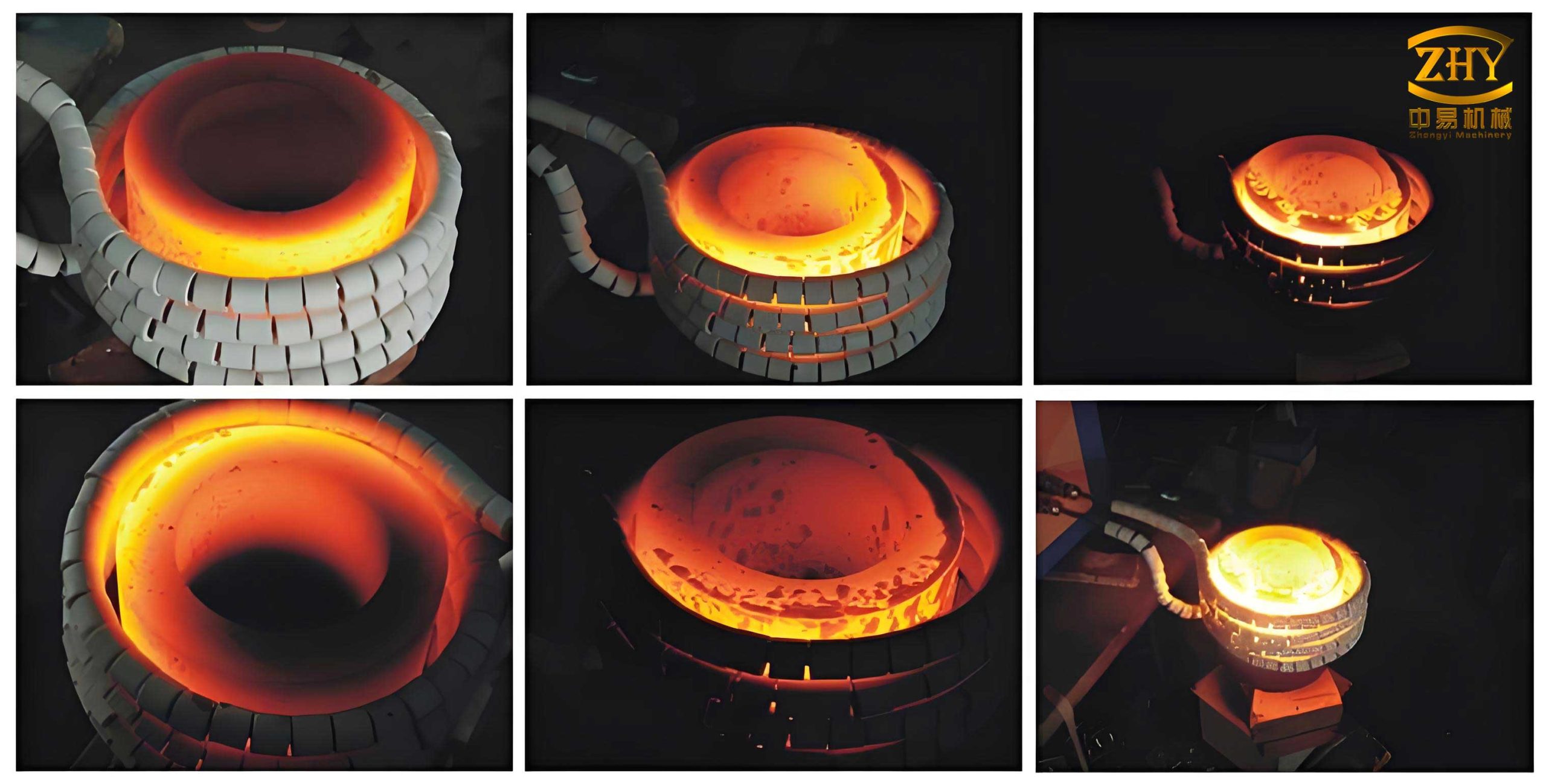
Automotive gears are typically manufactured from case-hardening steels such as 20MnCr5, 8620, or 9310. The heat treatment sequence often involves a preliminary treatment to refine the forged microstructure, followed by a case-hardening process (e.g., carburizing or carbonitriding) and final tempering. This discussion focuses on the preliminary heat treatment stage, as it sets the foundational microstructure for subsequent processing. Two prevalent preliminary treatments are normalizing and isothermal annealing. While both aim to homogenize the structure and improve machinability, their differing cooling paths lead to distinct microstructures with varying susceptibilities to heat treatment defects.
Normalizing involves austenitizing the steel followed by cooling in still air. This continuous cooling transformation results in a microstructure typically consisting of fine pearlite and ferrite. However, the non-uniform cooling rate, especially in components with varying cross-sections like gears, can lead to several heat treatment defects:
- Microstructural Banding: Chemical segregation from the ingot stage can be exacerbated, leading to alternating bands of pearlite (rich in carbon and alloying elements) and ferrite. This creates galvanic cells, accelerating localized corrosion.
- Non-Uniform Transformation Products: The surface may transform to harder phases like bainite or even martensite if the cooling rate is sufficiently high, while the core remains pearlitic. This inhomogeneity creates internal stress and electrochemical potential differences.
- Residual Stresses: Rapid and uneven cooling induces thermal stresses that can remain locked in as residual tensile stresses, which are known to promote stress corrosion cracking and accelerate anodic dissolution.
The corrosion rate in an aqueous electrolyte like NaCl can be approximated by Faraday’s law, linking mass loss to current density:
$$ \text{Corrosion Rate} = \frac{M \cdot I}{n \cdot F \cdot \rho} $$
where \( M \) is the atomic weight, \( I \) is the corrosion current density, \( n \) is the number of electrons transferred, \( F \) is Faraday’s constant, and \( \rho \) is the density. The current density \( I \) is exponentially related to the overpotential via the Butler-Volmer equation. Heat treatment defects like banding directly increase the effective anodic current density by providing numerous, closely spaced anodic (ferrite) and cathodic (pearlite/cementite) sites.
Isothermal annealing, in contrast, involves austenitization followed by rapid cooling to a specific temperature (e.g., 630°C for 20MnCr5) held for a sufficient time to allow complete transformation to a uniform ferrite-pearlite structure, before final cooling. This process minimizes several key heat treatment defects:
- Uniform Microstructure: Transformation at a constant temperature promotes a homogeneous distribution of phases.
- Reduced Segregation: The isothermal hold can allow for some diffusion, slightly reducing the sharpness of compositional banding.
- Lower Residual Stress: The more controlled and slower final cooling from the isothermal temperature generates significantly lower thermal stresses compared to air cooling from the austenitization temperature.
The primary heat treatment defects and their characteristics are summarized in the table below:
| Heat Treatment Defect | Primary Cause | Manifestation in Microstructure | Direct Impact on Corrosion |
|---|---|---|---|
| Microstructural Banding | Chemical segregation + continuous cooling | Alternating layers of ferrite and pearlite | Creats galvanic couples, promoting localized attack. |
| Non-uniform Phase Distribution | Variable cooling rates across component | Mixed phases (e.g., pearlite, bainite, martensite) | Electrochemical heterogeneity, leading to pitting. |
| High Residual Tensile Stress | Rapid, uneven cooling (thermal gradients) | Locked-in elastic strain energy | Increases susceptibility to Stress Corrosion Cracking (SCC) and anodic activity. |
| Excessive Grain Growth | Over-austenitizing (time/temperature) | Coarse prior austenite grains | May alter passive film stability; often accompanies other defects. |
| Decarburization | Atmosphere control failure during heating | Surface layer depleted in carbon | Surface becomes softer, more anodic relative to the carbon-rich core. |
To quantitatively assess the impact of these microstructural heat treatment defects on corrosion, experimental studies are essential. As referenced in the opening context, a comparison between normalized and isothermally annealed 20MnCr5 steel in NaCl environments reveals stark differences. The normalized specimen, prone to the defects listed above, exhibits inferior performance across all standard corrosion tests. The corrosion potential \( E_{corr} \) is a critical parameter obtained from electrochemical testing like Tafel extrapolation. A more negative \( E_{corr} \) indicates a higher thermodynamic tendency to corrode. The relationship is evident in the mixed-potential theory, where the corrosion potential is the intersection of the anodic and cathodic polarization curves:
$$ I_a(E_{corr}) = |I_c(E_{corr})| = I_{corr} $$
Defects that enhance the anodic kinetics (e.g., residual stress, active phases) shift the anodic curve to higher currents, leading to a more negative \( E_{corr} \) and a higher corrosion current \( I_{corr} \).
The following table synthesizes hypothetical experimental data extrapolated from the core findings, illustrating the profound effect of preliminary heat treatment choice:
| Test Parameter | Normalized Sample (Defect-Prone) | Isothermally Annealed Sample (Homogeneous) | Implied Mechanism / Defect Link |
|---|---|---|---|
| Salt Spray (72h): Surface Morphology | Numerous, large corrosion pits; white corrosion products. | Few, very small pits; no visible products. | Galvanic coupling from banding/non-uniformity drives localized pitting. |
| Full Immersion (240h): Mass Loss % | ~1.02% | ~0.20% | Higher general corrosion rate due to greater effective anodic area and activity. |
| Electrochemical: Corrosion Potential (Ecorr) | -1.032 V (vs. Ref.) | -0.115 V (vs. Ref.) | Negative shift indicates stronger anodic character induced by defects like residual stress. |
| Electrochemical: Corrosion Current Density (Icorr) | Estimated High (e.g., 10-20 µA/cm²) | Estimated Low (e.g., 1-2 µA/cm²) | Defects increase the exchange current density for anodic dissolution. |
| Dominant Heat Treatment Defects | Banding, Mixed Phases, High Residual Stress | Minimal (Slight Segregation Possible) | Direct correlation between defect severity and corrosion metrics. |
The pitting corrosion observed on normalized samples can be modeled by considering the stability of the passive film. Defects act as sites for film breakdown. The pitting potential \( E_{pit} \) is often lowered by microstructural heterogeneity. The growth kinetics of a stable pit can be described by a relationship involving the applied potential \( E \), the pit solution chemistry, and the ohmic potential drop \( IR \):
$$ I_{pit} = \frac{E – E_{pit} – \phi}{R} $$
where \( \phi \) represents other overpotentials. A microstructure with numerous defects provides easier paths for pit stabilization and growth, effectively reducing the resistance \( R \) within the pit environment.
Beyond preliminary treatments, subsequent case-hardening processes are prolific sources of heat treatment defects with severe implications for corrosion. Carburizing, while creating a hard, wear-resistant surface, can introduce:
- Excessive Surface Carbon: Can lead to the formation of brittle grain boundary carbides. These carbides are cathodic to the surrounding matrix, promoting intergranular corrosion. The interfacial area becomes a preferential path for corrosive attack.
- Intergranular Oxidation (IGO): During atmospheric gas carburizing, oxygen can diffuse along prior austenite grain boundaries, forming oxides of silicon, manganese, and chromium. This depletes the adjacent matrix of chromium, impairing passivation and creating a network of anodic paths. The depth of IGO is a critical metric for corrosion performance.
- Quenching Cracks: Perhaps the most catastrophic heat treatment defects, these arise from excessive thermal and transformation stresses during oil or polymer quenching from the carburizing temperature. A crack provides an ideal occluded crevice for the initiation of Crevice Corrosion, where the local chemistry becomes highly acidic and aggressive, leading to rapid propagation.
The detrimental effect of chromium depletion near grain boundaries due to IGO can be conceptualized through the chromium content required for passivation. The critical chromium content \( C_{Cr}^{crit} \) for stainless behavior is often cited as ~10.5 wt%. Local depletion below this threshold turns those regions active. The corrosion rate in the active state is orders of magnitude higher than in the passive state, which follows a logarithmic relationship with potential.
To mitigate these heat treatment defects and enhance the overall corrosion-durability of automotive gears, a multi-faceted approach is necessary:
- Process Optimization: Replacing normalizing with isothermal annealing for preliminary treatment is a straightforward step to eliminate foundational inhomogeneity. For case hardening, employing vacuum carburizing or low-pressure carburizing (LPC) followed by high-pressure gas quenching (HPGQ) virtually eliminates intergranular oxidation and reduces distortion and stress, thereby minimizing quench cracking tendencies.
- Parameter Control: Precise control of austenitizing temperature and time prevents grain growth. Optimizing quenchant temperature, agitation, and cooling rate profiles minimizes residual stresses and distortion.
- Post-Treatment Processes: Shot peening after heat treatment introduces beneficial compressive residual stresses on the gear tooth surface, counteracting the harmful tensile stresses from quenching and significantly improving resistance to fatigue and stress corrosion cracking. This is a critical step in rectifying one of the key heat treatment defects.
- Material Advancements: Using steels with finer initial segregation (e.g., from electro-slag remelting) or microalloying elements like niobium that retard grain growth can reduce the propensity for defect formation during heat treatment.
The interplay between heat treatment, resulting defects, and corrosion is complex but decipherable through microstructural analysis and electrochemical principles. The choice of isothermal annealing over normalizing for preliminary treatment represents a fundamental improvement in microstructural homogeneity, directly translating to superior corrosion resistance as quantified by salt spray, immersion, and electrochemical tests. The heat treatment defects inherent to normalizing—banding, phase inhomogeneity, and high stress—create an electrochemically active landscape prone to both general and localized corrosion. When considering the full manufacturing chain, advanced case-hardening techniques and stringent process controls are imperative to suppress defects like intergranular oxidation and quench cracks. Ultimately, viewing heat treatment not just as a means to achieve hardness but as a critical determinant of electrochemical performance is key to manufacturing automotive gears that meet the dual demands of mechanical robustness and long-term corrosion durability in harsh service environments.