
Spur gear transmissions are fundamental components in mechanical systems, prized for their ability to maintain a constant instantaneous transmission ratio. This characteristic underpins their widespread use, offering advantages such as a broad range of transmissible power, high transmission efficiency, and extended operational life. A critical parameter governing the dynamic behavior of spur gear systems is the time-varying mesh stiffness (TVMS), which acts as a primary source of dynamic excitation during operation. However, the integrity and performance of spur gears are frequently compromised by surface failures induced by cyclical fatigue loads and thermo-mechanical stresses. Among these, spalling faults—manifesting as pitting and material flaking—significantly alter the TVMS, potentially leading to increased vibration, noise, and, in severe cases, catastrophic transmission failure.
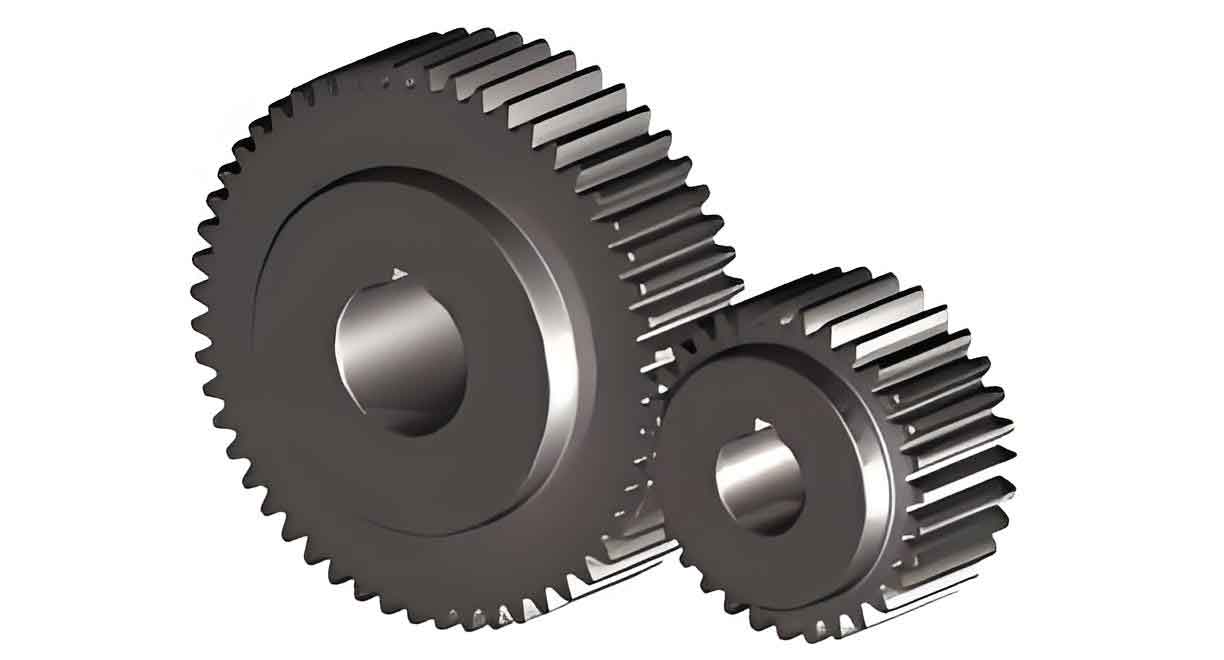
Extensive research has been conducted on modeling spalling faults in spur gears. Studies often simplify the spall geometry to shapes like rectangles, circles, ellipses, or V-notches to analyze their impact on mesh stiffness. A common assumption in these models is that the spall is symmetrically located about the gear’s axial centerline. In practical engineering scenarios, however, manufacturing inaccuracies, assembly misalignments, and resultant axial and radial vibrations during operation can lead to uneven load distribution across the gear face. This non-uniform loading, coupled with localized thermal stresses, often results in asymmetric spalling patterns. Furthermore, tooth surface friction, a significant factor in gear dynamics and wear initiation, is frequently oversimplified in analyses. Many models employ a constant friction coefficient, neglecting its inherently time-varying nature due to changes in lubrication conditions, rolling-sliding velocities, and contact pressure along the path of contact. There is a notable gap in research that concurrently considers the combined effects of asymmetric spalling faults and time-varying tooth surface friction on the TVMS of spur gears.
This study focuses on spur gear pairs with simulated rectangular spall defects. Building upon models for symmetric spalling, we develop a comprehensive analytical framework to investigate the influence of eccentric (asymmetric) spalling. The model incorporates the torsional stiffness arising from uneven load distribution due to spall eccentricity. Subsequently, we integrate both constant and time-varying tooth friction models to analyze their synergistic effects with spalling faults on the TVMS. Analytical expressions for mesh stiffness under these combined conditions are derived using the potential energy method. This integrated approach provides a more realistic theoretical foundation for studying the dynamic transmission characteristics of faulty spur gears, aiming to enhance diagnostic capabilities and design for durability.
1. Time-Varying Mesh Stiffness of Spur Gears with Spalling Faults
1.1 Modeling of Symmetric Spalling
In spur gear pairs, the pinion, typically having a smaller number of teeth, is more susceptible to spalling faults. The highest probability for spall initiation and engagement often lies within the single-tooth-pair meshing interval. To simplify the analytical model, the spall is assumed to be rectangular, located at the pitch circle of the driving gear, and symmetric about the gear’s axial mid-plane. The spall is defined by its length $a_s$, width $b_s$, and depth $h_s$.
The TVMS calculation employs a cantilever beam model projected onto the gear’s base circle. When a spall is present on the tooth flank, it reduces the effective cross-sectional area and moment of inertia of the tooth segment within the spalled region. This reduction primarily affects the bending stiffness $k_b$, shear stiffness $k_s$, and axial compressive stiffness $k_a$ of the tooth. The modified stiffness components for the spalled section, derived using the potential energy method, are as follows:
Bending stiffness in the spalled region:
$$ \frac{1}{k_{b\_s}} = \int_{0}^{d_1} \frac{[d_1 – x \cos(\alpha_1)] \{x \sin(\alpha_1) – h_s\}}{2EI_x} dx + \int_{d_1}^{d_2} \frac{[d_1 – x \cos(\alpha_1)] \{x \sin(\alpha_1) – h_s\}}{2EI_x} dx $$
Shear stiffness in the spalled region:
$$ \frac{1}{k_{s\_s}} = \int_{0}^{d_1} \frac{1.2 \cos^2(\alpha_1)}{GA_x} dx + \int_{d_1}^{d_2} \frac{1.2 \cos^2(\alpha_1)}{GA_x} dx $$
Axial compressive stiffness in the spalled region:
$$ \frac{1}{k_{a\_s}} = \int_{0}^{d_1} \frac{\sin^2(\alpha_1)}{EA_x} dx + \int_{d_1}^{d_2} \frac{\sin^2(\alpha_1)}{EA_x} dx $$
Here, $E$, $G$, and $ u$ are the Young’s modulus, shear modulus, and Poisson’s ratio of the gear material, respectively. $A_x$ and $I_x$ represent the area and area moment of inertia of the tooth section at distance $x$ from the root. $d_1$ and $d_2$ are integration limits corresponding to the spall boundaries, and $\alpha_1$ is the pressure angle at the meshing point.
The total mesh stiffness for a healthy spur gear pair is the sum of stiffness components from both mating teeth (bending, shear, axial, Hertzian contact, and fillet foundation stiffness). For a pair with a symmetric spall, the stiffness components $k_b$, $k_s$, and $k_a$ for the faulty tooth are replaced by $k_{b\_s}$, $k_{s\_s}$, and $k_{a\_s}$ when the meshing point traverses the spalled region. Calculations are performed using the primary parameters for the spur gear pair listed in Table 1.
| Parameter (Unit) | Pinion | Gear |
|---|---|---|
| Module, $m$ (mm) | 2 | 2 |
| Number of Teeth, $z$ | 19 | 48 |
| Pressure Angle, $\alpha_0$ (°) | 20 | 20 |
| Face Width, $L$ (mm) | 16 | 16 |
| Young’s Modulus, $E$ (Pa) | 2.06e11 | 2.06e11 |
| Poisson’s Ratio, $ u$ | 0.3 | 0.3 |
For a symmetric spall with dimensions $a_s=4mm$, $b_s=8mm$, and $h_s=0.2mm$, the calculated TVMS shows a distinct reduction in stiffness when the spall enters the mesh zone compared to the healthy spur gear pair.
1.2 Modeling of Eccentric (Asymmetric) Spalling
Practical conditions in spur gear systems often lead to spalls that are not symmetric about the axial centerline. This eccentricity, denoted as $l_s$, arises from assembly errors, shaft deflections, and uneven axial vibration, causing non-uniform load distribution across the face width. An eccentric spall introduces an additional compliance: torsional stiffness $k_t$. Because the spall removes material asymmetrically, the line of action of the resultant meshing force does not coincide with the center of the remaining healthy tooth section, inducing a twisting moment.
The distributed load on the tooth flank is replaced by an equivalent total force $F_{total}$ and an equivalent twisting moment $T$. The torsional potential energy $U_t$ is given by:
$$ U_t = \frac{T^2}{2G I_{px}} = \frac{(F_{total} \cdot t)^2}{2G I_{px}} $$
where $t$ is the effective arm of the force causing torsion, and $I_{px}$ is the polar moment of inertia of the tooth cross-section. For a rectangular spall with eccentricity $l_s$, the effective arm $t$ is approximated by half the eccentricity: $t = l_s / 2$. The polar moment of inertia $I_{px}$ for a rectangular tooth section of width $L$ and variable height $h_x$ is:
$$ I_{px} \approx \frac{L h_x^3}{12} + \frac{L^3 h_x}{12} $$
The torsional stiffness $k_{t\_f}$ for the faulty spur gear tooth (e.g., the pinion) in the spalled region is then derived as:
$$ k_{t\_f} = \frac{F_{total}^2}{2U_t} = \frac{G I_{px}}{t^2} $$
Due to the action-reaction principle, the mating healthy spur gear tooth will also experience a twisting moment, leading to a torsional stiffness $k_{t\_h}$. Typically, $k_{t\_f} \ll k_{t\_h}$ because the pinion tooth has a smaller base cross-section. The total effective mesh stiffness must now include this torsional compliance. When the eccentric spall is within the double-tooth-pair meshing zone, the total mesh stiffness $K_{mesh}$ is:
$$ \frac{1}{K_{mesh}} = \sum_{i=1}^{2} \left( \frac{1}{k_{b,i}+k_{s,i}+k_{a,i}+k_{f,i}} + \frac{1}{k_{h,i}} \right) + \frac{1}{k_{t\_f} + k_{t\_h}} $$
where $k_{b,i}, k_{s,i}, k_{a,i}, k_{f,i}$ are the bending, shear, axial, and fillet foundation stiffnesses of tooth pair $i$, and $k_{h,i}$ is the corresponding Hertzian contact stiffness. The term $k_{t\_f} + k_{t\_h}$ represents the combined torsional compliance. For the single-tooth-pair meshing zone, the summation is over only one tooth pair.
The analysis is performed for different spall eccentricities $l_s$ as defined in Table 2, with other spall dimensions kept constant ($a_s=4mm$, $b_s=8mm$, $h_s=0.2mm$).
| Case | $a_s$ (mm) | $b_s$ (mm) | $h_s$ (mm) | $l_s$ (mm) |
|---|---|---|---|---|
| Healthy | 0 | 0 | 0 | 0 |
| Symmetric Spall | 4 | 8 | 0.2 | 0 |
| Eccentric Spall 1 | 4 | 8 | 0.2 | 1 |
| Eccentric Spall 2 | 4 | 8 | 0.2 | 3 |
| Eccentric Spall 3 | 4 | 8 | 0.2 | 5 |
The results demonstrate that asymmetric spalling in spur gears introduces torsional stiffness, which further reduces the overall TVMS compared to symmetric spalling. The reduction in TVMS becomes more pronounced as the spall eccentricity $l_s$ increases. This is because a larger $l_s$ increases the twisting moment arm, leading to greater torsional compliance (lower $k_t$). The torsional stiffness of the pinion (faulty tooth) is significantly lower than that of the mating gear tooth due to the pinion’s smaller dimensions. This analysis underscores the importance of minimizing installation and alignment errors in spur gear systems to reduce the likelihood of severe asymmetric spalling and the associated excessive loss of mesh stiffness.
2. Mesh Stiffness of Spur Gears Considering Combined Spalling and Tooth Surface Friction
Tooth surface friction is a critical factor in spur gear dynamics, influencing efficiency, wear, and thermo-mechanical loading. It is also a primary driver for initiating surface failures like pitting and spalling. This section investigates the combined influence of tooth surface friction and spalling faults on the TVMS of spur gears.
2.1 Constant Friction Coefficient with Spalling
We first consider a constant coefficient of friction $f$ acting on the tooth flanks of the spur gears. The direction of the friction force $F_f = f \cdot F$ (where $F$ is the normal mesh force) is always tangent to the tooth profile and directed towards the pitch point. Consequently, its direction reverses as the contact point passes the pitch point: during the approach (mesh-in), friction on the driving gear acts from the pitch point towards the root; during the recess (mesh-out), it acts from the pitch point towards the tip.
The friction force modifies the internal force components within the cantilever beam model. It affects the bending moment and the shear/axial force distributions, thereby altering the bending ($k_b$), shear ($k_s$), and axial compressive ($k_a$) stiffness components. The potential energies for a tooth segment are recalculated considering the additional force components due to friction.
For the mesh-in phase of the driving spur gear tooth:
$$ U_{b\_in} = \int \frac{[M_b + F_f \cdot (h_x – y)]^2}{2EI_x} dx $$
$$ U_{s\_in} = \int \frac{1.2 (F_s \pm F_f \cos(\alpha_x))^2}{2GA_x} dx $$
$$ U_{a\_in} = \int \frac{(F_a \mp F_f \sin(\alpha_x))^2}{2EA_x} dx $$
where $M_b$ is the bending moment from the normal force, $h_x$ is the distance from the neutral axis, $y$ is the distance from the spall base, $F_s$ and $F_a$ are the shear and axial components from the normal force, and $\alpha_x$ is the pressure angle at position $x$. Signs depend on specific geometry.
For the mesh-out phase:
$$ U_{b\_out} = \int \frac{[M_b – F_f \cdot (h_x – y)]^2}{2EI_x} dx $$
$$ U_{s\_out} = \int \frac{1.2 (F_s \mp F_f \cos(\alpha_x))^2}{2GA_x} dx $$
$$ U_{a\_out} = \int \frac{(F_a \pm F_f \sin(\alpha_x))^2}{2EA_x} dx $$
From these potential energies, the modified stiffness components $k_{b\_fric}$, $k_{s\_fric}$, and $k_{a\_fric}$ for both mesh-in and mesh-out are derived. These expressions are applied to the spalled tooth section where applicable. The modified stiffness for a healthy spur gear tooth under friction is derived similarly. For a spur gear pair with a symmetric spall, the TVMS is recalculated by integrating these friction-dependent stiffness components along the path of contact.
Calculations are performed for constant friction coefficients $f = 0.0, 0.05, 0.1$. The results show that friction significantly influences the TVMS of spur gears. It generally increases the mesh stiffness in the double-tooth-pair meshing zones and during the mesh-in phase of the single-tooth-pair zone. Conversely, it decreases the mesh stiffness during the mesh-out phase of the single-tooth-pair zone. Because the friction force direction reverses instantaneously at the pitch point under the constant $f$ model, the TVMS curve exhibits a sharp discontinuity or “jump” at that point. The magnitude of this discontinuity and the overall stiffness modulation increase with higher friction coefficients.
2.2 Time-Varying Friction Coefficient with Spalling
A more realistic model for spur gear contact employs a time-varying (or position-varying) friction coefficient $f(\lambda, …)$, which depends on elastohydrodynamic lubrication (EHL) conditions. A widely used empirical model based on EHL theory expresses the friction coefficient as:
$$ f = e^{b_1} S^{b_2} \eta^{b_3} P_{h}^{b_4} u_{e}^{b_5} R^{b_6} \cdot |SRR|^{b_7} \cdot sign(SRR) $$
where the exponents $b_i$ are regression coefficients. The key parameters are:
- $S$: Surface roughness ($\mu m$)
- $\eta$: Dynamic viscosity of the lubricant (Pa·s)
- $P_h$: Maximum Hertzian contact pressure (Pa)
- $u_e$: Entrainment velocity (m/s)
- $R$: Equivalent radius of curvature (m)
- $SRR$: Slide-to-roll ratio, defined as $SRR = \frac{u_1 – u_2}{u_e}$, where $u_1, u_2$ are the surface velocities.
The slide-to-roll ratio changes sign at the pitch point, where pure rolling occurs ($SRR=0$, hence $f=0$). The friction coefficient varies smoothly along the path of contact, reaching higher magnitudes near the start of approach and end of recess. The lubricant and surface properties used are listed in Table 3, and the regression coefficients in Table 4.
| Parameter | Symbol | Value |
|---|---|---|
| Dynamic Viscosity | $\eta$ | 27.4 mPa·s |
| Surface Roughness | $S$ | 1.6 $\mu m$ |
| Pinion Torque | $T_1$ | 1000 Nm |
| $b_1$ | $b_2$ | $b_3$ | $b_4$ | $b_5$ | $b_6$ | $b_7$ |
|---|---|---|---|---|---|---|
| -8.92 | 1.03 | 1.04 | -0.35 | 2.81 | -0.10 | 0.75 |
Calculating $f$ along the line of action for the spur gear pair yields a smooth, continuous curve that is zero at the pitch point and asymmetric between approach and recess due to different kinematic conditions.
This time-varying friction coefficient $f(\theta)$ is then incorporated into the potential energy equations from Section 2.1, replacing the constant $f$. The TVMS is recalculated for a spur gear pair with an eccentric spall (e.g., $l_s=3mm$). The results confirm the same general trends observed with constant friction: stiffness increase in double-pair zones and the mesh-in phase, and stiffness decrease in the mesh-out phase. However, the key difference is that the TVMS curve now varies smoothly and continuously through the pitch point, eliminating the unphysical discontinuity. This provides a more accurate and realistic representation of the coupled spalling-friction effect on the dynamic behavior of spur gears.
3. Conclusion
This study presents a comprehensive analytical investigation into the time-varying mesh stiffness of spur gear pairs under the combined influence of tooth surface spalling faults and friction. A model for eccentric (asymmetric) rectangular spalls was developed, revealing that such asymmetry induces additional torsoidal compliance, further reducing mesh stiffness compared to symmetric spalls. The reduction becomes more severe with increasing spall eccentricity. Furthermore, the integrated analysis of friction and spalling demonstrates that tooth surface friction significantly modulates the TVMS of spur gears. Both constant and time-varying friction models show that friction tends to increase mesh stiffness in the double-tooth-pair meshing intervals and during the approach (mesh-in) phase of single-tooth contact, while it decreases stiffness during the recess (mesh-out) phase. The time-varying EHL-based friction model provides a physically realistic continuous stiffness transition at the pitch point.
The findings highlight critical considerations for the design and maintenance of reliable spur gear transmissions. Minimizing assembly and alignment errors is essential to prevent severe asymmetric spalling and its compounded negative impact on mesh stiffness. Ensuring effective and consistent lubrication is equally crucial to manage tooth surface friction and mitigate its role in accelerating surface fatigue and stiffness degradation. The derived analytical models provide a valuable foundation for advanced dynamic simulation and fault diagnosis in spur gear systems operating under realistic conditions of wear and friction.