
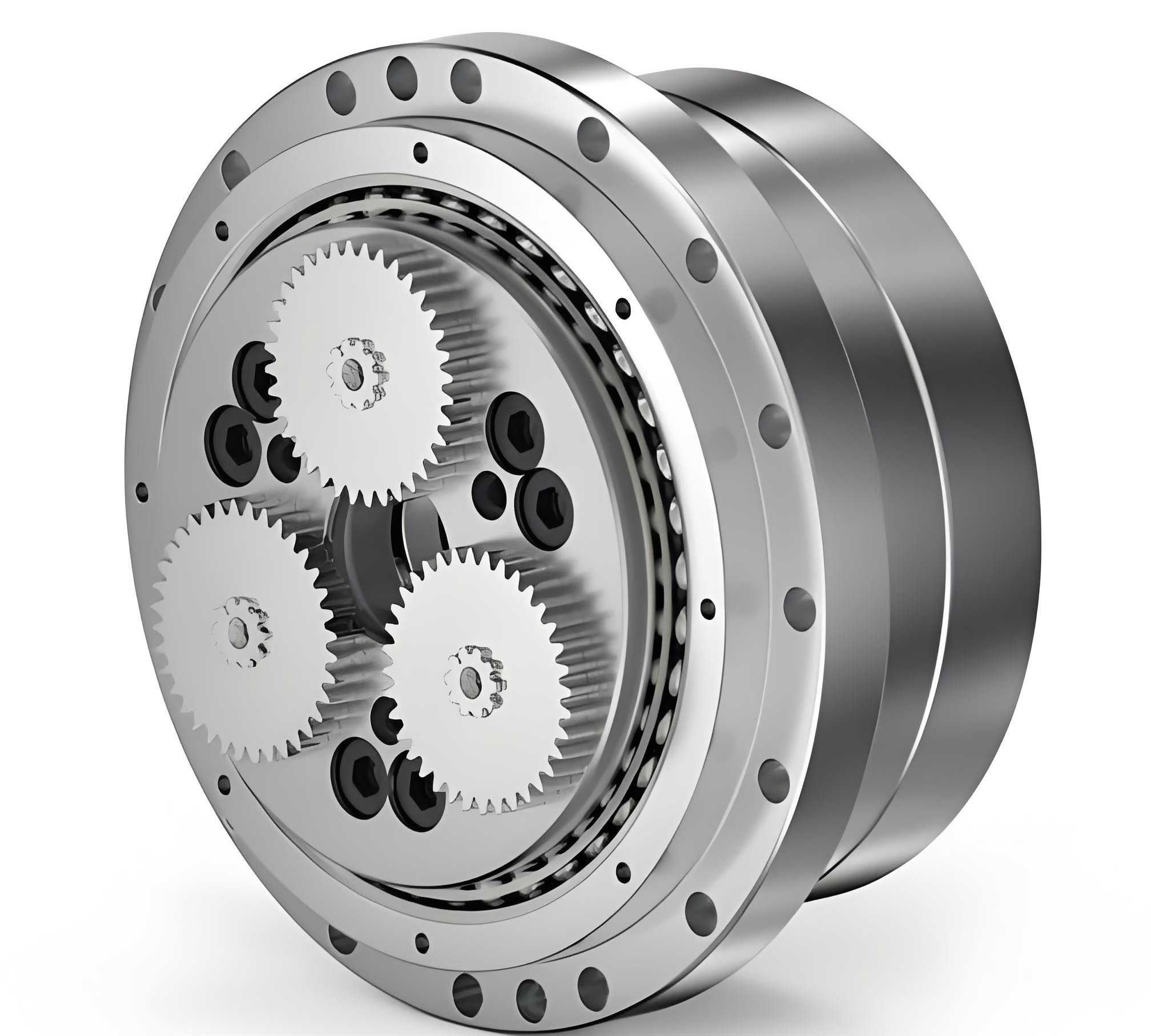
In the realm of precision motion control, the rotary vector reducer stands as a pivotal innovation, merging cycloidal pin-wheel planetary drives with involute gear transmissions to achieve exceptional compactness, high reduction ratios, and remarkable stiffness. As a key component in robotics and other mechatronic systems, the rotary vector reducer must deliver unparalleled transmission accuracy to meet stringent positioning demands. This review, penned from my perspective as a researcher engaged in this field, aims to synthesize and expand upon existing studies concerning the transmission accuracy of rotary vector reducers. I will delve into methodological frameworks, seminal findings, and practical implications, leveraging mathematical formulations and tabular summaries to provide a thorough resource for designers and engineers. The goal is to foster deeper understanding and advancement in the development of high-precision rotary vector reducers.
The transmission accuracy of a rotary vector reducer refers to the deviation between the actual and theoretical output rotation for a given input, encompassing errors like backlash and kinematic inaccuracies. These errors arise from myriad sources, including manufacturing tolerances, assembly misalignments, and dynamic effects. In this review, I will first explore foundational research using geometric approaches, then transition to advanced dynamic modeling, and finally integrate key conclusions and future directions. Throughout, I will emphasize the critical role of error analysis in optimizing the performance of rotary vector reducers.
Geometrical Analysis of Transmission Errors in Rotary Vector Reducers
Early investigations into the transmission accuracy of cycloidal drives, which form the core of rotary vector reducers, were pioneered by researchers employing purely geometrical methods. Their work focused on single-stage, single-cycloidal-disc systems, providing essential insights into error mechanisms. The profile of a cycloidal disc can be described parametrically, with the pin radius \( r \) being a central parameter. The standard equations governing the cycloidal disc profile are:
$$ x = (R_c + r) \cos(\phi) – e \cos((Z_p + 1)\phi) $$
$$ y = (R_c + r) \sin(\phi) – e \sin((Z_p + 1)\phi) $$
Here, \( R_c \) is the radius of the pin circle, \( e \) is the eccentricity, \( Z_p \) is the number of pins, and \( \phi \) is the input rotation angle. When the pin radius deviates by a small amount \( \Delta r \), the tooth profile is altered, leading to transmission errors. These errors manifest as two distinct components: the lag angle \( \Delta \theta_1 \), representing the difference between actual and theoretical output angles during motion, and the lead angle \( \Delta \theta_2 \), accounting for additional rotation due to backlash when motion ceases. The total backlash \( \Delta \theta \) is thus:
$$ \Delta \theta = \Delta \theta_1 + \Delta \theta_2 $$
Analytical derivations reveal that \( \Delta \theta \) exhibits periodic behavior with a period of \( 2\pi/(i+1) \), where \( i \) is the transmission ratio of the rotary vector reducer. Within each period, the error curve typically shows two peaks, owing to the phase mismatch between \( \Delta \theta_1 \) and \( \Delta \theta_2 \). Moreover, the transmission ratio \( i \) itself fluctuates periodically, inducing torsional vibrations in the output shaft. These relationships can be quantified through sensitivity analysis. For instance, the variation in lag angle due to \( \Delta r \) can be approximated as:
$$ \Delta \theta_1 \approx \frac{\partial \theta_1}{\partial r} \Delta r + \frac{1}{2} \frac{\partial^2 \theta_1}{\partial r^2} (\Delta r)^2 $$
Similarly, the impact of changes in pin circle diameter \( D_p \) or cycloidal disc tooth height \( h \) can be derived. Through numerical case studies, researchers generated graphs illustrating how these parameters influence \( \Delta \theta \) and torsional vibration amplitudes. Key observations include that reducing \( \Delta r \) below 5 µm significantly diminishes error magnitudes, and that the theoretical transmission ratio \( i \) should be optimized to minimize periodic fluctuations. The geometrical approach, while insightful, is limited to simpler configurations and does not account for the complex interactions in multi-stage rotary vector reducers.
| Parameter | Symbol | Effect on Backlash Δθ | Effect on Torsional Vibration |
|---|---|---|---|
| Pin radius variation | Δr | Moderate increase with Δr | Increases amplitude proportionally |
| Pin circle diameter error | ΔD_p | Significant, especially at high ratios | Induces harmonic excitations |
| Transmission ratio | i | Alters periodicity; optimal i reduces error | Higher i may amplify vibrations |
| Cycloidal disc tooth height error | Δh | Moderate, affects contact pattern | Minor influence on vibration frequency |
Dynamic Modeling and Error Synthesis in Multi-Stage Rotary Vector Reducers
To address the limitations of geometrical methods for complex rotary vector reducers, subsequent research adopted dynamic modeling techniques. These studies consider two-stage systems with multiple cranks and cycloidal discs, representative of modern rotary vector reducers. The methodology involves treating each component—such as input gears, cranks, cycloidal discs, and output wheels—as rigid bodies interconnected by linear springs that simulate contact stiffnesses and tolerances. A twenty-degree-of-freedom matrix equation system is formulated to capture the system’s static and dynamic behavior. The general form of the equilibrium equations is:
$$ \mathbf{K} \mathbf{x} = \mathbf{F} + \mathbf{E} $$
Here, \( \mathbf{K} \) is the global stiffness matrix incorporating mechanical interfaces, \( \mathbf{x} \) is the vector of micro-displacements for each degree of freedom, \( \mathbf{F} \) represents external loads (e.g., a small torque to ensure contact), and \( \mathbf{E} \) encodes equivalent errors from machining and assembly. By solving this system iteratively, one can compute the actual output angle \( \theta_{ca} \) for an input angle \( \theta_s \). The transmission error \( \theta_{err} \) is then defined as:
$$ \theta_{err} = \theta_{ca} – \frac{\theta_s}{i} $$
This model enables exhaustive analysis of individual error effects and their interactions. For a rotary vector reducer, errors can be categorized into first-stage (involute gear) and second-stage (cycloidal drive) components. Research demonstrates that first-stage errors have negligible impact on overall transmission accuracy, allowing designers to concentrate on second-stage refinements. Within the second stage, critical error sources include:
- Eccentricity variations among the three cranks: Even minor differences can cause substantial output deviations.
- Circumferential errors of crank shafts: These alter the phase relationship between cranks, exacerbating inaccuracies.
- Cumulative pitch errors of cycloidal discs: These directly affect tooth engagement and are highly detrimental.
- Pin tooth cumulative pitch errors: Similar to cycloidal disc errors, they disrupt smooth transmission.
- Radial and circumferential errors in crank holes on cycloidal discs: Misalignments here introduce nonlinearities.
The phase relationships between errors are particularly crucial. For instance, if two cycloidal discs have cumulative pitch errors that are 180° out of phase, transmission accuracy degrades severely. Conversely, aligning error phases can mitigate overall effects. The combined influence of multiple errors is not additive but synergistic, necessitating holistic tolerance analysis. Experimental validations using prototype rotary vector reducers have confirmed these findings, showing strong correlation with model predictions.
| Error Type | Component Affected | Individual Impact | Combined Impact (with Other Errors) |
|---|---|---|---|
| Crank eccentricity difference | Crank shafts | High: causes uneven load distribution | Very High: amplifies when paired with cycloidal errors |
| Cycloidal disc pitch cumulative error | Cycloidal discs | High: leads to periodic transmission error | High: synergistic with pin errors |
| Crank hole circumferential error | Cycloidal discs | Moderate: affects crank phase | High: critical in multi-disc assemblies |
| Pin radius variation Δr | Pin wheels | Low: minor alone | Moderate to High: when combined with other errors |
| Output wheel eccentricity | Output stage | High: directly impacts output angle | High: interacts with all preceding errors |
To quantify these interactions, sensitivity coefficients can be derived. For example, the sensitivity of transmission error to crank eccentricity \( e_c \) is given by:
$$ S_{e_c} = \frac{\partial \theta_{err}}{\partial e_c} $$
These coefficients vary with the design parameters of the rotary vector reducer, such as the number of teeth, eccentricity, and stiffness values. Advanced models also incorporate damping and inertial effects for dynamic accuracy assessment, though static accuracy often suffices for initial design phases.
Mathematical Formulations for Error Prediction in Rotary Vector Reducers
Building on the dynamic model, mathematical expressions can be developed to predict transmission error magnitudes. For a rotary vector reducer with \( n \) error sources, the total transmission error \( \Theta_{err} \) can be expressed as a function of individual errors \( \delta_j \) and their interactions:
$$ \Theta_{err} = \sum_{j=1}^{n} C_j \delta_j + \sum_{j=1}^{n} \sum_{k=j+1}^{n} D_{jk} \delta_j \delta_k + \cdots $$
Here, \( C_j \) are linear sensitivity coefficients, and \( D_{jk} \) represent quadratic interaction terms. Due to the periodic nature of errors in rotary vector reducers, Fourier series representations are useful. The transmission error over one revolution of the input shaft can be written as:
$$ \Theta_{err}(\phi) = \sum_{m=1}^{\infty} \left[ A_m \cos(m \omega \phi) + B_m \sin(m \omega \phi) \right] $$
where \( \omega = 2\pi / T \) is the fundamental frequency related to the error periodicity, and \( T \) is the period often tied to the number of teeth or cranks. The amplitudes \( A_m \) and \( B_m \) depend on the specific error distributions. For instance, if a cycloidal disc has a sinusoidal pitch error of amplitude \( \alpha \), then \( A_m \) may scale linearly with \( \alpha \).
Furthermore, the stiffness matrix \( \mathbf{K} \) in the dynamic model can be detailed. For a rotary vector reducer with components indexed by \( i \), the stiffness between components \( i \) and \( j \) is denoted \( k_{ij} \). The global stiffness matrix is assembled as:
$$ \mathbf{K} = \begin{bmatrix}
k_{11} & -k_{12} & \cdots & -k_{1N} \\
-k_{21} & k_{22} & \cdots & -k_{2N} \\
\vdots & \vdots & \ddots & \vdots \\
-k_{N1} & -k_{N2} & \cdots & k_{NN}
\end{bmatrix} $$
where \( N \) is the total number of degrees of freedom. The error vector \( \mathbf{E} \) includes terms like \( \delta_{ij} k_{ij} \), where \( \delta_{ij} \) is the equivalent error in the connection between \( i \) and \( j \). Solving for \( \mathbf{x} \) yields micro-displacements that directly translate to angular errors at the output of the rotary vector reducer.
Synthesis of Key Findings and Design Implications
Integrating insights from both geometrical and dynamic studies, several overarching conclusions emerge regarding transmission accuracy in rotary vector reducers. These findings have direct implications for design, manufacturing, and assembly processes.
First, the first-stage transmission errors (involute gear stage) are generally insignificant compared to second-stage errors. Therefore, resources should be allocated to precision manufacturing of second-stage components—cranks, cycloidal discs, and pins—in a rotary vector reducer.
Second, specific error types dominate accuracy degradation. As summarized in Table 3, eccentricity errors in cranks and cumulative pitch errors in cycloidal discs are paramount. Controlling these within tight tolerances is essential for high-performance rotary vector reducers.
| Rank | Error Source | Recommended Tolerance | Rationale |
|---|---|---|---|
| 1 | Crank eccentricity variation | < 2 µm | Directly causes output angle deviation |
| 2 | Cycloidal disc cumulative pitch error | < 5 arcsec | Affects tooth engagement continuity |
| 3 | Pin tooth cumulative pitch error | < 10 arcsec | Similar impact as cycloidal disc errors |
| 4 | Crank hole circumferential error | < 3 µm | Influences phase alignment in multi-disc systems |
| 5 | Output wheel eccentricity | < 5 µm | Final stage error magnifies overall inaccuracy |
Third, error phasing is a critical design lever. In dual-cycloidal-disc rotary vector reducers, arranging errors to be in phase (rather than opposed) can reduce transmission error amplitudes by up to 50% in some cases. This principle extends to multiple cranks and pins.
Fourth, the non-additive nature of combined errors necessitates system-level tolerance analysis. Simplified worst-case stacking may overestimate errors, whereas statistical methods or full dynamic simulations yield more realistic predictions for a rotary vector reducer.
Fifth, increasing the number of cycloidal discs—provided they have consistent errors—can average out inaccuracies and enhance transmission accuracy. This is expressed mathematically as a reduction in the variance of \( \Theta_{err} \). For \( m \) identical discs with uncorrelated errors of variance \( \sigma^2 \), the combined error variance reduces to \( \sigma^2 / m \).
Sixth, thermal and load-induced deformations, though not covered in the reviewed studies, also affect transmission accuracy in rotary vector reducers. Future models should incorporate these factors for comprehensive accuracy prediction.
Extended Analysis and Future Directions for Rotary Vector Reducers
Beyond the core studies, additional considerations can further elucidate transmission accuracy in rotary vector reducers. For instance, the effect of lubrication and wear on long-term accuracy warrants investigation. As a rotary vector reducer operates, wear alters tooth profiles and clearances, gradually degrading accuracy. Predictive models could integrate wear rates based on contact pressures and materials.
Moreover, advanced manufacturing techniques like grinding and honing can reduce initial errors. The relationship between manufacturing process capabilities and final accuracy can be quantified. If a process yields a surface finish with standard deviation \( \sigma_s \), the resulting profile error \( \delta_p \) might follow:
$$ \delta_p = k_p \sigma_s $$
where \( k_p \) is a process-dependent constant. Implementing such relationships allows for cost-accuracy trade-offs in producing rotary vector reducers.
Dynamic transmission accuracy, involving inertial and damping effects, becomes crucial in high-speed applications. The equation of motion for a rotary vector reducer under dynamic conditions expands to:
$$ \mathbf{M} \ddot{\mathbf{x}} + \mathbf{C} \dot{\mathbf{x}} + \mathbf{K} \mathbf{x} = \mathbf{F}(t) + \mathbf{E} $$
Here, \( \mathbf{M} \) is the mass matrix, \( \mathbf{C} \) is the damping matrix, and \( \mathbf{F}(t) \) is time-varying load. Solving this system reveals resonant frequencies and dynamic error amplifications, guiding design to avoid critical speeds.
Future research should also explore real-time error compensation using sensor feedback and adaptive control. By measuring output errors in a rotary vector reducer, corrective actions can be applied via auxiliary actuators or control algorithms, potentially elevating accuracy beyond mechanical limits.
In summary, the transmission accuracy of rotary vector reducers is a multifaceted challenge rooted in geometrical precision, dynamic interactions, and systemic error management. Through continued research integrating advanced modeling, precision manufacturing, and smart compensation, the next generation of rotary vector reducers will achieve unprecedented levels of performance, solidifying their role in precision engineering applications.