
The durability and reliability of mechanical power transmission systems are fundamentally linked to the performance of their constituent gears. Among the various failure modes, surface contact fatigue, manifesting as pitting, spalling, and micropitting, is a primary life-limiting factor for spur gears operating under high load and speed conditions. Traditional gear design and analysis methods, predominantly based on Hertzian contact theory, often provide an incomplete picture. These methods typically neglect critical dynamic phenomena such as impact loads arising from time-varying mesh stiffness, the significant influence of friction between contacting surfaces, and the vital role of the lubricant film in separating surfaces and altering the stress state. This simplification can lead to non-conservative life predictions or inefficient over-design. Therefore, developing a more sophisticated model that integrates elastohydrodynamic lubrication (EHL) theory with dynamic response analysis is essential for accurate contact fatigue life prediction of spur gears.
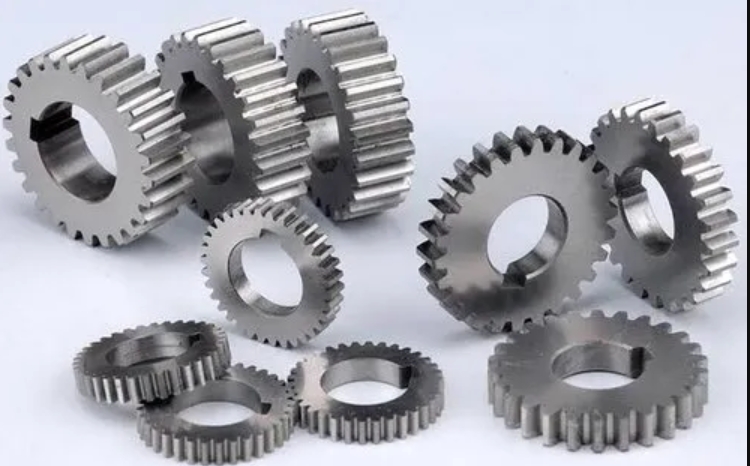
This article presents a comprehensive methodology for analyzing the contact fatigue life of involute spur gears. The core of our approach is a hybrid model that synergistically combines a numerical elastohydrodynamic lubrication model with a finite element explicit dynamic analysis. The EHL model calculates the precise pressure distribution and film thickness within the contact conjunction, accounting for non-Newtonian fluid effects and elastic deformation of the gear teeth. These results are then mapped into an explicit dynamic analysis framework, which simulates the transient meshing process, capturing impact events and calculating the resulting subsurface stress field. Finally, a multiaxial fatigue criterion is applied to the stress history to predict the initiation life for contact fatigue. We will delve into the theoretical foundations, the numerical solution strategy, and present a detailed case study examining the effects of gear design parameters, specifically the contact ratio, and operating conditions, namely oil supply state, on the fatigue life and the location of the critical failure zone.
1. Theoretical Foundations of the Hybrid Model
The proposed model rests on three pillars: the simplification of the gear contact geometry to a canonical form, the governing equations for elastohydrodynamic lubrication, and a fatigue life prediction model suitable for high-cycle rolling/sliding contact.
1.1 Geometrical Simplification of Spur Gear Contact
The contact between two involute spur gear teeth is a complex, moving, and curvilinear line contact. For analysis, this can be effectively simplified using the concept of equivalent cylinders. At any instant during meshing, the contact between two gear teeth profiles can be represented as the contact between two cylinders with radii equal to the instantaneous radii of curvature of the profiles at the contact point. This equivalent cylinder-plane model further simplifies the problem. The equivalent (or reduced) radius of curvature, $R$, for the contacting spur gear teeth is given by:
$$ R = \frac{R_1 R_2}{R_1 + R_2} $$
where $R_1$ and $R_2$ are the radii of curvature of the pinion and gear tooth profiles at the specific meshing position, respectively. The equivalent cylinder length is equal to the face width of the spur gear. This simplification allows the application of well-established line-contact EHL theory.
1.2 Governing Equations for Isothermal EHL
We consider an isothermal, steady-state line contact lubricated by a Newtonian fluid. The classical Reynolds equation governs the pressure generation within the fluid film:
$$ \frac{\partial}{\partial x}\left( \frac{\rho h^3}{\eta} \frac{\partial p}{\partial x} \right) = 12 u_e \frac{\partial}{\partial x}(\rho h) $$
with boundary conditions $p(x_{in}) = p(x_{out}) = 0$ and $p(x) \ge 0$ for $x_{in} < x < x_{out}$. Here, $p$ is the hydrodynamic pressure, $h$ is the film thickness, $\rho$ is the lubricant density, $\eta$ is the lubricant viscosity, and $u_e = (u_1 + u_2)/2$ is the entrainment velocity, where $u_1$ and $u_2$ are the surface velocities of the two spur gear teeth.
The film thickness equation accounts for both the geometry of the gap and the elastic deformation of the spur gear tooth surfaces under pressure:
$$ h(x) = h_0 + \frac{x^2}{2R} – \frac{2}{\pi E’} \int_{x_{in}}^{x_{out}} p(s) \ln|x – s| \, ds $$
where $h_0$ is the central rigid film thickness, $R$ is the equivalent radius of curvature, and $E’$ is the effective elastic modulus $\left( \frac{1}{E’} = \frac{1}{2}\left( \frac{1-\nu_1^2}{E_1} + \frac{1-\nu_2^2}{E_2} \right) \right)$.
The viscosity-pressure relationship is modeled using the Barus-like Roelands equation:
$$ \eta(p) = \eta_0 \exp\left\{ (\ln(\eta_0) + 9.67) \left[ (1 + 5.1 \times 10^{-9}p)^{Z_0} – 1 \right] \right\} $$
and the density-pressure relationship using the Dowson-Higginson equation:
$$ \rho(p) = \rho_0 \left( 1 + \frac{0.6 \times 10^{-9}p}{1 + 1.7 \times 10^{-9}p} \right) $$
where $\eta_0$ and $\rho_0$ are the ambient viscosity and density, respectively, and $Z_0$ is the pressure-viscosity index.
The final equation is the force balance, ensuring the integrated pressure supports the applied normal load per unit length $w$:
$$ \int_{x_{in}}^{x_{out}} p(x) \, dx = w $$
1.3 Contact Fatigue Life Model: Smith-Watson-Topper Criterion
Contact fatigue is a high-cycle fatigue phenomenon driven by alternating subsurface shear stresses. The Manson-Coffin model is suited for low-cycle fatigue dominated by plastic strain. For high-cycle fatigue where stress is primarily elastic, strain-life approaches incorporating mean stress effects are more appropriate. The Smith-Watson-Topper (SWT) parameter is an effective stress-life model that accounts for the influence of the maximum normal stress on the plane of maximum shear strain amplitude, making it suitable for multiaxial, non-proportional loading conditions like those found in spur gear contacts.
The SWT parameter is defined as:
$$ \sigma_{max} \frac{\Delta \varepsilon}{2} = \frac{(\sigma_f’)^2}{E} (2N_f)^{2b} + \sigma_f’ \varepsilon_f’ (2N_f)^{b+c} $$
where $\sigma_{max}$ is the maximum normal stress on the critical plane, $\Delta \varepsilon /2$ is the strain amplitude on that plane, $N_f$ is the number of cycles to crack initiation, $\sigma_f’$ is the fatigue strength coefficient, $b$ is the fatigue strength exponent, $\varepsilon_f’$ is the fatigue ductility coefficient, $c$ is the fatigue ductility exponent, and $E$ is Young’s modulus.
In rolling/sliding contact, damage initiation is often correlated with the maximum alternating shear stress. Therefore, we adapt the SWT model by using the von Mises equivalent stress, $\sigma_{vM}$, as a proxy for the shear stress amplitude driving fatigue. The modified criterion for the critical subsurface location becomes:
$$ \tau_{eff,max} \frac{\Delta \gamma}{2} = \frac{(\sigma_f’)^2}{E} (2N_f)^{2b} + \sigma_f’ \varepsilon_f’ (2N_f)^{b+c} $$
where $\tau_{eff,max}$ is derived from the von Mises stress history. The explicit dynamic analysis provides the complete time-history of the stress tensor at every material point, from which the von Mises stress and the identification of the critical plane and stress components for the SWT parameter can be calculated.
2. Numerical Solution Methodology
The solution process is sequential, first solving the EHL problem numerically, then transferring key results to the explicit dynamic finite element model of the spur gear pair.
2.1 Solving the EHL Equations
The coupled, non-linear integro-differential EHL system is solved using the highly efficient multigrid method. The domain $x_{in} \le x \le x_{out}$ is discretized using a multi-level grid. The pressure is solved iteratively on the finest grid using a Gauss-Seidel line relaxation scheme, while residual errors are smoothed and solved on coarser grids to accelerate convergence. The elastic deformation integral in the film thickness equation is evaluated using the multigrid multi-level integration technique, which dramatically improves computational speed compared to direct integration. Convergence is achieved when the relative error between the calculated load and the applied load is less than $1 \times 10^{-4}$. To enhance numerical stability, the problem is often reformulated using the equivalent induced pressure, $q$:
$$ q = \frac{1}{\alpha} (1 – e^{-\alpha p}) $$
where $\alpha$ is a function of lubricant properties.
2.2 Integration with Explicit Dynamic Analysis
The explicit dynamic analysis is performed using the Finite Element Method. A 3D model of the spur gear pair is created. The challenge is incorporating the EHL results. We achieve this through equivalent loading and boundary conditions:
- Equivalent Pressure Load: The pressure distribution $p(x)$ obtained from the EHL solution is mapped as a spatially varying surface traction onto the contacting tooth surfaces in the FE model at the corresponding mesh position.
- Friction Coefficient: The EHL solution provides the film thickness. The friction coefficient $\mu$ in the contact is highly dependent on the lubrication regime. Under full-film EHL, $\mu$ is very low (e.g., 0.002-0.05). Under starved or mixed lubrication, where the film is thin, $\mu$ increases significantly. A pre-defined relationship or map between central film thickness $h_c$ and friction coefficient $\mu$ is used. This $\mu$ is assigned to the contact interface in the explicit analysis.
- Dynamic Loading: The explicit analysis inherently captures dynamics. A rotational speed is applied to the pinion, and a resisting torque is applied to the gear wheel. The magnitude of the torque is determined from the total load supported by the EHL pressure distribution to ensure consistency.
The explicit analysis solves the equations of motion in the time domain, capturing the precise moment of impact at the beginning and end of single-tooth contact, as well as the load sharing between teeth. It outputs the full-field, time-varying stress tensor.
2.3 Fatigue Life Calculation Workflow
The complete workflow for predicting the contact fatigue life at a specific point on the spur gear tooth flank is as follows:
- For a given meshing position (point on the line of action), calculate the instantaneous radii of curvature $R_1$ and $R_2$ for the spur gear teeth.
- Compute the equivalent radius $R$, load per unit length $w$, and entrainment velocity $u_e$.
- Solve the isothermal EHL equations using the multigrid method to obtain $p(x)$, $h(x)$, and the central film thickness $h_c$.
- Determine the corresponding friction coefficient $\mu$ based on $h_c$ and the oil supply model.
- In the explicit dynamic FE model, apply the calculated $p(x)$ as surface traction and set the contact friction to $\mu$ at that meshing position.
- Run the explicit analysis over several mesh cycles to obtain a stabilized periodic stress history at numerous material points (nodes) beneath the surface of the analyzed spur gear tooth.
- For each material point, process the stress history to find the plane experiencing the maximum SWT parameter. Calculate the SWT parameter value.
- Using the material’s fatigue properties ($\sigma_f’, b, \varepsilon_f’, c, E$) and the calculated SWT parameter, solve the SWT equation (in its shear-stress adapted form) for the cycles to initiation $N_f$.
- The node with the minimum $N_f$ defines the critical depth and the predicted contact fatigue life for that tooth flank position.
3. Case Study: Effects of Contact Ratio and Oil Supply
We apply the developed methodology to analyze a case study involving a spur gear pair. The base material is 42CrMo4V steel, and the lubricant is L-CKC150. Key properties are summarized in Table 1.
| Property | Value | Unit |
|---|---|---|
| Gear Material | 42CrMo4V | – |
| Tensile Strength, $\sigma_T$ | 1134 | MPa |
| Yield Strength, $\sigma_s$ | 880 | MPa |
| Fatigue Strength Coefficient, $\sigma_f’$ | 1820 | MPa |
| Fatigue Ductility Coefficient, $\varepsilon_f’$ | 0.65 | – |
| Strength Exponent, $b$ | -0.08 | – |
| Ductility Exponent, $c$ | -0.76 | – |
| Lubricant Type | L-CKC150 | – |
| Density @ 20°C, $\rho_0$ | 880 | kg/m³ |
| Kinematic Viscosity @ 40°C | 150 | mm²/s |
We investigate two key factors: the transverse contact ratio ($\varepsilon_{\alpha}$) and the state of oil supply.
3.1 Influence of Contact Ratio on Spur Gear Fatigue
Three spur gear designs with different contact ratios were analyzed. The contact ratio was varied primarily by changing the module while keeping the center distance constant. Parameters are listed in Table 2.
| Parameter | Model U | Model V | Model W |
|---|---|---|---|
| Contact Ratio, $\varepsilon_{\alpha}$ | 1.30 | 1.50 | 1.73 |
| Module, $m$ (mm) | 16 | 7 | 2 |
| Pinion Teeth, $z_1$ | 8 | 16 | 56 |
| Gear Teeth, $z_2$ | 8 | 16 | 56 |
| Face Width (mm) | 20 | 20 | 20 |
| Speed (rad/min) | 300 | 300 | 300 |
The analysis focused on the region from the pitch point to the root of the driven spur gear tooth. The primary findings are:
- Stress Peaks and Meshing Impacts: The maximum contact stress peaks occurred during the transitions between single-tooth-pair and double-tooth-pair contact zones (i.e., at the start and end of the single-pair contact interval). These correspond to the well-known mesh entry and exit impacts in spur gears. As the contact ratio increased, the magnitude of these stress peaks decreased.
- Shift in Critical Zone: The location of the minimum predicted fatigue life (the “danger zone”) along the tooth profile shifted. For lower contact ratio spur gears, the danger zone was closer to the root. As $\varepsilon_{\alpha}$ increased, this zone moved towards the pitch line. The change in contact ratio alters the load-sharing sequence and the instantaneous radii of curvature at the impact points, which in turn affects the EHL film thickness and pressure spike, ultimately changing the subsurface stress field.
- Life Improvement: The predicted contact fatigue life increased with increasing contact ratio. A higher $\varepsilon_{\alpha}$ provides more overlap, leading to smoother load transfer, reduced dynamic overload due to impact, and generally lower maximum contact stresses. This demonstrates a key design principle for enhancing the durability of spur gears against contact fatigue.
3.2 Influence of Oil Supply State on Spur Gear Fatigue
Using Model W ($\varepsilon_{\alpha}=1.73$), we analyzed the critical point (identified in the previous study) under two lubrication conditions: fully flooded and starved. The oil supply state is modeled via the inlet meniscus distance in the EHL calculation. Under starved conditions, the lubricant film cannot fully develop.
- Pressure Profile Change: Under fully flooded conditions, the classic EHL pressure profile with a secondary pressure spike near the outlet is observed. Under severely starved conditions, this spike diminishes, and the pressure profile collapses towards the Hertzian dry contact shape.
- Friction Increase: Starvation leads to a thinner film, increasing the shear stress in the fluid and the likelihood of asperity contact. Consequently, the effective friction coefficient rises dramatically—from approximately $\mu \approx 0.002$ in full-film EHL to $\mu \approx 0.2$ under mixed lubrication in this case.
- Dramatic Life Reduction and Danger Zone Migration: The explicit analysis results are striking. Table 3 compares the key outcomes:
| Condition | Friction Coeff. ($\mu$) | Critical Depth | Relative Fatigue Life |
|---|---|---|---|
| Fully Flooded | ~0.002 | ~0.375 mm below surface | Baseline (High) |
| Starved | ~0.2 | ~0.0015 mm below surface | Severely Reduced |
Under full lubrication, the maximum von Mises stress and thus the critical plane for fatigue initiation is located in the subsurface (approx. 0.375 mm deep). Under starved conditions, the high surface friction introduces significant shear stresses right at the surface. This causes the critical danger zone to migrate to an extremely shallow depth, essentially at the surface. Furthermore, the magnitude of the SWT parameter increases, leading to a severe reduction in predicted contact fatigue life. This explains why micropitting and surface-initiated pitting are common under thin-film or boundary lubrication regimes. It underscores the paramount importance of maintaining adequate EHL conditions for spur gear longevity.
4. Discussion and Conclusions
The hybrid numerical-explicit model presented provides a powerful and realistic framework for predicting the contact fatigue life of spur gears. By integrating a full EHL solution with transient dynamic stress analysis, it captures phenomena that traditional models miss. The model’s capability to handle different spur gear geometries and operating conditions makes it a valuable tool for both analysis and design optimization.
The key conclusions from this study are:
- Model Efficacy: The combination of a multigrid EHL solver and explicit dynamic FE analysis successfully bridges the gap between detailed lubrication physics and system-level dynamic response for spur gears. It efficiently provides the precise stress histories needed for accurate fatigue life prediction via the SWT criterion.
- Contact Ratio is a Powerful Design Lever: Increasing the transverse contact ratio of a spur gear system is a highly effective strategy for improving contact fatigue life. It mitigates meshing impact severity, reduces peak contact stresses, and shifts the critical fatigue zone towards the pitch line—a region often with more favorable curvature and potentially thicker films.
- Lubrication is Critical, Not Ancillary: The state of oil supply has a profound, even dominating, influence on spur gear contact fatigue life. Starved lubrication leads to drastically increased friction, which pulls the fatigue-critical stress zone from the subsurface to the very surface. This not only dramatically shortens life but also changes the failure mode from classical subsurface-originated pitting to surface-originated micropitting or pitting. Ensuring fully flooded conditions or using lubricants/additives that maintain protective films under severe conditions is essential for durability.
- Design Implications: The findings offer clear guidance for spur gear design and maintenance:
- Designers should aim for higher contact ratios where feasible, balancing this against other constraints like size and bending strength.
- The model can identify the exact subsurface depth of the critical stress region under good lubrication. This provides a scientific basis for determining the required case depth for surface-hardened spur gears (e.g., carburized or induction-hardened gears), ensuring the hardened layer encompasses the danger zone.
- The dramatic effect of starvation highlights the need for reliable lubrication system design and maintenance practices in spur gear applications.
In summary, this work moves beyond the limitations of classical Hertzian analysis for spur gears. By accounting for the synergistic effects of elastohydrodynamic lubrication, dynamic impacts, and surface friction, it provides a more reliable and physically representative method for assessing and extending the contact fatigue life of one of the most fundamental components in mechanical engineering: the spur gear.