
The relentless pursuit of renewable energy has propelled the wind power industry to the forefront, demanding ever-higher standards of reliability and efficiency from its core components. Among these, the gearbox stands as a critical element, tasked with converting the low rotational speed of the turbine blades into the high speed required by the generator. Unfortunately, gearbox failures remain a significant contributor to wind turbine downtime and maintenance costs. A predominant source of these failures is excessive vibration within the transmission system, often culminating in issues like gear tooth pitting, cracking, and ultimately, catastrophic failure. This investigation focuses specifically on the dynamics of the parallel shaft helical gear stages commonly found in wind turbine gearboxes. By employing a detailed coupled rotor-dynamic analysis, we aim to dissect the vibrational characteristics of these systems, identify potential resonance risks, and explore practical design modifications to enhance operational stability.
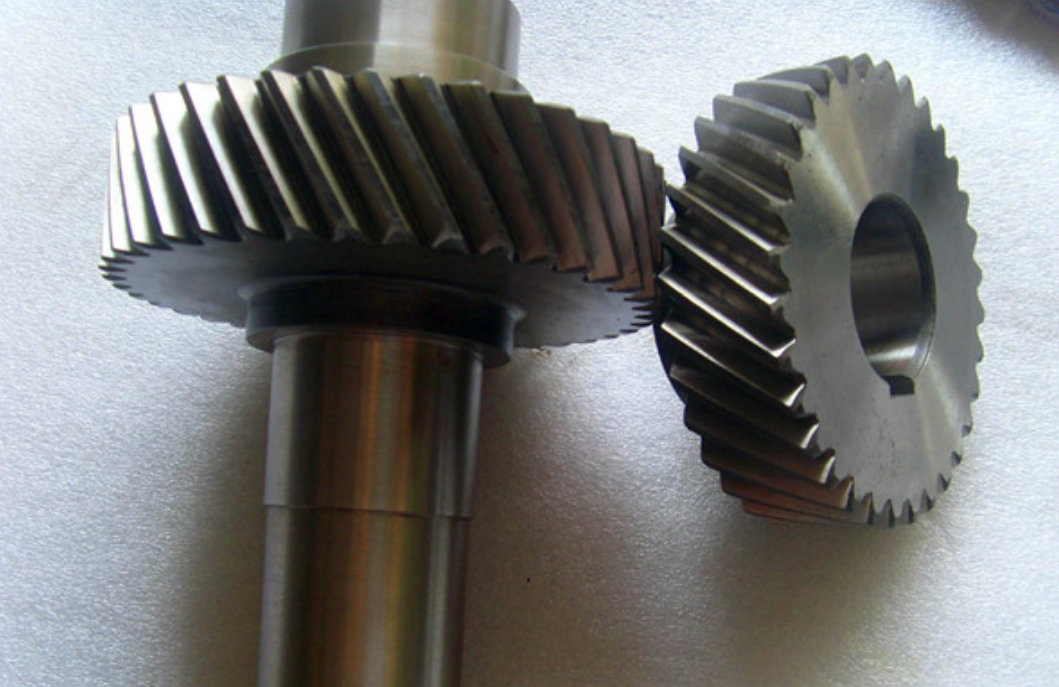
The operational principle of a helical gear, fundamental to this discussion, involves teeth that are cut at an angle to the gear axis. This helix angle introduces gradual tooth engagement, leading to smoother operation, higher load capacity, and reduced noise compared to spur gears. However, this same geometry induces axial thrust forces and creates more complex meshing stiffness variations, which significantly influence the system’s dynamic response. The meshing action of a pair of helical gears can be represented by a time-varying stiffness function. For a single tooth pair in contact, the meshing stiffness can be approximated, but for dynamic analysis, the total mesh stiffness $k_m(t)$, which is periodic with the gear mesh frequency, is crucial. It can be expanded in a Fourier series:
$$ k_m(t) = k_{m0} + \sum_{n=1}^{N} [a_n \cos(n\omega_m t) + b_n \sin(n\omega_m t)] $$
where $k_{m0}$ is the mean mesh stiffness, $\omega_m$ is the gear mesh frequency ($\omega_m = Z \times \Omega$, with $Z$ as the number of teeth and $\Omega$ as the rotational speed), and $a_n$, $b_n$ are Fourier coefficients. The helical angle $\beta$ directly affects the length of the contact line and thus the mean stiffness $k_{m0}$.
The dynamics of a rotor-bearing-gear system is governed by equations derived from Newton’s second law or Lagrange’s equations. For a simple Jeffcott rotor model extended to include gear mesh dynamics, the equations for a gear pair on flexible shafts and bearings can be expressed. Considering translational motions $x$, $y$ and rotational/torsional motion $\theta$, the equations for the driving pinion (p) and driven gear (g) in one plane are:
$$ m_p \ddot{x}_p + c_{px} \dot{x}_p + k_{px} x_p = F_{mx}(t) $$
$$ m_p \ddot{y}_p + c_{py} \dot{y}_p + k_{py} y_p = F_{my}(t) $$
$$ I_p \ddot{\theta}_p + c_{p\theta} \dot{\theta}_p + k_{p\theta} \theta_p = T_p – R_{bp} F_{m\theta}(t) $$
$$ m_g \ddot{x}_g + c_{gx} \dot{x}_g + k_{gx} x_g = -F_{mx}(t) $$
$$ m_g \ddot{y}_g + c_{gy} \dot{y}_g + k_{gy} y_g = -F_{my}(t) $$
$$ I_g \ddot{\theta}_g + c_{g\theta} \dot{\theta}_g + k_{g\theta} \theta_p = -T_g + R_{bg} F_{m\theta}(t) $$
Here, $m$ is mass, $I$ is mass moment of inertia, $c$ and $k$ are damping and stiffness coefficients for bearings/shafts, $T$ is torque, $R_b$ is base circle radius, and $F_m$ is the dynamic mesh force. The mesh force components are functions of the dynamic transmission error (DTE) $\delta(t)$ along the line of action:
$$ \delta(t) = (x_p – x_g)\cos\alpha + (y_p – y_g)\sin\alpha + (R_{bp}\theta_p – R_{bg}\theta_g) + e(t) $$
$$ F_m(t) = k_m(t) \delta(t) + c_m \dot{\delta}(t) $$
where $\alpha$ is the pressure angle and $e(t)$ is the static transmission error excitation. For a helical gear, the force decomposition must account for the helix angle $\beta$, introducing axial components and coupling between transverse and torsional vibrations.
Extending this to a multi-stage, multi-parallel shaft system, as found in a typical wind turbine gearbox high-speed stage, requires assembling the global system matrices. The finite element method (FEM) is the most practical tool for this. Each shaft is discretized into Timoshenko beam elements, accounting for shear deformation and rotary inertia. The gears are modeled as rigid disks with mass and inertia properties attached to corresponding shaft nodes. The bearings are represented by linear stiffness and damping coefficients at the support nodes. The key to capturing the system’s true behavior lies in correctly modeling the helical gear mesh coupling between shafts. The time-varying mesh stiffness $k_m(t)$ acts along the line of action, coupling the degrees of freedom (translational and rotational) of the two mating gear nodes. The global equation of motion for the coupled system becomes:
$$ \mathbf{M}\ddot{\mathbf{q}}(t) + \mathbf{C}\dot{\mathbf{q}}(t) + \mathbf{K}(t)\mathbf{q}(t) = \mathbf{F}(t) $$
where $\mathbf{M}$, $\mathbf{C}$ are the global mass and damping matrices, $\mathbf{K}(t)$ is the global stiffness matrix containing both time-invariant (shaft, bearing) and time-varying (gear mesh) components, $\mathbf{q}(t)$ is the vector of nodal displacements (including lateral, axial, and torsional), and $\mathbf{F}(t)$ is the force vector including unbalance and transmission error excitations. The periodic nature of $\mathbf{K}(t)$ due to the helical gear mesh makes this a parametrically excited system.
The first step in dynamic analysis is often the modal analysis of the free, undamped, and time-averaged system (i.e., using the mean mesh stiffness $k_{m0}$). This solves the eigenvalue problem:
$$ (\mathbf{K}_0 – \omega_i^2 \mathbf{M}) \mathbf{\Phi}_i = 0 $$
where $\mathbf{K}_0$ is the mean stiffness matrix, $\omega_i$ are the natural frequencies, and $\mathbf{\Phi}_i$ are the corresponding mode shapes. For a two-stage parallel shaft helical gear system, the modes can be complex, involving coupled lateral (bending), torsional, and axial vibrations of both shafts, as well as “body” modes where the gears rock on their supporting stiffnesses. It is critical to distinguish between the analysis of uncoupled subsystems (e.g., analyzing each shaft separately) and the fully coupled system.
The following table contrasts the primary parameters for a typical two-stage parallel shaft helical gear train from a wind turbine gearbox, which will serve as our analysis case.
| Component | Module (mm) | Pressure Angle | Helix Angle $\beta$ | Hand | Face Width (mm) | Number of Teeth | Shaft Diameter (mm) | Bearing Span (mm) |
|---|---|---|---|---|---|---|---|---|
| Low-Speed Pinion | 5 | 20° | 15° | Left | 100 | 53 | 150 | 250 |
| Low-Speed Gear | 5 | 20° | 15° | Right | 105 | 20 | 80 | – |
| High-Speed Gear (Large) | 5 | 20° | 15° | Right | 100 | 97 | 80 | 450 |
| High-Speed Pinion (Small) | 5 | 20° | 15° | Left | 105 | 20 | 80 | 250 |
Material properties are: Young’s Modulus $E = 2.06 \times 10^{11}$ Pa, Poisson’s ratio $\mu = 0.3$, density $\rho = 7800$ kg/m³.
Building the coupled FEM model involves meshing the shafts with beam elements, concentrating gear masses/inertias at nodes, applying bearing constraints (modeled as linear springs), and, most importantly, establishing the stiffness connection between the gear nodes via the mean helical gear mesh stiffness. The mesh stiffness for a helical gear pair can be estimated using analytical formulas or detailed FEM contact analysis, considering the contact ratio. For preliminary analysis, it can be approximated as proportional to the face width and a function of the helix angle:
$$ k_{m0} \propto \frac{W \cdot E}{\cos^2 \beta} $$
where $W$ is the effective face width.
The results of the coupled modal analysis reveal distinct natural frequencies and mode shapes. The table below summarizes a subset of the calculated modal frequencies and the dominant participating components for the coupled system.
| Mode Order | Natural Frequency (Hz) | Dominant Vibration Characteristic (Mode Shape Description) |
|---|---|---|
| 1 | f₁ | Rigid-body rotational mode of the high-speed shaft; Low-speed gears exhibit coupled rocking. |
| 2 | f₂ | Coupled torsional vibration of the low-speed gear pair; low-speed shaft rotation. |
| 6 | f₆ | Coupled bending-torsional vibration of the high-speed pinion (small gear). |
| 8 | f₈ | Torsional vibration of high-speed pinion shaft; bending of the high-speed large gear. |
| 14 | f₁₄ | Strongly coupled bending-torsional vibration of both the high-speed pinion shaft and the large gear. |
| 15 | f₁₅ | Bending-torsional vibration of high-speed shaft; circumferential (umbrella) mode of the large gear web. |
A critical comparison is made between the natural frequencies of the fully coupled system and those obtained from analyzing each shaft assembly in isolation (uncoupled). This comparison yields several important observations:
- Emergence of New Frequencies: The coupled system exhibits natural frequencies that do not exist in the uncoupled analyses. These are system modes resulting from the dynamic interaction between the two gear stages through the mesh stiffness. They represent global system dynamics.
- Complex Combined Mode Shapes: The new frequencies correspond to vibration modes that are intricate combinations of individual shaft motions—bending, torsion, and axial—linked by the gear mesh. For instance, a mode might involve the bending of the high-speed shaft coupled with the torsional vibration of the low-speed stage.
- Shift in Existing Frequencies: Some frequencies that correspond to modes of an isolated shaft (e.g., a first bending mode of the high-speed shaft) are still present in the coupled system but are shifted in value. This shift occurs because the connecting mesh stiffness alters the effective boundary conditions for that shaft’s vibration.
- Greater Impact on Lower Frequencies: The coupling effect, imposed by the helical gear mesh, generally has a more pronounced influence on the lower-order natural frequencies. Higher-frequency modes, often associated with local deformations like gear web modes, are less affected by the inter-shaft coupling.
The presence of these system modes is significant for resonance avoidance. Excitation sources in a wind turbine gearbox are abundant: gear mesh frequency ($f_m$) and its harmonics, rotational frequencies of shafts ($1X$, $2X$), and sidebands ($f_m \pm nX$). If any of these excitation frequencies coincide with a system natural frequency, especially one involving high dynamic loads on gear teeth, severe resonant vibration can occur. The high-speed stage is particularly vulnerable because it operates at the highest rotational speed, subjecting its components, especially the small pinion with lower inertia, to the highest mesh frequency excitations. Modes involving the high-speed pinion, such as the coupled bending-torsional modes identified, are prime candidates for dangerous resonances. Furthermore, vibrations from the larger, more flexible gears (like web or umbrella modes) are transmitted through the rigid mesh to the smaller pinion, potentially leading to stress concentrations and fatigue failure at the pinion teeth—a common failure point in practice.
Given the risk of resonance, a key design objective is to tune the system’s natural frequencies away from major excitation frequencies. This can be achieved by modifying system parameters. One of the most practically influential parameters for a helical gear is its face width ($W$). The face width directly impacts several key properties: gear mass, gear mesh stiffness ($k_{m0}$), and shaft loading. Its effect on system dynamics is multi-faceted and can be evaluated systematically. Let’s analyze the impact of reducing the face width on our case study system.
| Parameter | Relationship with Face Width ($W$) | Effect of Reducing $W$ |
|---|---|---|
| Gear Mass & Inertia | $m_g, I_g \propto W$ | Decreases |
| Mean Mesh Stiffness $k_{m0}$ | $k_{m0} \propto W$ (approximately) | Decreases |
| Shaft Bending Stiffness | Unaffected (independent) | No direct change |
| Bearing Load & Stiffness | Indirect effect via load changes | Potentially changes |
To quantify the dynamic impact, we modify the original design: reduce the face width of the small pinions to 90 mm and the large gears to 85 mm, keeping all other parameters constant. A new coupled modal analysis is performed. The change in natural frequency for a mode $\omega_i$ can be understood by considering the simplified effect on a single-degree-of-freedom equivalent system where the effective stiffness $K_{eff}$ and mass $M_{eff}$ are influenced by $W$. The natural frequency is $\omega_i = \sqrt{K_{eff}/M_{eff}}$. Reducing $W$ decreases both $K_{eff}$ (primarily via mesh stiffness) and $M_{eff}$ (gear mass). The net shift depends on the sensitivity of the mode to these parameters. For modes dominated by gear mesh deformation, the stiffness reduction often outweighs the mass reduction, leading to a lower natural frequency. For modes dominated by shaft bending, the effect may be smaller or more complex. The results of our comparative analysis are summarized below.
| Mode Description (Dominant Feature) | Natural Freq. – Original Design (Hz) | Natural Freq. – Reduced Face Width (Hz) | Percentage Change (%) |
|---|---|---|---|
| 1st System Torsional Mode | f_{T1} | f_{T1}’ | -Δ₁% |
| Low-Speed Shaft 1st Bending | f_{B1-LS} | f_{B1-LS}’ | -Δ₂% |
| High-Speed Shaft 1st Bending | f_{B1-HS} | f_{B1-HS}’ | ~Δ₃% (minor) |
| Helical Gear Coupled Mode (e.g., Mode 6 from Table 2) | f₆ | f₆’ | -Δ₄% (significant) |
| High-Speed Large Gear Web Mode | f_{Web} | f_{Web}’ | -Δ₅% |
The analysis confirms that reducing the face width of the helical gears has a pronounced and often significant effect on the system’s natural frequencies, particularly those lower-frequency modes that are heavily influenced by the gear mesh stiffness and the inertial properties of the gears themselves. This provides a viable, practical design lever for resonance avoidance. For example, if the original design exhibited a potential resonance between the 3rd mesh harmonic and a coupled system mode at frequency $f₆$, reducing the face width could lower $f₆$ sufficiently to place a safe margin between the two frequencies. It is a more effective strategy for tuning lower-order modes compared to higher-frequency local modes, which might require other modifications like changing web thickness or ribbing.
The forced response analysis under operational conditions is the ultimate validation. Using the modified design with reduced face width, we apply the primary excitations: static transmission error $e(t)$ modeled as a sinusoidal function at mesh frequency, and mass unbalance forces on the rotors at 1X rotational speeds. The equations of motion including damping are solved using numerical integration (e.g., Newmark-β method) or frequency-domain methods. The dynamic mesh force $F_m(t)$ and the dynamic bearing forces are critical outputs. The vibration response, especially at the gear mesh frequency and sidebands, can be monitored. A key metric is the dynamic factor, the ratio of dynamic mesh load to static mesh load. For a helical gear pair, the dynamic mesh load $F_{dyn}$ can be estimated from the dynamic transmission error $\delta_{dyn}$:
$$ F_{dyn} \approx k_{m0} \cdot \delta_{dyn} $$
The goal of the design modification is to reduce $F_{dyn}$ and the associated stress cycles on the gear teeth. A successful modification, where the excitation frequencies are detuned from system resonances, will show a marked reduction in vibration amplitude at critical frequencies in the frequency spectrum and a lower dynamic factor, directly contributing to improved fatigue life and reliability of the helical gear transmission.
In conclusion, the stability of a wind turbine gearbox is inextricably linked to the complex coupled dynamics of its multi-parallel shaft helical gear rotor systems. Isolated component analysis fails to capture critical system-wide vibrational modes that emerge from the interaction between stages via the time-varying helical gear mesh. These coupled modes, often involving bending-torsional-axial interactions, are prime sites for resonance, particularly in the high-speed stage where excitation frequencies are highest. Through detailed finite element-based coupled rotor-dynamic analysis, these risks can be identified. Furthermore, strategic design modifications, such as adjusting the face width of the helical gears, provide an effective and practical means to shift the system’s natural frequencies, thereby creating safe margins from major excitations and mitigating resonant vibration. This methodology underscores the importance of a system-level dynamic perspective in the design and troubleshooting of high-performance helical gear transmissions, ultimately paving the way for more reliable and efficient wind energy systems.