
Gear transmission systems are fundamental components across industries such as aerospace, automotive, and energy generation. The operational reliability of these systems is paramount, as gear failure can lead to significant economic losses and potentially catastrophic safety incidents. Among various failure modes, tooth root bending fatigue fracture is one of the most severe and prevalent issues. This mode of failure typically initiates from microscopic cracks that nucleate at the root fillet region—a critical stress concentration zone—and progressively propagate under cyclic loading until catastrophic fracture occurs. Statistical analyses indicate that fatigue-related failures account for a substantial portion (50-90%) of mechanical component failures, with root fractures representing a significant subset of gear failures.
The analysis of crack propagation and the prediction of residual fatigue life in cylindrical gears are therefore critical for ensuring system reliability, guiding optimal design practices, and implementing effective preventive maintenance strategies. Traditional design standards often rely on simplified models and nominal stress approaches, which may not fully capture the complex three-dimensional stress state and the actual crack growth behavior under service conditions. This work focuses on the fracture mechanics-based analysis of surface cracks at the tooth root of spur cylindrical gears, with particular attention paid to the influence of non-uniform load distribution along the tooth face width—a common real-world condition arising from manufacturing inaccuracies, assembly misalignments, and shaft deflections.
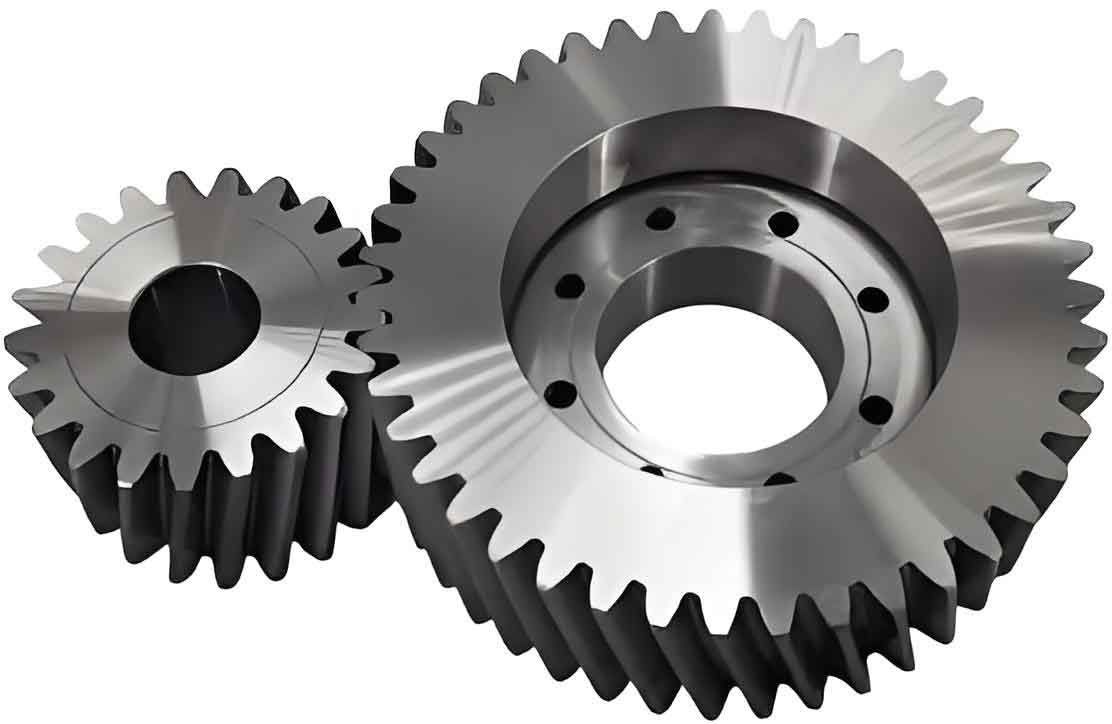
The core of this investigation utilizes a combined numerical simulation approach. A parametric finite element model of a spur cylindrical gear is developed using ANSYS APDL, enabling efficient modeling and analysis. A sub-model of a single tooth is extracted for detailed study. The actual crack propagation process is simulated using the specialized fracture mechanics software FRANC3D, which is interfaced with ANSYS for finite element analysis. This methodology allows for the simulation of three-dimensional mixed-mode crack growth from an initial flaw, calculation of fracture parameters like stress intensity factors, and subsequent prediction of fatigue life.
Theoretical Foundations of Crack Propagation and Fatigue
Fatigue crack analysis primarily operates within the framework of Linear Elastic Fracture Mechanics (LEFM) for high-cycle fatigue scenarios where plastic zones are small compared to crack dimensions. The fundamental concepts involve crack characterization, the description of the crack-tip stress field, and criteria governing crack growth initiation and direction.
Crack-Tip Stress Field and Stress Intensity Factor (SIF): For a sharp crack in a linear elastic body, Williams’ asymptotic solution describes the singular stress field near the crack tip. Using a polar coordinate system (r, θ) originating at the crack tip, the stress components for the three basic modes are given by:
Mode I (Opening):
$$
\sigma_{ij}^{\mathrm{I}} = \frac{K_{\mathrm{I}}}{\sqrt{2\pi r}} f_{ij}^{\mathrm{I}}(\theta)
$$
Mode II (Sliding):
$$
\sigma_{ij}^{\mathrm{II}} = \frac{K_{\mathrm{II}}}{\sqrt{2\pi r}} f_{ij}^{\mathrm{II}}(\theta)
$$
Mode III (Tearing):
$$
\sigma_{ij}^{\mathrm{III}} = \frac{K_{\mathrm{III}}}{\sqrt{2\pi r}} f_{ij}^{\mathrm{III}}(\theta)
$$
Here, $K_{\mathrm{I}}$, $K_{\mathrm{II}}$, and $K_{\mathrm{III}}$ are the Stress Intensity Factors (SIFs) for Modes I, II, and III, respectively. They quantify the intensity of the singular stress field and are functions of the applied load, crack geometry, and component geometry. For a surface crack, the SIF varies along the crack front. For a semi-elliptical surface crack with depth *a* and surface length 2*c*, the Mode I SIF at a point defined by angle φ from the surface is often expressed as:
$$
K_I = \frac{\sigma \sqrt{\pi a}}{\Phi} \left[ \sin^2 \phi + \left( \frac{a}{c} \right)^2 \cos^2 \phi \right]^{1/4}
$$
where $\Phi$ is the complete elliptic integral of the second kind. The SIF is the primary driving force for fatigue crack propagation.
Mixed-Mode Fracture Criteria: In practice, cracks in gear teeth are often subject to a combination of loading modes (mixed-mode I/II/III). Predicting the direction of crack growth under such conditions requires a fracture criterion. Three common criteria are:
1. Maximum Tangential Stress (MTS) Criterion: Crack propagates in the direction θ₀ where the circumferential stress σ_θθ is maximum. The initiation condition is given by:
$$
\cos \frac{\theta_0}{2} \left[ K_I \sin \theta_0 + K_{II} (3 \cos \theta_0 – 1) \right] = 0
$$
2. Strain Energy Density Factor (S) Criterion: Crack propagates in the direction of minimum strain energy density factor S. The critical condition is $S_{min} = S_c$, where $S_c$ is a material constant related to fracture toughness.
3. Energy Release Rate (G) Criterion: Crack extends in the direction that maximizes the energy release rate G. For linear elasticity, G is related to the SIFs. For plane strain conditions:
$$
G = \frac{1-\nu^2}{E} (K_I^2 + K_{II}^2) + \frac{1+\nu}{E} K_{III}^2
$$
where *E* is Young’s modulus and ν is Poisson’s ratio.
Fatigue Crack Growth Rate and Life Prediction: The rate of crack growth per loading cycle (da/dN) is empirically related to the range of the SIF (ΔK = K_max – K_min) via the Paris law:
$$
\frac{da}{dN} = C (\Delta K)^m
$$
where *C* and *m* are material constants. For mixed-mode loading, an equivalent SIF range ΔK_eq is often used. One formulation is:
$$
\Delta K_{eq} = \sqrt{ (\Delta K_I)^2 + \alpha_1 (\Delta K_{II})^2 + \alpha_2 (\Delta K_{III})^2 }
$$
where α₁ and α₂ are weighting coefficients. The total fatigue life (N_f) from an initial crack size a_i to a critical size a_c is obtained by integration:
$$
N_f = \int_{a_i}^{a_c} \frac{da}{C (\Delta K_{eq})^m}
$$
This forms the basis for predicting the crack propagation life of cylindrical gear teeth.
Parametric Modeling and Initial Crack Implementation
An accurate finite element model is essential for reliable analysis. A parametric model of a standard involute spur cylindrical gear was created using ANSYS APDL scripting. The key gear parameters defined in the script include module, number of teeth, pressure angle, addendum, and dedendum coefficients. This parametric approach allows for easy modification of gear geometry for future studies.
A single-tooth sub-model was extracted from the full gear model to reduce computational cost while maintaining result accuracy, leveraging the periodicity and symmetry of cylindrical gears. The material selected for the analysis is 42CrMo4 (AISI 4142), a common high-strength gear steel. Its mechanical properties are listed in the table below.
| Property | Symbol | Value | Unit |
|---|---|---|---|
| Young’s Modulus | E | 206,000 | MPa |
| Shear Modulus | G | 80,000 | MPa |
| Poisson’s Ratio | ν | 0.3 | – |
| Yield Strength | R_m | 1000 | MPa |
| Tensile Strength | R_t | 800 | MPa |
| Fracture Toughness | K_IC | 2620 | MPa√mm |
| Paris Law Constant | C | 1.73E-11 | – |
| Paris Law Exponent | m | 4.16 | – |
The boundary conditions applied to the single-tooth model simulate a cantilever scenario: the tooth’s bottom and sides are constrained, representing its connection to the gear body. The load is applied along the highest point of single tooth contact (HPSTC) line on the tooth’s addendum, representing the most critical loading position for bending stress. Crucially, two distinct load distribution patterns along the tooth width (Z-direction) are investigated:
- Ideal Uniform Load: Constant pressure across the entire face width.
- Actual Linear Load: A linearly varying pressure from zero at one end to a maximum at the other end, simulating the effect of misalignment and shaft deflection. The total force integrated over the face width is equal to that of the uniform load case for a fair comparison.
A preliminary static stress analysis of the uncracked tooth under uniform load identified the region of maximum tensile stress at the root fillet, approximately at the mid-width location. This point is deemed the most likely site for fatigue crack initiation. A semi-elliptical surface crack, with a depth of 1 mm and an aspect ratio (a/c) of 0.8, was embedded at this location as the initial flaw. This model, containing the initial crack, boundary conditions, and applied load, was then exported from ANSYS and imported into FRANC3D for subsequent crack growth simulation and life prediction.
Three-Dimensional Crack Propagation Analysis Under Different Load Distributions
The core simulation work was performed using FRANC3D, which facilitates automatic crack growth simulation based on fracture mechanics principles. The process involves inserting the crack, generating a locally refined mesh around the crack front, performing a finite element analysis (via ANSYS solver), calculating SIFs along the crack front, determining the new crack growth direction and increment based on a selected criterion (Maximum Tangential Stress criterion was used here), and then remeshing. This cycle repeats for a specified number of growth steps.
The simulations were run separately for the two load cases: ideal uniform load and actual linear load. The resulting crack growth paths and the evolution of SIFs provide critical insights.
Crack Path and Morphology: The initial semi-elliptical crack propagated under both loading conditions. A distinct difference in the crack path was observed. Under the ideal uniform load, the crack grew predominantly in a plane nearly perpendicular to the tooth axis, maintaining symmetry. Under the actual linear load, the crack growth plane tilted towards the heavily loaded end of the tooth. The crack front shape also evolved differently; the aspect ratio (a/c) changed more significantly under the non-uniform load, indicating uneven growth rates along the crack front due to the varying stress field.
Evolution of Stress Intensity Factors: The SIFs were calculated at the deepest point of the semi-elliptical crack front (point A) throughout the growth process. The results are summarized below.
| Crack Depth a (mm) | Ideal Uniform Load | Actual Linear Load | ||||
|---|---|---|---|---|---|---|
| K_I (MPa√m) | K_II (MPa√m) | K_III (MPa√m) | K_I (MPa√m) | K_II (MPa√m) | K_III (MPa√m) | |
| 1.00 | 12.5 | 1.2 | ~0.0 | 13.8 | 1.5 | 0.8 |
| 1.12 | 14.1 | 1.3 | ~0.0 | 15.6 | 1.6 | 0.7 |
| 1.24 | 15.7 | 1.3 | ~0.0 | 17.4 | 1.6 | 0.6 |
| 1.36 | 17.4 | 1.4 | ~0.0 | 19.3 | 1.7 | 0.5 |
| 1.48 | 19.1 | 1.4 | ~0.0 | 21.2 | 1.7 | 0.4 |
Key Observations:
- Mode I (K_I) is the dominant SIF in both cases, driving the crack opening. Its value increases with crack depth for both load types.
- For the same crack depth, K_I under the actual linear load is consistently higher than under the ideal uniform load. This is because the non-uniform load creates a higher localized bending stress at the crack location.
- Mode II (K_II) is present but significantly smaller than K_I. Its value remains relatively stable during propagation.
- Mode III (K_III) is negligible under ideal symmetric loading but has a measurable value under the non-uniform load, reflecting the out-of-plane shear induced by the load gradient. Its value decreases slightly as the crack grows.
Crack Deflection Angles: The presence of K_II and K_III causes the crack to deviate from a path purely perpendicular to the maximum tensile stress. The deflection angles (φ in-plane, ψ out-of-plane) can be estimated using formulae like Richard’s approximation. Analysis shows that while φ remains small and similar for both cases, ψ is notably larger for the actual linear load case, quantitatively confirming the observed tilt in the crack growth plane.
Fatigue Life Prediction for Cylindrical Gears
The fatigue crack propagation life was predicted by integrating the Paris law, using the equivalent SIF range ΔK_eq calculated from the simulated SIFs along the crack front. The material constants C and m for 42CrMo4 were used. The life was calculated for both load distribution cases, from the initial crack size to a critical depth deemed as failure.
The crack growth rate (da/dN) was first derived. As expected, the rate was higher under the actual linear load due to the higher ΔK_eq. Furthermore, the crack growth rate along the tooth width (surface direction) was found to be faster than in the depth direction for both cases, consistent with the behavior of semi-elliptical surface cracks.
The predicted number of cycles to failure (N_f) for the two scenarios are compared below. The life is expressed both in terms of crack depth (a) and crack length along the surface (2c).
| Load Condition | Life to Reach a = 1.5 mm (cycles) | Life to Reach 2c = 5 mm (cycles) | Relative Life Reduction |
|---|---|---|---|
| Ideal Uniform Load | ~3.25 x 10^5 | ~3.25 x 10^5 | Base Case |
| Actual Linear Load | ~2.90 x 10^5 | ~3.20 x 10^5 | ~10-15% |
The results clearly demonstrate that non-uniform load distribution along the face width of cylindrical gears significantly reduces the fatigue crack propagation life. In this specific case, the life was reduced by approximately 10-15%. This underscores the critical importance of minimizing misalignment and improving load distribution in the design and assembly of cylindrical gear systems. The face load distribution factor (K_Hβ), commonly used in gear rating standards, quantitatively accounts for this effect; a higher K_Hβ directly correlates with a shorter predicted fatigue life.
Influence of Initial Crack Location on Fatigue Life
Fatigue cracks in cylindrical gears can initiate at various points along the root fillet due to localized imperfections or inclusions. To investigate this, the initial semi-elliptical crack was placed at different angular orientations relative to the tooth’s central plane (XZ-plane). Four angles were studied: 15°, 30°, 45°, and 60°. The simulation procedure (under uniform load for isolation of this variable) was repeated for each orientation.
The SIF history varied with the initial crack angle. While K_I remained the dominant factor, its magnitude generally decreased as the initial crack angle increased, as the crack plane became less aligned with the maximum tensile stress direction. Conversely, K_II tended to increase with the angle. The fatigue life was subsequently predicted for each case.
The relationship between the initial crack orientation angle (β) and the predicted fatigue life (N_f) for a given crack depth extension can be expressed through fitted functions. For a crack depth growth of Δa = 0.5 mm, the trends are summarized as:
$$ N_f(15^\circ) \approx 4.46 \times 10^5 \text{ cycles} $$
$$ N_f(30^\circ) \approx 4.63 \times 10^5 \text{ cycles} $$
$$ N_f(45^\circ) \approx 4.84 \times 10^5 \text{ cycles} $$
$$ N_f(60^\circ) \approx 5.08 \times 10^5 \text{ cycles} $$
The increment in life between successive angles, ΔN_f, increases with the angle:
$$ \Delta N_f(15^\circ\to30^\circ) < \Delta N_f(30^\circ\to45^\circ) < \Delta N_f(45^\circ\to60^\circ) $$
This leads to a key conclusion: The fatigue crack propagation life of cylindrical gear teeth is sensitive to the initial crack location/orientation. Cracks initiating at a steeper angle relative to the tooth’s central axis tend to have a longer propagation life. This is because such cracks are less favorably oriented to the principal bending stress, resulting in a lower effective driving force (ΔK_eq) for growth.
Conclusions and Outlook
This study conducted a comprehensive fracture mechanics analysis of tooth root cracks in spur cylindrical gears, employing advanced finite element and crack propagation simulation tools. The parametric modeling approach provided flexibility, and the FRANC3D software enabled realistic simulation of three-dimensional mixed-mode crack growth.
The primary findings are:
- Non-uniform face load distribution, a common real-world condition, not only alters the crack growth path, causing it to tilt towards the heavily loaded region, but also increases the stress intensity factors and consequently accelerates the fatigue crack growth rate. This leads to a significant reduction (10-15% in the studied case) in the predicted fatigue life compared to the ideal uniform load assumption.
- The initial location and orientation of the crack significantly influence the propagation life. Cracks oriented at a larger angle to the tooth’s central plane experience a lower driving force and thus exhibit a longer fatigue life.
These results highlight the limitations of oversimplified gear design models and underscore the value of detailed fracture mechanics analysis for critical applications. The demonstrated methodology can be used for gear life prediction, remaining life assessment, and optimizing design parameters for enhanced durability.
Future work should focus on several areas to enhance the fidelity and applicability of such analyses for cylindrical gears: incorporating material plasticity effects using concepts like the J-integral for low-cycle fatigue or large-scale yielding scenarios; simulating crack growth under moving tooth loads to capture the complete meshing cycle; experimentally validating the numerical predictions for specific gear materials and geometries; and developing probabilistic models to account for the inherent scatter in crack initiation life, material properties, and loading conditions, leading to reliability-based life predictions for cylindrical gear transmission systems.