
Gear shaping generates intense localized heat due to plastic deformation and friction between the tool and workpiece, causing thermal expansion, accelerated tool wear, and dimensional instability. Traditional flood cooling using oil-based fluids mitigates these issues but introduces environmental, economic, and technical drawbacks. This article details my experimental implementation of Cryogenic Minimum Quantity Lubrication (CMQL)—combining sub-zero air (−15°C to −45°C) and ultra-low-volume vegetable oil (0.03–0.4 L/h)—as a sustainable alternative. Results demonstrate enhanced gear accuracy, reduced costs, and elimination of hazardous waste.
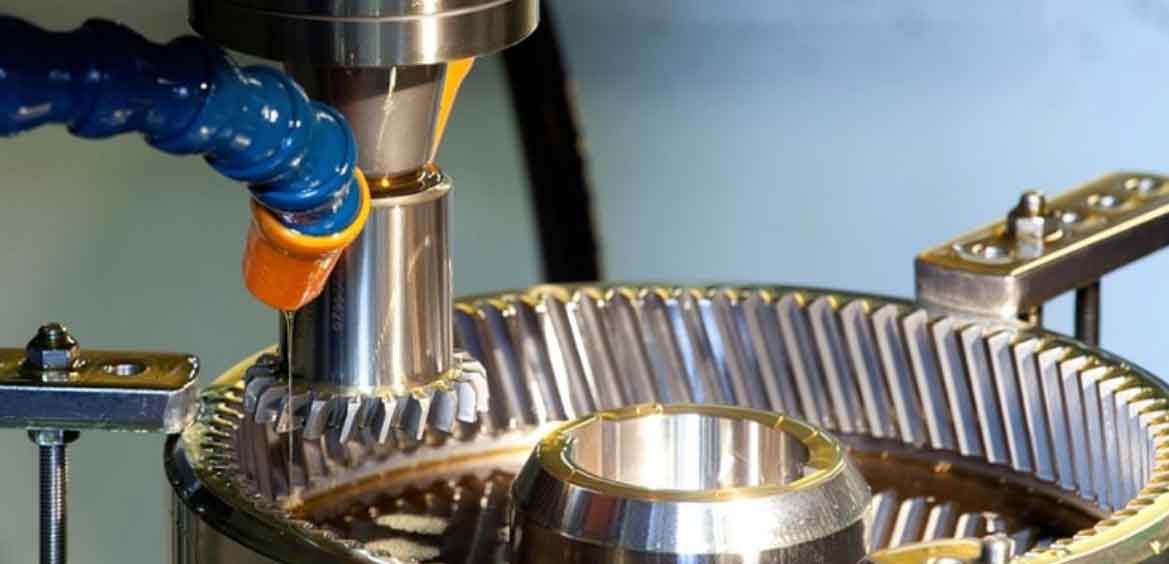
Thermal Dynamics in Gear Shaping
The heat flux \( Q \) during gear shaping is governed by:
$$ Q = \mu \cdot F_c \cdot v_c $$
where \( \mu \) = friction coefficient, \( F_c \) = cutting force (N), and \( v_c \) = cutting speed (m/min). Uncontrolled heat elevates temperatures above 800°C, degrading surface finish and dimensional precision. For DIN 7-grade gears, permissible errors include:
- Single pitch error \( f_p \leq 12 \mu m \)
- Total pitch error \( F_p \leq 28 \mu m \)
- Radial runout \( F_r \leq 20 \mu m \)
Limitations of Flood Cooling
Traditional flood cooling struggles in high-speed gear shaping due to limited penetration into the tool-workpiece interface (Fig. 2). Additionally:
| Parameter | Value | Impact |
|---|---|---|
| Cutting fluid cost | 7–17% of total machining cost | High procurement/disposal fees |
| Fluid consumption | 170 kg/refill | 6-month filtration, 2-year replacement |
| Energy use | 1.8 kW (pumps) + drying | ~14 kWh/shift |
Sulfur/chlorine additives in fluids pose health and ecological risks, classifying spent coolant as hazardous waste.
CMQL System Design
The CMQL system integrates vortex tubes and MQL. The vortex tube separates compressed air (0.4–0.6 MPa) into cold/hot streams via the Ranque-Hilsch effect:
$$ \Delta T = T_{in} – T_{cold} = f(P_{in}, \eta) $$
where \( \Delta T \) = temperature drop, \( P_{in} \) = inlet pressure, and \( \eta \) = vortex efficiency. At \( P_{in} = 0.5 \ \text{MPa} \), \( T_{cold} \) reaches −45°C. The MQL subsystem atomizes biodegradable oil into the cold airstream, achieving:
- Oil consumption: 0.03–0.4 L/h
- Droplet size: <5 µm
- Heat transfer coefficient: 3× higher than flood cooling
Experimental Validation
Tests used a remanufactured gear shaper for small-module gears (150–190 HBW). Key parameters:
| Cutting phase | Stroke speed (str/min) | Circular feed (mm/str) | Radial feed (mm/str) |
|---|---|---|---|
| Roughing | 550 | 0.400 | 0.0050 |
| Finishing | 700 | 0.350 | 0.0050 |
Results comparison:
| Method | Surface roughness \( R_a \) (µm) | Tool life (parts) | \( C_{pk} / C_{mk} \) |
|---|---|---|---|
| Dry cutting | >3.2 | 80 | <1.0 |
| Cold air only | 1.6–2.5 | 150 | 1.33 |
| CMQL | 0.8–1.2 | 320 | ≥1.67 |
CMQL enabled a 120s cycle time while achieving DIN 7 accuracy. The cold air-induced material embrittlement reduced cutting forces by 25%, while MQL’s boundary lubrication minimized adhesion:
$$ \mu_{CMQL} = 0.15 \quad \text{vs.} \quad \mu_{dry} = 0.45 $$
Economic and Environmental Impact
CMQL eliminated fluid-related costs and reduced energy use by 92%:
| Cost factor | Flood cooling | CMQL |
|---|---|---|
| Lubricant | $3,000 + $1,000 (cleaning) | $120/year (oil) |
| Energy | 14 kWh/shift | 0.2 kWh/shift (compressor) |
| Waste disposal | $500/ton (hazardous) | $0 |
The residual oil film provided 48-hour corrosion protection, negating post-process cleaning.
Conclusion
CMQL transforms gear shaping by merging cryogenic cooling’s thermal management with MQL’s tribological benefits. For the tested gear shaper, it:
- Improved \( C_{pk}/C_{mk} \) to ≥1.67 by stabilizing thermal conditions
- Reduced tooling costs by 60% through extended edge life
- Achieved zero hazardous waste via biodegradable oils
This technology is scalable to milling, turning, and grinding, establishing a new paradigm for precision gear shaping.