
In the realm of advanced mechanical transmissions, the planetary roller screw assembly has emerged as a critical component, particularly for applications demanding high precision, rigidity, efficiency, and load capacity. My research focuses on the adaptation and integration of a planetary roller screw assembly into a heavy-duty commercial vehicle steering system, specifically targeting the replacement of conventional ball screw mechanisms. This article details the comprehensive design process, parametric analysis, three-dimensional modeling, and finite element verification undertaken to validate the feasibility of using a planetary roller screw assembly in such a demanding environment. The work is grounded in practical constraints, such as the limited installation space and high output torque requirements of a specific steering gear model, and seeks to provide a new structural paradigm for electric power steering (EPS) in heavy trucks.
The superiority of the planetary roller screw assembly over traditional ball screws is well-documented, especially in performance-critical scenarios. Its principle of operation involves the conversion of rotary motion into linear motion through a system of threaded components—a central screw, multiple planetary rollers, and a nut—engaging in pure rolling contact. This configuration inherently offers higher stiffness and load distribution. The core kinematics can be described using the following relationships. For a standard design where the nut is held stationary (ωN = 0), the fundamental geometric and kinematic equations governing the planetary roller screw assembly are as follows:
$$ d_N = d_s + 2d_R $$
where \( d_N \), \( d_s \), and \( d_R \) are the pitch diameters of the nut, screw, and roller, respectively. The relationship between the rotational speeds of the screw (ωS), the rollers (ωR), and the carrier (ωP) is derived from the thread engagements and the constraint imposed by the internal gear (the nut’s inner ring gear). The linear speed of the nut (or the screw, depending on the fixed component) is directly related to the screw’s rotation and the lead of the assembly. A more detailed kinematic table is presented below to summarize the motion constraints and design parameters typically involved in a planetary roller screw assembly.
| Component | Symbol | Parameter Description | Design Relationship / Constraint |
|---|---|---|---|
| Screw | ωS, nS, pS | Angular velocity, Number of thread starts, Pitch | Primary input; \( p_S = p \) (common pitch) |
| Nut | ωN, nN, pN | Angular velocity, Number of thread starts, Pitch | Often stationary (ωN=0); \( p_N = p \); \( n_N = n_S \) |
| Planetary Roller | ωR, nR, pR | Angular velocity, Number of thread starts, Pitch | \( p_R = p \); Typically \( n_R = 1 \); Constrained by nut gear |
| Carrier | ωP | Angular velocity | Governs roller orbit; \( ω_P = \frac{ω_S}{1 + (d_S / d_R)} \) for common case |
The core advantage of the planetary roller screw assembly lies in this distributed load-sharing among multiple rollers, which significantly reduces stress concentrations compared to a ball screw. For the specific application in a ZF 8098 steering gear retrofit, the initial design specifications were stringent. The internal installation space dictated the primary dimensions, leading to the selection of a nominal screw diameter (ds) of 30 mm and an assembly lead (LSPRS) of 10 mm. The performance targets included a spiral transmission efficiency exceeding 70%, a maximum input speed of at least 120 rpm, and the capability to handle the steering system’s maximum output torque of 7388 Nm. These requirements formed the bedrock for the detailed parameter design of the planetary roller screw assembly.
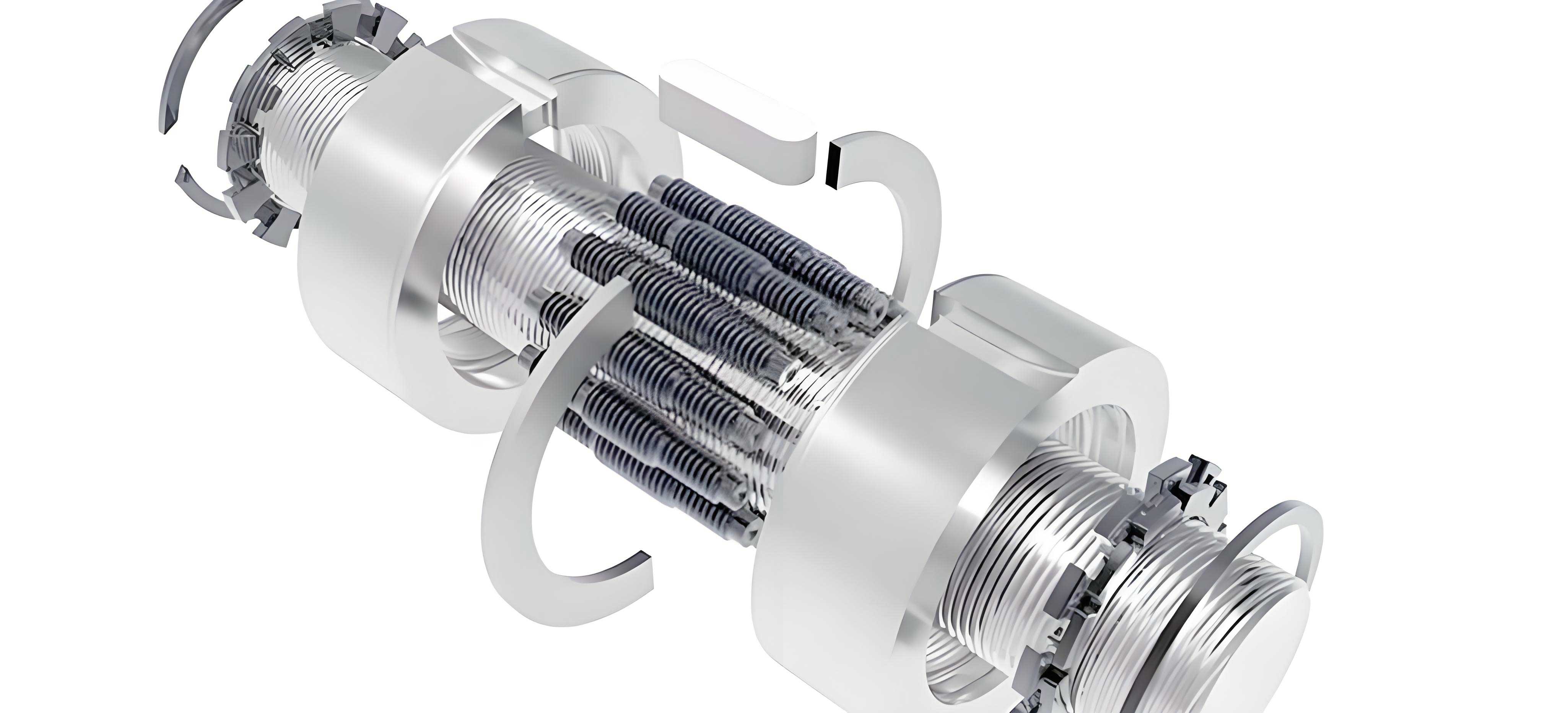
The parametric design of the planetary roller screw assembly proceeded systematically from these top-level specs. The thread design is paramount for ensuring line contact and optimal load distribution. The number of screw thread starts (nS) was chosen as 5, a common value that balances load capacity and manufacturing complexity. This directly defines the thread pitch: \( p = L_{SPRS} / n_S = 10 \, \text{mm} / 5 = 2 \, \text{mm} \). The nut, having the same number of thread starts and pitch, required its pitch diameter to be determined. Using the fundamental geometric relation \( d_N = d_s + 2d_R \), and after iterative sizing for load capacity and space, the roller pitch diameter (dR) was set to 10 mm. Consequently, \( d_N = 30 \, \text{mm} + 2 \times 10 \, \text{mm} = 50 \, \text{mm} \). The length of the nut was dictated by the rack piston length in the original steering gear, set at 174 mm. The roller length was subsequently chosen as 168 mm to fit within this nut length, with specific portions allocated for the threaded section (136 mm) and the gear ends (32 mm total).
The thread profile selection is critical for the performance of any planetary roller screw assembly. A non-standard trapezoidal thread with a 90-degree thread angle was adopted. This profile, particularly when the roller thread is designed with a circular arc in its axial cross-section, promotes stable line contact between the roller and both the screw and nut threads. This design choice enhances load distribution uniformity, increases axial stiffness, and improves the overall transmission efficiency of the planetary roller screw assembly.
| Component | Parameter | Symbol | Value | Unit | Notes |
|---|---|---|---|---|---|
| Screw | Nominal Diameter | ds | 30 | mm | Given by installation space |
| Lead | LSPRS | 10 | mm | Design specification | |
| Number of Thread Starts | nS | 5 | – | Chosen for load distribution | |
| Pitch | pS | 2 | mm | \( p = L_{SPRS}/n_S \) | |
| Pitch Diameter | ds | 30 | mm | Assumed equal to nominal for calculation | |
| Nut | Pitch Diameter | dN | 50 | mm | \( d_N = d_s + 2d_R \) |
| Number of Thread Starts | nN | 5 | – | \( n_N = n_S \) | |
| Pitch | pN | 2 | mm | Same as screw pitch | |
| Length | LN | 174 | mm | Based on rack piston length | |
| Number of Gear Teeth | zN | 100 | – | Modulus m=0.5; \( z_N = d_N/m \) | |
| Planetary Roller | Pitch Diameter | dR | 10 | mm | Determined from geometry and load |
| Number of Thread Starts | nR | 1 | – | Typical standard | |
| Pitch | pR | 2 | mm | Same as screw pitch | |
| Length | LR | 168 | mm | 168 = 136 (thread) + 32 (gear ends) | |
| Number of Gear Teeth | zR | 20 | – | Modulus m=0.5; \( z_R = d_R/m \) | |
| Number of Rollers | N | 8 | – | Even distribution for load sharing | |
| Gear Profile Modification | XR | -0.2 | – | Equal modification for nut gear (XN = -0.2) | |
| General | Module (Gear) | m | 0.5 | mm | Standard gear parameter |
| Pressure Angle (Gear) | α | 20 | deg | Standard value | |
| Thread Angle | β | 90 | deg | Non-standard trapezoidal for line contact |
Material selection for a planetary roller screw assembly intended for heavy-duty, long-duration operation is crucial. High-carbon chromium bearing steel, such as GCr15, is highly recommended. This material offers excellent wear resistance and strength. After quenching, it achieves a surface hardness in the range of 58-62 HRC, making it ideally suited to withstand the high contact stresses and cyclical loading inherent in the operation of a planetary roller screw assembly within a steering system.
The gear engagement at the ends of the rollers, which meshes with the internal gear teeth on the nut, ensures the proper orbital motion of the rollers without slip. Using a standard module of m = 0.5 mm, the number of teeth on the nut (zN) and each roller (zR) were calculated as 100 and 20, respectively. An equal profile shift coefficient (x = -0.2) was applied to both the roller and nut gears to improve the meshing conditions and strength of the gear teeth within the compact space of the planetary roller screw assembly.
Based on these meticulously calculated parameters, a detailed three-dimensional solid model of the complete planetary roller screw assembly was developed using SolidWorks software. This model included all components: the central screw with its multi-start thread, the eight planetary rollers each with their single-start thread and end gears, the nut with its internal thread and gear, and the necessary carrier structure. This virtual prototype served as the basis for subsequent engineering analysis and validation of the planetary roller screw assembly design.
To verify the structural integrity and performance under load, a finite element analysis (FEA) was conducted. Analyzing the full, complex planetary roller screw assembly model with all contact pairs is computationally prohibitive. Therefore, a rational simplification was employed. Recognizing that the primary load transfer in a planetary roller screw assembly occurs through the threaded contacts along the axial direction of the rollers, the analysis can be effectively reduced to studying a representative contact pair. A simplified model consisting of a segment of a screw thread, a roller thread, and a nut thread was constructed, representing the hemisphere-on-plane contact condition that is characteristic of the threaded engagement in a planetary roller screw assembly.
The material properties for GCr15 were assigned: Young’s Modulus \( E = 2.10 \times 10^5 \, \text{MPa} \), Poisson’s Ratio \( \nu = 0.278 \), and Density \( \rho = 7.85 \times 10^3 \, \text{kg/m}^3 \). The critical step was applying the operational load. The maximum output torque of the steering system (T = 7388 Nm) acts on a sector gear with an assumed pitch diameter (dsector) of 120 mm. The resulting axial force (Faxial) on the rack and therefore the nut of the planetary roller screw assembly is calculated as:
$$ F_{axial} = \frac{2T}{d_{sector}} = \frac{2 \times 7388 \, \text{Nm}}{0.12 \, \text{m}} \approx 123,000 \, \text{N} $$
This total axial load is shared by the eight rollers in the planetary roller screw assembly. Thus, the load per roller is \( F_{roller} = 123,000 \, \text{N} / 8 = 15,375 \, \text{N} \). Further, examining the designed roller length and pitch, each roller has approximately 82 active thread contact points with the screw and nut combined (considering engagement length). Assuming load is equally distributed among these discrete contact points for the simplified analysis, the force on a single representative contact point becomes \( F_{contact} = 15,375 \, \text{N} / 82 \approx 187.5 \, \text{N} \). This force was applied normally to the contact surface in the simplified FEA model.
| Aspect | Specification |
|---|---|
| Analysis Type | Static Structural |
| Software | ANSYS Workbench |
| Model | Simplified hemisphere-on-plane contact pair (Screw-Roller-Nut segment) |
| Material | GCr15 Steel (E=210 GPa, ν=0.278) |
| Mesh Type | Tetrahedral (Default) |
| Mesh Resolution | 7 (Fine setting) |
| Contact Treatment | Bonded for fixed interfaces, Frictional for thread contact (μ assumed) |
| Boundary Conditions | Fixed support on nut segment base; Force (187.5 N) on roller segment |
| Objective | Determine von Mises stress and total deformation |
The meshed model and the applied boundary conditions were set up to simulate the constrained state of the planetary roller screw assembly under load. The solution revealed the stress and deformation fields. The maximum von Mises stress was found to be approximately 78.8 MPa, located at the contact region between the roller and the screw thread. This value is significantly lower than the yield strength of quenched GCr15, which is typically above 518 MPa. This indicates that from a pure strength perspective, the designed planetary roller screw assembly has a substantial safety factor for the specified maximum operational load. The maximum total deformation (strain) was on the order of \( 3.94 \times 10^{-4} \), observed in the contact zone between the roller and the nut. This minimal deformation further confirms the high rigidity of the planetary roller screw assembly configuration.
The successful FEA results, however, must be contextualized within the real-world operational challenges for a planetary roller screw assembly in a steering application. The stress state is complex, involving cyclical contact stresses that can lead to fatigue. The working environment may involve vibrations, shocks, and temperature variations. Therefore, ensuring long-term reliability requires more than just adequate static strength. Key manufacturing and control strategies become essential for a robust planetary roller screw assembly. Manufacturing processes must aim for extremely low oxygen and inclusion content in the steel to enhance fatigue resistance. Precision grinding or advanced forming techniques like cold rolling should be employed for the threads to improve surface finish, dimensional accuracy, and introduce beneficial residual compressive stresses, thereby extending the fatigue life of the planetary roller screw assembly. Furthermore, the integration of the planetary roller screw assembly into an EPS system necessitates a sophisticated control strategy. The assistance torque provided by the EPS motor must be meticulously mapped against vehicle speed and driver torque input. Designing an optimal assist characteristic curve—potentially a hybrid curve combining linear, segmented, and nonlinear regions—is vital to ensure smooth, responsive steering feel while protecting the planetary roller screw assembly and other components from shock loads.
In conclusion, this detailed exploration into the design and analysis process demonstrates the strong potential of the planetary roller screw assembly for revolutionizing heavy-duty electric power steering systems. Through rigorous kinematic analysis, parametric design tailored to spatial and load constraints, virtual prototyping, and finite element verification, the feasibility of implementing a planetary roller screw assembly in a high-torque steering gear has been substantiated. The analysis confirms that the critical stresses under maximum load are well within the material limits, and the inherent design provides high stiffness. The repeated focus on the planetary roller screw assembly throughout this study underscores its centrality as an enabling technology. For successful real-world deployment, future work must concentrate on advanced manufacturing techniques for the planetary roller screw assembly components, comprehensive fatigue life testing, and the development of integrated electronic control systems that fully leverage the precision and responsiveness offered by the planetary roller screw assembly. The transition from conventional systems to those incorporating a planetary roller screw assembly promises significant gains in performance, durability, and control fidelity for the next generation of commercial vehicles.