
In modern mechanical manufacturing, speed reducers play an indispensable role as power transmission devices between prime movers and working machines. The application of CAD and related technologies in reducer design accelerates the design process, shortens the cycle, and enhances design quality and reliability, thereby yielding significant economic and social benefits. This article focuses on the practical needs of the reducer manufacturing industry, employing 3D CAD technology and its secondary development capabilities. Based on the SolidWorks environment, a specialized CAD system for screw gears reducers is developed. Throughout this work, the term “screw gears” is emphasized to highlight the core components, and the design process leverages advanced modeling and simulation tools to achieve efficient and accurate outcomes.
The design and optimization of screw gears are critical in reducer systems, as they involve complex geometric interactions and high precision requirements. In this study, I utilize SolidWorks, a powerful 3D mechanical design software, to create detailed models of screw gears components. The integration of Visual Basic for secondary development allows for customization and automation, streamlining the design workflow. By emphasizing screw gears in every stage, from modeling to assembly, this approach ensures that the reducer meets performance standards while reducing development time. The following sections delve into the software environment, 3D modeling techniques, virtual assembly, and simulation, all centered around the efficient design of screw gears reducers.
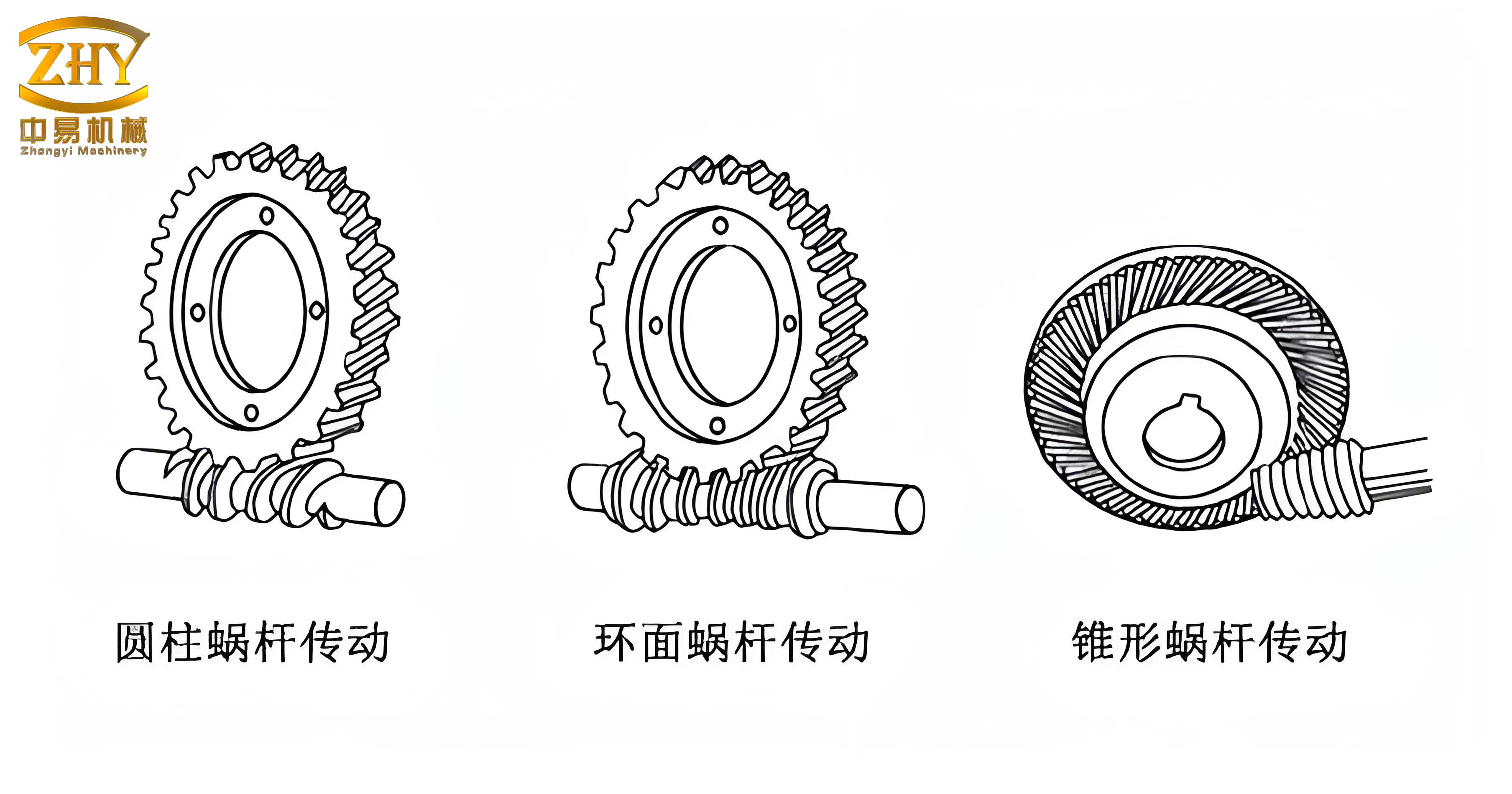
Software Environment and Tools
The design platform is built on SolidWorks, a Windows-based mechanical design software developed by SolidWorks Corporation. It supports various feature-based modeling techniques such as extrusion, revolution, sweeping, and lofting, which are essential for creating complex screw gears geometries. For secondary development, Visual Basic 6.0 (VB6.0) is chosen due to its flexibility in user interface design, strong error handling mechanisms, and seamless integration with SolidWorks through API (Application Programming Interface). This combination enables automated parameter-driven design, particularly for screw gears, where dimensions like module, number of teeth, and helix angles vary. The table below summarizes the key software components and their roles in screw gears reducer design.
| Software Component | Role in Screw Gears Design | Key Features |
|---|---|---|
| SolidWorks | 3D modeling and assembly | Feature-based design, simulation tools |
| Visual Basic 6.0 | Secondary development and automation | GUI creation, API integration |
| SolidWorks API | Programmatic control of modeling | Access to geometry and parameters |
Three-Dimensional Modeling of Screw Gears Components
The 3D modeling phase involves creating precise digital representations of screw gears parts, including the worm gear (referred to as screw gear in this context), worm shaft (screw shaft), and housing. Each component is designed based on given parameters, ensuring accuracy and functionality. The modeling process for screw gears relies on mathematical formulations to define tooth profiles and geometries. For instance, the involute tooth shape of screw gears can be expressed using parametric equations, which are then implemented in SolidWorks sketches. The basic equation for an involute curve in terms of pressure angle $\phi$ and base circle radius $r_b$ is:
$$ x = r_b (\cos \theta + \theta \sin \theta) $$
$$ y = r_b (\sin \theta – \theta \cos \theta) $$
where $\theta$ is the roll angle. This equation guides the creation of screw gears teeth through spline approximation in SolidWorks.
Worm Gear (Screw Gear) Modeling
For the worm gear, key design parameters include module $m$, number of teeth $z$, helix angle $\beta$, and pitch diameter $d$. The modeling starts with a sketch of the gear blank, which is revolved to form the base cylinder. The tooth profile is generated using the involute equation, and a sweep cut operation removes material to create teeth. The number of teeth and helix angle are critical for screw gears performance, as they affect torque transmission and efficiency. The table below lists typical parameters for screw gears used in this design.
| Parameter | Symbol | Value | Unit |
|---|---|---|---|
| Module | $m$ | 5 | mm |
| Number of Teeth | $z$ | 30 | – |
| Helix Angle | $\beta$ | 20° | degree |
| Pitch Diameter | $d$ | 150 | mm |
| Pressure Angle | $\alpha$ | 20° | degree |
The 3D model of the screw gear is completed through mirroring and circular patterning of teeth, resulting in a detailed representation that can be used for further analysis. This process highlights the importance of screw gears in transmitting motion at right angles with high reduction ratios.
Worm Shaft (Screw Shaft) Modeling
The worm shaft, another key component of screw gears, is modeled similarly. Its design involves parameters such as lead $L$, axial pitch $p_a$, and diameter $d_w$. The lead is related to the helix angle and module by $L = \pi m z / \cos \beta$. A sketch of the shaft profile is extruded, and the thread is created using a helical sweep based on the lead. The mathematical relation for the helix path is:
$$ x = r \cos(t) $$
$$ y = r \sin(t) $$
$$ z = \frac{L t}{2\pi} $$
where $r$ is the shaft radius and $t$ is the parameter. This ensures accurate screw gears engagement. The model includes features like keyslots and bearing seats, which are essential for assembly.
Housing Design
The housing provides structural support for screw gears and other components. It must have sufficient strength and stiffness to withstand operational loads. In SolidWorks, the housing is modeled using extrusion, fillets, chamfers, and cutouts. Key dimensions are derived from the screw gears assembly, such as bore diameters and mounting points. The design process considers factors like wall thickness $t_h$ and material properties, which can be summarized in the following formula for bending stress $\sigma_b$ under load $F$:
$$ \sigma_b = \frac{M y}{I} $$
where $M$ is the bending moment, $y$ is the distance from neutral axis, and $I$ is the moment of inertia. This ensures the housing’s reliability in screw gears reducers.
Virtual Simulation and Assembly of Screw Gears Reducer
Virtual simulation assembly is a crucial aspect of modern product development, allowing for the verification of part fits and assemblability before physical prototyping. For screw gears reducers, this step identifies potential interferences and optimizes the design. In SolidWorks, assembly is performed by inserting components and defining mates, such as concentric, coincident, and parallel relations. The process begins with sub-assemblies, like the worm shaft assembly, and progresses to the full reducer.
Sub-Assembly of Worm Shaft Components
The worm shaft sub-assembly includes the shaft, key, screw gear (worm gear), adjusting shim, bearing, and nut. Mates are applied to ensure proper alignment: for example, the key mates with the shaft keyway via concentric and parallel relations. The screw gear is mounted on the shaft with a keyed connection, emphasizing the precise engagement required in screw gears systems. The table below outlines the mate types used in this sub-assembly.
| Component Pair | Mate Type | Purpose in Screw Gears Assembly |
|---|---|---|
| Shaft and Key | Concentric, Parallel | Secure torque transmission |
| Screw Gear and Shaft | Concentric, Coincident | Align gear teeth for meshing |
| Bearing and Shaft | Concentric | Support rotational motion |
| Nut and Thread | Helical | Fasten components |
This sub-assembly ensures that the screw gears operate smoothly without misalignment, which is critical for efficiency and longevity.
Full Reducer Assembly
The full assembly integrates all sub-assemblies, including the housing, screw gears set, shafts, and covers. Mates are defined between the housing bore and bearing outer races, and between screw gears teeth to simulate meshing. SolidWorks motion tools can be used to analyze the kinematic behavior, such as rotation and contact patterns. The virtual assembly allows for interference detection; for instance, checking clearance between screw gears teeth and housing walls. The advantages of this approach for screw gears reducers include reduced prototyping costs and faster time-to-market.
Mathematical Analysis and Optimization of Screw Gears
To enhance the design, mathematical analysis is conducted on screw gears performance. Key parameters like efficiency $\eta$, torque capacity $T$, and contact ratio $C_r$ are evaluated. The efficiency of screw gears can be estimated using the formula:
$$ \eta = \frac{\tan \lambda}{\tan (\lambda + \phi)} $$
where $\lambda$ is the lead angle and $\phi$ is the friction angle. This shows the importance of helix angle selection in screw gears design. The contact ratio, which affects smoothness of operation, is given by:
$$ C_r = \frac{\sqrt{r_{a1}^2 – r_{b1}^2} + \sqrt{r_{a2}^2 – r_{b2}^2} – a \sin \alpha}{p_b} $$
where $r_a$ is addendum radius, $r_b$ is base radius, $a$ is center distance, and $p_b$ is base pitch. For screw gears, a higher contact ratio improves load distribution. Optimization involves adjusting parameters to maximize efficiency while minimizing size and weight. The table below presents a comparative analysis of different screw gears configurations.
| Configuration | Helix Angle ($\beta$) | Efficiency ($\eta$) | Contact Ratio ($C_r$) |
|---|---|---|---|
| Standard Screw Gears | 20° | 85% | 1.5 |
| High-Efficiency Screw Gears | 30° | 92% | 1.8 |
| Compact Screw Gears | 15° | 78% | 1.3 |
This analysis underscores the trade-offs in screw gears design and guides selection based on application requirements.
Motion Simulation and Dynamic Behavior
Using SolidWorks Motion, the screw gears reducer can be simulated under operational conditions. The motion study involves applying rotational motors to the input shaft and analyzing output motion, forces, and velocities. For screw gears, dynamic factors like backlash and vibration are critical. The equation of motion for the system can be expressed as:
$$ J \ddot{\theta} + c \dot{\theta} + k \theta = T $$
where $J$ is inertia, $c$ is damping, $k$ is stiffness, and $T$ is torque. Simulation results help refine screw gears geometry to reduce noise and wear. Additionally, stress analysis via SolidWorks Simulation assesses component durability, ensuring that screw gears can handle rated loads without failure.
Implementation of Secondary Development for Screw Gears Design
To automate the design process, a VB-based application is developed within SolidWorks. This application allows users to input parameters (e.g., module, teeth number) and automatically generate screw gears models. The code leverages SolidWorks API functions like `CreateCircle` and `Extrude`. For instance, to create a screw gear tooth, the program calculates involute points using the earlier equation and constructs a sketch. This automation significantly speeds up the design of custom screw gears, making it ideal for batch production or variant designs. The flowchart below illustrates the automation steps for screw gears modeling.
| Step | Action | VB Code Snippet (Simplified) |
|---|---|---|
| 1 | Input parameters | `m = InputBox(“Enter module”)` |
| 2 | Calculate geometry | `d = m * z` |
| 3 | Create sketch | `swSketch.CreateCircle(0,0, d/2)` |
| 4 | Extrude feature | `swFeature.Extrude(10, True)` |
| 5 | Generate teeth | `SweepCut along helix path` |
This approach enhances consistency and reduces human error in screw gears design.
Conclusion and Future Work
The design and simulation of screw gears reducers using SolidWorks and secondary development tools demonstrate significant advantages in terms of efficiency, accuracy, and cost-effectiveness. By focusing on screw gears throughout the process—from 3D modeling to virtual assembly—this methodology ensures robust performance and quick adaptation to design changes. The use of mathematical formulas and tables aids in optimizing parameters, while motion simulation validates dynamic behavior. Future work may involve integrating AI for predictive design of screw gears or extending the system to other gear types. Overall, this CAD-based approach for screw gears reducers contributes to advancing mechanical manufacturing technology, enabling faster innovation and better product quality.
In summary, screw gears are pivotal in reducer systems, and their design benefits immensely from modern CAD techniques. The repetitive emphasis on screw gears in this article underscores their importance, and the detailed workflows provided here serve as a guideline for engineers and designers. By leveraging tools like SolidWorks and VB, the development of screw gears reducers becomes more streamlined, paving the way for smarter and more reliable mechanical solutions.