
In the realm of modern manufacturing, the integration of advanced plastics and precision engineering has revolutionized product design. As an engineer specializing in injection mold design, I have extensively utilized DELCAM software to develop molds for complex components like helical gears. These gears are pivotal in transmission systems due to their smooth operation and high load capacity. This article delves into my experience with DELCAM’s Moldmaker module, highlighting its efficacy in designing injection molds for helical gears. I will explore the entire process from 3D modeling to mold assembly, incorporating tables and formulas to summarize key aspects. The focus is on optimizing design efficiency while ensuring the durability and functionality of helical gears in applications such as printers, cameras, and toy vehicles.
The adoption of plastic materials has surged owing to their lightweight nature, strength, and cost-effectiveness. Helical gears, in particular, offer significant advantages over spur gears, including gradual engagement, higher contact ratio, and reduced noise. The transmission characteristics of a helical gear can be expressed mathematically. For instance, the contact ratio ($$C_r$$) is given by:
$$C_r = \frac{\sqrt{(r_a^2 – r_b^2)} + \sqrt{(R_a^2 – R_b^2)} – C \sin\phi}{p_b}$$
where $$r_a$$ and $$r_b$$ are the addendum and base radii of the pinion, $$R_a$$ and $$R_b$$ are for the gear, $$C$$ is the center distance, $$\phi$$ is the pressure angle, and $$p_b$$ is the base pitch. This formula underscores the enhanced performance of helical gears, making them ideal for plastic molding. However, designing molds for such gears requires sophisticated software tools. DELCAM’s Moldmaker module has been instrumental in my projects, enabling rapid and accurate mold design. Below, I outline its capabilities and my methodology for creating robust injection molds for helical gears.
DELCAM’s Moldmaker is a specialized, entity-based application tailored for injection mold designers. It streamlines the design process through a guided workflow, allowing designers to focus on structural integrity rather than software complexities. In my work, I have leveraged Moldmaker to ensure consistency across projects, as it standardizes assembly structures and layer settings. This facilitates collaboration among team members. The module supports various CAD data formats via PS-Exchange, enabling seamless integration of models from software like UG, Pro/E, and SolidWorks. The table below summarizes Moldmaker’s key functions:
| Function | Description | Application in Helical Gear Mold Design |
|---|---|---|
| 3D Modeling | Direct entity and surface modeling using PowerSHAPE, or data conversion via PS-Exchange. | Creating parametric models of helical gears for easy modification. |
| Parting Surface Definition | Automatic or manual generation of parting lines and surfaces based on component geometry. | Establishing optimal parting planes for helical gear cavities. |
| Mold Base Assembly | Library of standard mold components (plates, ejectors, guides) for quick assembly. | Configuring mold structures tailored to helical gear ejection requirements. |
| Cooling and Gating Design | Tools for designing runner systems, gates, and cooling channels. | Implementing point gates and spiral cooling for helical gear molds. |
| Simulation and Analysis | Integration with flow analysis to predict filling and cooling behavior. | Optimizing injection parameters for helical gear production. |
The design process in Moldmaker typically follows a sequence: import or create the helical gear model, define the mold base, set parting surfaces, add ejection systems, and finalize gating. This structured approach reduces errors and accelerates development. For helical gears, I often start with parametric models to accommodate design changes efficiently. The helical gear geometry involves parameters like helix angle ($$\beta$$), module ($$m$$), and number of teeth ($$z$$). The relationship between these can be described by:
$$p_n = \pi m_n$$
where $$p_n$$ is the normal circular pitch and $$m_n$$ is the normal module. For a helical gear, the transverse module ($$m_t$$) is related to the normal module by:
$$m_t = \frac{m_n}{\cos\beta}$$
These formulas guide the 3D modeling phase, ensuring accuracy in gear tooth profiles.
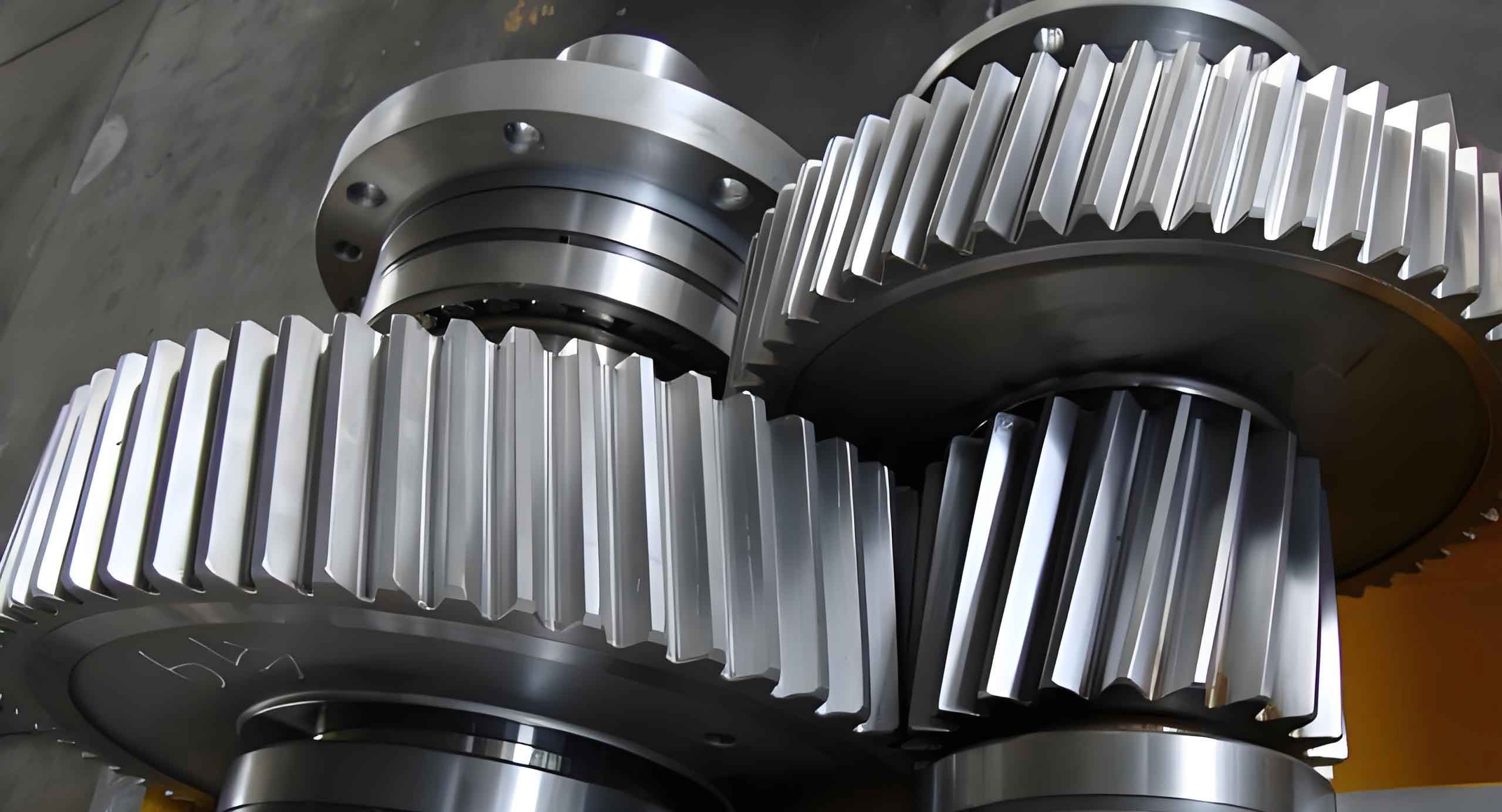
Creating a precise 3D model of the helical gear is foundational. I utilize PowerSHAPE for direct modeling or PS-Exchange for importing existing CAD files. Parametric modeling is preferred, as it allows dynamic updates; for example, altering the helix angle automatically adjusts the gear geometry. The helical gear model includes features like the helical teeth, hub, and mounting details. To ensure manufacturability, I apply draft angles and fillets. The volume ($$V$$) of the helical gear can be approximated for material calculation:
$$V = \frac{\pi}{4} \left( d_o^2 – d_i^2 \right) L + N \cdot A_t \cdot L_t$$
where $$d_o$$ is the outer diameter, $$d_i$$ is the inner diameter, $$L$$ is the gear width, $$N$$ is the number of teeth, $$A_t$$ is the cross-sectional area of a tooth, and $$L_t$$ is the tooth length. This helps in estimating plastic injection requirements. Once the model is ready, I import it into Moldmaker for mold design.
The core of mold design for helical gears lies in determining the parting surface and ejection mechanism. The parting surface must facilitate clean separation of mold halves without damaging the gear teeth. For a helical gear, I typically set the parting plane at the interface between the helical and spur sections, if present. This yields core and cavity inserts that encapsulate the gear form. The table below compares different parting surface options:
| Parting Surface Location | Advantages | Disadvantages |
|---|---|---|
| Along gear face (perpendicular to axis) | Simplifies mold construction; suitable for low-helix angles. | May cause undercuts on helical teeth, leading to ejection issues. |
| At helical-spur junction (as used in my design) | Minimizes undercuts; ensures even cavity distribution. | Requires precise alignment of mold halves. |
| Complex surface following gear contour | Optimal for high-precision helical gears with large $$\beta$$. | Increases machining cost and design complexity. |
Ejection is critical for helical gears due to their angled teeth. Direct ejection can damage the gear if the helix angle ($$\beta$$) or thickness is significant. Therefore, I often implement a spiral ejection system. This involves a rotating core that unscrews the helical gear during ejection. The kinematics can be analyzed using the following relationship. The ejection force ($$F_e$$) must overcome friction and gear resistance:
$$F_e = \mu N + F_s$$
where $$\mu$$ is the coefficient of friction, $$N$$ is the normal force, and $$F_s$$ is the shear force due to helical geometry. For spiral ejection, the rotation angle ($$\theta$$) relates to the ejection stroke ($$S$$) and helix lead ($$L_h$$):
$$\theta = \frac{2\pi S}{L_h}$$
The lead for a helical gear is given by $$L_h = \pi d \tan\beta$$, where $$d$$ is the pitch diameter. This ensures synchronized motion. In my design, I use a double-direction thrust ball bearing to allow rotation of the core insert. A spiral groove on the core interacts with pins on the ejector sleeve, converting linear motion to rotation. Key considerations include:
- Ejector sleeve diameter must be sufficient to house pins robustly.
- Spiral groove direction must match the helical gear’s hand (left or right).
- Stroke length should exceed gear thickness to ensure complete release.
For gating, I prefer point gates to minimize marks on the helical gear. The runner system is machined into the fixed plate, with a conical gate facilitating clean separation. The gate diameter ($$d_g$$) can be calculated based on material flow rate ($$Q$$) and injection time ($$t$$):
$$d_g = \sqrt{\frac{4Q}{\pi v t}}$$
where $$v$$ is the flow velocity. A puller pin is incorporated to remove runner debris during mold opening. The table below outlines gating parameters for a typical helical gear mold:
| Parameter | Value | Rationale |
|---|---|---|
| Gate type | Point gate (conical) | Reduces stress concentration on helical gear teeth. |
| Runner cross-section | Trapezoidal (5 mm x 4 mm) | Balances flow efficiency and cooling. |
| Gate diameter | 1.2 mm | Optimized for polyamide materials used in helical gears. |
| Cooling channel diameter | 8 mm | Ensures uniform cooling around helical gear cavity. |
The complete mold structure comprises multiple plates and components. My design includes fixed and moving plates, ejector mechanisms, and alignment systems. The mold operates in stages: first, the runner system separates via the puller pin; then, the mold opens, and the spiral ejects the helical gear. The sequence is summarized in the table below:
| Stage | Action | Component Involvement |
|---|---|---|
| Injection and cooling | Plastic injected into cavity; helical gear formed. | Fixed plate, core insert, cooling channels. |
| Initial opening | Fixed and moving plates separate; runner detached. | Puller pin, conical gate, plate guides. |
| Full opening | Mold reaches open position; helical gear exposed. | Limit rings, moving plate, helical gear core. |
| Ejection | Ejector plate advances; core rotates via spiral groove. | Ejector sleeve, pins, thrust bearing, helical gear. |
| Reset | Ejector plate retracts; mold closes for next cycle. | Return springs, guide pillars, helical gear cavity. |
Throughout the design, I emphasize the helical gear’s integrity. For instance, the mold material selection impacts wear resistance. I often use hardened steel for core inserts to withstand abrasive plastics. The fatigue life of the helical gear mold can be estimated using the S-N curve equation:
$$\sigma_a = \sigma_f’ (2N_f)^b$$
where $$\sigma_a$$ is the stress amplitude, $$\sigma_f’$$ is the fatigue strength coefficient, $$N_f$$ is the number of cycles, and $$b$$ is the fatigue exponent. This ensures longevity in high-volume production of helical gears.
In conclusion, DELCAM’s Moldmaker module has proven invaluable in designing injection molds for helical gears. By leveraging its parametric modeling, automated workflows, and simulation tools, I can create efficient and reliable molds. The helical gear’s complex geometry demands careful attention to parting surfaces, ejection systems, and gating—all addressed through Moldmaker’s capabilities. This software not only reduces design time but also enhances the quality of plastic helical gears used in diverse industries. Future advancements may integrate AI for optimizing helical gear mold designs, further pushing the boundaries of CAD/CAM applications in plastic injection molding.