
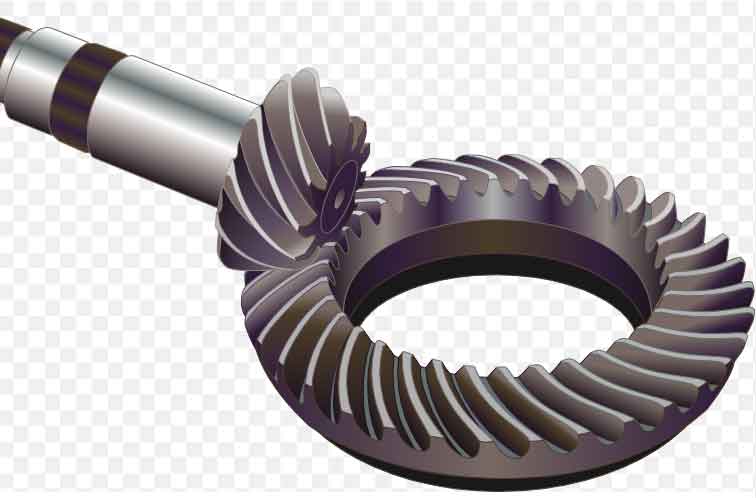
Designing high-performance spiral bevel gear systems requires careful consideration of various factors to optimize gear performance, durability, and efficiency. Here are key steps and design considerations to achieve a high-performing spiral bevel gear system:
1. Application Requirements:
Understand the specific requirements of the gear system, such as torque, speed, load, and environmental conditions. Define the gear’s intended use and performance goals to guide the design process.
2. Material Selection:
Choose appropriate materials with high strength, wear resistance, and durability. Alloy steels and surface-hardened materials are commonly used for spiral bevel gears to withstand heavy loads and ensure long service life.
3. Gear Tooth Profile Optimization:
Design the tooth profile to optimize tooth contact and reduce noise and vibration during gear meshing. Modified tooth profiles can enhance performance by minimizing impact loads and improving load distribution.
4. Precision Manufacturing:
Use advanced manufacturing techniques, such as CNC machining and gear grinding, to ensure tight tolerances and high gear quality. Precision manufacturing is crucial for achieving smooth gear operation and consistent performance.
5. Lubrication and Cooling:
Implement an effective lubrication system to reduce friction and wear between gear teeth. Proper cooling mechanisms, such as oil circulation, help manage heat generated during operation, enhancing gear performance and longevity.
6. Alignment and Tolerance Control:
Ensure precise gear alignment and tight tolerance control during assembly to minimize misalignment and noise. Proper alignment is essential for smooth gear meshing and efficient power transmission.
7. Gear Tooth Filleting:
Add fillets to gear tooth roots to reduce stress concentrations and increase the gear’s resistance to bending and fatigue failure.
8. Load Distribution and Contact Ratio:
Design the gear system to achieve optimal load distribution and increase the contact ratio between teeth during meshing. This enhances gear strength and load-carrying capacity.
9. Backlash Control:
Manage backlash to maintain accurate gear positioning and prevent issues like gear rattle or knocking during operation.
10. Finite Element Analysis (FEA):
Perform FEA simulations to analyze stress distribution, deflection, and bending behavior of the gear system. FEA helps identify potential weak points and optimize gear design for improved performance.
11. Noise and Vibration Reduction:
Implement noise reduction techniques, such as surface treatments and vibration dampening, to minimize gear noise and vibration during operation.
12. Gearbox Design Integration:
Integrate spiral bevel gears into the overall gearbox design, considering gear ratios, shaft layouts, and system constraints to ensure efficient power transmission and proper load distribution.
13. Testing and Validation:
Conduct rigorous testing and validation of the gear system to ensure it meets the performance requirements and desired reliability.
14. Maintenance and Inspection:
Develop a maintenance plan that includes regular inspections and monitoring of gear health to detect potential issues early and prevent costly failures.
By carefully considering these design factors and incorporating advanced manufacturing techniques, engineers can create high-performance spiral bevel gear systems that excel in demanding applications across industries, ensuring reliable and efficient power transmission.