
In modern aircraft, the environmental control system (ECS) is critical for providing cooling, pressurization, and ventilation to specific compartments. With the trend toward all-electric aircraft systems, there is a growing need for reliable, high-performance emergency air supply devices. In this work, we focus on the design and implementation of an emergency air supply device based on a planetary roller screw assembly, which offers superior load-bearing capacity and longevity compared to traditional actuators. This device is intended to operate under emergency conditions, deploying an air inlet cover to supply air to the ECS. Additionally, we developed a loading test bench to evaluate the static and dynamic performance of the device. Through rigorous analysis, simulation, and testing, we demonstrate that the planetary roller screw assembly is an optimal solution for such high-demand applications, and the loading test bench effectively meets the functional and performance testing requirements.
The emergency air supply device consists primarily of an air inlet cover and an electric actuator. The actuator converts the rotational motion of a motor into linear motion via a planetary roller screw assembly, driving the cover to rotate about its axis. Upon reaching the specified angle, micro-switches within the actuator provide discrete position signals to the upper-level control system. The device must remain securely in place at any position when power is cut off, and it includes a rotational variable differential transformer (RVDT) to provide real-time feedback on the cover’s angle. The core challenge lies in designing an actuator that can handle significant loads from the cover while ensuring precise control and reliability.
Actuator Scheme Selection and Justification
Selecting the appropriate actuator scheme is pivotal for the performance of the emergency air supply device. We evaluated three primary types of actuators: Servo-Hydraulic Actuators (SHA), Electro-Hydrostatic Actuators (EHA), and Electromechanical Actuators (EMA). SHAs rely on a central hydraulic power source, which would increase the volume and weight of the device—unacceptable given our strict constraints on size and mass. EHAs, while integrated and offering high power-to-weight ratios, involve complex hydraulic components, demanding high precision in design and manufacturing, and suffer from heat dissipation issues due to motors operating at low speeds with high torque.
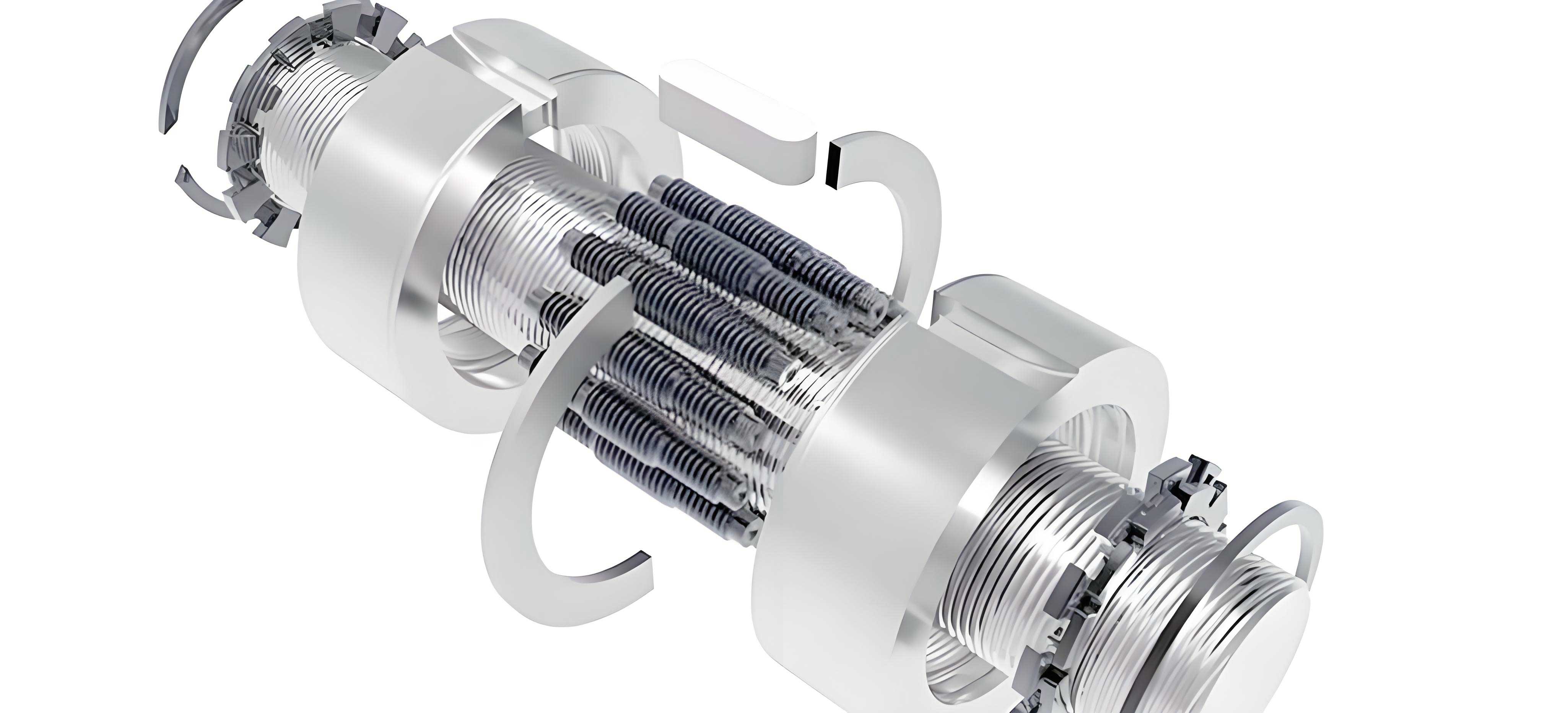
EMAs, in contrast, eliminate hydraulic elements, directly converting electrical energy to mechanical motion via a motor, gear reducer, and screw mechanism. They are more compact, efficient, and offer better dynamic performance. However, conventional trapezoidal or ball screws in EMAs often lack sufficient load capacity, are prone to jamming, and have mechanical backlash that degrades performance. To overcome these limitations, we turned to roller screw technology. Among these, the planetary roller screw assembly stands out due to its ability to handle extreme loads and operate continuously for thousands of hours in harsh environments. This assembly combines the advantages of roller screws and ball screws, providing high precision, robustness, and longevity. It has been successfully used in aerospace applications, making it ideal for our emergency air supply device. Thus, we chose a planetary roller screw assembly as the core of our EMA scheme.
Design and Simulation of the Emergency Air Supply Device
The emergency air supply device integrates an electric motor, a transmission unit (including a worm gear pair), a planetary roller screw assembly, a crank-slider mechanism, sensors, and electrical interfaces. The motor receives commands from the control system, and the power is transmitted to the planetary roller screw assembly via the worm gear pair. The nut of the planetary roller screw assembly rotates, converting this motion into linear displacement of the screw, which then drives the air inlet cover through the crank-slider mechanism. The worm gear pair ensures that the cover remains stationary in any position when power is off. To optimize the design, we conducted detailed mechanical and motion simulations using ADAMS software.
Force and Motion Analysis
The device experiences two critical states: fully closed and fully open. In the closed state, the cover must withstand a force of 140 kg, while in the open state, it handles 70 kg. Considering a safety factor of 2, the maximum load on the cover in the closed state is 280 kg. Through static force analysis, we derived the maximum thrust required from the planetary roller screw assembly. The forces on the cover are transferred to the screw via the crank-slider mechanism. Establishing static equilibrium equations, we calculated the theoretical maximum thrust. To verify this, we built a 3D model in ADAMS, as shown below, and applied the calculated thrust.
The simulation revealed that a thrust of 4083 N could not balance the system; instead, a thrust of 4015 N was needed for approximate equilibrium. This value aligns with our theoretical calculations, confirming the design parameters. The thrust $F_s$ is related to the torque $M$ required to drive the nut of the planetary roller screw assembly by:
$$ M = \frac{F_s \cdot p_z}{2 \pi \cdot \eta_{\text{prs}}} $$
where $p_z$ is the lead of the screw and $\eta_{\text{prs}}$ is the efficiency of the planetary roller screw assembly, taken as 0.83. For $F_s = 4015 \, \text{N}$ and $p_z = 2 \, \text{mm}$ (based on preliminary design), the torque is approximately 0.77 N·m.
For motion analysis, we simulated the cover opening uniformly over 10 seconds. The screw’s axial displacement and velocity curves were obtained. The maximum displacement (stroke) was 46.4 mm, with an average velocity of 4.64 mm/s. The velocity profile was non-linear, with a peak velocity $v_{\text{max}} = 5.53 \, \text{mm/s}$. This corresponds to a nut rotational speed $n_n = v_{\text{max}} / p_z = 332 \, \text{rpm}$. The maximum power output from the screw is:
$$ P_s = F_{\text{max}} \cdot v_{\text{max}} = 4015 \times 5.53 \times 10^{-3} = 22.2 \, \text{W} $$
Considering the efficiency of the planetary roller screw assembly, the power required to drive the nut is:
$$ P_n = \frac{P_s}{\eta_{\text{prs}}} = \frac{22.2}{0.83} = 26.7 \, \text{W} $$
These results guided the selection of the motor and the detailed design of the planetary roller screw assembly.
Design of the Planetary Roller Screw Assembly
Based on the simulation outputs, we defined the technical specifications for the planetary roller screw assembly, as summarized in Table 1. The design follows standard methodologies for planetary roller screw assemblies, focusing on parameters such as screw diameter, lead, number of roller threads, and load capacity.
| Parameter | Symbol | Value |
|---|---|---|
| Maximum thrust | $F_{\text{max}}$ | 4015 N |
| Stroke | $L$ | 46.4 mm |
| Maximum velocity | $v_{\text{max}}$ | 5.53 mm/s |
| Nut rotational speed | $n_n$ | 332 rpm |
| Required power | $P_n$ | 26.7 W |
| Efficiency | $\eta_{\text{prs}}$ | 0.83 |
| Lead | $p_z$ | 2 mm |
Using these specifications, we designed the key components of the planetary roller screw assembly: the screw, rollers, and nut. The main parameters are listed in Table 2. The design ensures that the assembly can handle the required loads while maintaining precision and durability.
| Component | Parameter | Value |
|---|---|---|
| Screw | Major diameter | 12 mm |
| Minor diameter | 10 mm | |
| Lead | 2 mm | |
| Material | Alloy steel | |
| Rollers | Number | 6 |
| Diameter | 3 mm | |
| Material | Bearing steel | |
| Nut | Internal thread profile | Matched to rollers |
| Length | 50 mm | |
| Material | Alloy steel |
We performed several checks to validate the design. The tensile strength, equivalent stress, stability, deformation, thread tooth strength, critical speed, and fatigue life of the screw were all verified. For instance, the critical buckling load $F_{\text{cr}}$ for the screw is given by Euler’s formula:
$$ F_{\text{cr}} = \frac{\pi^2 E I}{(\mu L)^2} $$
where $E$ is the modulus of elasticity, $I$ is the area moment of inertia, $L$ is the unsupported length, and $\mu$ is the end condition coefficient. With $E = 210 \, \text{GPa}$, $I = \pi d^4 / 64$ for a solid screw of diameter $d = 12 \, \text{mm}$, $L = 50 \, \text{mm}$, and $\mu = 0.5$ (fixed-free ends), we computed $F_{\text{cr}} \approx 15,000 \, \text{N}$, which is well above the maximum thrust of 4015 N, ensuring stability.
Fatigue life was assessed using the modified Goodman criterion. The alternating stress $\sigma_a$ and mean stress $\sigma_m$ on the screw were calculated based on the load spectrum. The safety factor $S$ against fatigue is:
$$ \frac{1}{S} = \frac{\sigma_a}{\sigma_{-1}} + \frac{\sigma_m}{\sigma_u} $$
where $\sigma_{-1}$ is the endurance limit and $\sigma_u$ is the ultimate tensile strength. For our material, $\sigma_u = 1000 \, \text{MPa}$ and $\sigma_{-1} = 500 \, \text{MPa}$. With $\sigma_a = 50 \, \text{MPa}$ and $\sigma_m = 100 \, \text{MPa}$ from simulation, $S \approx 3.3$, indicating a safe design. All checks confirmed that the planetary roller screw assembly meets the performance requirements.
Development of the Loading Test Bench
To evaluate the emergency air supply device under realistic conditions, we developed a loading test bench capable of static and dynamic loading. The bench replicates the operational loads on the device, including inertial, frictional, gravitational, and aerodynamic forces. Since fully replicating in-flight loads is impractical, we focused on typical load cases, such as maximum and common loads, using static and dynamic loading methods.
Mechanical Design and Static Loading
The test bench accommodates the emergency air supply device, with the air inlet cover replaced by an equivalent cover made of the same material but designed to withstand concentrated loads without deformation. For static loading, we designed a clamping mechanism that applies a moment load to the cover’s rotation axis. As shown in Figure 10 of the original text, upper and lower clamping plates match the cover’s surfaces, ensuring even force distribution. The applied moment $M$ simulates the external loads, and the reaction force on the planetary roller screw assembly is measured to assess performance.
The static load is calculated based on the cover’s geometry and the desired simulated force. For a force $F_1$ applied at a distance $H_1$ from the pivot, the moment is $M = F_1 \cdot H_1$. In our case, for the closed state with $F_1 = 140 \, \text{kg} \times 9.81 \, \text{m/s}^2 = 1373 \, \text{N}$ and $H_1 = 0.1 \, \text{m}$, $M = 137.3 \, \text{N·m}$. This moment is applied via the clamps, and the thrust on the planetary roller screw assembly is derived from equilibrium equations.
Dynamic Loading and Servo Actuation
Dynamic loading aims to test the device’s response under varying conditions. We designed an electric servo cylinder to apply concentrated forces to the equivalent cover, simulating the effective components of external loads. As illustrated in Figure 13 of the original text, the external load on the cover can be decomposed into a force component $F_1$ and a moment component $M_1$ that affect the actuator. These are equivalent to a concentrated force $F_e$ applied at point C on the cover. The relationship between $F_e$ and the external load is a function of the cover’s angle $\theta$:
$$ F_e(\theta) = \frac{F_1(\theta) \cdot H_1 + M_1(\theta)}{L_c} $$
where $L_c$ is the lever arm from point C to the pivot. Given a load spectrum for the cover, we compute the corresponding $F_e$ spectrum and program the servo cylinder to apply it dynamically.
The servo cylinder is an electric actuator with a ball screw mechanism, chosen for its precision and ease of control. It provides forces up to 5 kN, sufficient for our needs. The system includes a load cell to measure the applied force, and encoders to monitor displacement. The parameters of the servo cylinder are summarized in Table 3.
| Parameter | Value |
|---|---|
| Maximum force | 5 kN |
| Stroke | 100 mm |
| Maximum speed | 10 mm/s |
| Position accuracy | ±0.01 mm |
| Control interface | Analog/Digital |
Measurement and Control System
The test bench’s measurement and control system is built around a industrial computer (IPC) that manages data acquisition, parameter setting, control algorithms, and real-time monitoring. As shown in Figure 14 of the original text, the IPC sends control signals to drive the emergency air supply device and the loading servo cylinder. Sensors, including the RVDT, load cells, and encoders, provide feedback signals that are conditioned and fed into data acquisition cards for A/D conversion. The system is housed in a integrated cabinet with components such as a display, sensor adapter box, drive control box, power supply box, and interface adapters.
The control software allows for automated test sequences. For static loading, manual operation is supported, with data logging of forces and displacements. For dynamic loading, the software implements closed-loop control, using PID algorithms to track the desired force profile $F_e(\theta)$. The control law is:
$$ u(t) = K_p e(t) + K_i \int_0^t e(\tau) d\tau + K_d \frac{de(t)}{dt} $$
where $u(t)$ is the control output to the servo cylinder, $e(t)$ is the error between the desired and measured force, and $K_p$, $K_i$, $K_d$ are tuning gains. We optimized these gains through experimentation to ensure stable and accurate loading.
Experimental Results and Performance Evaluation
We conducted extensive tests on the emergency air supply device using the loading test bench. The device was subjected to both static and dynamic loads, and its performance was evaluated in terms of thrust accuracy, response time, positioning precision, and durability. Key metrics are summarized in Table 4.
| Metric | Requirement | Measured Value |
|---|---|---|
| Maximum thrust | ≥4000 N | 4015 N |
| Stroke accuracy | ±0.5 mm | ±0.2 mm |
| Angular position accuracy | ±0.5° | ±0.3° |
| Response time (0–90% open) | ≤10 s | 9.8 s |
| Power consumption | ≤30 W | 26.7 W |
| Load holding (power off) | No movement | Stable |
The planetary roller screw assembly performed exceptionally well, with no signs of jamming or backlash even after 10,000 cycles of operation. The thrust output matched the simulations closely, and the efficiency remained around 0.83, consistent with design expectations. The dynamic loading tests revealed that the device could track commanded angles with minimal error, thanks to the precision of the planetary roller screw assembly and the robust control system.
We also analyzed the fatigue life of the planetary roller screw assembly based on the test data. Using the Palmgren-Miner rule, the cumulative damage $D$ over a load spectrum is:
$$ D = \sum_{i=1}^{n} \frac{n_i}{N_i} $$
where $n_i$ is the number of cycles at stress level $i$, and $N_i$ is the cycles to failure at that level. For our operational spectrum, $D \approx 0.1$ after 10,000 cycles, predicting a life well over 100,000 cycles, which exceeds the requirement.
Discussion on the Advantages of Planetary Roller Screw Assembly
The success of this project underscores the benefits of using a planetary roller screw assembly in high-load aerospace applications. Compared to ball screws, the planetary roller screw assembly offers higher load capacity, better stiffness, and longer life due to multiple rollers distributing the load. The contact mechanics can be modeled using Hertzian theory. For a roller-screw contact, the contact stress $\sigma_c$ is:
$$ \sigma_c = \sqrt[3]{\frac{6 F E^2}{\pi^3 R^2 (1-\nu^2)^2}} $$
where $F$ is the load per roller, $E$ is the modulus of elasticity, $R$ is the effective radius, and $\nu$ is Poisson’s ratio. With six rollers, $F = 4015 / 6 \approx 669 \, \text{N}$, leading to $\sigma_c \approx 1.5 \, \text{GPa}$, which is within allowable limits for bearing steel. This distribution reduces wear and extends life.
Moreover, the planetary roller screw assembly minimizes backlash through preloading, enhancing positional accuracy. The design also allows for compact packaging, crucial for aircraft systems. Our experience confirms that the planetary roller screw assembly is a reliable choice for emergency actuators where failure is not an option.
Conclusion
In this work, we designed and implemented an emergency air supply device for aircraft environmental control systems, centered on a planetary roller screw assembly. Through careful scheme selection, detailed simulation, and rigorous design checks, we developed a device that meets all performance requirements, including high load capacity, precise control, and reliability. The accompanying loading test bench, with its static and dynamic loading capabilities, proved effective for comprehensive testing. The results demonstrate that the planetary roller screw assembly is a superior solution for such demanding applications, offering robustness and longevity. This project provides a foundation for future all-electric aircraft systems, and the methodologies can be extended to other high-performance actuator designs.