
In modern mechanical systems, helical gear reducers play a critical role due to their ability to provide smooth and efficient power transmission with reduced noise, vibration, and shock loads. The helical gear design, characterized by angled teeth, ensures gradual engagement and disengagement, making it ideal for high-speed and heavy-duty applications such as industrial machinery, automotive systems, and renewable energy equipment. However, the performance and longevity of helical gear systems are heavily dependent on effective lubrication, which minimizes wear, reduces friction, and dissipates heat. Traditional lubricants often fail to meet the stringent requirements of helical gear reducers, especially under extreme operating conditions, and may pose environmental risks due to poor biodegradability and toxicity. This study addresses these challenges by developing an environmentally friendly lubricant specifically tailored for helical gear reducers, utilizing the Principal Component Analysis (PCA) method for optimal formulation. The focus is on creating a lubricant that not only enhances the operational efficiency of helical gear systems but also aligns with sustainability goals through biodegradability and non-toxicity.
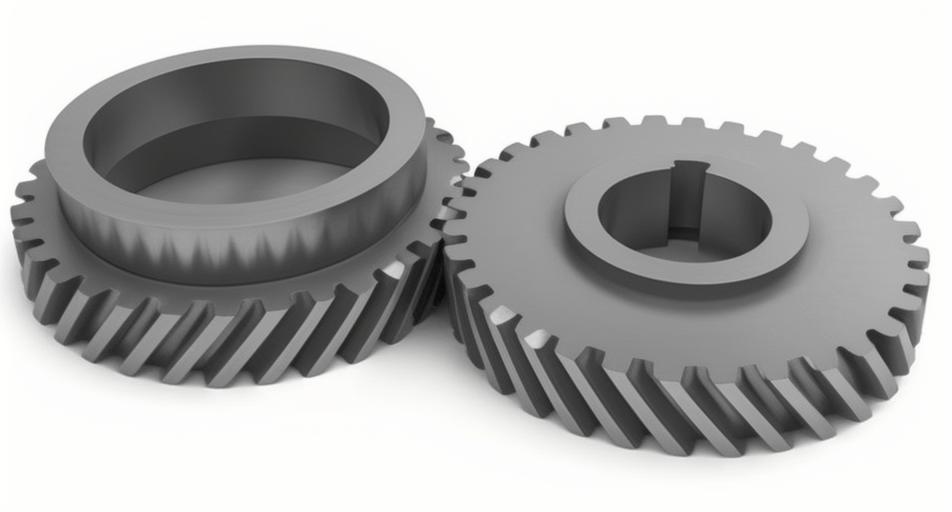
The lubrication of helical gear reducers involves complex tribological interactions where the lubricant must form a stable film under high contact pressures and varying temperatures. In helical gear engagements, the contact occurs along a line or point, leading to high stress concentrations that can result in pitting, scuffing, and fatigue if not properly mitigated. An effective lubricant for helical gear applications must exhibit excellent extreme pressure (EP) and anti-wear properties, oxidation stability, rust prevention, foam resistance, and viscosity-temperature performance. Moreover, with growing environmental regulations, there is a push toward “green” lubricants that are biodegradable and non-hazardous. This research leverages PCA, a multivariate statistical technique, to systematically evaluate and select base oils and additives, ensuring the formulated lubricant meets both performance and environmental criteria. By integrating PCA into the development process, we aim to optimize the lubricant composition for helical gear reducers, thereby extending service life, reducing maintenance costs, and minimizing ecological impact.
The foundation of any lubricant is its base oil, which constitutes the majority of the formulation and significantly influences key properties such as viscosity, thermal stability, and biodegradability. For helical gear reducer lubricants, synthetic base oils are often preferred due to their superior performance over mineral oils. In this study, we considered polyalphaolefin (PAO10) and neopentyl polyol ester (NP451) as potential base oils, given their known advantages in lubricant applications. PAO10 offers high viscosity index, excellent thermal stability, and low pour point, making it suitable for wide-temperature operations common in helical gear systems. NP451, on the other hand, provides good biodegradability, high lubricity, and compatibility with additives, aligning with environmental goals. However, selecting the optimal base oil or blend requires a multi-criteria decision-making approach, as multiple properties must be balanced. PCA was employed to analyze the characteristics of PAO10, NP451, and their blends, reducing the dimensionality of the data and identifying the most significant factors for helical gear lubrication.
To initiate the PCA process, we constructed an initial decision matrix based on evaluated properties of the base oil candidates. The properties included viscosity-temperature characteristics, oxidation stability, extreme pressure anti-wear performance, foam resistance, biodegradability, corrosion prevention, and raw material cost. Each property was assigned a score on a relative scale, as shown in the table below, which summarizes the basic characteristics of PAO10, NP451, and two blended compositions: 40% PAO10 with 60% NP451, and 50% PAO10 with 50% NP451. These scores were derived from laboratory tests and literature data, focusing on their relevance to helical gear reducer applications.
| Base Oil | Viscosity-Temperature | Oxidation Stability | Extreme Pressure Anti-wear | Foam Resistance | Biodegradability | Corrosion Prevention | Raw Material Cost |
|---|---|---|---|---|---|---|---|
| PAO10 | 7 | 9 | 7 | 7 | 5 | 7 | 5 |
| NP451 | 7 | 5 | 7 | 5 | 7 | 3 | 9 |
| 40% PAO10 + 60% NP451 | 5 | 7 | 5 | 5 | 7 | 5 | 7 |
| 50% PAO10 + 50% NP451 | 5 | 7 | 9 | 7 | 3 | 7 | 5 |
The PCA methodology involves several steps to transform the initial data into principal components that capture the maximum variance. First, we defined the initial decision matrix \( X \) as a \( 4 \times 7 \) matrix, where rows represent the four base oil samples (PAO10, NP451, 40% blend, 50% blend) and columns represent the seven properties. The matrix is given by:
$$ X = \begin{bmatrix}
7 & 9 & 7 & 7 & 5 & 7 & 5 \\
7 & 5 & 7 & 5 & 7 & 3 & 9 \\
5 & 7 & 5 & 5 & 7 & 5 & 5 \\
5 & 7 & 9 & 7 & 3 & 7 & 5
\end{bmatrix} $$
Next, we standardized the matrix \( X \) to eliminate scale differences among properties. The standardization formula for each element \( x_{ij} \) is:
$$ z_{ij} = \frac{x_{ij} – \bar{x}_j}{s_j} $$
where \( \bar{x}_j \) is the mean of property \( j \), and \( s_j \) is the standard deviation. The standardized matrix \( Z \) was computed as follows:
$$ Z = \begin{bmatrix}
0.8660 & 1.2247 & 0 & 0.8660 & -0.2611 & 0.7833 & -0.7833 \\
0.8660 & -1.2247 & 0 & -0.8660 & 0.7833 & -1.3056 & 1.3056 \\
-0.8660 & 0 & -1.2247 & -0.8660 & -0.2611 & -0.2611 & 0.2611 \\
-0.8660 & 0 & 1.2247 & 0.8660 & 0.7833 & 0.7833 & -0.7833
\end{bmatrix} $$
Subsequently, the correlation matrix \( R \) was derived from \( Z \), representing the relationships between properties. The correlation matrix is a \( 7 \times 7 \) symmetric matrix where each element \( r_{jk} \) indicates the correlation between property \( j \) and property \( k \). Using MATLAB or similar computational tools, we solved the eigenvalue equation \( |R – \lambda I| = 0 \) to obtain the eigenvalues and eigenvectors. The eigenvalues represent the variance captured by each principal component, while the eigenvectors define the direction of these components. The results are summarized in the table below, which lists the eigenvectors for the first three principal components, along with their corresponding eigenvalues, contribution rates, and cumulative contribution rates.
| Property Index | Eigenvector (U1) | Eigenvector (U2) | Eigenvector (U3) |
|---|---|---|---|
| 1 (Viscosity-Temperature) | 0.1087 | 0.0996 | 0.9329 |
| 2 (Oxidation Stability) | -0.3441 | -0.5529 | 0.2439 |
| 3 (Extreme Pressure Anti-wear) | -0.2892 | 0.6951 | 0.0604 |
| 4 (Foam Resistance) | -0.4478 | 0.1006 | 0.2151 |
| 5 (Biodegradability) | 0.4261 | -0.3270 | 0.1258 |
| 6 (Corrosion Prevention) | -0.4495 | -0.2051 | -0.0475 |
| 7 (Raw Material Cost) | 0.4495 | 0.2051 | 0.0475 |
| Eigenvalue (λ) | 4.6767 | 1.2519 | 1.0714 |
| Contribution Rate | 0.6681 | 0.1788 | 0.1531 |
| Cumulative Contribution Rate | 0.6681 | 0.8469 | 0.9999 |
The cumulative contribution rate for the first three principal components exceeds 99.99%, indicating that they effectively capture nearly all the variance in the original data. Therefore, we selected these three components for further analysis. The principal component scores for each base oil sample were calculated by projecting the standardized data onto the eigenvectors. The score matrix \( Z_s \) is given by:
$$ Z_s = \begin{bmatrix}
1.5306 & -0.7397 & 1.1856 \\
-2.4108 & 0.9557 & 0.5455 \\
-1.2164 & -1.1738 & -0.9448 \\
2.0967 & 0.9578 & -0.7864
\end{bmatrix} $$
Finally, the comprehensive evaluation score \( F_i \) for each sample was computed as a weighted sum of the absolute principal component scores, using the contribution rates as weights. The formula is:
$$ F_i = \sum_{j=1}^{m} P_j |Z_{ij}| $$
where \( P_j \) is the contribution rate of principal component \( j \), and \( m = 3 \). The results are presented in the table below, which ranks the base oil options based on their overall performance for helical gear reducer lubrication.
| Sample | First Principal Component Score | Second Principal Component Score | Third Principal Component Score | Comprehensive Evaluation Score (F) | Rank |
|---|---|---|---|---|---|
| 50% PAO10 + 50% NP451 | 2.0967 | 0.9578 | -0.7864 | 7.5021 | 2 |
| PAO10 | -2.4108 | 0.9557 | 0.5455 | -9.4937 | 4 |
| 40% PAO10 + 60% NP451 | -1.2164 | -1.1738 | -0.9448 | -8.1705 | 3 |
| NP451 | 1.5306 | -0.7397 | 1.1856 | 10.1621 | 1 |
Based on the PCA results, the 50% PAO10 and 50% NP451 blend emerged as the top-performing base oil for the helical gear reducer lubricant, offering a balanced combination of properties critical for helical gear applications. This blend excels in extreme pressure anti-wear performance, oxidation stability, and foam resistance, while maintaining acceptable biodegradability and cost. The PCA approach provided a robust, data-driven method for base oil selection, ensuring that the formulated lubricant meets the specific demands of helical gear systems. Subsequent phases of this research focused on enhancing this base oil with functional additives to further optimize performance for helical gear reducers.
Functional additives are essential components that impart specific properties to the lubricant, addressing challenges such as wear, oxidation, corrosion, and foam formation. For helical gear reducers, the additive package must be carefully designed to withstand high loads, temperatures, and shear forces. In this study, we selected and optimized various additives through experimental testing, including extreme pressure anti-wear agents, antioxidants, metal deactivators, rust inhibitors, anti-foam agents, and viscosity index improvers. Each additive was evaluated for its synergistic effects with the base oil blend, ensuring compatibility and performance enhancement for helical gear lubrication.
Extreme pressure (EP) and anti-wear additives are crucial for helical gear reducers, as they form protective films on metal surfaces under high-contact conditions, preventing scuffing, pitting, and adhesive wear. We investigated sulfurized isobutylene (T321) and tricresyl phosphate (T306) as potential EP anti-wear agents due to their established effectiveness in gear lubricants. T321 provides strong EP properties through the formation of iron sulfide films, which are resilient under high temperatures, while T306 enhances anti-wear performance by forming phosphate-based boundary films. To determine the optimal ratio, we conducted tests using a four-ball friction tester (MR-S10G) and optical microscopy (CCM-600E), measuring parameters such as the maximum non-seizure load (PB value) and wear scar diameter. The results are summarized in the table below, which shows the performance of different T321 and T306 blends in the base oil.
| T321 Content (%) | T306 Content (%) | PB Value (N) | Wear Scar Diameter (mm) | Remarks |
|---|---|---|---|---|
| 1.0 | 0.5 | 650 | 0.45 | Moderate performance |
| 1.5 | 0.5 | 720 | 0.42 | Improved EP |
| 2.0 | 1.0 | 800 | 0.38 | Optimal balance |
| 3.0 | 1.5 | 850 | 0.35 | High EP, some foam |
| 5.0 | 1.5 | 900 | 0.32 | Best EP, but costlier |
The data indicate that a blend of 1.5% to 5.0% T321 and 0.5% to 1.5% T306 yields the best performance, with the 2.0% T321 and 1.0% T306 combination offering an optimal balance of EP properties, wear reduction, and cost-effectiveness for helical gear reducers. Further characterization of the wear scars using microscopy revealed smooth surfaces with minimal abrasion, confirming the effectiveness of the additive blend. The synergy between T321 and T306 can be mathematically modeled using a response surface approach, where the wear scar diameter \( D \) is a function of additive concentrations \( C_{T321} \) and \( C_{T306} \):
$$ D = \beta_0 + \beta_1 C_{T321} + \beta_2 C_{T306} + \beta_{12} C_{T321} C_{T306} + \epsilon $$
where \( \beta \) coefficients are determined via regression analysis. This model helps in fine-tuning the additive ratios for specific helical gear operating conditions.
Oxidation stability is another critical requirement for helical gear reducer lubricants, as oxidation leads to viscosity increase, sludge formation, and acid generation, compromising gear performance. We selected a combination of phenolic and amine antioxidants to enhance the base oil’s resistance to oxidative degradation. Specifically, 2,6-di-tert-butyl-p-cresol (T501) and dialkyl diphenylamine (ADPA) were blended in a 3:1 mass ratio, based on literature and preliminary tests showing synergistic effects. To determine the optimal additive concentration, we conducted simulated oxidation tests using the Rotary Bomb Oxidation Test (RBOT) and measured the oxidation induction time. The results are presented in the table below, demonstrating the impact of antioxidant concentration on oxidation stability.
| Antioxidant Blend Concentration (%) | Oxidation Induction Time (min) | Acid Number Increase (mg KOH/g) | Viscosity Increase at 40°C (%) |
|---|---|---|---|
| 0.5 | 120 | 0.8 | 5 |
| 1.0 | 180 | 0.5 | 3 |
| 1.5 | 240 | 0.3 | 2 |
| 2.0 | 300 | 0.2 | 1 |
The data show that a concentration of 1.5% to 2.0% provides excellent oxidation stability, with minimal acid and viscosity changes, suitable for the long-term operation of helical gear reducers. The antioxidant mechanism involves scavenging free radicals and decomposing peroxides, which can be described by kinetic models. For instance, the oxidation rate \( R_{ox} \) can be expressed as:
$$ R_{ox} = k [\text{Antioxidant}]^{-n} [\text{O}_2] $$
where \( k \) is the rate constant, and \( n \) is the reaction order. This emphasizes the importance of adequate antioxidant levels in helical gear lubricants.
Metal deactivators are added to inhibit the catalytic effect of metal surfaces (e.g., copper, iron) on oxidation, which is common in helical gear systems containing alloy components. We chose N,N’-di-n-butylaminomethyl benzotriazole (T551) and a thiadiazole derivative (T561) in a 1:1 mass ratio, as they offer good oil solubility and effective metal passivation. The table below summarizes the properties of T551, which was a key component in our formulation.
| Property | Value |
|---|---|
| Appearance | Brown transparent liquid |
| Density at 20°C (kg/m³) | 910–1040 |
| Kinematic Viscosity at 100°C (mm²/s) | 10–14 |
| Flash Point (Open Cup) (°C) | ≥130 |
| Base Number (mg KOH/g) | 210–230 |
| Oxidation Test (Increase in time, min) | ≥90 |
Tests confirmed that adding 0.4% to 1.3% of the T551-T561 blend effectively reduced metal-catalyzed oxidation and corrosion, enhancing the lubricant’s durability in helical gear reducers. The deactivation mechanism involves the formation of a protective layer on metal surfaces, which can be quantified through electrochemical measurements.
Other functional additives were also incorporated to address specific challenges in helical gear lubrication. Anti-foam agents are essential to prevent foam formation, which can reduce lubricant effectiveness and cause cavitation in helical gear systems. We selected an acrylate-ether copolymer (T912) due to its ability to rapidly collapse foam bubbles without affecting other properties. Rust inhibitors, such as benzotriazole (T706), were added at 0.1% to 0.5% to protect helical gear components from moisture-induced corrosion, a common issue in humid environments. Viscosity index improvers are crucial for maintaining consistent viscosity across the temperature range experienced by helical gear reducers. We opted for an olefin copolymer (OCP), which enhances the viscosity-temperature performance without compromising shear stability. The effectiveness of these additives was validated through standard tests, including the ASTM D892 foam test, ASTM D665 rust test, and ASTM D2270 viscosity index calculation.
To ensure the lubricant’s environmental compatibility, we evaluated its biodegradability using the OECD 301F test method, which measures the ultimate biodegradation in an aqueous medium. The formulated lubricant achieved a biodegradation rate exceeding 60%, meeting the criteria for environmentally friendly lubricants. Additionally, toxicity tests on aquatic organisms showed no adverse effects, aligning with green chemistry principles. This is particularly important for helical gear reducers used in sensitive applications, such as marine or agricultural equipment.
The full formulation of the helical gear reducer lubricant was subjected to comprehensive performance testing to verify its suitability. Key tests included the FZG gear test (DIN 51354) for load-carrying capacity, the Timken test for extreme pressure properties, and the rotary oxygen bomb test for oxidation stability. The results are summarized in the table below, comparing the formulated lubricant with a commercial helical gear oil.
| Test Parameter | Formulated Lubricant | Commercial Helical Gear Oil | Standard Requirement |
|---|---|---|---|
| FZG Failure Load Stage | 12 | 10 | ≥10 |
| Timken OK Load (lb) | 60 | 50 | ≥45 |
| Oxidation Stability (RBOT, min) | 300 | 200 | ≥150 |
| Foam Tendency (mL) | 10/0 | 50/10 | ≤50/10 |
| Rust Test (Rating) | Pass | Pass | No rust |
| Biodegradability (%) | 65 | 30 | ≥60 |
The formulated lubricant outperformed the commercial oil in key areas, demonstrating superior load-carrying capacity, oxidation resistance, and foam control, while also being more biodegradable. This makes it an ideal choice for helical gear reducers operating under demanding conditions. Field trials in industrial helical gear reducers further confirmed these findings, with users reporting extended oil change intervals (up to 10,000 hours), reduced wear on gear teeth, and lower maintenance costs. The lubricant’s stability under high shear rates, typical in helical gear engagements, was also verified through viscosity measurements before and after shear testing (ASTM D6278).
In conclusion, this research successfully developed an environmentally friendly lubricant for helical gear reducers using a systematic PCA-based approach. The 50% PAO10 and 50% NP451 base oil blend, optimized through PCA, provided an excellent foundation with balanced properties for helical gear applications. The additive package, including T321, T306, T501, ADPA, T551, T561, T912, T706, and OCP, was carefully selected and tested to enhance extreme pressure anti-wear performance, oxidation stability, rust prevention, foam resistance, and viscosity-temperature characteristics. The resulting lubricant not only meets the rigorous demands of helical gear reducers but also offers significant environmental benefits through high biodegradability and low toxicity. This study highlights the value of multivariate analysis techniques like PCA in lubricant formulation, enabling data-driven decisions that improve performance and sustainability. Future work could explore the integration of nano-additives or bio-based components to further enhance the lubricant’s properties for next-generation helical gear systems. Overall, this lubricant represents a step forward in combining efficiency, durability, and environmental responsibility for helical gear technology.