
In the realm of industrial machinery, the efficient operation of worm gears is paramount. Worm gears, characterized by their compact design, high reduction ratios, smooth operation, and low noise, are pivotal in applications ranging from heavy-duty conveyors to precision automotive systems. However, the inherent sliding friction in worm gears, particularly in steel-copper friction pairs, presents significant challenges such as high frictional heat, scoring, wear, and even seizure. This necessitates specialized lubricants that can withstand extreme pressures, reduce wear, and prevent corrosion, especially since copper components are sensitive to common sulfur-phosphorus extreme pressure additives. The advent of nanomaterial science has opened new avenues, and graphene, a two-dimensional carbon allotrope discovered in 2004, has emerged as a promising candidate for enhancing lubricant performance. Its ability to adhere to friction surfaces and form a low-shear lubricating film is particularly beneficial for worm gears. In this work, we detail the development of a graphene-enhanced worm gear oil, designated L-CKE/P 320, focusing on base oil selection, additive formulation, performance evaluation, and practical application. The goal is to create a lubricant that meets the stringent requirements of worm gears while leveraging the unique properties of graphene.
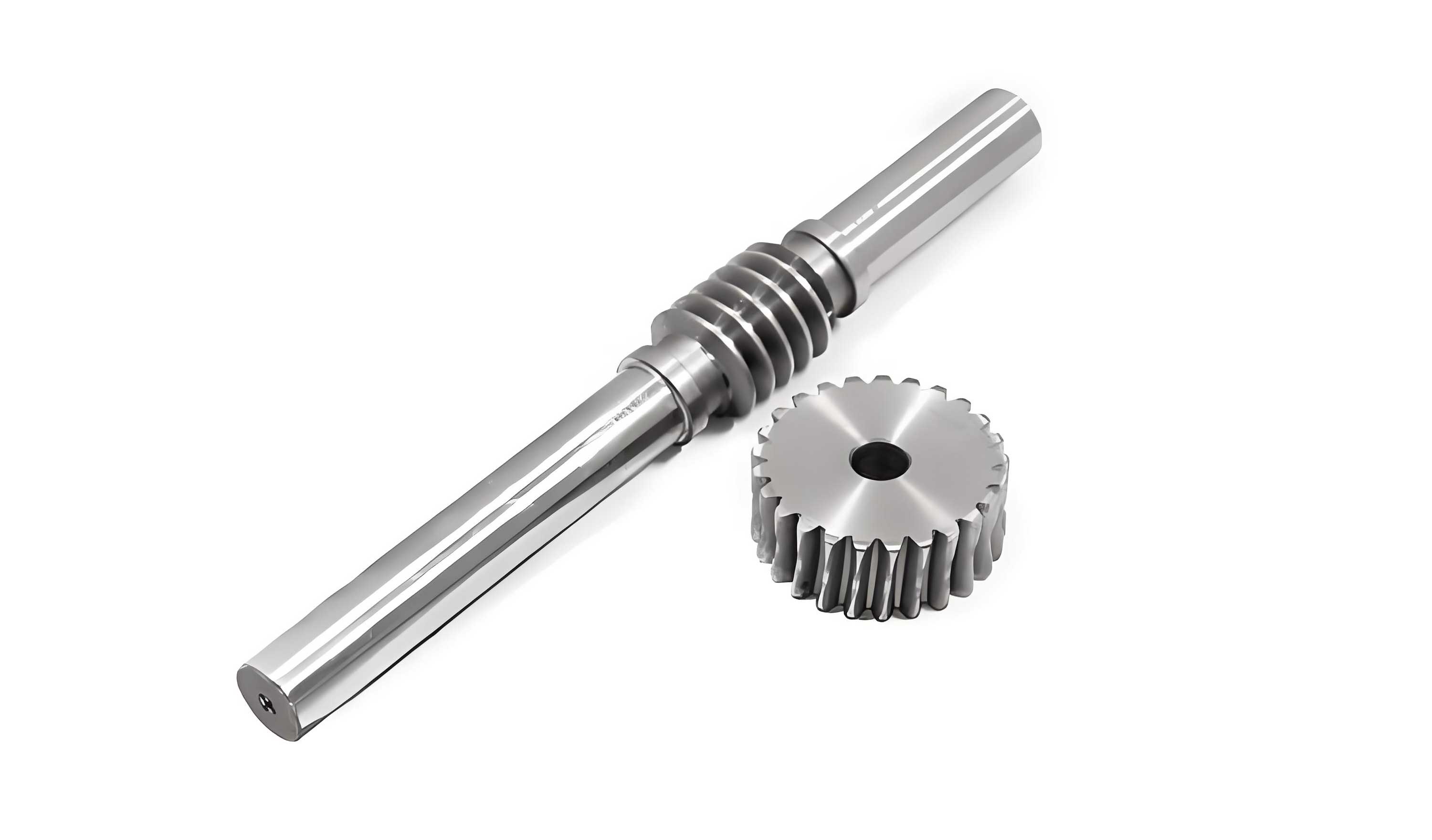
The fundamental challenge in lubricating worm gears stems from their operational mechanics. Unlike other gear types where rolling contact predominates, worm gears primarily involve sliding motion between the worm (typically steel) and the worm wheel (often copper-based alloy). This sliding action generates considerable heat and stress, demanding lubricants with excellent load-carrying capacity, anti-wear properties, and thermal stability. The friction coefficient in such contacts can be modeled using simplified relations, but the real behavior is complex. For instance, the specific film thickness, a key parameter in elastohydrodynamic lubrication (EHL), is given by: $$\lambda = \frac{h_{\text{min}}}{\sqrt{R_q^2 + R_q^2}}$$ where \(h_{\text{min}}\) is the minimum lubricant film thickness and \(R_q\) is the root mean square surface roughness. For worm gears, maintaining \(\lambda > 3\) is ideal to prevent asperity contact, but in practice, boundary lubrication often prevails due to high loads and slow speeds, necessitating robust additive packages. Graphene, with its high surface area and lamellar structure, can intercalate between surfaces, reducing direct metal-to-metal contact. Its effectiveness can be related to the reduction in wear volume, often described by the Archard wear equation: $$V = k \frac{W s}{H}$$ where \(V\) is wear volume, \(k\) is the wear coefficient, \(W\) is the normal load, \(s\) is the sliding distance, and \(H\) is the hardness of the softer material. By incorporating graphene, we aim to lower the wear coefficient \(k\) for worm gears, thereby extending component life.
The development process began with the selection of a suitable base oil, which forms the backbone of any lubricant. For worm gear oils, high viscosity and good viscosity-temperature characteristics are essential to maintain a protective film under varying operational temperatures. We evaluated two mineral base oils: 500SN and 150BS. Their key properties are summarized in the table below.
| Property | 500SN | 150BS |
|---|---|---|
| Kinematic Viscosity at 40°C (mm²/s) | 95.1 | 483.1 |
| Kinematic Viscosity at 100°C (mm²/s) | 10.85 | 31.79 |
| Viscosity Index | 98 | 97 |
| Flash Point (Open Cup, °C) | 262 | 322 |
| Pour Point (°C) | -15 | -12.5 |
| Acid Value (mg KOH/g) | 0.01 | 0.01 |
Both oils exhibited low pour points and high flash points, making them suitable for worm gear applications. The viscosity index (VI), a measure of viscosity change with temperature, was calculated using the standard ASTM D2270 method: $$VI = \frac{L – U}{L – H} \times 100$$ where \(U\) is the kinematic viscosity at 40°C of the oil, and \(L\) and \(H\) are reference values based on viscosity at 100°C. For these oils, VI values around 97-98 indicate good viscosity-temperature performance, crucial for worm gears operating across temperature ranges. A blend of 500SN and 150BS was prepared to achieve the target ISO VG 320 viscosity grade, ensuring adequate film strength for worm gears under load.
Additive selection is critical for worm gear oils, given the severe sliding conditions. The primary additives required include extreme pressure (EP) agents, anti-wear agents, rust inhibitors, and antioxidants. For worm gears with copper components, EP agents must be non-corrosive to copper. We screened three sulfur-containing EP additives: non-active sulfur EP agent A (sulfur content ≥10.0% by mass), active sulfur EP agent B (sulfur content ≥15.0%, active sulfur ≥4.0%), and non-active sulfur EP agent C (sulfur content ≥10.0%). Each was added at 10.0% mass fraction to the base blend, and key performance indicators were assessed, as shown below.
| Property | EP Agent A | EP Agent B | EP Agent C |
|---|---|---|---|
| Copper Strip Corrosion (100°C, 3 h)/Rating | 1a | 1a | 1a |
| Copper Strip Corrosion (121°C, 3 h)/Rating | 1a | 3c | 2a |
| Timken OK Value (N) | 267 | 312 | 223 |
| Four-Ball Wear Scar Diameter (mm) | 0.39 | 0.45 | 0.56 |
EP agent A showed the best copper corrosion resistance at elevated temperatures, a moderate Timken OK value (indicating load-carrying capacity), and a relatively low wear scar diameter. The Timken test measures the load at which welding or scoring occurs, vital for worm gears under high stress. The superiority of non-active sulfur agents for copper protection is well-known; active sulfur can form corrosive sulfides with copper. Thus, EP agent A was selected for the worm gear oil formulation.
To further enhance anti-wear performance, graphene was incorporated as a dispersed anti-wear agent. Graphene’s lubrication mechanism involves the formation of a protective film on surfaces, reducing friction and wear. The effect of graphene concentration on wear was studied using the four-ball test, with results tabulated below.
| Formulation | Four-Ball Wear Scar Diameter (mm) |
|---|---|
| 10.0% EP Agent A + 1.0% Graphene | 0.39 |
| 10.0% EP Agent A + 3.0% Graphene | 0.36 |
| 10.0% EP Agent A + 5.0% Graphene | 0.25 |
| 10.0% EP Agent A + 7.0% Graphene | 0.23 |
The data indicates a significant reduction in wear scar diameter with increasing graphene content, plateauing around 5.0% mass fraction. The wear reduction can be modeled by an exponential decay function: $$d = d_0 + A e^{-k c}$$ where \(d\) is wear scar diameter, \(d_0\) is the baseline diameter, \(c\) is graphene concentration, and \(A\) and \(k\) are constants. For worm gears, a 5.0% addition provided optimal cost-performance balance, ensuring minimal wear in sliding contacts.
Rust and corrosion prevention is essential for worm gears, especially in humid environments. We evaluated three rust inhibitors: dodecenyl succinic acid, a domestic dodecenyl succinate, and an imported dodecenyl succinate. The performance in synthetic seawater immersion tests is summarized.
| Rust Inhibitor (Mass Fraction) | Liquid Phase Rust Test (Synthetic Seawater) |
|---|---|
| 0.03% Dodecenyl Succinic Acid | Rust Present |
| 0.10% Dodecenyl Succinic Acid | No Rust |
| 0.03% Domestic Dodecenyl Succinate | Rust Present |
| 0.10% Domestic Dodecenyl Succinate | No Rust |
| 0.03% Imported Dodecenyl Succinate | No Rust |
The imported dodecenyl succinate at 0.03% mass fraction effectively prevented rust, making it suitable for the worm gear oil. This aligns with the need for efficient corrosion protection in worm gears exposed to moisture.
Oxidation stability is crucial for worm gear oils due to high operating temperatures. We assessed three composite antioxidants using the rotary bomb oxidation test (RBOT) at 150°C, measuring induction period in minutes.
| Composite Antioxidant (Mass Fraction) | Oxidation Induction Period (min) |
|---|---|
| 0.2% Alkyldiphenylamine/Hindered Phenol | 166 |
| 0.4% Alkyldiphenylamine/Hindered Phenol | 296 |
| 0.5% Alkyldiphenylamine/Hindered Phenol | 337 |
| 0.2% Arylamine/Phenol Derivative | 169 |
| 0.4% Arylamine/Phenol Derivative | 216 |
| 0.5% Arylamine/Phenol Derivative | 232 |
| 0.5% Alkyldiphenylamine/2,6-Di-tert-butylphenol | 256 |
The alkyldiphenylamine/hindered phenol blend at 0.5% mass fraction yielded the longest induction period (337 min), indicating superior oxidation resistance. Oxidation kinetics often follow an Arrhenius relationship: $$t_{\text{ind}} = A e^{E_a/(RT)}$$ where \(t_{\text{ind}}\) is induction time, \(E_a\) is activation energy, \(R\) is gas constant, and \(T\) is temperature. The selected antioxidant package helps maintain lubricant integrity in worm gears under thermal stress.
Based on these findings, the final formulation for L-CKE/P 320 graphene worm gear oil was established as follows:
- Base Oil: Blend of 500SN and 150BS to achieve ISO VG 320 viscosity.
- Extreme Pressure Agent: 10.0% mass fraction of non-active sulfur EP agent A (sulfur content ≥10.0%).
- Anti-wear Agent: 5.0% mass fraction of dispersed graphene.
- Rust Inhibitor: 0.03% mass fraction of imported dodecenyl succinate.
- Antioxidant: 0.5% mass fraction of alkyldiphenylamine/hindered phenol composite.
This formulation targets the specific needs of worm gears, combining high load-capacity with copper compatibility and enhanced wear protection.
The performance of the developed worm gear oil was evaluated against the SH/T0094—1991 standard for worm gear oils. Key properties are presented in the table below.
| Property | Specification Limit | Typical Data for L-CKE/P 320 |
|---|---|---|
| Kinematic Viscosity at 40°C (mm²/s) | 288–352 | 327.6 |
| Kinematic Viscosity at 100°C (mm²/s) | Report | 25.68 |
| Viscosity Index | ≥90 | 102 |
| Flash Point (Open Cup, °C) | ≥200 | 308 |
| Pour Point (°C) | ≤-12 | -12 |
| Copper Strip Corrosion (100°C, 3 h)/Rating | ≤1 | 1a |
| Water Content (%) | ≤Trace | None |
| Mechanical Impurities (%) | ≤0.02 | 0.01 |
| Sulfur Content (% mass) | ≤1.25 | 1.01 |
| Acid Value (mg KOH/g) | ≤1.0 | 0.88 |
| Saponification Value (mg KOH/g) | ≤25.0 | 11.5 |
| Foam Characteristics (mL/mL) 24°C 93.5°C After 24°C |
≤75/0 ≤75/0 ≤75/0 |
0/0 0/0 0/0 |
| Demulsibility (82°C, 40-37-3 mL, min) | ≤60 | 10 |
| Liquid Phase Rust Test (Synthetic Seawater) | Pass | Pass |
| Four-Ball Weld Load (Composite Wear Value, N) | ≥392 | 582 |
All parameters met or exceeded the standard requirements. The high weld load (582 N) indicates excellent extreme pressure performance, vital for worm gears under heavy loads. The foam characteristics and demulsibility results ensure stable lubrication in turbulent or wet conditions common in worm gearboxes.
To validate real-world performance, the L-CKE/P 320 graphene worm gear oil was field-tested in worm gear reducers on rolling mill equipment at a steel plant. The oil was monitored over six months, with key properties tracked periodically, as shown in the following table.
| Property | New Oil | 2 Months | 4 Months | 6 Months |
|---|---|---|---|---|
| Kinematic Viscosity at 40°C (mm²/s) | 327.6 | 312.2 | 310.9 | 312.2 |
| Kinematic Viscosity at 100°C (mm²/s) | 25.68 | 23.81 | 23.85 | 23.81 |
| Viscosity Index | 102 | 96 | 97 | 96 |
| Copper Strip Corrosion (100°C, 3 h)/Rating | 1a | 1a | 1a | 1a |
| Copper Strip Corrosion (121°C, 3 h)/Rating | 1a | 1a | 1a | 1a |
| Copper Content (μg/g) | 0.2 | 4.0 | 4.0 | 5.0 |
| Iron Content (μg/g) | 0 | 6.0 | 5.0 | 7.0 |
| Demulsibility (82°C, 40-37-3 mL, min) | 15 | 25 | 25 | 20 |
| Liquid Phase Rust Test (Synthetic Seawater) | Pass | Pass | Pass | Pass |
| Foam Characteristics (mL/mL) 24°C 93.5°C After 24°C |
0/0 0/0 0/0 |
0/0 0/0 0/0 |
0/0 0/0 0/0 |
0/0 0/0 0/0 |
| Sulfur Content (% mass) | 1.01 | 0.98 | 0.99 | 0.98 |
The viscosity remained stable within acceptable limits, indicating minimal shear degradation or oxidation. The low and steady copper and iron content (5–7 μg/g after six months) suggests minimal wear in the worm gears, affirming the lubricant’s protective capability. The consistent corrosion and foam performance further demonstrate the oil’s durability in service. This field data corroborates the laboratory findings, showing that the graphene-enhanced formulation effectively meets the demands of worm gears in harsh industrial environments.
In conclusion, the development of L-CKE/P 320 graphene worm gear oil represents a significant advancement in lubricant technology for worm gears. By carefully selecting a base oil blend of 500SN and 150BS, and incorporating 10.0% non-active sulfur EP agent A, 5.0% graphene, 0.03% imported dodecenyl succinate rust inhibitor, and 0.5% alkyldiphenylamine/hindered phenol antioxidant, we have created a lubricant that excels in key areas: extreme pressure capacity, anti-wear performance, corrosion protection, and oxidation stability. The oil fully complies with the SH/T0094—1991 standard and has proven effective in real-world worm gear applications, reducing wear and extending service life. The integration of graphene as an anti-wear agent leverages its unique two-dimensional structure to form resilient lubricating films, addressing the sliding friction challenges inherent in worm gears. Future work could explore synergistic effects with other nanomaterials or biodegradable base oils, but this formulation already sets a high benchmark for worm gear lubrication. As machinery continues to evolve towards higher speeds and loads, such innovative lubricants will be essential for maintaining the reliability and efficiency of worm gears across industries.
The role of worm gears in modern engineering cannot be overstated; they are integral to systems requiring precise motion control and high torque transmission. The sliding friction in worm gears generates heat that can degrade conventional lubricants, leading to increased energy consumption and component failure. The use of graphene mitigates this by reducing the friction coefficient, which can be expressed as: $$\mu = \frac{F_f}{W}$$ where \(\mu\) is the coefficient of friction, \(F_f\) is frictional force, and \(W\) is normal load. Graphene’s lamellar sheets slide easily over one another, lowering \(F_f\) and thus \(\mu\). Additionally, the thermal conductivity of graphene (approximately 5000 W/m·K) aids in heat dissipation from the contact zone, further protecting worm gears. In our formulation, the graphene concentration was optimized to balance performance and cost, but higher loadings could be explored for extreme-duty worm gears. The antioxidant package also plays a key role; the induction period of 337 min at 150°C suggests that the oil can withstand prolonged exposure to high temperatures common in worm gearboxes, where localized heating can exceed 100°C. The viscosity-temperature relationship, governed by the Vogel-Fulcher-Tammann equation: $$\mu = A e^{B/(T – C)}$$ where \(A\), \(B\), and \(C\) are constants, is favorable for our blend, ensuring consistent film thickness across operating conditions. Field monitoring over six months showed no significant viscosity increase, indicating resistance to polymerization or sludge formation. The wear metal analysis revealed low iron and copper levels, which can be modeled using a wear rate equation: $$R_w = \frac{\Delta C \cdot V_o}{t \cdot A_c}$$ where \(R_w\) is wear rate, \(\Delta C\) is change in metal concentration, \(V_o\) is oil volume, \(t\) is time, and \(A_c\) is contact area. For our worm gear oil, \(R_w\) values were minimal, confirming effective protection. Overall, this graphene-based lubricant offers a robust solution for the demanding lubrication needs of worm gears, enhancing performance and longevity in diverse applications.