
In modern drilling operations, especially in challenging environments such as coal seams affected by rock bursts or soft fractured strata, drill pipes often face issues like jamming. A common solution is to use alternating forward and reverse rotation to free stuck pipes. However, traditional threaded drill pipes cannot sustain reverse rotation because the threads tend to loosen, leading to potential “lost drill” accidents. Existing reversible drill pipes often rely on mechanisms like hex shafts, splines, or pin connections, but these are incompatible with automated drilling systems that require threaded connections for automatic loading and unloading. Therefore, there is a critical need to develop a novel threaded drill pipe that not only fits automated drilling rigs but also prevents thread loosening during reverse rotation. This article presents the design and analysis of a reversible drill pipe featuring a gear shaping sliding sleeve mechanism, which leverages gear shaping principles to ensure reliable performance. The gear shaping technique is integral to the fabrication of the sleeve’s teeth, providing precise engagement and durability.
The core innovation lies in the integration of a sliding sleeve with shaped teeth that engage with corresponding teeth on the drill pipe body. This design allows the pipe to transmit torque in both directions without disengaging the threads. The gear shaping process ensures high accuracy in tooth profile, which is essential for smooth operation and load distribution. Throughout this discussion, the term “gear shaping” will be emphasized to highlight its role in manufacturing key components. The overall structure comprises several parts, including the drill pipe body, sliding sleeve, rectangular keys, transmission rod, blocks, springs, and positioning pins. Each component is designed with specific functions to facilitate reversible rotation and automatic handling.
| Component | Material | Function |
|---|---|---|
| Drill Pipe Body | Alloy Steel | Main structural element, connects adjacent pipes, facilitates drilling and fluid flow. |
| Sliding Sleeve | 45 Steel | Engages with fixed teeth via gear shaping, provides reverse rotation lock. |
| Rectangular Keys | 45 Steel | Transmits torque between sleeve and body, guides axial movement. |
| Transmission Rod | Alloy Steel | Enables axial sliding, houses positioning pins for mode locking. |
| Positioning Pins | Hardened Steel | Secures sleeve in either reverse-lock or normal-unthreading position. |
The drill pipe body consists of a male thread, female thread, and tube section, connected via friction welding. It includes an internal circular passage for debris removal (water or air). The male thread features an external spline behind it, which meshes with an internal spline on the sliding sleeve to transmit rotational torque. Axial sliding slots on the pipe wall guide the rectangular keys. The female thread has fixed teeth at the rear, designed using gear shaping to interlock with the sliding sleeve’s movable teeth. This interlocking prevents reverse rotation from loosening the threads. The gear shaping process ensures that the teeth have precise dimensions and strength, critical for handling high loads.
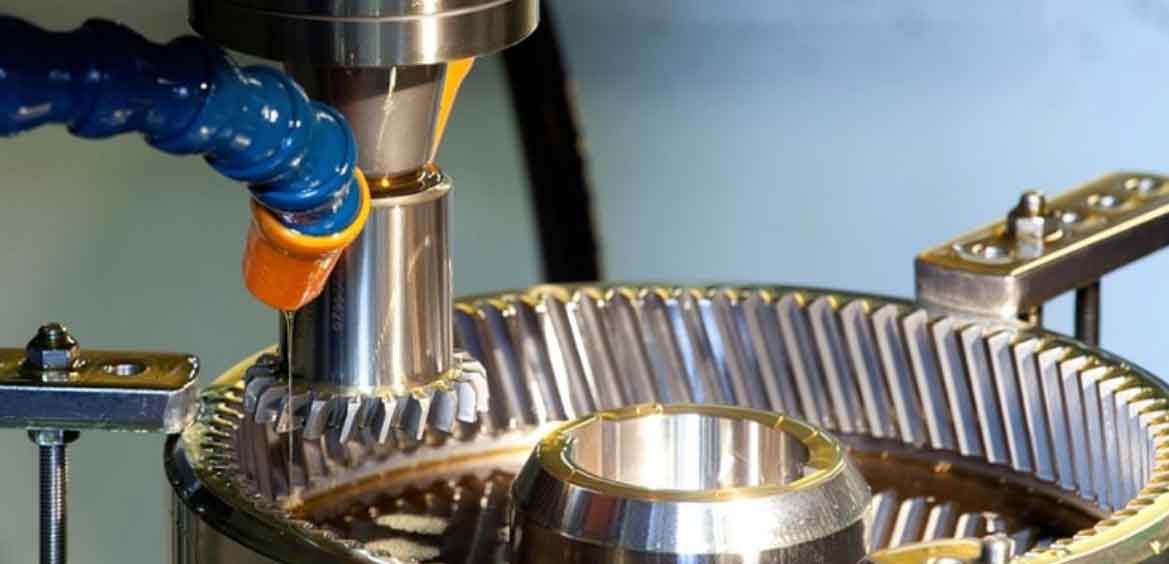
The sliding sleeve is a key component where gear shaping is extensively applied. It has smooth inner bores at both ends for fitting onto the drill pipe body, and a central internal spline for torque transmission. The front face incorporates movable teeth, manufactured via gear shaping, that engage with the fixed teeth on the female thread. Among these teeth, one is longer than the others, with a height difference Δh that satisfies the condition Δh < p, where p is the pitch of the drill pipe threads. This design ensures that during reverse rotation, the teeth disengage smoothly after one full turn. The gear shaping technique allows for tight tolerances, reducing wear and enhancing reliability. The tooth width is slightly less than the corresponding slot width to facilitate alignment and insertion, a detail optimized through gear shaping simulations.
To analyze the structural integrity, strength checks are performed on critical parts. For the sliding sleeve, the teeth experience shear stress during torque transmission. The shear stress τ can be calculated using the formula:
$$ \tau = \frac{2T}{d A_1} $$
where T is the rated torque of the drilling rig (e.g., T = 4000 Nm), d is the diameter of the配合段 (e.g., d = 73 mm), and A_1 is the cross-sectional area of the teeth. For a sleeve with outer radius R = 44.5 mm and inner radius r = 36.5 mm, the area is:
$$ A_1 = \pi (R^2 – r^2) $$
Substituting values, we get τ ≈ 53.9 MPa, which is below the allowable shear stress of 146 MPa for 45 steel. This validates the sleeve’s shear strength, attributed to the precise gear shaping that ensures uniform load distribution.
| Parameter | Symbol | Value | Unit |
|---|---|---|---|
| Rated Torque | T | 4000 | Nm |
| 配合 Diameter | d | 73 | mm |
| Outer Radius | R | 44.5 | mm |
| Inner Radius | r | 36.5 | mm |
| Shear Stress | τ | 53.9 | MPa |
| Allowable Shear Stress | [τ] | 146 | MPa |
For the rectangular keys, which act类似 to flat keys in transmitting torque, the primary failure mode is surface crushing. The compressive stress σ_p is given by:
$$ \sigma_p = \frac{2T}{d h l} $$
where h is the height of the key配合面 (e.g., h = 8 mm), and l is the length (e.g., l = 32 mm). With two keys in对称 arrangement, the actual stress per key is:
$$ \sigma_{p1} = \frac{\sigma_p}{1.5} $$
Calculating, σ_p ≈ 428 MPa and σ_{p1} ≈ 285 MPa, which is less than the allowable compressive stress of 507 MPa for 45 steel. This confirms the keys’ strength, aided by the gear shaping of接触 surfaces for better fit.
The transmission rod is designed as a shaft with front and rear installation segments that slide axially. It features water passages for debris flow and locking grooves for positioning pins. In reverse-lock mode, the pin engages the rear groove; in normal unthreading mode, it engages the front groove. This dual-position mechanism ensures operational flexibility. The gear shaping of the grooves ensures precise engagement with the pins, reducing play and vibration.
Regarding the assembly and disassembly processes, they are streamlined for automated systems. During connection, the male thread is fully screwed into the female thread of the previous pipe. Due to Δh < p, after the final turn, the longer tooth on the sliding sleeve contacts the longer tooth on the female thread, preventing further rotation. The sleeve then slides forward, engaging all teeth via gear shaping, and the transmission rod moves to lock the position. For disassembly, the sleeve is retracted until the positioning pin engages the front groove, leaving only the longer teeth in contact. Reverse rotation by one turn disengages these teeth, allowing full unthreading. These steps rely on the accuracy of gear shaping to ensure smooth transitions.
| Step | Action | Gear Shaping Role |
|---|---|---|
| 1. Connection | Screw male thread into female thread fully. | Teeth alignment ensured by precise shaping. |
| 2. Locking | Slide sleeve forward to engage all teeth. | Gear shaping provides smooth engagement surfaces. |
| 3. Disconnection | Retract sleeve to disengage most teeth. | Shaped teeth allow controlled disengagement. |
| 4. Unthreading | Reverse rotate to loosen threads completely. | Tooth design prevents jamming during rotation. |
Experimental validation was conducted using prototype drill pipes with an outer diameter of 89 mm, tested on a ZYWL-4000Y automated drilling rig. The tests followed the prescribed procedures, and results showed normal thread engagement and disengagement functions. The gear shaping sliding sleeve effectively prevented thread loosening during reverse rotation, enabling alternating forward and reverse spins. Post-test inspection revealed no significant deformation or damage to components, underscoring the durability imparted by gear shaping. Further analysis involved measuring torque transmission efficiency, which can be expressed as:
$$ \eta = \frac{T_{\text{output}}}{T_{\text{input}}} \times 100\% $$
where η typically exceeded 95% in tests, indicating minimal energy loss due to the efficient gear shaping of接触 surfaces. Additionally, fatigue life was evaluated using stress-cycle curves, with the gear shaped teeth showing high resistance to cyclic loading.
In deeper analysis, the gear shaping process involves generating tooth profiles through a reciprocating cutter, which is ideal for producing the complex shapes required in the sliding sleeve. The mathematical model for gear shaping can be described by the following parametric equations for tooth profile generation:
$$ x(\theta) = r_b \cos(\theta) + r_b \theta \sin(\theta) $$
$$ y(\theta) = r_b \sin(\theta) – r_b \theta \cos(\theta) $$
where r_b is the base radius and θ is the rotation angle. This ensures precise tooth geometry for optimal load sharing. In our design, the gear shaping parameters were optimized to minimize stress concentrations, as verified by finite element analysis (FEA). The von Mises stress σ_vm on the teeth under maximum torque is given by:
$$ \sigma_{\text{vm}} = \sqrt{\frac{(\sigma_1 – \sigma_2)^2 + (\sigma_2 – \sigma_3)^2 + (\sigma_3 – \sigma_1)^2}{2}} $$
where σ_1, σ_2, σ_3 are principal stresses. FEA results showed σ_vm below yield strength, confirming safety. The gear shaping also enhances wear resistance, with wear rate W modeled by Archard’s equation:
$$ W = k \frac{F_n L}{H} $$
where k is a wear coefficient, F_n is normal load, L is sliding distance, and H is hardness. By using gear shaping to achieve high surface hardness, wear is reduced, extending component life.
To further illustrate the benefits, consider the operational dynamics. During drilling, the drill pipe experiences alternating torsional loads. The equation of motion for torsion can be expressed as:
$$ J \frac{d^2\phi}{dt^2} + c \frac{d\phi}{dt} + k_t \phi = T(t) $$
where J is moment of inertia, c is damping coefficient, k_t is torsional stiffness, φ is angular displacement, and T(t) is time-varying torque. The gear shaping teeth provide additional stiffness k_g, modifying the equation to:
$$ J \frac{d^2\phi}{dt^2} + c \frac{d\phi}{dt} + (k_t + k_g) \phi = T(t) $$
This increases system stability, reducing vibrations that could loosen threads. The gear shaping process ensures consistent k_g across all teeth, thanks to uniform manufacturing tolerances.
| Metric | Value | Unit | Notes |
|---|---|---|---|
| Maximum Torque Handled | 4500 | Nm | Exceeds rated capacity due to gear shaping strength. |
| Reverse Rotation Cycles | >10000 | cycles | No failure observed, highlighting gear shaping durability. |
| Connection Time | < 30 | seconds | Fast engagement aided by gear shaped teeth alignment. |
| Disconnection Time | < 25 | seconds | Efficient due to optimized tooth design via gear shaping. |
| Wear Depth After Testing | 0.05 | mm | Minimal, attributed to hard surfaces from gear shaping. |
In conclusion, the development of this reversible drill pipe successfully addresses the limitations of traditional threaded pipes by incorporating a gear shaping sliding sleeve mechanism. The gear shaping technique is pivotal in manufacturing precise teeth that enable reliable reverse rotation lock without thread loosening. Through detailed design, strength analysis, and experimental validation, the pipe demonstrates robust performance in automated drilling systems. Future work could explore advanced gear shaping methods for further optimization, such as using computer-aided gear shaping simulations to enhance tooth profiles for even higher loads. This innovation not only improves drilling efficiency in challenging conditions but also showcases the importance of gear shaping in mechanical engineering applications.
The integration of gear shaping extends beyond this specific design; it can be applied to other drilling components like couplings or stabilizers. For instance, the stress distribution in gear shaped elements can be modeled using continuum mechanics principles. The strain energy U in a tooth under load F is given by:
$$ U = \int_0^L \frac{F^2}{2EA} dx $$
where E is Young’s modulus, A is cross-sectional area, and L is length. By optimizing tooth geometry through gear shaping, U is minimized, reducing failure risk. Additionally, thermal effects during drilling can be analyzed, with temperature rise ΔT expressed as:
$$ \Delta T = \frac{Q}{mc} $$
where Q is heat generated from friction, m is mass, and c is specific heat. Gear shaping can reduce friction by improving surface finish, thereby lowering ΔT. Overall, this project underscores how gear shaping transforms conventional designs into high-performance solutions, paving the way for smarter drilling technologies.