
The spur gear is a fundamental component in countless mechanical power transmission systems, found in applications ranging from precision machine tools to automotive gearboxes. The integrity and strength of a spur gear directly influence the overall transmission efficiency, operational noise, and the service life of the entire drivetrain. Accurately predicting the stress states within gear teeth during meshing is therefore paramount for reliable design. This complex interaction involves highly nonlinear dynamic contact phenomena. While traditional analytical methods and static finite element analyses provide valuable insights, they often simplify or neglect the transient effects inherent in real-world operation, such as impact loads during engagement and dynamic tooth deflection. This article presents a comprehensive methodology for performing a dynamic contact simulation of an involute spur gear pair using explicit finite element analysis. The process encompasses parametric modeling, material and element definition, contact algorithm selection, boundary condition application, and detailed post-processing of results to elucidate the evolution and distribution of contact stresses throughout the meshing cycle.
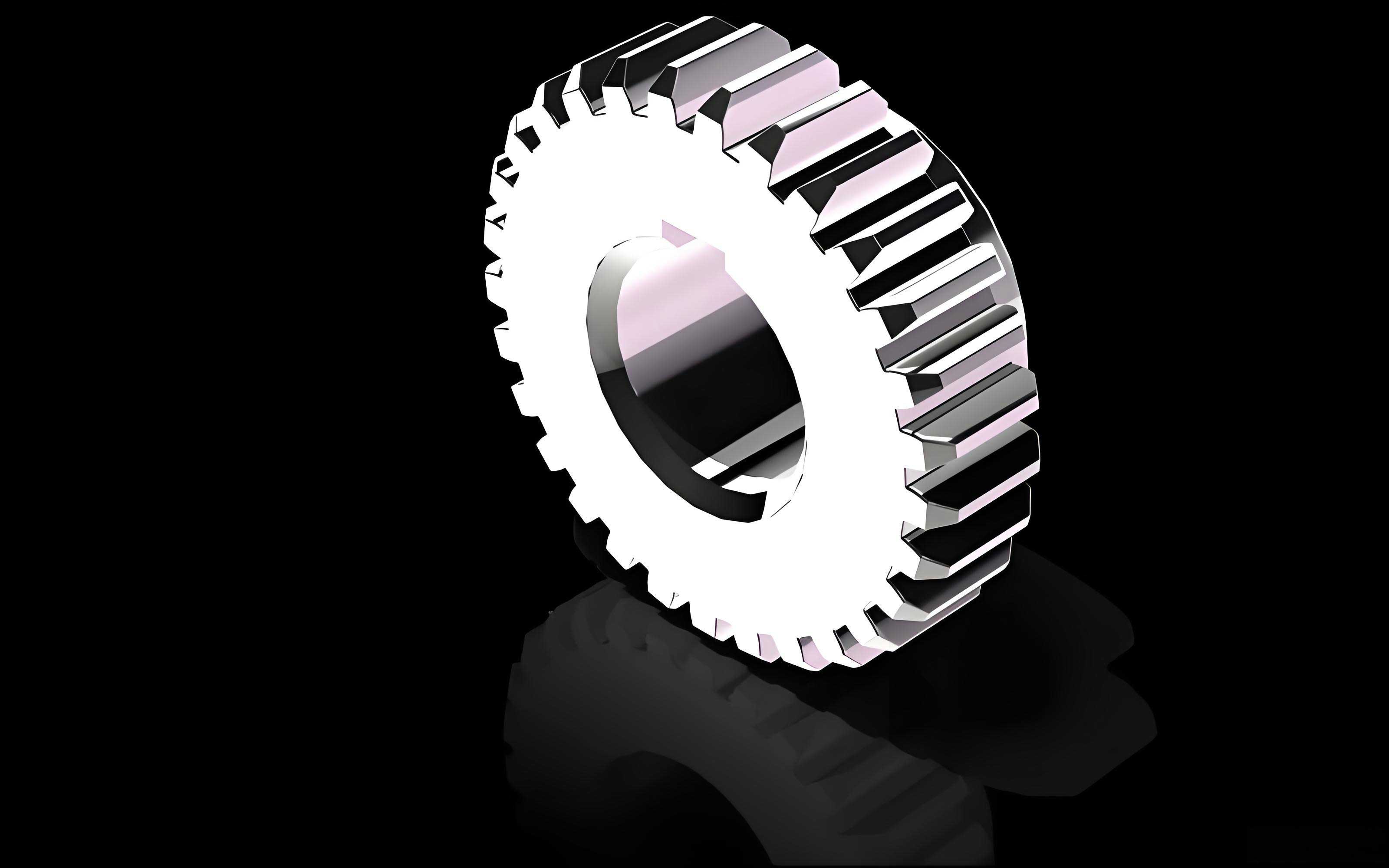
Involute spur gears are characterized by their straight teeth which are parallel to the axis of rotation. The involute profile ensures a constant angular velocity ratio between mating gears, which is crucial for smooth power transmission. The design and analysis of these gears require a deep understanding of the contact mechanics involved when two teeth come into engagement, slide against each other, and then disengage. This contact generates complex, time-varying stress fields within the tooth body, particularly at the contact surface and the root fillet region. The primary failure modes for spur gears, such as pitting, spalling, and bending fatigue, are directly correlated to these stress histories. Consequently, a dynamic simulation that captures the entire meshing event, from initial impact to steady-state contact and separation, offers a more realistic and powerful tool for design validation compared to conventional static analyses.
The foundation of any accurate simulation is a precise geometric model. For an involute spur gear, the tooth profile is defined by the involute of a base circle. The parametric equations for an involute curve are essential for generating an accurate CAD model. The coordinates of a point on the involute can be expressed as:
$$ x = r_b (\cos(\theta) + \theta \sin(\theta)) $$
$$ y = r_b (\sin(\theta) – \theta \cos(\theta)) $$
where $r_b$ is the base radius of the spur gear and $\theta$ is the involute roll angle. By sweeping this profile along the gear face width and performing Boolean operations to create the complete gear body, a highly accurate three-dimensional model of the spur gear is created. This parametric approach allows for easy modification of gear geometry (module, number of teeth, pressure angle, face width) for subsequent analyses.
| Gear Parameter | Symbol | Value (Example) |
|---|---|---|
| Number of Teeth (Pinion) | $z_1$ | 20 |
| Number of Teeth (Gear) | $z_2$ | 40 |
| Module | $m_n$ | 3 mm |
| Pressure Angle | $\alpha$ | 20° |
| Face Width | $b$ | 20 mm |
| Base Radius (Pinion) | $r_{b1}$ | $m_n z_1 \cos(\alpha)/2$ |
The material properties significantly influence the dynamic response. A common gear steel like 20CrMoH is often used. For explicit dynamic analysis, a linear elastic material model is frequently sufficient for stress analysis, though more complex elastic-plastic models can be employed for failure studies. The key properties are defined as follows. The density $\rho$ is required for inertial calculations in dynamics.
| Material Property | Symbol | Value |
|---|---|---|
| Young’s Modulus | $E$ | 210 GPa |
| Poisson’s Ratio | $\nu$ | 0.27 |
| Density | $\rho$ | 7850 kg/m³ |
Finite element discretization is a critical step. For three-dimensional analysis of spur gears, hexahedral (brick) elements are preferred over tetrahedral elements due to their superior accuracy and computational efficiency in contact problems. The SOLID164 element in LS-DYNA is a common choice for explicit dynamics. To reduce computational cost without sacrificing accuracy in the contact region, a multi-zone meshing strategy is employed. The region around the teeth, where high stress gradients are expected, is meshed with a fine, uniform grid. Areas away from the contact, such as the gear hub and web, can be meshed more coarsely. This variable mesh density must be transitioned smoothly to avoid artificial stress concentrations. The following guidelines are crucial for mesh generation: avoid excessively distorted (high aspect ratio) elements, strive for gradual changes in element size, and minimize the number of overly small elements which control the stable time step in explicit analysis.
To further enhance computational efficiency, one of the spur gears (often the larger gear) can be modeled as a rigid body. In explicit dynamics, a rigid body definition couples all nodes within that part to its center of mass, reducing the degrees of freedom from potentially millions to just six (three translations and three rotations). This drastically reduces solution time while having a negligible effect on the contact stress results on the deformable mating gear. The rigid body must be assigned realistic mass and inertia properties based on its geometry and material density.
The heart of the spur gear simulation is the definition of contact. The interaction between the teeth of the pinion and the gear is a surface-to-surface contact condition. An automatic surface-to-surface contact algorithm in LS-DYNA is typically used, which efficiently detects and enforces contact constraints. The contact definition requires specifying several parameters:
| Contact Parameter | Description | Typical Value / Setting |
|---|---|---|
| Contact Type | Automatic Surface-to-Surface | ASTS |
| Static Friction Coefficient | $\mu_s$ | 0.10 – 0.15 |
| Dynamic Friction Coefficient | $\mu_d$ | 0.05 – 0.10 |
| Contact Stiffness Factor | Scale factor for penalty stiffness | 0.1 – 1.0 (Default often works) |
The penalty method is commonly used, where a spring stiffness is applied to prevent penetration. The choice of contact stiffness is a balance; too high a value can lead to numerical instability and excessive high-frequency noise, while too low a value allows for unacceptable penetration. Friction, modeled using a simple Coulomb model, adds to the realism by accounting for the sliding component of the tooth contact.
Realistic boundary conditions and loads are applied to simulate the operating conditions of the spur gear pair. The pinion (driver) is typically assigned a rotational velocity $\omega$ about its axis. A more realistic loading scenario involves applying a torque $T$ to the pinion and a resisting torque (or a moment of inertia with damping) to the driven gear. The torques can be applied as functions of time using load curves. For example, to simulate a gradual start-up, the driving torque can be ramped up over a short period:
$$ T(t) = T_{max} \cdot \min(1, t/t_{ramp}) $$
where $T_{max}$ is the nominal operating torque and $t_{ramp}$ is the ramp duration. The rotational degrees of freedom for both gears about their axes are typically left free to allow rotation under the applied torques. All translational degrees of freedom at the bore of each gear are constrained to simulate mounting on a rigid shaft.
The explicit dynamic solution requires careful control of time integration parameters. The analysis time $t_{total}$ must be long enough to capture several mesh cycles for a spur gear pair to observe periodic behavior, but is often first studied for a single engagement. A common rule is $t_{total} \ge 60 / (n \cdot z)$, where $n$ is the rotational speed in RPM and $z$ is the number of teeth, to cover one full revolution of the slower gear. However, for a focused study on the contact event, a shorter time covering the engagement of one tooth pair is sufficient. The explicit central difference method is conditionally stable, requiring a time step $\Delta t$ smaller than the Courant-Friedrichs-Lewy (CFL) condition:
$$ \Delta t \le \frac{L_{min}}{c_d} $$
where $L_{min}$ is the smallest element dimension in the model and $c_d$ is the dilatational wave speed of the material, $c_d = \sqrt{\frac{E}{\rho}}$. LS-DYNA calculates this stable time step automatically. Output is requested at intervals $\Delta t_{output}$ to capture the stress history, often requiring hundreds to thousands of output states for a smooth animation and plot.
The primary result of interest is the evolution of contact stress, typically represented by the von Mises equivalent stress $\sigma_{vm}$, which is effective for predicting yield initiation in ductile materials like gear steel. The von Mises stress is calculated as:
$$ \sigma_{vm} = \sqrt{ \frac{(\sigma_{11}-\sigma_{22})^2 + (\sigma_{22}-\sigma_{33})^2 + (\sigma_{33}-\sigma_{11})^2 + 6(\sigma_{12}^2+\sigma_{23}^2+\sigma_{31}^2)}{2} } $$
The analysis reveals a highly transient stress field. A key observation is the presence of a significant stress peak at the very instant of tooth engagement. This is the impact load caused by the finite stiffness of the gear teeth and any theoretical profile errors or backlashes. The magnitude of this initial impact stress can be substantially higher than the nominal Hertzian contact stress calculated under steady-state assumptions. Following this initial spike, the stress drops as the teeth elastically rebound and settle into a more stable contact condition. A second, slightly lower peak often occurs near the pitch point or just before the single-tooth pair contact region ends, corresponding to the point of maximum load sharing or specific contact conditions. The following table illustrates a hypothetical stress history for a node at the contact surface.
| Simulation Time (s) | Meshing Phase | Max $\sigma_{vm}$ on Tooth (MPa) |
|---|---|---|
| 0.00000 | Pre-contact | ~0 |
| 0.00005 | Initial Impact | 833 |
| 0.00010 | Post-Impact Settling | 181 |
| 0.00015 | Mid-engagement Peak | 853 |
| 0.00025 | Towards Disengagement | 420 |
Beyond the surface contact stresses, the dynamic simulation provides critical insight into the root bending stress history, which is vital for assessing bending fatigue risk. By tracking the stress components (bending $\sigma_x$, compressive $\sigma_y$, shear $\tau_{xy}$) at the critical root fillet over time, one can construct a complete stress-time history for fatigue life prediction. The dynamic analysis often shows that the maximum root stress does not necessarily coincide with the point of maximum applied load at the tooth tip, as static analysis assumes, but is influenced by dynamic amplification and the precise location of the load vector during the roll. Furthermore, due to symmetry and load sharing, the stress histories in the fillets on the leading and trailing sides of a spur gear tooth are often mirror images, albeit with slightly different magnitudes due to the sliding friction direction.
The dynamic contact simulation also allows for the visualization and quantification of the contact patch. Unlike the theoretical line contact for spur gears, under load, the contact spreads into an elliptical area due to elastic deformation. The size and pressure distribution within this contact ellipse change dynamically as the point of contact moves from the root towards the tip of the tooth. The maximum contact pressure $p_0$ can be compared to the classical Hertzian contact pressure formula for two parallel cylinders:
$$ p_0 = \sqrt{\frac{F E^*}{\pi b R^*}} $$
where $F$ is the normal load per unit face width $b$, $E^*$ is the equivalent elastic modulus $\left(\frac{1}{E^*}=\frac{1-\nu_1^2}{E_1}+\frac{1-\nu_2^2}{E_2}\right)$, and $R^*$ is the equivalent radius of curvature $\left(\frac{1}{R^*}=\frac{1}{R_1}\pm\frac{1}{R_2}\right)$, which varies continuously during the mesh cycle for a spur gear pair.
In conclusion, the dynamic contact simulation of an involute spur gear pair using explicit finite element methods offers a powerful and detailed view into the complex, transient stress states that govern gear performance and durability. This methodology moves beyond the limitations of static analysis by explicitly capturing critical phenomena such as engagement impact loads, dynamic load sharing between tooth pairs, and the continuous evolution of contact and root stresses throughout the meshing cycle. The ability to model these effects provides engineers with a more reliable tool for optimizing spur gear geometry, selecting appropriate materials and heat treatments, and predicting failure modes under realistic operating conditions. The insights gained, particularly regarding the magnitude and location of stress peaks that are often underestimated by traditional methods, are invaluable for the design of more efficient, quieter, and longer-lasting spur gear transmissions. The process, from parametric modeling and careful meshing to the selection of contact algorithms and dynamic boundary conditions, establishes a robust framework for the virtual prototyping and validation of spur gear designs across a wide range of industries.