
The pursuit of precision, efficiency, and longevity in power transmission systems has consistently driven innovation in gear design. Among the critical factors affecting the dynamic performance and acoustic signature of gear drives, backlash—the clearance between mating teeth—plays a pivotal role. While necessary to prevent jamming due to thermal expansion or lubrication films, excessive backlash, often resulting from wear in standard spur gears, leads to increased noise, vibration, and dynamic loads, ultimately accelerating failure. My research focuses on a novel design paradigm for an involute beveloid gear, which I term the “Mobile Base Circle Beveloid Gear.” This design offers a fundamentally different approach to generating a tapered tooth thickness compared to conventional profile-shifted beveloid gears, aiming to provide effective and interference-free backlash adjustment to mitigate these adverse dynamic effects.
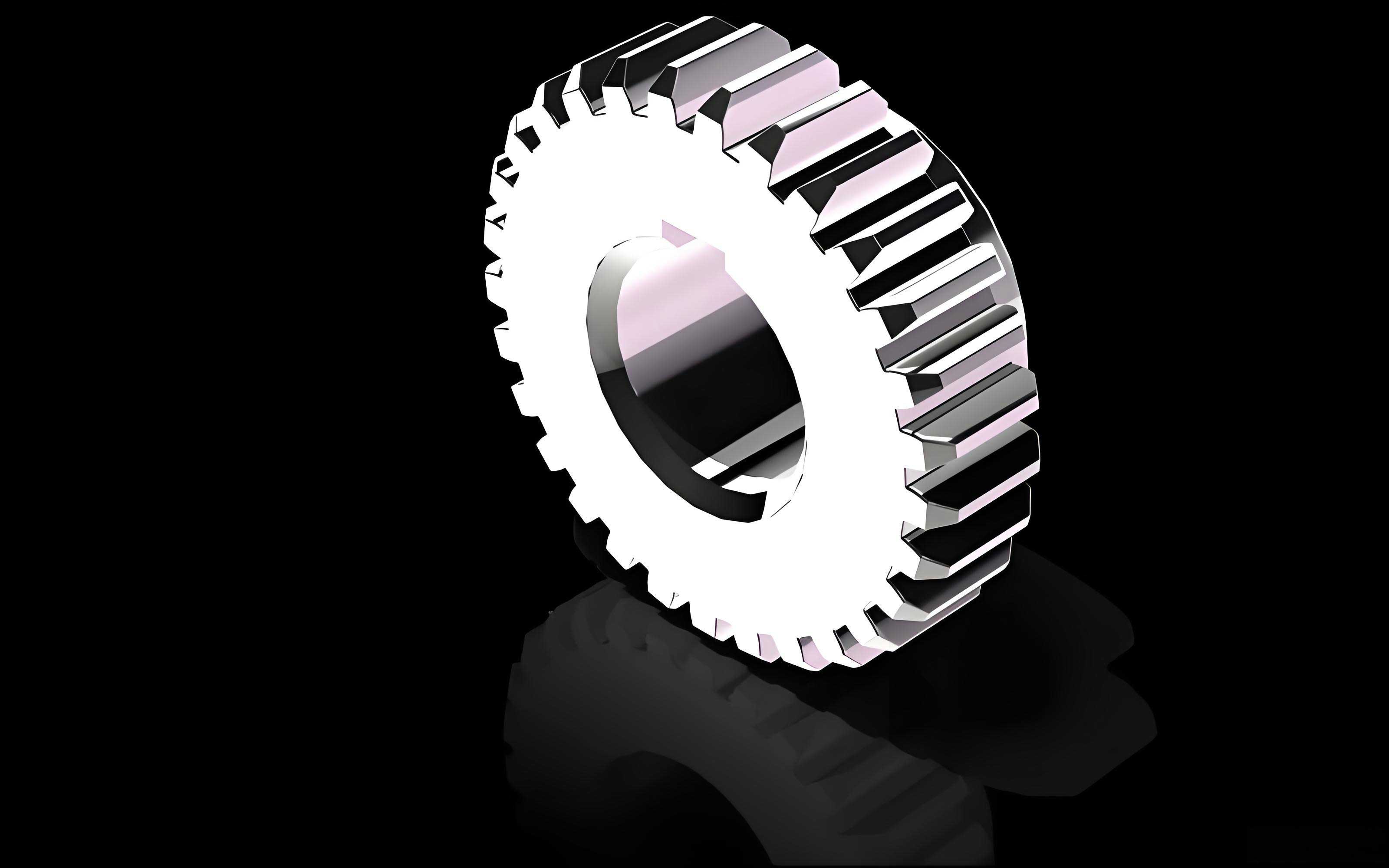
Conventional beveloid or conical involute gears are typically generated by applying a linearly variable profile shift coefficient along the face width. This method, while effective, introduces a geometric consequence: the diameters of the tip and root circles vary across different transverse sections. During axial adjustment for backlash compensation, this variation can potentially lead to interference at the ends of the teeth, limiting the full range of adjustment. The proposed mobile base circle spur gear circumvents this issue by maintaining a constant base cylinder radius. The core geometric principle involves systematically shifting the position of the base circle’s center along the gear’s axis, causing its axis to form a specific angle with the gear’s own axis of rotation. This shift alters the starting point of the involute curve on each transverse section, thereby creating a conical tooth form without altering the fundamental tooth profile parameters like module or pressure angle across the face width. This inherent geometric consistency promises a theoretically interference-free axial adjustment capability.
The fundamental machining principle for this mobile base circle spur gear can be visualized using a rack cutter. In the standard generation of a spur gear, the pitch plane of the rack cutter is tangent to the pitch cylinder of the gear blank, and their relative motion is a pure rolling motion. To generate the proposed gear, after positioning, the rack cutter is tilted by a small angle $\theta$—the “thickness variation angle”—around an axis parallel to its pitch line and perpendicular to the gear axis, within its own pitch plane. Despite this tilt, the essential relative rolling motion between the gear blank’s pitch circle and the rack’s pitch plane is preserved. According to the theory of gear generation, the tooth surface of the mobile base circle spur gear is the envelope of the family of rack cutter surfaces under this modified kinematic relationship. The mathematical formulation begins with the coordinate system. Let $O-XYZ$ be a fixed coordinate system where the gear’s axis coincides with the Z-axis. The rack cutter surface in its standard position is defined. After tilting by angle $\theta$ about the X-axis, its surface equation in the fixed system becomes $\mathbf{r}_r^{(f)}(u, v, \theta)$. The generation motion introduces the rotation of the gear blank $\phi$ and the translation of the rack $s = r_p \phi$, where $r_p$ is the pitch radius. The family of rack surfaces is then given by transforming $\mathbf{r}_r^{(f)}$ through this motion. The meshing equation, derived from the condition of continuous tangency, is $\mathbf{n} \cdot \mathbf{v}^{(rf)} = 0$, where $\mathbf{n}$ is the normal to the rack surface and $\mathbf{v}^{(rf)}$ is the relative velocity. Solving this equation in conjunction with the transformed surface family yields the precise mathematical model of the gear tooth surface, $\mathbf{r}_g(\phi, u)$.
To facilitate dynamic analysis, an accurate three-dimensional solid model is indispensable. I employed parametric modeling techniques in Pro/Engineer to construct the mobile base circle spur gear pair. The parameters for the model are summarized in the table below. It is crucial to note that the base circle radius $r_b = r_p \cos\alpha$ remains constant along the face width, but the locus of its center is offset.
| Component | Module, $m$ (mm) | Number of Teeth, $z$ | Pressure Angle, $\alpha$ (°) | Thickness Variation Angle, $\theta$ (°) | Face Width, $b$ (mm) |
|---|---|---|---|---|---|
| Pinion (Driver) | 2 | 25 | 20 | 1.0 | 10 |
| Gear (Driven) | 2 | 50 | 20 | 1.0 | 10 |
The modeling process involved defining these parameters, generating the base curve (involute) for a reference transverse plane, and using advanced blending and protrusion operations along the axis while accounting for the calculated shift in the base circle center. This results in a precise solid model where the tooth thickness varies linearly from one end to the other. For comparative analysis, an equivalent standard spur gear model with identical module, tooth numbers, pressure angle, and face width was also created.
The transition from geometric model to dynamic simulation was achieved by exporting the Pro/E assembly in a neutral format (like STEP or Parasolid) and importing it into the Adams/View multibody dynamics environment. In Adams, materials were assigned (steel, with density $\rho = 7.8e-6$ kg/mm³, Young’s modulus $E = 2.07e5$ N/mm², Poisson’s ratio $\nu = 0.29$), and appropriate constraints were applied: a revolute joint between the pinion and ground, a revolute joint between the gear and ground, and a contact force between the gear teeth. The critical component of the simulation is the definition of the tooth-to-tooth contact force. I selected the Impact function model in Adams, which computes the force based on a spring-damper representation of the collision. The general form of the force $F$ is:
$$ F = \begin{cases}
K \cdot \delta^e + C(\delta) \cdot \dot{\delta}, & \text{if } \delta > 0 \\
0, & \text{if } \delta \le 0
\end{cases} $$
where $\delta = x_1 – x$ is the penetration depth (positive when surfaces overlap), $x_1$ is the reference separation distance (initial gap or backlash), $x$ is the actual distance, $\dot{\delta}$ is the penetration velocity, $K$ is the contact stiffness, $e$ is the force exponent (typically >1 for metals), and $C(\delta)$ is a step damping function that activates only during penetration to avoid numerical instability. The stiffness coefficient $K$ is derived from Hertzian contact theory for two cylinders in line contact. For gear teeth, a local approximation using the radii of curvature at the potential contact point is valid. Near the pitch point, these radii can be approximated by the pitch radii for initial estimation. The formula is:
$$ K = \frac{4}{3} E^* \sqrt{R^*} $$
where $E^*$ is the equivalent Young’s modulus and $R^*$ is the equivalent radius of curvature.
$$ \frac{1}{E^*} = \frac{1-\nu_1^2}{E_1} + \frac{1-\nu_2^2}{E_2} $$
$$ \frac{1}{R^*} = \frac{1}{R_1} + \frac{1}{R_2} $$
For the pinion and gear at the pitch point: $R_1 = r_{p1} \sin\alpha = (m z_1 / 2) \sin\alpha = 8.55$ mm, $R_2 = r_{p2} \sin\alpha = (m z_2 / 2) \sin\alpha = 17.10$ mm. With $E_1=E_2=2.07e5$ N/mm² and $\nu_1=\nu_2=0.29$, we calculate $E^* = 1.139e5$ N/mm² and $R^* = 5.70$ mm. Substituting into the stiffness formula yields:
$$ K = \frac{4}{3} \times 1.139 \times 10^5 \times \sqrt{5.70} \approx 6.15 \times 10^5 \text{ N/mm} $$
This calculated stiffness value was used directly in the Impact function. Other contact parameters were set based on empirical data and simulation stability requirements: force exponent $e = 1.5$, maximum damping coefficient $C_{max} = 50$ N·s/mm, penetration depth for full damping $d = 0.1$ mm. Friction was considered with a static coefficient of 0.08, dynamic coefficient of 0.05, and appropriate stiction transition velocities. For the standard spur gear simulation with intentional backlash, the reference separation distance $x_1$ in the contact definition was set to 0.5 mm to model a worn condition.
The simulation driving and loading conditions were carefully defined to reflect a realistic scenario. A rotational velocity driver was applied to the pinion shaft. To avoid an instantaneous acceleration shock at time zero, a smooth step function was used: $\omega(t) = \text{STEP}(time, 0, 0, 0.1, 1050)$ rev/s. This brings the pinion from rest to 1050 rev/s (or 6300 deg/s) over 0.1 seconds. A constant resistive torque of $2 \times 10^5$ N·mm was applied to the output gear shaft. The simulation was run for 0.3 seconds with a fixed integration step size of 0.001 seconds using the GSTIFF solver to ensure accuracy in capturing the high-frequency contact events.
The primary output of interest is the meshing force—the contact force transmitted between the interacting teeth of the pinion and gear. For the mobile base circle spur gear pair with theoretically zero initial backlash due to axial pre-adjustment, the dynamic meshing force profile shows distinct characteristics. The force oscillates around a mean value corresponding to the transmitted load, with fluctuations caused by the time-varying mesh stiffness as the number of tooth pairs in contact changes from one to two (or vice versa) and due to slight geometric excitations. The amplitude of these oscillations is relatively contained. The rotational speed of the driven gear stabilized at approximately 3150.09 deg/s, which is extremely close to the theoretical value of 3150 deg/s ($\omega_{out} = \omega_{in} \times (z_1/z_2)$), confirming stable and accurate kinematic transmission.
In stark contrast, the simulation of the standard spur gear with 0.5 mm of modeled backlash reveals a severely degraded dynamic performance. The meshing force profile is characterized by large, sharp impulse spikes. These occur when a driving tooth impacts the flank of the driven tooth after traversing the backlash clearance. The peak forces are significantly higher—often several times greater—than the steady-state force levels observed in the adjusted mobile base circle spur gear simulation. This is a direct consequence of the impact velocity developed across the gap. Furthermore, the transmission of motion is noisier in a computational sense, with higher frequency content visible in the force signal. The driven gear’s speed also exhibits more pronounced ripple, though its average remains near the theoretical value.
| Performance Indicator | Mobile Base Circle Spur Gear (Adjusted) | Standard Spur Gear (0.5 mm Backlash) |
|---|---|---|
| Mean Meshing Force (N) | ~2000 (matches static load) | ~2000 (matches static load) |
| Peak-to-Peak Force Amplitude (N) | Low to Moderate | Very High (Impact spikes) |
| Force Signal Character | Relatively smooth, stiffness variation dominated | Highly impulsive, impact dominated |
| Output Speed Stability | High (Low ripple) | Low (Visible ripple) |
| Primary Excitation Source | Mesh stiffness variation, minor geometric error | Backlash-induced impacts |
The implications of these results are significant for the design of high-performance spur gear transmissions. The backlash in a standard spur gear, while initially small, inevitably increases due to wear during operation. This wear-induced backlash initiates a vicious cycle: impacts increase dynamic loads, which accelerate wear, which further increases backlash and dynamic loads. The mobile base circle spur gear, with its capacity for precise, interference-free axial adjustment, offers a mechanism to break this cycle. By periodically or continuously adjusting the axial position of one gear relative to its mate, the effective backlash can be maintained at or near zero throughout the system’s operational life. My dynamic simulation confirms that this state of near-zero backlash fundamentally alters the excitation mechanism from detrimental impact-dominated dynamics to the more benign and predictable dynamics governed by mesh stiffness variation.
Further analytical insight can be gained by considering a simplified single-degree-of-freedom torsional model of a gear pair with backlash. The equation of motion is highly nonlinear due to the piecewise nature of the contact. For a spur gear pair with backlash $2b$, the dynamic transmission error $\xi = r_{b1}\theta_1 – r_{b2}\theta_2$ relative to the static transmission error $e(t)$ governs contact:
$$ I_{eq} \ddot{\xi} + c \dot{\xi} + k(t) g(\xi, b) = F_{m} + \Delta F(t) $$
where $I_{eq}$ is the equivalent mass moment of inertia, $c$ is damping, $k(t)$ is the time-varying mesh stiffness, $F_m$ is the mean force, and $\Delta F(t)$ is the fluctuating force. The nonlinear displacement function $g(\xi, b)$ is:
$$ g(\xi, b) = \begin{cases}
\xi – b, & \text{if } \xi > b \\
0, & \text{if } -b \le \xi \le b \\
\xi + b, & \text{if } \xi < -b
\end{cases} $$
This nonlinearity is the source of sub-harmonics and chaotic behavior in systems with significant backlash. In the adjusted mobile base circle spur gear, the functional backlash $b$ can be reduced to a minimal value, effectively linearizing the function $g(\xi, b) \approx \xi$, thereby eliminating this major source of nonlinear excitation. The dominant remaining excitation is the parametric excitation from $k(t)$, which is an inherent property of spur gear meshing but is generally less severe than impact excitation.
In conclusion, my investigation into the mobile base circle spur gear, from its foundational geometry and machining principle to its detailed dynamic simulation, demonstrates a compelling advantage over the standard spur gear in managing backlash-related dynamic issues. The ability to generate a conical tooth form through base circle translation, rather than profile shift variation, provides a geometrically clean solution for backlash adjustment. The three-dimensional modeling and subsequent multibody dynamics analysis in Adams provide quantitative evidence. The meshing force characteristics of the adjusted novel spur gear are markedly superior to those of a worn standard spur gear with equivalent backlash, showing significantly lower impact forces and more stable motion transmission. This validates the core hypothesis that proactive backlash management via the axial adjustment of this gear design can effectively suppress detrimental dynamic excitations, leading to smoother operation, reduced noise and vibration, and potentially extended service life for spur gear transmissions operating under demanding conditions. Future work will involve experimental validation, optimization of the thickness variation angle $\theta$ for different load cases, and extension of the analysis to include the effects of system flexibility and housing dynamics.