
In the field of precision mechanical transmission systems, the planetary roller screw assembly stands out as a critical component due to its high load capacity, accuracy, and reliability. As a researcher deeply involved in the study of these mechanisms, I have focused on understanding the intricate dynamics of their simultaneous thread and gear meshing. This article presents a comprehensive analysis of the dynamic sliding characteristics inherent in the planetary roller screw assembly, particularly emphasizing the synchronous engagement of thread pairs and gear pairs. The planetary roller screw assembly’s performance is heavily influenced by sliding phenomena, which affect efficiency, wear, and overall lifespan. Through kinematic modeling and numerical simulation, I aim to elucidate how operating conditions like screw speed and nut load impact sliding angles and distances, providing insights that can guide design optimization for various applications in aerospace, robotics, and industrial machinery.
The planetary roller screw assembly consists of several key components: a central screw, multiple rollers, a nut, an internal gear ring, and a retainer. In operation, the screw rotates and drives the rollers via threaded engagement. These rollers, in turn, transmit motion to the nut through their threads while simultaneously meshing with the internal gear ring to maintain proper alignment. This dual meshing—thread pairs and gear pairs—creates a complex interaction where sliding can occur, especially due to deformations under load. Understanding these dynamics is essential for improving the planetary roller screw assembly’s efficiency and durability. Previous studies have highlighted the presence of sliding in thread contacts, but a holistic view of the synchronous meshing process remains underexplored. In my research, I address this gap by developing a kinematic model for the sliding angle and employing finite element analysis to simulate dynamic behavior.
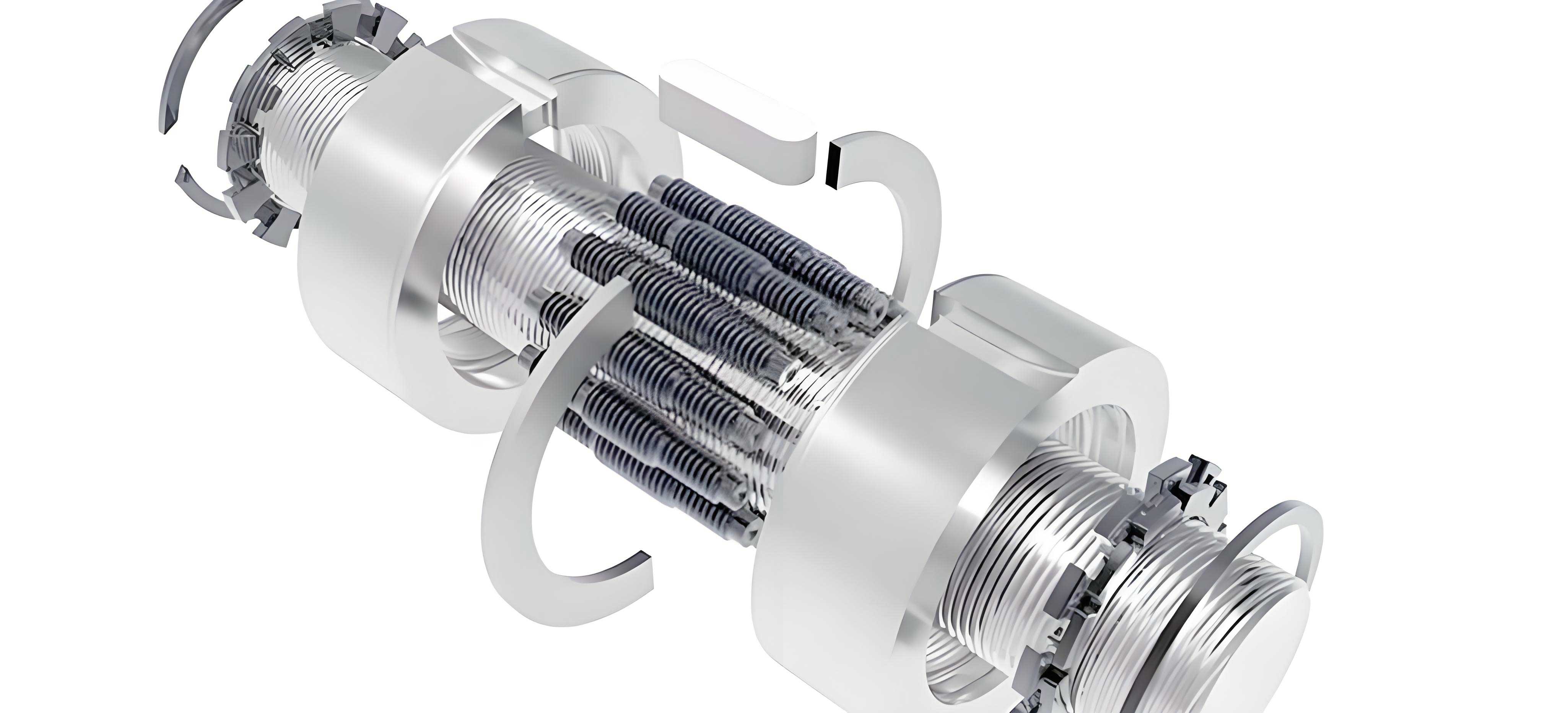
At the core of the sliding behavior in a planetary roller screw assembly is the concept of pitch circle offset. Under ideal conditions, the pitch circle radius of the roller threads matches that of the roller gears. However, when the planetary roller screw assembly is subjected to load, radial forces from the screw and nut compress the roller threads, causing a radial deformation. This results in a mismatch where the thread pitch circle radius, denoted as $r_R$, becomes smaller than the gear pitch circle radius, $G_R$. This offset is crucial because it introduces relative sliding between the rollers and the nut during meshing. To quantify this, I derived a kinematic model for the sliding angle, $\theta_{\text{slip}}$, which represents the angular difference between the roller gear’s rotation and the roller thread’s pure rolling rotation when the screw rotates.
The derivation begins with the geometry of the planetary roller screw assembly. When the screw rotates by an angle $\theta_S$, the roller undergoes a planetary motion. The rotation angle of the roller axis relative to the screw axis, $\theta_r$, is related to the roller’s orbital angle, $\theta_R$, by the gear ratios. Based on the principle of no sliding at the roller-screw thread contact under ideal assumptions, the relationship can be expressed as:
$$ \theta_r = \frac{G_N – G_R}{G_R} \theta_R $$
where $G_N$ is the pitch circle radius of the internal gear. For the roller-screw side, assuming pure rolling, the orbital angle is:
$$ \theta_R = \frac{r_S}{2(r_S + r_R)} \theta_S $$
with $r_S$ as the nominal screw radius. The pure rolling rotation angle of the roller thread, $\theta_{HR}$, and the roller gear rotation angle, $\theta_{GR}$, are then:
$$ \theta_{HR} = \frac{r_R}{r_N – r_R} \theta_r $$
$$ \theta_{GR} = \frac{G_R}{G_N – G_R} \theta_r $$
where $r_N$ is the nut thread pitch radius. The sliding angle is the difference:
$$ \theta_{\text{slip}} = \theta_{GR} – \theta_{HR} $$
Combining these equations yields the sliding angle formula for the planetary roller screw assembly:
$$ \theta_{\text{slip}} = \left(1 – \frac{r_R}{G_R}\right) \frac{r_S G_R}{r_S G_R + r_R G_N} \theta_S $$
This equation highlights that the sliding angle depends on the pitch circle mismatch and the screw rotation. In practice, $r_R$ decreases under load, increasing the sliding angle. This model forms the basis for analyzing the dynamic sliding characteristics of the planetary roller screw assembly.
To validate this kinematic model and explore the planetary roller screw assembly’s behavior under various conditions, I developed a numerical finite element model. Given the symmetry of the planetary roller screw assembly, I simplified the geometry to include three evenly distributed rollers, each with five thread teeth, along with the screw, nut, internal gear ring, and retainer. This reduction saves computational time while capturing essential dynamics. The material properties and boundary conditions were set to mimic real-world operation: a rotational joint on the screw, a translational joint on the nut, and appropriate constraints on the rollers and retainer. Loads and speeds were applied to simulate different working scenarios.
The parameters for the thread pairs and gear pairs in my planetary roller screw assembly model are summarized in the tables below. These values are typical for standard planetary roller screw assemblies and ensure realistic simulations.
| Parameter | Value |
|---|---|
| Screw thread pitch diameter, $d_S$ (mm) | 44 |
| Number of thread starts, $n$ | 6 |
| Pitch, $p$ (mm) | 2 |
| Helix angle, $\lambda$ (°) | 4.962 |
| Thread flank angle, $\beta$ (°) | 45 |
| Roller thread pitch diameter, $d_R$ (mm) | 11 |
| Number of roller thread teeth | 5 |
| Nut thread pitch diameter, $d_N$ (mm) | 66 |
| Arc tooth profile radius, $\rho_a$ (mm) | 7.778 |
| Parameter | Value |
|---|---|
| Module, $m$ (mm) | 0.55 |
| Number of roller gear teeth | 20 |
| Pressure angle, $\alpha$ (°) | 37.5 |
| Roller gear addendum diameter (mm) | 10 |
| Roller gear dedendum diameter (mm) | 8.73 |
| Fillet radius (mm) | 0.1 |
| Number of internal gear teeth | 120 |
| Internal gear addendum diameter (mm) | 64 |
| Internal gear dedendum diameter (mm) | 65.27 |
Using this numerical model of the planetary roller screw assembly, I simulated cases with a constant nut load of 5 kN and screw angular velocities of 10, 20, and 30 rad/s over 0.02 seconds. The pure rolling angles of the roller threads were extracted from the simulations and compared with the kinematic model predictions. The results showed close agreement, with relative errors below 6%, confirming the accuracy of the sliding angle calculation for the planetary roller screw assembly. This validation step is crucial for trusting subsequent analyses of dynamic sliding characteristics.
With the model verified, I investigated how the sliding angle in the planetary roller screw assembly varies with screw speed and nut load. For a fixed load of 5 kN, as the screw speed increased from 10 to 30 rad/s, the sliding angle grew from 0.017° to 0.054°. To better understand the trend, I calculated the sliding angle as a percentage of the roller gear rotation angle, which increased from 0.37% to 0.39%. This indicates that higher speeds exacerbate sliding in the planetary roller screw assembly, albeit modestly. The increase occurs because faster rotation amplifies the effects of pitch circle mismatch, leading to greater relative motion between the roller threads and the nut.
Next, I examined the impact of nut load on the sliding angle in the planetary roller screw assembly. With the screw speed held at 30 rad/s, increasing the nut load from 5 kN to 7 kN raised the sliding angle from 0.054° to 0.071°. This rise is attributed to enhanced radial deformation of the roller threads under higher loads, which enlarges the pitch circle offset. The relationship can be expressed as a function of load-induced deformation, but for simplicity, the trend highlights that heavier loads intensify sliding in the planetary roller screw assembly. This has direct implications for friction and wear, as a larger sliding angle corresponds to higher relative velocities at contact points, potentially reducing transmission efficiency.
To further quantify sliding in the planetary roller screw assembly, I analyzed sliding distances across the thread pairs and gear pairs. Sliding distance refers to the linear displacement due to relative motion between contacting surfaces. From the numerical simulations, I extracted contour plots and dynamic curves of sliding distances under various conditions. For instance, with a nut load of 5 kN and screw speed of 30 rad/s, the sliding distance on the roller-screw side was distributed along the thread helix, with a maximum value of approximately 0.167 mm near the first engaged thread tooth. In contrast, the roller-nut side showed a more uniform distribution with a maximum of only 0.018 mm, consistent with the notion that this side experiences primarily rolling contact in the planetary roller screw assembly. The gear pair exhibited sliding distances concentrated near the thread-side root of the gears, peaking at around 0.117 mm.
The dynamic sliding distance curves revealed initial fluctuations due to engagement clearances, followed by stabilization. For the roller-screw side, the steady-state mean sliding distance was 0.1698 mm, while for the roller-nut side, it was 0.0176 mm. The gear pair stabilized at 0.117 mm, indicating a mix of rolling and sliding in the planetary roller screw assembly’s gear meshing. These values underscore that the roller-screw thread contact is the primary site of sliding, which aligns with the kinematic model’s predictions.
I then explored how screw speed influences sliding distances in the planetary roller screw assembly. Keeping the nut load at 5 kN, I varied the screw speed from 10 to 30 rad/s. The results are summarized in the table below, showing steady-state mean sliding distances for each component.
| Screw Speed (rad/s) | Roller-Screw Side Sliding Distance (mm) | Roller-Nut Side Sliding Distance (mm) | Gear Pair Sliding Distance (mm) |
|---|---|---|---|
| 10 | 0.1484 | 0.0157 | 0.1490 |
| 20 | 0.1591 | 0.0165 | 0.1332 |
| 30 | 0.1698 | 0.0176 | 0.1170 |
As seen, increasing screw speed raises the sliding distances on both thread sides in the planetary roller screw assembly. For the roller-screw side, it went from 0.1484 mm to 0.1698 mm; for the roller-nut side, from 0.0157 mm to 0.0176 mm. This increase is due to higher relative velocities at the contacts. Interestingly, the gear pair sliding distance decreased from 0.149 mm to 0.117 mm. This inverse trend might stem from altered meshing frequencies or load distribution; as the screw speeds up, the gear engagement may shift toward more rolling, reducing sliding. This interplay highlights the complexity of synchronous meshing in the planetary roller screw assembly.
Similarly, I assessed the effect of nut load on sliding distances in the planetary roller screw assembly, with screw speed fixed at 30 rad/s. The findings are presented in the following table.
| Nut Load (kN) | Roller-Screw Side Sliding Distance (mm) | Roller-Nut Side Sliding Distance (mm) | Gear Pair Sliding Distance (mm) |
|---|---|---|---|
| 5 | 0.1698 | 0.0178 | 0.1170 |
| 6 | 0.1872 | 0.0185 | 0.1285 |
| 7 | 0.2043 | 0.0193 | 0.1390 |
Higher nut loads consistently increased sliding distances across all components of the planetary roller screw assembly. The roller-screw side saw a jump from 0.1698 mm to 0.2043 mm, the roller-nut side from 0.0178 mm to 0.0193 mm, and the gear pair from 0.117 mm to 0.139 mm. This uniform rise is expected because greater loads amplify contact deformations and frictional forces, promoting more sliding. The initial fluctuations in the dynamic curves also became more pronounced with load, indicating sharper engagement impacts in the planetary roller screw assembly.
The implications of these findings for the planetary roller screw assembly are significant. The sliding angle and sliding distances directly influence wear rates and energy losses. For instance, a larger sliding angle at higher speeds or loads means increased relative sliding velocities at the roller-nut interface, which can accelerate wear and reduce the efficiency of the planetary roller screw assembly. The substantial sliding on the roller-screw side suggests that this area is prone to wear and may benefit from surface treatments or lubrication optimization. Conversely, the minimal sliding on the roller-nut side affirms its predominantly rolling nature, contributing to the planetary roller screw assembly’s high efficiency. The gear pair’s sliding behavior, which decreases with speed but increases with load, points to a trade-off in operating conditions; designers of planetary roller screw assemblies might consider this when selecting parameters for specific applications.
From a design perspective, mitigating sliding in the planetary roller screw assembly could enhance performance. Strategies might include optimizing thread profiles to reduce pitch circle offset, using materials with lower deformation under load, or implementing preload adjustments. The kinematic model I derived offers a tool for predicting sliding angles based on geometric and operational parameters, aiding in the proactive design of planetary roller screw assemblies. Furthermore, the numerical model can be extended to study thermal effects or fatigue life, providing a holistic view of the planetary roller screw assembly’s dynamics.
In conclusion, my investigation into the dynamic sliding characteristics of the planetary roller screw assembly reveals that sliding is an inherent aspect of its synchronous thread and gear meshing. The sliding angle, governed by pitch circle offset, increases with both screw speed and nut load, leading to higher frictional losses. Sliding distances are most pronounced on the roller-screw thread side, while the roller-nut side remains relatively low, and the gear pair exhibits intermediate values. These distances generally rise with speed and load, except for the gear pair’s distance, which decreases with speed. These insights underscore the importance of considering sliding in the design and operation of planetary roller screw assemblies to ensure longevity and efficiency. Future work could explore real-time monitoring of sliding in planetary roller screw assemblies or advanced materials to minimize its effects, further solidifying the planetary roller screw assembly’s role in high-performance mechanical systems.
Throughout this analysis, the planetary roller screw assembly has been the focal point, with its unique dual-meshing mechanism posing both challenges and opportunities. By leveraging kinematic models and finite element simulations, I have demonstrated how key parameters affect sliding, providing a foundation for optimizing the planetary roller screw assembly in various engineering contexts. As demand for precision and reliability grows, continued research into the planetary roller screw assembly will be essential, and I hope this contribution aids in that endeavor, emphasizing the critical nature of understanding and controlling sliding in these sophisticated assemblies.