
In the era of intelligent manufacturing, the soaring demand for industrial robots imposes stringent requirements on their core components, particularly regarding transmission precision, load-bearing capacity, and operational longevity. The RV reducer, a critical precision transmission component within robot joints, plays a pivotal role in determining the robot’s overall positioning accuracy, motion smoothness, and service life. Its transmission error, defined as the deviation between the actual output rotation angle and the theoretically expected angle, is a paramount performance metric. Traditionally, research has predominantly focused on the behavior of the RV reducer under constant, steady-state loads. However, real-world robotic applications—such as pick-and-place operations, machining, or assembly—often subject the reducer to complex, time-varying load profiles, including sinusoidal variations or shock-like step loads. Ignoring the influence of these variable load conditions can lead to an incomplete understanding of the RV reducer’s performance, potentially compromising the accuracy and reliability of the entire robotic system. Therefore, a comprehensive investigation into the dynamic transmission error of RV reducers under both constant and variable load conditions is essential for enhancing their design, optimizing performance, and expanding their application robustness. This analysis delves into the impact of load magnitude and loading pattern on the dynamic transmission error of an RV reducer, utilizing multi-body dynamics simulation and experimental validation to uncover underlying trends and mechanisms.
The RV reducer features a two-stage compound structure that provides high reduction ratios, compact size, and high torsional rigidity. The primary stage is a planetary gear train, and the secondary stage is a cycloid-pin gear mechanism. Power is transmitted from the input sun gear to the planetary gears. These planetary gears are connected to crankshafts, which have eccentric portions. The rotation of the crankshafts drives the cycloid discs, causing them to undergo a compounded planetary motion—rotation around their own center and revolution around the central axis. With the pin housing fixed, the motion of the cycloid discs is transferred to the output flange connected to the planet carrier, completing the speed reduction and torque amplification. The total transmission ratio \( i \) is given by:
$$ i = (1 + \frac{Z_p}{Z_s}) \times Z_h $$
where \( Z_p \) is the number of teeth on the planetary gear, \( Z_s \) is the number of teeth on the sun gear, and \( Z_h \) is the number of pins in the housing.
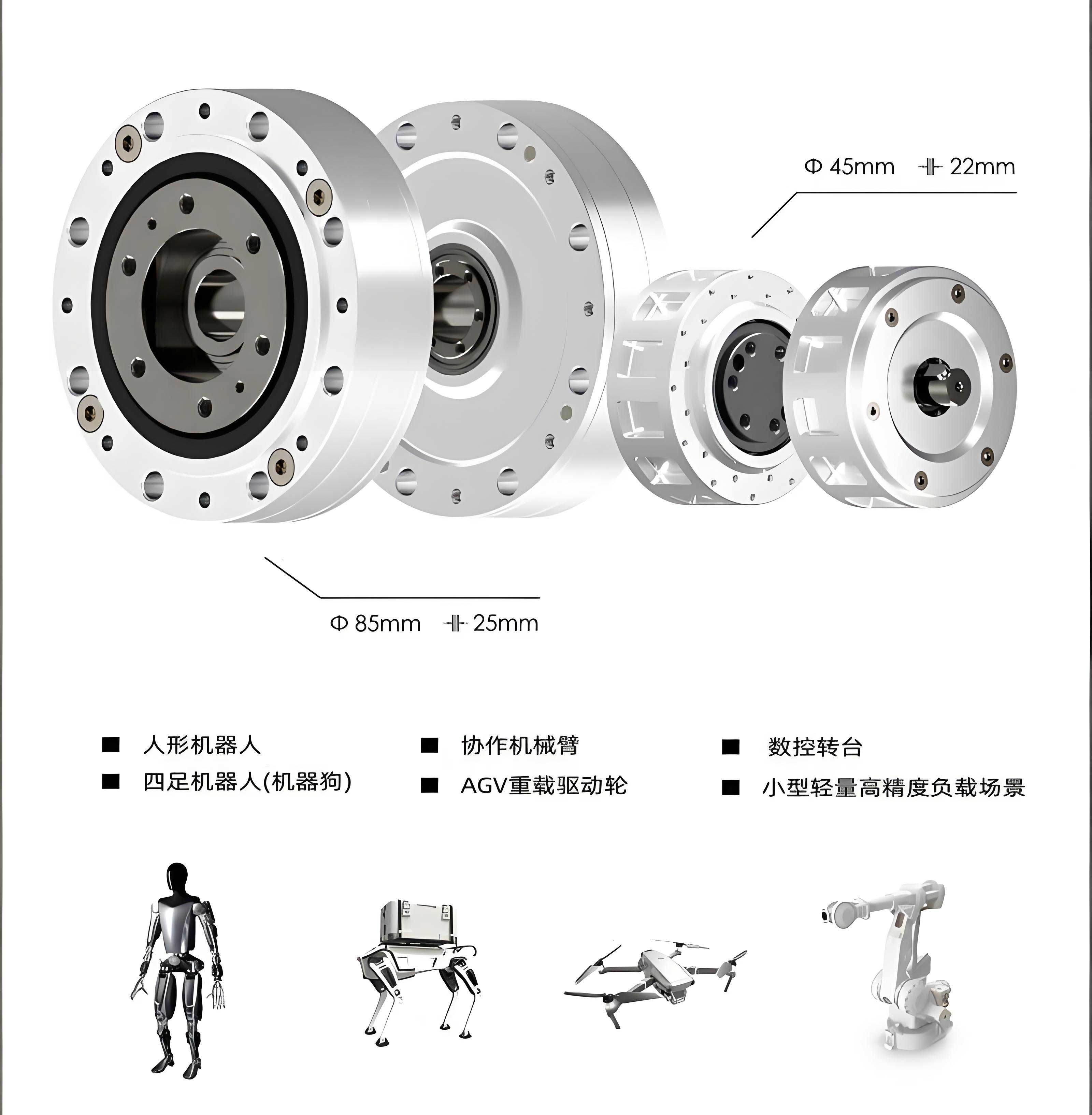
Transmission error (TE) is the fundamental measure of an RV reducer’s kinematic precision. It quantifies the instantaneous deviation from ideal motion transmission. The angular transmission error \( \Delta \phi \) is calculated as the difference between the actual output rotation \( \theta_r \) and the theoretical output rotation \( \theta_{or} \), which is the input rotation divided by the transmission ratio:
$$ \Delta \phi = \theta_r – \theta_{or} = \theta_r – \frac{\theta_s}{i} $$
A more computationally convenient form for dynamic analysis derives TE from the speed error integrated over time:
$$ \Delta \phi(t_i) = \left( \omega_{out}(t_i) – \frac{\omega_{in}(t_i)}{i} \right) \times \Delta t(t_i) $$
where \( \omega_{out}(t_i) \) is the instantaneous measured output angular velocity, \( \omega_{in}(t_i) \) is the instantaneous input angular velocity, and \( \Delta t(t_i) \) is the time interval between consecutive sampling points. This formula reveals that dynamic transmission error accumulates from the product of instantaneous velocity mismatch and time.
Multi-Body Dynamics Simulation Methodology
To analyze the dynamic transmission error of the RV reducer under various operational conditions, a detailed multi-body dynamics model was developed. The complex three-dimensional geometry of an RV-40E type reducer was simplified by removing non-essential features like small fillets, chamfers, and connecting bolts to optimize computational efficiency while preserving critical mechanical interactions. The interactions between components were defined using appropriate kinematic joints and force elements, as summarized in the table below.
| Component 1 | Component 2 | Constraint/Force Type | Purpose |
|---|---|---|---|
| Input Shaft | Ground (Frame) | Rotational Joint | Defines input rotation axis. |
| Sun Gear (Input) | Planetary Gears | Contact Force | Simulates meshing in the first stage. |
| Planetary Gears | Crankshafts | Fixed Joint | Connects planetary gear to its crankshaft. |
| Crankshafts | Output Flange | Rotational Joint | Allows crankshaft rotation relative to output. |
| Crankshafts | Cycloid Discs | Revolute Joint | Defines the eccentric driving connection. |
| Cycloid Discs | Pins (on Housing) | Contact Force | Simulates meshing in the cycloid-pin stage. |
| Pin Housing | Ground | Fixed Joint | Holds the pin housing stationary. |
| Output Flange | Ground | Rotational Joint + Torque | Defines output axis and applies load torque. |
The simulation boundary conditions were set to replicate realistic operational scenarios. A constant input speed of 7200 deg/s (120 RPM) was applied using a smooth step function to avoid start-up transients. To investigate the effects of load gradient and pattern, three distinct loading forms were applied to the output flange: Constant Load, Square Wave Load, and Sinusoidal Load. Each pattern was tested at four load gradient levels with approximate peak values of 100 N·m, 200 N·m, 300 N·m, and 400 N·m. The load application also used a step function to ramp up from zero after the initial 1-second start-up phase. The mathematical expressions for the load torques \( T_{load}(t) \) after t=1s were:
$$ \text{Constant: } T_{load}(t) = T_0 $$
$$ \text{Square Wave: } T_{load}(t) = T_0 + A_{sq} \cdot \text{sgn}(\sin(2\pi f_{sq} t)) $$
$$ \text{Sinusoidal: } T_{load}(t) = T_0 + A_{sin} \cdot \sin(2\pi f_{sin} t) $$
where \( T_0 \) is the base load (e.g., 100,000 N·mm), and \( A_{sq}, f_{sq}, A_{sin}, f_{sin} \) are the amplitude and frequency parameters for the variable components. The WSTIFF integrator with a simulation time of 7 seconds and 700 steps was used to ensure an accurate and efficient solution.
Analysis of Transmission Error Under Constant Loads
The dynamic transmission error of the RV reducer was first evaluated under constant torque loads of varying magnitudes. The results indicate a clear correlation between load and transmission error behavior. As the load increased from 100 N·m to 400 N·m, the peak-to-peak amplitude of the transmission error curve exhibited a marked increase. This positive correlation suggests that higher loads induce greater elastic deformations at the meshing interfaces (particularly in the cycloid-pin contacts) and slightly alter the contact conditions, leading to larger instantaneous kinematic deviations.
A frequency domain analysis (Fast Fourier Transform) of the transmission error signals revealed consistent spectral characteristics across different load levels. Prominent peaks were consistently observed at distinct frequencies:
$$ f_1 \approx 0.02 \text{ Hz}, \quad f_2 \approx 0.28 \text{ Hz} $$
These frequencies correspond to the characteristic meshing frequencies of the RV reducer’s internal components. The lower frequency \( f_1 \) is associated with the revolution frequency of the cycloid disc relative to the pins (related to the crankshaft-cycloid interaction). The higher frequency \( f_2 \) matches the meshing frequency of the first-stage planetary gear train. A very dominant peak was also present near 0 Hz (the DC component), representing the cumulative or quasi-static error offset, which is heavily influenced by the compliance of the cycloid-pin meshing pair under load. Notably, at the lowest load (100 N·m), the system showed less stability, with the low-frequency components showing significant magnitude, indicating that a minimum load is necessary for stable, repeatable meshing in the RV reducer.
| Load Torque (N·m) | Peak-to-Peak TE (arc-sec) | Dominant Frequency 1 (Hz) | Dominant Frequency 2 (Hz) | Remarks |
|---|---|---|---|---|
| 100 | ~65 | ~0.02 | ~0.28 | High low-freq. magnitude, less stable. |
| 200 | ~75 | ~0.02 | ~0.28 | Stable spectral pattern. |
| 300 | ~90 | ~0.02 | ~0.28 | Amplitude increase clear. |
| 400 | ~110 | ~0.02 | ~0.28 | Largest amplitude, very low-freq. content increases. |
Analysis of Transmission Error Under Variable Loads
The investigation was extended to variable load conditions, namely square wave and sinusoidal loading patterns, maintaining the same average load levels as the constant load cases for direct comparison.
Square Wave Load: This pattern simulates periodic shock or reversing loads. The transmission error response under square wave loading shared similar trends with the constant load case regarding the correlation with average load magnitude. The spectral content also showed primary peaks at the same characteristic frequencies (0.02 Hz and 0.28 Hz). However, the time-domain signal exhibited modulated behavior synchronized with the load transitions. The most critical finding is that the abrupt change in torque during the square wave’s rising and falling edges can induce transient vibrations and shock loads within the RV reducer. While the data processing (linear interpolation) might smooth the absolute peak error at the instant of transition, this loading condition is inherently detrimental. The repeated shock loading accelerates wear, fatigue, and potential damage to gear teeth and bearings, making it a condition to be avoided in the design of robotic motion profiles.
Sinusoidal Load: This pattern represents a smoothly varying operational load, common in processes like polishing or following variable inertial forces. Under sinusoidal loading, the transmission error displayed the most significant temporal fluctuation among the three patterns for a given average load level. The continuous variation in torque prevents the system from settling into a steady meshing state, leading to a persistent modulation of the error signal. The frequency spectrum contained the same fundamental RV reducer frequencies but often with additional sidebands or increased noise, indicating more complex interaction dynamics. This pattern consistently resulted in the largest dispersion of the transmission error values.
Quantitative Comparison Using Standard Deviation
To objectively compare the impact of different loading forms on the dispersion and stability of the transmission error, the standard deviation \( \sigma \) of the TE signal over one output revolution was calculated for each case. Standard deviation provides a measure of how much the instantaneous error values deviate from the mean error, effectively quantifying signal volatility.
The formula for standard deviation is:
$$ \sigma = \sqrt{ \frac{1}{n} \sum_{i=1}^{n} (x_i – \bar{x})^2 } $$
where \( x_i \) are the individual transmission error samples, \( \bar{x} \) is the mean transmission error, and \( n \) is the total number of samples.
| Average Load (N·m) | Constant Load \( \sigma \) | Square Wave Load \( \sigma \) | Sinusoidal Load \( \sigma \) |
|---|---|---|---|
| 100 | 14.15 | 14.06 | 14.17 |
| 200 | 14.70 | 14.90 | 15.42 |
| 300 | 16.82 | 17.31 | 17.93 |
| 400 | 19.20 | 19.03 | 19.49 |
The data in Table 3 leads to two key conclusions. First, for any given loading pattern, the standard deviation increases with the load magnitude. This confirms that higher loads generally degrade the stability and increase the fluctuation of the transmission error in an RV reducer. Second, at a fixed load level, the sinusoidal load consistently produces the highest standard deviation, followed by the square wave load, and then the constant load. This ranking quantifies the intuitive understanding that a constantly varying load (sinusoidal) perturbs the system the most, while a steady load allows for the most stable error pattern. Although the square wave’s standard deviation values are close to the constant load’s, its damaging effect is due to shock and transient dynamics not fully captured by this single statistical metric.
Experimental Validation
To verify the fidelity of the multi-body dynamics simulation model, an experimental test was conducted on a physical RV-40E reducer. The test platform comprised a servo drive system for input control, a high-precision optical encoder on the output shaft for angle measurement, and a dedicated reducer fixture. The experiment measured the transmission error under a no-load condition at an input speed of 100 RPM.
The measured transmission error curve exhibited a peak-to-peak value of approximately 57.5 arc-seconds. The corresponding simulation under the same no-load condition produced a transmission error fluctuating between -20 and +25 arc-seconds. The discrepancy between the experimental and simulation values is attributed primarily to practical alignment errors during the physical installation of the RV reducer on the test bench. Misalignment induces low-frequency, periodic error components that are not modeled in the idealized simulation. Furthermore, the absence of load in the test exacerbates the influence of any mechanical play or clearance. Despite these differences, the order of magnitude and the general behavior of the error are consistent, validating the simulation approach as a reliable tool for comparative analysis of load effects on the RV reducer’s dynamic transmission error.
Conclusions
This comprehensive analysis of the dynamic transmission error in an RV reducer under constant and variable load conditions yields several important conclusions for the design and application of these critical components in robotics.
1. Load Magnitude Effect: The dynamic transmission error of the RV reducer exhibits a positive correlation with increasing load magnitude. Higher loads lead to larger error amplitudes and greater signal dispersion (standard deviation). This is primarily due to increased elastic deformation at the meshing interfaces, most significantly within the cycloid-pin gear pair, which is the main source of compliance in the system.
2. Spectral Characteristics: The frequency content of the transmission error is dominated by the intrinsic kinematic frequencies of the RV reducer, specifically near 0.02 Hz (associated with the cycloid disc revolution/crankshaft frequency) and 0.28 Hz (associated with the first-stage planetary gear meshing). The low-frequency cumulative error near 0 Hz is most prominent and is highly sensitive to load.
3. Load Pattern Effect: The pattern of load application significantly influences the stability of the transmission error. For identical average load and speed conditions, a sinusoidal load causes the highest degree of dispersion in the transmission error due to its continuous variation. A square wave load, while having a statistical dispersion similar to a constant load, introduces harmful shock transients during load steps that can accelerate wear and failure. Constant loading provides the most stable transmission error output.
4. Operational Stability Zones: Both very low-load and very high-load (near rated capacity) conditions are detrimental to transmission error stability. Low loads can lead to unstable meshing and increased error, while high loads exacerbate deformations and error accumulation. Optimal, stable operation of the RV reducer occurs within a moderate load range.
In summary, for high-precision robotic applications utilizing an RV reducer, motion profiles should be designed to minimize sudden load changes (avoid square-wave-like torque demands) and, where possible, operate within a stable, moderate load range. Smoothly varying loads, while causing more error fluctuation, are less damaging than shock loads. This understanding is crucial for improving the positioning accuracy, longevity, and application robustness of industrial robots.