
The pursuit of high-performance, high-precision power transmission in demanding applications such as heavy-duty robotics, aerospace actuation, and marine propulsion has placed significant focus on advanced gear systems. Among these, the rotary vector reducer, commonly known as an RV reducer, stands out due to its compact design, high torque capacity, large reduction ratio, and excellent torsional stiffness. While considerable research exists for small and medium-sized RV reducers, the dynamics of heavy-duty variants, which operate under substantially larger loads, require specialized investigation. This article presents a comprehensive dynamic modeling and analysis of a heavy-load rotary vector reducer, focusing on its natural frequency characteristics and parameter sensitivity, which are critical for avoiding resonant conditions and guiding optimal design.
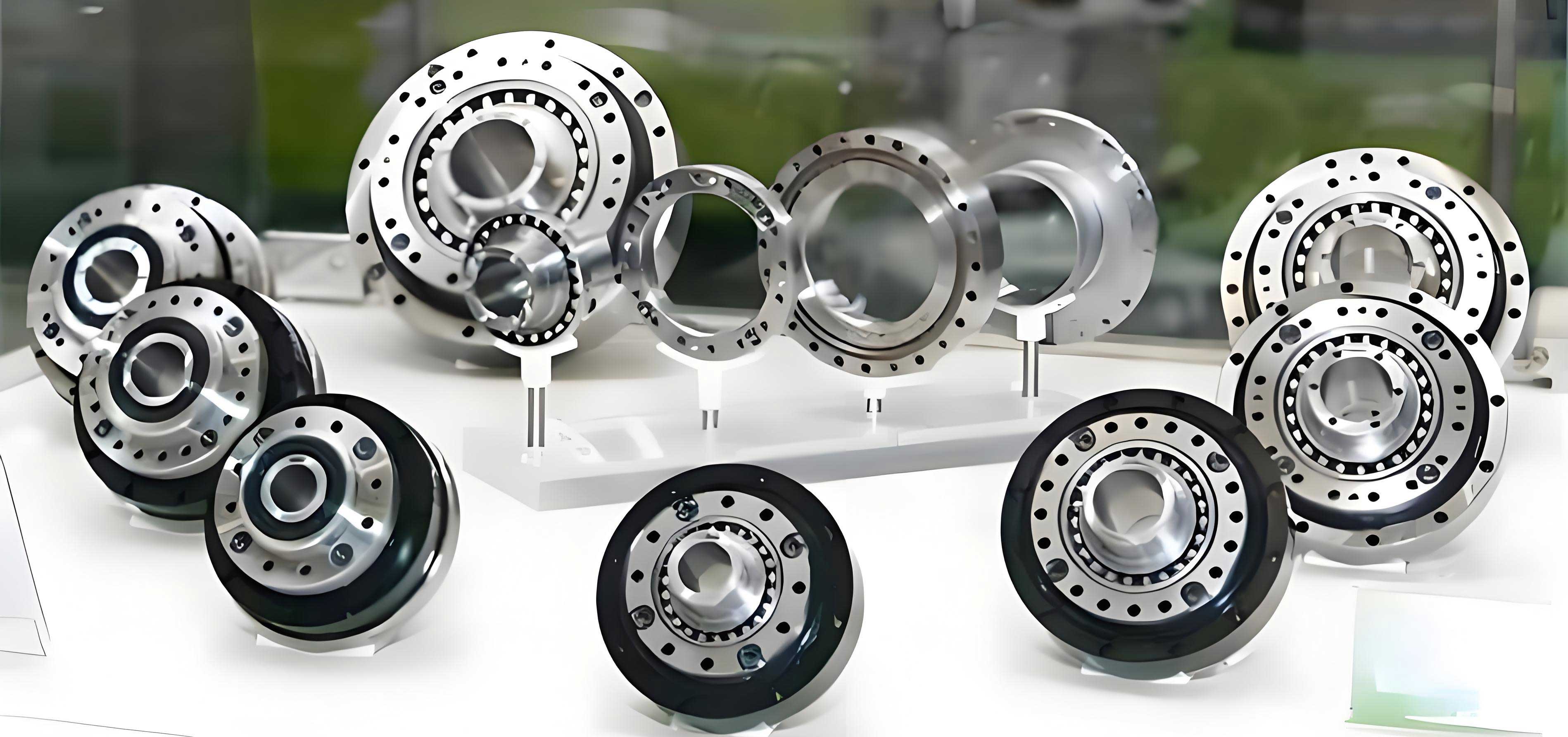
The operational principle of the rotary vector reducer is based on a two-stage reduction mechanism. The first stage consists of a planetary gear train with a sun gear, multiple planet gears, and a fixed ring gear (often integrated into the housing). The second stage is a cycloidal drive. The sun gear is connected to the input shaft. As it rotates, it drives the planet gears. Each planet gear is rigidly connected to a crankshaft. This crankshaft, through a turning arm bearing (also called a cycloidal bearing), engages with a cycloidal disc, causing it to undergo an eccentric motion. Typically, two cycloidal discs are used, installed 180 degrees out of phase to balance forces. The cycloidal discs mesh with a ring of stationary pins housed in the pin gear housing (or pin wheel). This meshing converts the eccentric motion of the cycloidal discs into a slow, reversed rotation relative to the crankshaft’s revolution. This slow rotation of the cycloidal discs is transmitted through the crankshafts to the planet carrier, which serves as the output member. The overall high reduction ratio is the product of the first-stage planetary train and the second-stage cycloidal drive.
To accurately capture the dynamic behavior of this complex system, a lumped-parameter model is developed. This method simplifies the distributed-parameter system by concentrating the inertia properties at discrete points (masses and moments of inertia) and connecting them with massless springs representing stiffnesses. For the heavy-duty rotary vector reducer under study, a 16-degree-of-freedom (16-DOF) model is established based on the following key assumptions:
- Masses are uniformly distributed, and the center of mass coincides with the geometric center for each component.
- Time-varying mesh stiffnesses (for both the involute and cycloidal gears) and bearing stiffnesses are replaced by their constant average values, modeled as linear springs.
- The meshing force between the cycloidal disc and pins is treated as a concentrated force at a calculated equivalent pressure angle.
- Friction, damping, manufacturing errors, and assembly misalignments are neglected to focus on the undamped natural characteristics.
- The bending stiffness of the crankshaft is significantly higher than the bearing stiffnesses and is thus neglected.
The model accounts for 11 rotational degrees of freedom about their own axes: the sun gear, the planet carrier, the pin housing, two cycloidal discs, three planet gears, and three crankshafts. Additionally, it includes 5 translational degrees of freedom: two for the cycloidal discs and three for the crankshafts, representing their orbital motion around the planet carrier’s axis. The coordinate systems are defined to facilitate the description of these coupled motions.
The equations of motion are derived using Newton’s second law. The generalized displacements are defined along the lines of action for the gear meshes. For rotational vibrations, the linear displacement on the mesh line is related to the angular displacement:
$$
u_s = r_s \theta_s, \quad u_{pi} = r_p \theta_{pi}, \quad u_{hi} = a \theta_{hi}, \quad u_{cj} = r_h \theta_{cj}, \quad u_o = r_h \theta_o, \quad u_r = r_r \theta_r
$$
where \( \theta_s, \theta_{pi}, \theta_{hi}, \theta_{cj}, \theta_o, \theta_r \) are the angular displacements of the sun gear, planet gear \(i\), crankshaft \(i\), cycloidal disc \(j\), planet carrier, and pin housing, respectively. The corresponding radii are \( r_s, r_p, a, r_h, r_r \). The relative displacements between components, such as between the crankshaft and cycloidal disc (\(\Delta_{cij}\)) and between the cycloidal disc and the pin housing (\(\Delta_{ccjr}\)), are calculated based on the system’s kinematics.
The final system of 16 coupled second-order differential equations can be expressed in matrix form as:
$$
\mathbf{M}\ddot{\mathbf{X}} + \mathbf{K}\mathbf{X} = \mathbf{F}
$$
where \(\mathbf{M}\) is the mass/inertia matrix, \(\mathbf{K}\) is the stiffness matrix, \(\mathbf{X}\) is the vector of generalized coordinates, and \(\mathbf{F}\) is the force vector. For free vibration analysis to determine natural frequencies, the forcing term and damping are set to zero, leading to the eigenvalue problem:
$$
(\mathbf{K} – \omega^2 \mathbf{M}) \boldsymbol{\phi} = 0
$$
Solving this equation yields the system’s natural frequencies \(\omega_r\) (in rad/s) and their corresponding mode shapes \(\boldsymbol{\phi}_r\).
The analysis is performed on an RV-550E type heavy-duty rotary vector reducer. The basic geometric and operational parameters are listed in the table below.
| Parameter | Symbol | Value |
|---|---|---|
| Number of Sun Gear Teeth | – | 14 |
| Number of Planet Gear Teeth | – | 42 |
| Number of Cycloidal Disc Teeth | – | 59 |
| Number of Pins | – | 60 |
| Module | \(m\) | 3 mm |
| Pressure Angle (Involute) | \(\alpha\) | 20° |
| Eccentricity | \(a\) | 2.2 mm |
| Sun Gear Base Circle Radius | \(r_s\) | 21 mm |
| Planet Gear Base Circle Radius | \(r_p\) | 63 mm |
| Crankshaft Distribution Radius | \(r_h\) | 84 mm |
| Pin Distribution Radius | \(r_r\) | 165 mm |
| Input Speed | – | 6900 rpm |
The dynamic parameters, including masses, moments of inertia, and stiffness values, are calculated from geometry, material properties, and established empirical formulas. The average mesh stiffnesses are used. A summary is provided in the following table.
| Component | Mass (kg) | Moment of Inertia (kg·m²) | Stiffness Type | Value (N/m or N·m/rad) |
|---|---|---|---|---|
| Sun Gear | 5.083 | \(2.43 \times 10^{-3}\) | Torsional Stiffness, \(k_s\) Mesh Stiffness (Involute), \(k_{sp}\) |
\(3.62 \times 10^6\) (N·m/rad) \(3.92 \times 10^9\) (N/m) |
| Planet Gear | 1.326 | \(2.87 \times 10^{-3}\) | – | – |
| Crankshaft | 1.761 | \(4.73 \times 10^{-4}\) | Torsional Stiffness, \(k_h\) | \(1.56 \times 10^6\) (N·m/rad) |
| Cycloidal Disc | 8.562 | 0.14 | – | – |
| Planet Carrier | 42.96 | 0.513 | – | – |
| Pin Housing | 51.209 | 1.986 | Torsional Stiffness, \(k_r\) | \(1.0 \times 10^{10}\) (N·m/rad) |
| – | – | – | Turning Arm Bearing Stiffness, \(k_{hc}\) Planet Carrier Support Bearing Stiffness, \(k_{oh}\) Cycloidal-Pin Mesh Stiffness, \(k_{cr}\) |
\(1.18 \times 10^8\) (N/m) \(3.15 \times 10^8\) (N/m) \(3.15 \times 10^{10}\) (N/m) |
Solving the eigenvalue problem with these parameters yields the natural frequencies of the rotary vector reducer. The lower-order frequencies are of primary interest as they are most likely to be excited by operational disturbances. The first six natural frequencies are listed below.
| Mode Order | 1 | 2 | 3 | 4 | 5 | 6 |
|---|---|---|---|---|---|---|
| Natural Frequency (Hz) | 305 | 830 | 864 | 1686 | 1739 | 1750 |
In contrast to models for smaller rotary vector reducers that often assume an infinitely stiff pin housing, the stiffness of this component is explicitly considered for the heavy-duty case due to the significant loads it sustains. The influence of the pin housing’s torsional stiffness (\(k_r\)) on the system’s first three natural frequencies is investigated. The results show that the first and second natural frequencies increase with \(k_r\), but they plateau after \(k_r\) exceeds approximately \(2 \times 10^7\) N·m/rad and \(8 \times 10^7\) N·m/rad, respectively. The third natural frequency remains unaffected by changes in \(k_r\), indicating it corresponds to a translational vibration mode. This analysis provides a critical design guideline: ensuring the pin housing stiffness is above \(2 \times 10^7\) N·m/rad is sufficient to stabilize the fundamental natural frequency, allowing for potential material or structural optimization of this large component without compromising dynamic performance.
To efficiently guide design modifications aimed at shifting natural frequencies away from excitation sources (e.g., input speed harmonics), sensitivity analysis is performed. This identifies which system parameters have the greatest influence on each natural frequency. The direct differentiation method is employed for its clarity and computational efficiency. For an undamped system, the eigenvalue sensitivity with respect to a generic system parameter \(p_m\) is given by:
$$
\frac{\partial \omega_r}{\partial p_m} = -\frac{1}{2\omega_r} \left( \omega_r^2 \boldsymbol{\phi}_r^T \frac{\partial \mathbf{M}}{\partial p_m} \boldsymbol{\phi}_r – \boldsymbol{\phi}_r^T \frac{\partial \mathbf{K}}{\partial p_m} \boldsymbol{\phi}_r \right)
$$
Specifically, the sensitivities with respect to mass/inertia terms \(m_{ij}\) and stiffness terms \(k_{ij}\) in the system matrices are:
$$
\frac{\partial \omega_r}{\partial m_{ij}} = \begin{cases}
-\omega_r \phi_{ir} \phi_{jr} & (i \neq j) \\
-\frac{1}{2} \omega_r \phi_{ir}^2 & (i = j)
\end{cases}, \quad \frac{\partial \omega_r}{\partial k_{ij}} = \begin{cases}
\phi_{ir} \phi_{jr} / \omega_r & (i \neq j) \\
\phi_{ir}^2 / (2\omega_r) & (i = j)
\end{cases}
$$
where \(\phi_{ir}\) is an element of the mass-normalized eigenvector \(\boldsymbol{\phi}_r\). The sensitivity results for the first three natural frequencies, normalized for comparison across parameters, are presented graphically below. The analysis focuses on key inertia and stiffness parameters of the major components.
The sensitivity of the natural frequencies to the moments of inertia reveals that the lower-order modes are most sensitive to the inertia of the planet carrier and the crankshafts. Modifying the planet carrier’s inertia is particularly effective for adjusting the first natural frequency. The sensitivity to stiffness parameters is even more pronounced. The stiffness of the turning arm bearings (\(k_{hc}\)) and the planet carrier support bearings (\(k_{oh}\)) show the highest sensitivity values, especially for the first natural frequency. This is attributed to their crucial role in supporting the load path and their relatively lower stiffness compared to gear mesh stiffnesses. Among the torsional stiffnesses (sun gear, crankshaft, pin housing), the crankshaft torsional stiffness has a relatively higher impact, though still generally lower than the bearing stiffness sensitivities.
To further elucidate the practical implications, the variation of the first three natural frequencies with the most sensitive parameters is examined. The plot for the first natural frequency versus turning arm bearing stiffness (\(k_{hc}\)) shows a critical region: when \(k_{hc}\) falls below approximately \(1.2 \times 10^9\) N/m, the first natural frequency drops rapidly. In service, wear in these bearings could reduce their effective stiffness, potentially lowering the first natural frequency into a range coincident with the input frequency, leading to resonance. This underscores the importance of selecting high-stiffness, durable bearings or implementing design features (like increasing the number of crankshafts) to mitigate this risk. The influence of bearing stiffnesses on the second and third frequencies is less dramatic but follows a predictable trend. Conversely, the crankshaft torsional stiffness must be reduced to an impractically low value (below ~\(4 \times 10^4\) N·m/rad) to significantly affect the system’s natural frequencies, confirming that bearing compliances are the dominant factors in the dynamics of this rotary vector reducer.
This detailed dynamics and sensitivity study of a heavy-duty rotary vector reducer provides valuable insights for engineers. The established 16-DOF lumped-parameter model effectively captures the system’s essential vibrational characteristics. The analysis confirms that for heavy-duty designs, the pin housing stiffness must be considered, and a target minimum value is identified for efficient design. Crucially, the sensitivity analysis quantitatively reveals that the system’s lower-order natural frequencies, which are most critical for resonance avoidance, are predominantly governed by the stiffness of the turning arm bearings and the support bearings, as well as the inertia of the planet carrier and crankshafts. Therefore, during the structural optimization phase of a heavy-load rotary vector reducer, priority should be given to selecting and maintaining high-performance bearings and to strategically managing the inertia of key rotating components. This targeted approach allows for more efficient and effective dynamic tuning, leading to a reducer design with enhanced vibrational stability and operational reliability under demanding loads.