
Helical gear pairs serve as critical components within marine propulsion systems, performing essential functions such as speed reduction, reversal, and torque transmission. The operational environment for these helical gear systems is notably severe, characterized by fluctuating loads from propeller action and potential shock events, making them susceptible to failure modes like tooth breakage and pitting. Consequently, a thorough investigation into the dynamic behavior of helical gear transmissions, particularly how key performance indicators respond to changes in working conditions, is of paramount importance for ensuring reliability and guiding optimal design practices.
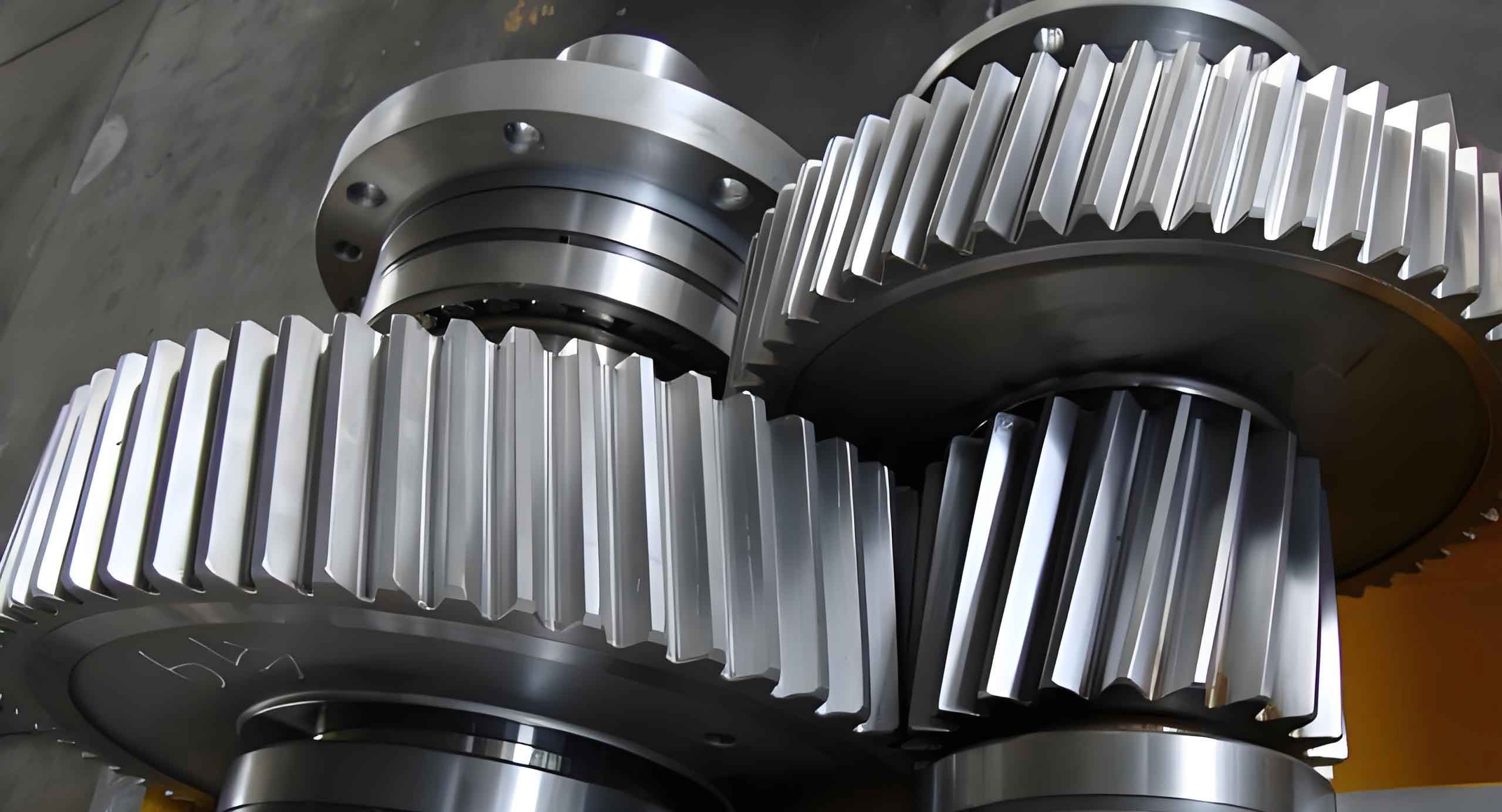
Recent research efforts have extensively focused on the dynamic performance of marine gear transmission systems. Studies have employed nonlinear contact finite element methods to analyze stress distribution in gearbox systems subjected to underwater shock loads. Other research has utilized explicit dynamics finite element analysis to simulate the dynamic characteristics of complete gearboxes, capturing the transient response of internal components. Furthermore, coupled dynamic models integrating gears, rotors, bearings, and housing structures have been developed to analyze the holistic dynamic behavior of marine gearboxes. While these studies provide significant insights, there remains a need for a more detailed exploration of how specific operational parameters—such as load magnitude, assembly tolerances, and lubrication regime—directly influence the dynamic stress states at critical locations like the tooth root in helical gear pairs. Predictive simulation analysis offers a powerful and cost-effective tool for this purpose, often proving more efficient than purely analytical methods for handling the complex, nonlinear contact problems inherent in helical gear meshing. The explicit dynamics procedure in ABAQUS/Explicit is particularly well-suited for this task due to its robust capabilities in simulating events involving impact, collision, and complex surface contact. This study leverages the explicit dynamic finite element method to construct a high-fidelity model of a marine helical gear pair, with a focused investigation on the influence of load torque, center distance error, and lubrication mode on the dynamic root stress.
Finite Element Simulation Methodology
Geometric and Material Parameters
The three-dimensional model of the helical gear pair is generated based on standard involute profiles and specified root fillet curves. The accuracy of the geometric model is validated against theoretical dimensions, with the error in measured normal chord length being within 0.02 mm, confirming its high fidelity. The primary parameters for the helical gear pair and the driving diesel engine are detailed in Table 1.
| Parameter | Driving Gear | Driven Gear |
|---|---|---|
| Number of Teeth, \(z\) | 64 | 70 |
| Normal Module, \(m_n\) (mm) | 8 | 8 |
| Normal Pressure Angle, \(\alpha_n\) (°) | 20 | 20 |
| Helix Angle, \(\beta\) (°) | 10 | 10 |
| Face Width, \(b\) (mm) | 122 | 122 |
| Center Distance, \(a\) (mm) | 544.28 | |
| Young’s Modulus, \(E\) (MPa) | \(2.09 \times 10^5\) | |
| Poisson’s Ratio, \(\nu\) | 0.3 | |
| Density, \(\rho\) (kg/m³) | 7855 | |
| Engine Rated Power (kW) | 183.9 | |
| Engine Rated Speed (r/min) | 500 | |
Finite Element Model Development
The explicit dynamics formulation in ABAQUS/Explicit utilizes a lumped mass matrix for linear elements, which is generally more effective than the consistent mass matrix used with quadratic elements for accurately propagating stress waves. Therefore, linear hexahedral (C3D8R) elements are selected for this simulation. The material properties are assigned as listed in Table 1. The quality of the finite element mesh is crucial for analysis accuracy. A single tooth of the helical gear is partitioned along the helix into five segments to facilitate controlled meshing. The mesh is locally refined at the tooth flank and, most importantly, at the tooth root fillet region where stress concentration is expected.
The contact between multiple potential tooth pairs is defined using the penalty contact method. This method introduces less numerical noise and is less likely to excite hourglass modes. The normal contact behavior is defined as “hard” contact, while the tangential behavior allows for finite sliding. The coefficient of friction for sliding is a key parameter determined by the lubrication regime, which will be varied in subsequent studies. A master-slave contact algorithm is employed with the finer-meshed surface typically designated as the slave surface.
Reference points, RP-1 and RP-2, are created at the geometric centers of the driving and driven gears, respectively. The inner cylindrical surfaces of each gear are kinematically coupled to their respective reference points. All translational degrees of freedom (DOF) and rotational DOFs about the X and Y axes are constrained at both reference points. Only the rotational degree of freedom about the gear axis (Z-axis) is permitted. A constant rotational velocity, \(v\), is applied to RP-1 (driving gear), and a constant resistive load torque, \(T_{out}\), is applied to RP-2 (driven gear).
To accurately capture the peak dynamic root stress during the meshing cycle, the output frequency for results such as stress must be sufficiently high. However, excessive output requests drastically increase computational time. An optimal output time increment, \(\Delta t\), is determined to balance these factors:
$$
\Delta t = \frac{60}{N \cdot z_1 \cdot n_1}
$$
where \(z_1\) is the number of teeth on the driving gear, \(n_1\) is its rotational speed in revolutions per minute (rpm), and \(N\) is the desired number of stress output points per tooth-passing period (i.e., per angular rotation of one gear tooth). A higher \(N\) yields a more detailed stress history.
Simulation Results and Analysis
Dynamic Response Under Rated Conditions
The dynamic root stress variation for the driving gear under its rated operational conditions is analyzed. The results show that the fluctuation patterns for stress on the loaded (driving side) and unloaded (coast side) flanks of the tooth root are fundamentally similar. The maximum dynamic impact stress at the tooth root manifests as a primary pulse. Due to the multi-tooth contact nature of helical gear meshing, several smaller stress peaks are distributed around this primary pulse, corresponding to the load sharing among different tooth pairs as they enter and exit the mesh. The stress time-history confirms the highly transient and impulsive loading experienced by the helical gear teeth during operation.
Influence of Operational Parameters
Marine gearboxes operate in a complex and variable environment. The helical gear pair is not always under steady-rated conditions; parameters such as propeller load torque, assembly center distance, and lubrication state are subject to change. This section investigates the influence of these key parameters on the maximum dynamic root stress.
1. Effect of Load Torque Variation
To analyze the effect of load, the resistive torque \(T_{out}\) on the driven gear is varied within a range of ±20% of the rated torque, while all other parameters remain constant. The resulting variation in the maximum dynamic root stress is plotted and analyzed.
The maximum dynamic root stress on the unloaded flank of the driving gear is generally higher than that on the driven gear’s unloaded flank. This can be attributed to the meshing impact conditions: upon initial contact (mesh-in), the root of the driving gear tooth impacts the tip of the driven gear tooth, generating high local contact stresses. Conversely, during mesh-out, the tip of the driving gear impacts the root of the driven gear. However, the difference in stress between the unloaded flanks of the driver and driven gear is relatively small for this helical gear pair. Crucially, the maximum dynamic root stress on both the loaded and unloaded flanks of both gears exhibits a clear linear increasing trend with increasing load torque.
The rate of increase in maximum dynamic root stress per unit increase in load torque can be quantified. Let \(\sigma_{max}\) represent the peak dynamic root stress and \(T\) the load torque. The relationship can be expressed as a linear function:
$$
\sigma_{max} = k \cdot T + C
$$
where \(k\) is the sensitivity coefficient (stress increase per N·m) and \(C\) is a constant. The average sensitivity coefficients \(k\) derived from the simulation data are summarized in the table below.
| Gear Location | Average Sensitivity, \(k\) (MPa/(N·m)) |
|---|---|
| Driving Gear, Loaded Flank | \(25.7 \times 10^{-3}\) |
| Driving Gear, Unloaded Flank | \(40.2 \times 10^{-3}\) |
| Driven Gear, Loaded Flank | \(37.5 \times 10^{-3}\) |
| Driven Gear, Unloaded Flank | \(27.4 \times 10^{-3}\) |
The data indicates that the unloaded flank of the driving gear is most sensitive to load torque changes, while the loaded flank of the driving gear is the least sensitive among the four measured locations for this specific helical gear design.
2. Effect of Center Distance Error
Assembly imperfections can lead to errors in the actual center distance between the mating helical gears. The impact of such errors on dynamic root stress is investigated by varying the center distance \(a\) from its nominal value. A negative error denotes an installed center distance smaller than the theoretical value.
The results demonstrate that the maximum dynamic root stress on both gears follows a similar trend with respect to center distance error. When the center distance error is negative (gears are mounted too close together), the maximum dynamic root stress decreases as the error increases (i.e., becomes less negative). This reduction occurs at an average rate of approximately 238.41 MPa per millimeter of error change. Conversely, when the center distance error is positive (gears are mounted too far apart), the maximum dynamic root stress increases with the error, but at a significantly lower average rate of about 60.33 MPa/mm. This asymmetric response highlights the nonlinear geometric constraints imposed by the involute profile, where a reduction in center distance may initially reduce backlash and impact severity, while an increase consistently degrades meshing conditions.
The relationship can be piecewise approximated as:
$$
\frac{d\sigma_{max}}{da} \approx \begin{cases}
-238.41 \text{ MPa/mm}, & \text{for } \Delta a < 0 \\
+60.33 \text{ MPa/mm}, & \text{for } \Delta a > 0
\end{cases}
$$
where \(\Delta a = a_{actual} – a_{nominal}\).
3. Effect of Lubrication Mode and Friction
The friction at the tooth contact interface significantly influences the bending stress state at the tooth root and cannot be neglected. The friction coefficient is primarily governed by the lubrication regime within the gearbox. Different lubrication modes correspond to distinct ranges of friction coefficients, as outlined in Table 3.
| Regime | Lubrication Mode | Friction Coefficient, \(f\) |
|---|---|---|
| I | Full Film Elastohydrodynamic Lubrication (EHL) | 0.01 – 0.04 |
| II | Partial EHL / Mixed Lubrication | 0.04 – 0.07 |
| III | Boundary Lubrication | 0.07 – 0.20 |
The maximum dynamic root stress is simulated across this spectrum of friction coefficients. The resulting relationship is complex and non-monotonic. In the full film EHL regime (Regime I, \(f = 0.01\) to \(0.04\)), the maximum root stress increases with the friction coefficient, reaching a peak near the transition to mixed lubrication at \(f \approx 0.04\). Within the mixed lubrication regime (Regime II, \(f = 0.04\) to \(0.07\)), the stress exhibits a decreasing trend, reaching a minimum near \(f \approx 0.07\). As the system enters the boundary lubrication regime (Regime III, \(f > 0.07\)), the maximum root stress begins to increase again with rising friction, although the rate of increase is relatively low and plateaus or even slightly decreases in the very high friction range (\(f = 0.18\) to \(0.20\)). This behavior can be explained by the competing effects of friction: while higher friction increases tangential shear loads contributing to root bending, it may also slightly alter the load distribution and impact dynamics across the helical gear contact line. The non-linear trend underscores the importance of maintaining an effective lubrication film to avoid operating in high-stress regions.
A simplified piecewise function can describe the general trend observed for the loaded flank of the driving gear:
$$
\sigma_{max}(f) \propto \begin{cases}
\text{Increasing function}, & f \in [0.01, 0.04) \\
\text{Decreasing function}, & f \in [0.04, 0.07) \\
\text{Slowly increasing function}, & f \in [0.07, 0.20]
\end{cases}
$$
Validation of Simulation Results
A critical consideration when using the explicit finite element method is the potential development of “hourglass” modes, which are zero-energy deformation modes that can corrupt the solution. The susceptibility of a model to hourglassing is often assessed by comparing the artificial strain energy (AE) to the internal energy (IE). Theoretically, an AE/IE ratio below 1% indicates negligible hourglass influence. In engineering practice, a ratio below 5-10% is generally considered acceptable, rendering the results credible. For all simulation cases presented in this study of the helical gear pair, the AE/IE ratio was maintained well below the 5% threshold. This confirms that hourglass modes were adequately controlled and that the dynamic analysis results presented for the helical gear are reliable and physically meaningful.
Conclusion
This comprehensive dynamic simulation study of a marine helical gear pair, conducted using an explicit nonlinear finite element approach, yields several significant conclusions regarding its performance under varying operational conditions. The dynamic stress at the tooth root exhibits a transient, pulsed character with multiple local peaks, reflecting the complex multi-tooth engagement process inherent to helical gear meshing.
The investigation into key operational parameters reveals their distinct influences. The maximum dynamic root stress demonstrates a linear and direct proportionality to the applied load torque, with quantified sensitivity coefficients that vary depending on the specific gear and flank (loaded/unloaded). Center distance error induces an asymmetric response: negative errors (tighter mesh) lead to a significant reduction in dynamic stress, whereas positive errors (looser mesh) cause a more moderate increase. This highlights the critical importance of precise assembly for helical gear systems.
Perhaps the most complex relationship is observed with lubrication mode. The maximum root stress does not vary monotonically with the tooth friction coefficient. It peaks near the transition from full-film to mixed lubrication, decreases through the mixed regime, and then gradually increases again under boundary lubrication conditions. This underscores the necessity of designing lubrication systems that maintain an effective elastohydrodynamic film to avoid operating in high-stress regimes that could accelerate fatigue failure in the helical gear.
In summary, the findings from this simulation-based analysis provide valuable quantitative insights into the dynamic behavior of marine helical gears. The identified relationships between operational parameters—load, alignment, and lubrication—and the critical tooth root stress offer a solid foundation for the optimized design, condition monitoring, and maintenance planning of helical gear transmissions in demanding marine applications, ultimately contributing to enhanced reliability and service life.