
In modern engineering applications, spur gears are fundamental components in power transmission systems, and the use of polymer materials for gears has gained significant attention due to their advantageous properties. As a researcher focused on tribology and gear dynamics, I have extensively studied the elastohydrodynamic lubrication (EHL) behavior of steel-polymer spur gears pairs. This analysis is crucial because polymer gears, while offering benefits like self-lubrication, low production cost, and corrosion resistance, are prone to failure modes such as pitting, especially under varying operational conditions. Compared to polymer-polymer spur gears pairs, steel-polymer spur gears combinations exhibit longer service lives due to better heat dissipation and mechanical stability. In this article, I will delve into the EHL performance of steel-polymer spur gears under lubrication, exploring how factors like pressure angle, rotational speed, load, and lubricant viscosity influence lubrication states and the potential for micro-pitting failure. The goal is to provide a comprehensive understanding that aids in designing durable spur gears systems.
Spur gears are widely used for their simplicity and efficiency in transmitting motion between parallel shafts. The integration of polymers like polyoxymethylene (POM), polyetheretherketone (PEEK), and polyphenylene sulfide (PPS) into spur gears designs has revolutionized industries such as automotive and consumer electronics. However, the lubrication mechanisms in steel-polymer spur gears pairs differ from those in all-metal spur gears due to the distinct material properties, including lower elastic moduli and higher compliance of polymers. This necessitates a detailed EHL analysis to ensure reliable operation. My work involves developing mathematical models, conducting numerical simulations, and validating results to predict lubrication performance and prevent failures in spur gears applications.
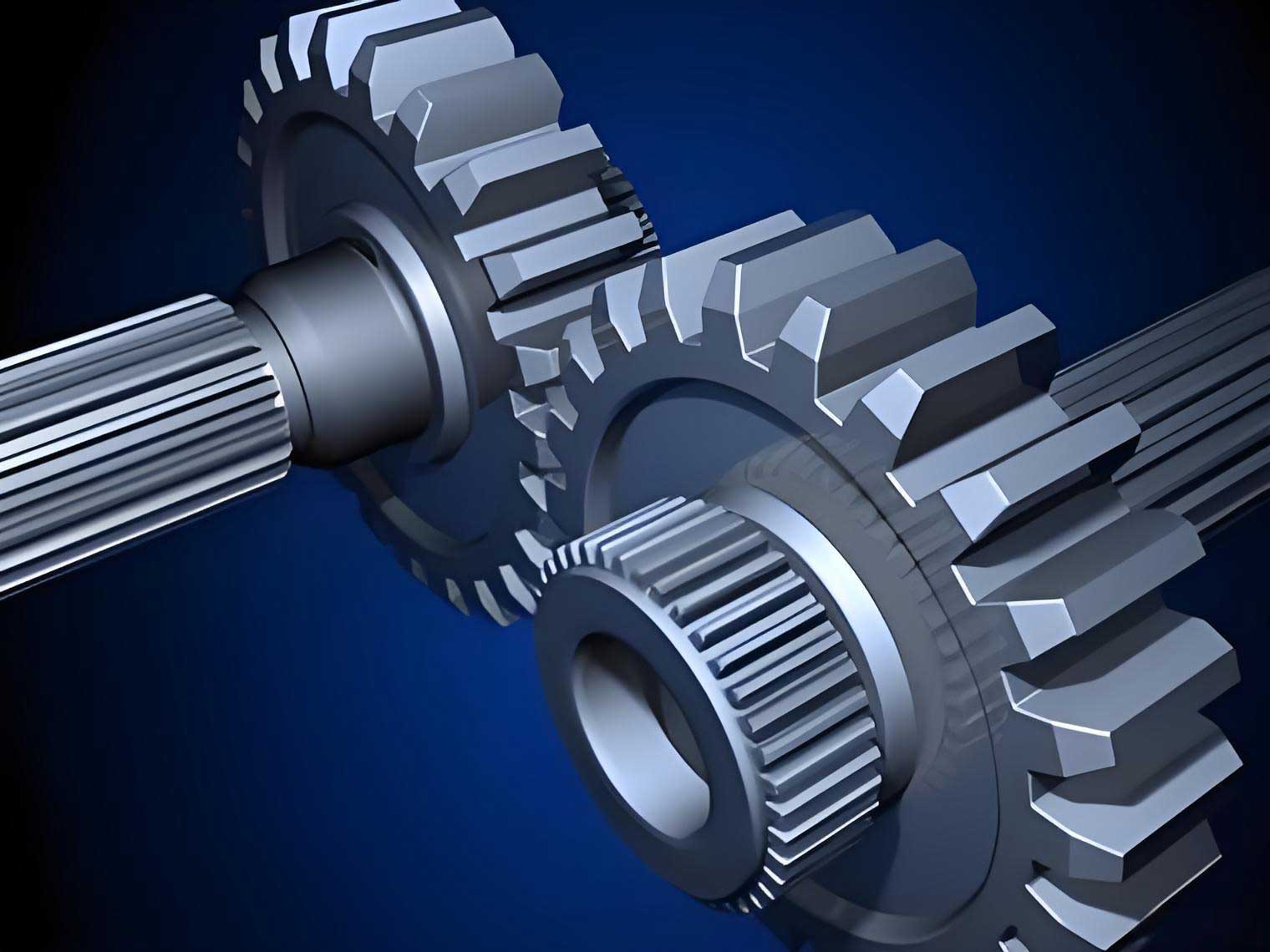
The foundation of this analysis lies in the EHL theory for line contacts, which is applicable to spur gears meshing. For steel-polymer spur gears pairs, the contact between teeth can be modeled as two cylinders in rolling and sliding contact, where the lubricant film formation is governed by the Reynolds equation. In my approach, I consider steady-state, isothermal conditions initially, though transient effects in spur gears engagement are also significant. The key equations include the Reynolds equation, film thickness equation, viscosity-pressure relation, density-pressure relation, and load balance equation. These are expressed in dimensionless forms for numerical solving, and I employ the multi-grid method to handle the computational complexity efficiently.
First, the Reynolds equation for line contact is given by:
$$ \frac{d}{dx} \left( \frac{\rho h^3}{\eta} \cdot \frac{dp}{dx} \right) = 12u \frac{d(\rho h)}{dx} $$
where \( \rho \) is the fluid density, \( h \) is the film thickness, \( \eta \) is the dynamic viscosity, \( p \) is the pressure, \( x \) is the coordinate along the contact, and \( u \) is the entrainment velocity. For spur gears, the entrainment velocity varies along the path of contact, affecting the lubrication film. The boundary conditions are set as \( p(x_{\text{in}}) = p(x_{\text{out}}) = 0 \), with \( p \geq 0 \) within the domain.
The film thickness equation accounts for both geometric separation and elastic deformation of the surfaces:
$$ h = h_0 + \frac{x^2}{2R} – \frac{2}{\pi E} \int_{-\infty}^{x} p(s) \ln(x-s)^2 ds $$
Here, \( h_0 \) is a constant, \( R \) is the equivalent radius of curvature for the spur gears teeth, and \( E \) is the equivalent elastic modulus. For steel-polymer spur gears pairs, \( E \) is computed as:
$$ \frac{1}{E} = \frac{1}{2} \left( \frac{1 – \mu_1^2}{E_1} + \frac{1 – \mu_2^2}{E_2} \right) $$
where \( E_1 \) and \( \mu_1 \) are for steel, and \( E_2 \) and \( \mu_2 \) for the polymer. This lower \( E \) value compared to all-steel spur gears leads to larger deformations and thicker films in some cases.
The viscosity-pressure relationship is described by the Roelands equation, which is more accurate than the Barus form for high pressures:
$$ \eta = \eta_0 \exp \left\{ (\ln \eta_0 + 9.67) \left[ (1 + 5.1 \times 10^{-9} p)^{z_0} – 1 \right] \right\} $$
with \( z_0 = \alpha / [5.1 \times 10^{-9} (\ln \eta_0 + 9.67)] \), where \( \eta_0 \) is the ambient viscosity and \( \alpha \) is the pressure-viscosity coefficient. The density-pressure relation is:
$$ \rho = \rho_0 \left( \frac{1 + 0.6 \times 10^{-9} p}{1 + 1.7 \times 10^{-9} p} \right) $$
where \( \rho_0 \) is the ambient density. These equations are essential for capturing the non-Newtonian behavior of lubricants in spur gears contacts.
The load balance equation ensures that the integrated pressure supports the applied load:
$$ \int_{-\infty}^{x} p(x) dx = C_w w $$
Here, \( w \) is the load per unit length, and \( C_w \) is the load sharing factor—1 for single-pair contact and 0.5 for double-pair contact in spur gears meshing. This factor is critical for analyzing spur gears along the path of contact, where transitions between single and double tooth engagement occur.
To assess lubrication states, I use the film thickness ratio \( \lambda \), defined as:
$$ \lambda = \frac{h_{\text{min}}}{\sigma} = \frac{h_{\text{min}}}{\sqrt{\sigma_1^2 + \sigma_2^2}} $$
where \( h_{\text{min}} \) is the minimum film thickness, and \( \sigma_1 \) and \( \sigma_2 \) are the root-mean-square roughnesses of the steel and polymer spur gears surfaces, respectively. Based on \( \lambda \), the lubrication regime is classified: full-film EHL for \( \lambda > 3 \), mixed lubrication for \( 1 < \lambda \leq 3 \), and boundary lubrication for \( \lambda \leq 1 \). For spur gears, maintaining \( \lambda \) above 1 is often targeted to reduce wear.
Additionally, to evaluate micro-pitting risk, I calculate the oil film safety factor \( S_\lambda \):
$$ S_\lambda = \frac{2h_{\text{min}}}{\sigma_1 + \sigma_2} $$
Micro-pitting, a surface fatigue failure common in spur gears under mixed lubrication, is avoided if \( S_\lambda \geq S_{\lambda,\text{min}} \), where \( S_{\lambda,\text{min}} = 2 \) based on experimental data. This criterion is vital for designing reliable steel-polymer spur gears pairs.
For numerical solving, I adopt dimensionless parameters: \( X = x/b \), \( b = \sqrt{8wR/(\pi E)} \), \( W = w/(ER) \), \( G = \alpha E \), \( U = u\eta_0/(ER) \), \( P = p/p_H \), \( p_H = Eb/(4R) \), \( \bar{H} = hR/b^2 \), \( \bar{\eta} = \eta/\eta_0 \), and \( \bar{\rho} = \rho/\rho_0 \). The multi-grid method with six grid levels and 961 nodes on the finest grid is employed, with a computational domain from \( X_{\text{in}} = -4.6 \) to \( X_{\text{out}} = 1.4 \). The initial pressure guess is the Hertzian distribution, and W-cycle iterations are used for convergence. This approach efficiently handles the non-linearities in EHL problems for spur gears.
Validation of the numerical method is done by comparing results with Dowson’s empirical formula for minimum film thickness in spur gears contacts:
$$ h_{\text{min}} = 2.65 \alpha^{0.54} (\eta_0 u)^{0.7} E^{-0.03} R^{0.43} w^{-0.13} $$
For steel-steel spur gears pairs under typical conditions, my numerical solutions show close agreement, with relative errors below 3% at key meshing points like the approach point, pitch point, and recess point. This confirms the accuracy of my model for analyzing spur gears lubrication.
In my study, I focus on steel-polymer spur gears pairs with POM, PEEK, and PPS as polymer materials. The parameters for these spur gears and lubricants are summarized in Table 1. These parameters are used throughout the analysis to simulate various operational scenarios for spur gears.
| Parameter | Value |
|---|---|
| Number of teeth (driver/driven) | 24 / 48 |
| Module, m (m) | 0.003 |
| Pressure angle, φ (degrees) | 20 (varied) |
| Steel elastic modulus, E1 (GPa) | 206 |
| Steel Poisson’s ratio, μ1 | 0.3 |
| POM elastic modulus, E2 (GPa) | 2.6 |
| PEEK elastic modulus, E2 (GPa) | 3.66 |
| PPS elastic modulus, E2 (GPa) | 3.5 |
| Polymer Poisson’s ratio, μ2 | 0.3 (POM), 0.33 (PEEK), 0.35 (PPS) |
| Barus pressure-viscosity coefficient, α (Pa⁻¹) | 2.2 × 10⁻⁸ |
| Gear width, B1/B2 (m) | 0.025 / 0.02 |
| Ambient viscosity, η0 (Pa·s) | 0.075 (varied) |
| Ambient density, ρ0 (kg/m³) | 870 |
| Surface roughness (steel), Ra1 (μm) | 0.60 (σ1 ≈ 0.75 μm) |
| Surface roughness (polymer), Ra2 (μm) | 0.36 (σ2 ≈ 0.45 μm) |
The results are discussed in terms of how different factors affect the EHL performance of steel-polymer spur gears pairs. I begin by examining the influence of polymer material type on lubrication. For spur gears made of POM, PEEK, and PPS paired with steel, under a rotational speed of 2000 rpm and load per unit length of 2.0 × 10⁴ N/m, the pressure and film thickness distributions at the approach point are computed. Steel-POM spur gears exhibit lower maximum pressure and larger minimum film thickness compared to steel-PEEK and steel-PPS spur gears, due to POM’s lower elastic modulus. This leads to better film formation in steel-POM spur gears pairs. The film thickness ratio λ and safety factor Sλ along the path of contact are higher for steel-POM spur gears, indicating more stable lubrication and lower micro-pitting risk. For instance, at the approach point, λ values are 1.18 for steel-POM, 1.08 for steel-PEEK, and 1.07 for steel-PPS spur gears, all in the mixed lubrication regime. However, Sλ for steel-POM spur gears is 1.72, still below 2, suggesting potential micro-pitting at this point unless conditions are optimized.
Next, I analyze the effect of pressure angle on steel-polymer spur gears lubrication. Pressure angles of 20°, 25°, and 30° are considered for steel-POM spur gears under the same speed and load. Increasing the pressure angle from 20° to 30° raises the equivalent radius of curvature, reducing the maximum pressure and increasing the minimum film thickness. This improves λ and Sλ significantly. As shown in Table 2, at the approach point, λ increases from 1.18 to 2.64, and Sλ from 1.72 to 3.84 as φ goes from 20° to 30°. Thus, higher pressure angles promote better lubrication in spur gears, potentially preventing micro-pitting even in mixed lubrication regimes. This is crucial for designing spur gears with enhanced durability.
| Pressure Angle, φ (degrees) | Film Thickness Ratio, λ | Oil Film Safety Factor, Sλ |
|---|---|---|
| 20 | 1.18 | 1.72 |
| 25 | 1.94 | 2.82 |
| 30 | 2.64 | 3.84 |
Rotational speed is another critical factor for spur gears performance. I vary the driver speed from 2000 to 5000 rpm for steel-POM spur gears under a constant load of 2.0 × 10⁴ N/m. Higher speeds increase the entrainment velocity u, enhancing hydrodynamic effects and film thickness. The minimum film thickness hmin grows with speed, leading to higher λ and Sλ values. At 2000 rpm, λ at the approach point is 1.18 (mixed lubrication), while at 3000 rpm, λ reaches 1.52, and at 5000 rpm, it exceeds 2.0, transitioning toward full-film lubrication. Similarly, Sλ surpasses 2 at speeds above 3000 rpm, indicating reduced micro-pitting risk. This highlights the importance of operating spur gears at adequate speeds to maintain effective lubrication.
Load variations profoundly impact spur gears lubrication. For steel-POM spur gears at 2000 rpm, increasing the load per unit length from 2.0 × 10⁴ N/m to 4.0 × 10⁴ N/m decreases hmin due to greater elastic deformation. Consequently, λ drops from 1.18 to 0.98 at the approach point, shifting from mixed to boundary lubrication. This increases the likelihood of surface contact and micro-pitting. Table 3 presents λ and Sλ at key meshing points under a high load of 4.0 × 10⁴ N/m. At the approach point, Sλ is 1.43, below the threshold, suggesting micro-pitting may initiate. Therefore, controlling load is essential for preserving lubrication in spur gears systems.
| Meshing Point | Film Thickness Ratio, λ | Oil Film Safety Factor, Sλ |
|---|---|---|
| Approach Point | 0.98 | 1.43 |
| Single Tooth Approach Point | 1.24 | 1.80 |
| Pitch Point | 1.35 | 1.96 |
| Single Tooth Recess Point | 1.41 | 2.04 |
| Recess Point | 1.97 | 2.86 |
Lubricant viscosity also plays a pivotal role in spur gears EHL. I test ambient viscosities η0 of 0.03 Pa·s, 0.075 Pa·s, and 0.12 Pa·s for steel-POM spur gears at 2000 rpm and 2.0 × 10⁴ N/m. Higher viscosity boosts film thickness, improving λ and Sλ. At η0 = 0.03 Pa·s, λ is 0.63 at the approach point (boundary lubrication), and Sλ is below 2 at all points, indicating high micro-pitting risk. At η0 = 0.075 Pa·s, λ is 1.18 (mixed lubrication), with Sλ still low at the approach point. At η0 = 0.12 Pa·s, λ exceeds 1.5 and Sλ surpasses 2 across the path, promoting safer operation for spur gears. This underscores the need for selecting appropriate lubricants for steel-polymer spur gears pairs.
To summarize, my analysis demonstrates that steel-polymer spur gears pairs, particularly steel-POM spur gears, can form stable lubricant films under oil lubrication, but their performance is sensitive to design and operational parameters. The pressure angle, rotational speed, load, and lubricant viscosity all significantly influence the lubrication state and micro-pitting resistance of spur gears. For instance, higher pressure angles (e.g., 30°) enhance film thickness, while excessive loads can degrade lubrication to boundary regimes. Similarly, increased speeds and viscosities improve EHL conditions. Therefore, when designing steel-polymer spur gears systems, it is crucial to optimize these factors to avoid pitting failures and ensure longevity. Future work could explore thermal effects, transient dynamics, and non-Newtonian lubricant behavior in spur gears contacts to further refine the models.
In conclusion, the elastohydrodynamic lubrication analysis of steel-polymer spur gears provides valuable insights for engineering applications. By leveraging mathematical models and numerical simulations, I have shown how key variables affect lubrication performance, offering guidelines for designing durable spur gears pairs. The integration of polymers into spur gears presents both challenges and opportunities, and understanding their EHL behavior is essential for advancing power transmission technology. As research continues, further improvements in material combinations and lubrication strategies will enhance the reliability of spur gears in diverse industries.