
In the realm of mechanical engineering, particularly within automotive and agricultural machinery such as tractors, gears play an indispensable role in transmitting motion and power between shafts. The accuracy of these gears directly influences performance, noise levels, and overall reliability. High-precision gear grinding, including gear profile grinding, is essential for achieving the required tooth geometry and surface quality. However, when dealing with internal spline gears, especially those with asymmetric or profiled structures, maintaining precision post-heat treatment becomes a significant challenge. This study focuses on addressing these issues through innovative process optimizations, with a particular emphasis on minimizing grinding cracks and ensuring dimensional stability.
Gears with internal splines are prone to deformation during heat treatment, which adversely affects their positional accuracy and leads to inconsistencies in gear grinding. Such deformations can induce grinding cracks, compromising the gear’s integrity and lifespan. In this research, we analyze the deformation mechanisms in asymmetric internal spline gears and propose solutions involving heat treatment compensation sleeves and spline mandrels. By refining the post-heat treatment machining processes, we aim to achieve superior gear grinding outcomes, meeting design specifications while exploring cost-effective methodologies.
Introduction to Gear Grinding and Its Challenges
Gear grinding is a high-precision machining process used to finish gear teeth after initial forming operations like hobbing or shaping. It ensures accurate tooth profiles, minimal runout, and enhanced surface integrity. Key techniques include gear profile grinding, which involves grinding the tooth flank along its contour to achieve precise geometry. However, internal spline gears present unique hurdles due to their complex geometry and susceptibility to heat treatment-induced distortions. These distortions can lead to misalignment during gear grinding, resulting in uneven tooth loading, increased noise, and potential grinding cracks. Grinding cracks are surface or subsurface fractures caused by excessive thermal stress during the grinding process, often exacerbated by residual stresses from heat treatment.
In typical manufacturing workflows, gears with internal splines undergo processes such as rough turning, finish turning, spline broaching, tooth hobbing, heat treatment, and finally, gear grinding. The internal spline serves as the locating datum for grinding, but post-heat treatment deformations—such as taper and ovality in the spline—compromise this datum’s accuracy. This misalignment manifests as erratic tooth alignment and profile errors in the final product. Our investigation centers on asymmetric profiled gears, where uneven mass distribution amplifies these issues. By adopting a reverse engineering approach, we identify critical control points to enhance process reliability.
Analysis of Deformation in Heat Treatment
Heat treatment processes like carburizing and quenching introduce significant thermal and transformational stresses in gears. For internal spline gears, these stresses cause dimensional changes, particularly in the spline bore and end faces. The deformation can be quantified using empirical models and finite element analysis. For instance, the thermal expansion during heating and contraction during cooling follows the relation:
$$ \Delta L = L_0 \alpha \Delta T $$
where \( \Delta L \) is the change in length, \( L_0 \) is the original dimension, \( \alpha \) is the coefficient of thermal expansion, and \( \Delta T \) is the temperature change. In asymmetric gears, non-uniform cooling rates lead to differential shrinkage, resulting in taper and ovality. This deformation directly impacts the gear grinding process by misaligning the reference datum, increasing the risk of grinding cracks due to uneven material removal and localized overheating.
To mitigate these effects, we designed a heat treatment compensation sleeve that fits into the internal spline during processing. This sleeve acts as a constraint, reducing distortion by promoting uniform heat dissipation and minimizing stress concentrations. Experimental data shows that the compensation sleeve reduces spline taper from over 0.1 mm to within 0.03 mm, significantly improving datum integrity for subsequent gear grinding operations.
| Parameter | Without Sleeve (mm) | With Sleeve (mm) |
|---|---|---|
| Spline Taper | 0.10 – 0.15 | 0.02 – 0.03 |
| Ovality | 0.08 – 0.12 | 0.01 – 0.02 |
| End Face Runout | 0.05 – 0.10 | 0.01 – 0.03 |
The reduction in deformation not only enhances the accuracy of gear grinding but also lowers the propensity for grinding cracks by ensuring a more stable and uniform material structure prior to grinding.
Original Process Scheme and Its Limitations
The initial manufacturing sequence for the asymmetric internal spline gear involved: rough turning, finish turning, spline broaching, end face finishing, tooth hobbing, heat treatment, gear grinding, and final inspection. The gear material was low-carbon alloy steel 20CrMnTi, subjected to carburizing and quenching to achieve a surface hardness of 58-64 HRC and a core hardness of 31-44 HRC. The tooth accuracy requirement was grade 7 per GB/T 10095-88 standards.
However, post-heat treatment inspection revealed severe tooth alignment issues, characterized by chaotic tooth direction and excessive profile deviations. The root cause was traced to the deformation of the internal spline and end faces, which served as the datum for gear grinding. The misalignment resulted in inconsistent tooth contact patterns and elevated stresses during operation, predisposing the gears to grinding cracks and premature failure. The following equation illustrates the cumulative error in tooth alignment due to datum inaccuracies:
$$ \Delta \theta = \sqrt{ \left( \frac{\Delta D}{D} \right)^2 + \left( \Delta \phi \right)^2 } $$
where \( \Delta \theta \) is the total angular error, \( \Delta D \) is the spline diameter variation, \( D \) is the nominal diameter, and \( \Delta \phi \) is the end face runout. In the original process, \( \Delta D \) and \( \Delta \phi \) were significant, leading to unacceptable \( \Delta \theta \) values.
Improved Process Design for Enhanced Gear Grinding
To address these challenges, we revamped the process sequence based on a reverse engineering methodology. The revised steps include: rough turning, finish turning, spline broaching, tooth hobbing, heat treatment (with compensation sleeve), outer diameter grinding using a spline mandrel, internal spline small diameter and end face grinding, gear grinding, and final inspection. This approach ensures that the datum for gear grinding is re-established post-heat treatment, aligning with the actual assembly conditions.
Central to this improvement is the design of a spline mandrel that engages with the internal spline’s keyways for outer diameter grinding. This mandrel provides precise centering, mimicking the gear’s operational mounting. The mandrel design parameters are optimized using the following relation for interference fit and stress distribution:
$$ \sigma = \frac{E \delta}{D} $$
where \( \sigma \) is the contact stress, \( E \) is the modulus of elasticity, \( \delta \) is the interference fit, and \( D \) is the nominal diameter. By controlling \( \delta \), we minimize elastic deformation during grinding, thereby enhancing datum accuracy for subsequent gear profile grinding.
| Process Step | Key Parameters | Impact on Gear Grinding |
|---|---|---|
| Heat Treatment with Sleeve | Temperature: 930°C, Quench medium: Oil | Reduces spline deformation, minimizes grinding cracks risk |
| Outer Diameter Grinding | Mandrel interference: 0.02-0.05 mm | Ensures concentricity, improves tooth alignment in gear grinding |
| Internal Spline Grinding | Grinding wheel grit: 80, Coolant: Synthetic | Enhances datum precision for gear profile grinding |
| Gear Grinding | Wheel speed: 30 m/s, Feed rate: 0.005 mm/pass | Achieves grade 7 accuracy, prevents grinding cracks |
The integration of these steps ensures that the gear grinding process operates on a high-integrity datum, significantly reducing errors and the likelihood of grinding cracks. Gear profile grinding, in particular, benefits from this stability, as it requires precise control over tooth flank geometry.
Experimental Validation and Results
We conducted trials on asymmetric internal spline gears using the improved process. Post-heat treatment, the gears were mounted on the spline mandrel for outer diameter grinding, followed by internal spline small diameter and end face grinding on an internal cylindrical grinder. The gear grinding was performed using a CNC gear profile grinder, with parameters optimized for minimal thermal input to avoid grinding cracks.
Inspection results demonstrated a remarkable improvement in tooth accuracy. Tooth direction errors were reduced from chaotic patterns to within specified limits, and profile deviations met the grade 7 requirements. The following data summarizes the outcomes:
| Inspection Parameter | Original Process (mm) | Improved Process (mm) |
|---|---|---|
| Tooth Profile Error | 0.025 – 0.040 | 0.008 – 0.012 |
| Tooth Direction Error | 0.030 – 0.050 | 0.010 – 0.015 |
| Cumulative Pitch Error | 0.035 – 0.060 | 0.012 – 0.018 |
| Runout | 0.040 – 0.070 | 0.015 – 0.020 |
The reduction in errors underscores the effectiveness of the revised process in enhancing gear grinding precision. Moreover, no grinding cracks were detected in the improved samples, as verified through dye penetrant tests. This is attributed to the uniform material removal and controlled grinding forces enabled by the stable datum.
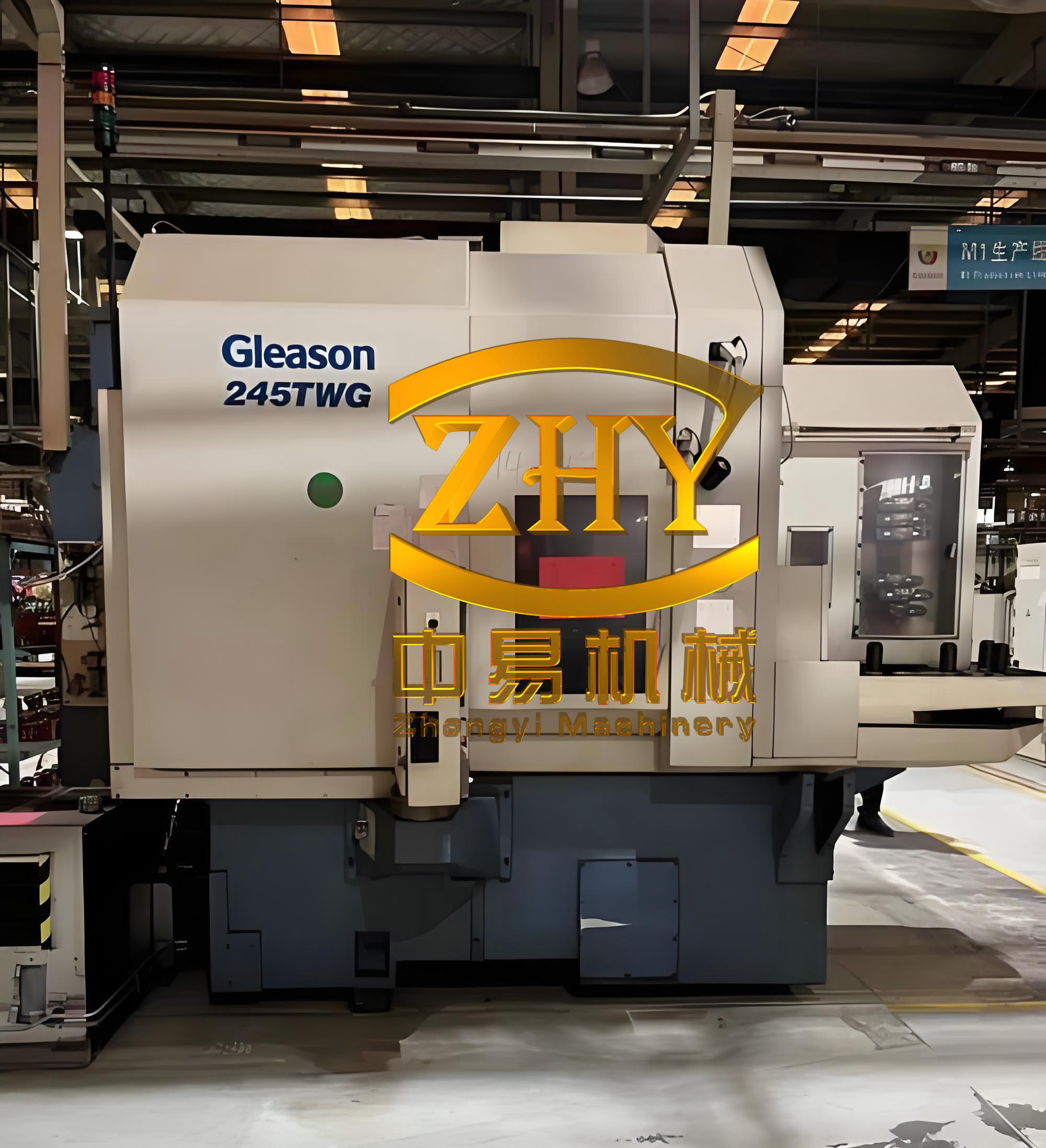
Grinding cracks typically arise from excessive thermal gradients during gear grinding. The heat generation per unit volume during grinding can be modeled as:
$$ Q = \frac{F_t v_s}{a_p w} $$
where \( Q \) is the heat flux, \( F_t \) is the tangential grinding force, \( v_s \) is the wheel speed, \( a_p \) is the depth of cut, and \( w \) is the width of cut. By maintaining a stable datum and optimizing grinding parameters, we reduce \( F_t \) and \( a_p \), thereby lowering \( Q \) and mitigating the risk of grinding cracks.
Exploration of Alternative Gear Grinding Schemes
Beyond the primary improved process, we investigated additional scenarios to achieve cost efficiency without compromising on gear grinding quality. One alternative involves using the end face and internal spline as the sole datum for gear grinding, provided that the post-heat treatment deformation is minimal. In this scheme, the process simplifies to: heat treatment, precision end face machining (using a spline mandrel for centering), gear grinding, and final inspection. This approach reduces steps but requires tight control over spline deformation, ideally within 0.02 mm, to prevent datum-induced errors in gear profile grinding.
Another option is to rely exclusively on the internal spline for locating during gear grinding. If the spline’s accuracy post-heat treatment is sufficient, the process can be truncated to heat treatment followed directly by gear grinding. This represents the lowest cost solution but demands high material consistency and minimal distortion. The feasibility depends on the gear’s symmetry and the heat treatment process’s repeatability. In both alternatives, the prevention of grinding cracks remains paramount, necessitating careful parameter selection in gear grinding operations.
The choice among these schemes involves a trade-off between cost, process complexity, and risk tolerance. For instance, the exclusive use of the internal spline datum may increase the susceptibility to grinding cracks if residual stresses are not adequately relieved. Therefore, comprehensive testing is essential before adoption.
Conclusions and Implications for Gear Grinding
Our research demonstrates that ensuring precision in gear grinding for internal spline gears, particularly asymmetric profiled types, requires a holistic approach addressing heat treatment deformation and datum establishment. The implementation of heat treatment compensation sleeves and spline mandrels significantly reduces distortions, thereby enhancing the accuracy of gear grinding and minimizing the occurrence of grinding cracks. The improved process sequence—incorporating post-heat treatment outer diameter and internal spline grinding—provides a reliable foundation for high-precision gear profile grinding.
Key takeaways include:
– The integrity of the locating datum is crucial for successful gear grinding; it must match the gear’s operational conditions to avoid alignment errors.
– Heat treatment compensation sleeves effectively control spline deformation, improving both manufacturing accuracy and assembly reliability.
– Gear profile grinding processes benefit from stable datums, as they enable consistent tooth geometry and reduce thermal stresses that lead to grinding cracks.
– Cost-optimal solutions are feasible under controlled conditions, such as minimal deformation and resource availability, but must be validated through rigorous testing.
Future work could explore advanced materials and real-time monitoring during gear grinding to further suppress grinding cracks. By continuing to refine these processes, we can achieve higher efficiency and reliability in gear manufacturing for demanding applications.