
In the demanding environment of underground coal mining, the continuous and reliable operation of material handling systems is paramount. As a core component of the scraper conveyor’s drive unit, the bevel gear pair within the reducer plays a critical role in transmitting power and changing the direction of rotation to drive the flight bars. My experience in this field has consistently shown that the performance and longevity of these bevel gears are directly tied to the overall safety, efficiency, and cost-effectiveness of the mining operation. The failure of a bevel gear assembly can lead to significant production downtime. Given the substantial weight of these reducers—often exceeding 10 metric tons—repairing them underground is fraught with logistical difficulty and safety risks, while transporting them to the surface for overhaul incurs high costs. Therefore, a deep understanding of failure mechanisms and the implementation of robust prevention strategies are essential. This article delves into the common failure modes of scraper reducer bevel gears, analyzes their root causes, and proposes a comprehensive framework for prevention, incorporating both established practices and novel approaches.
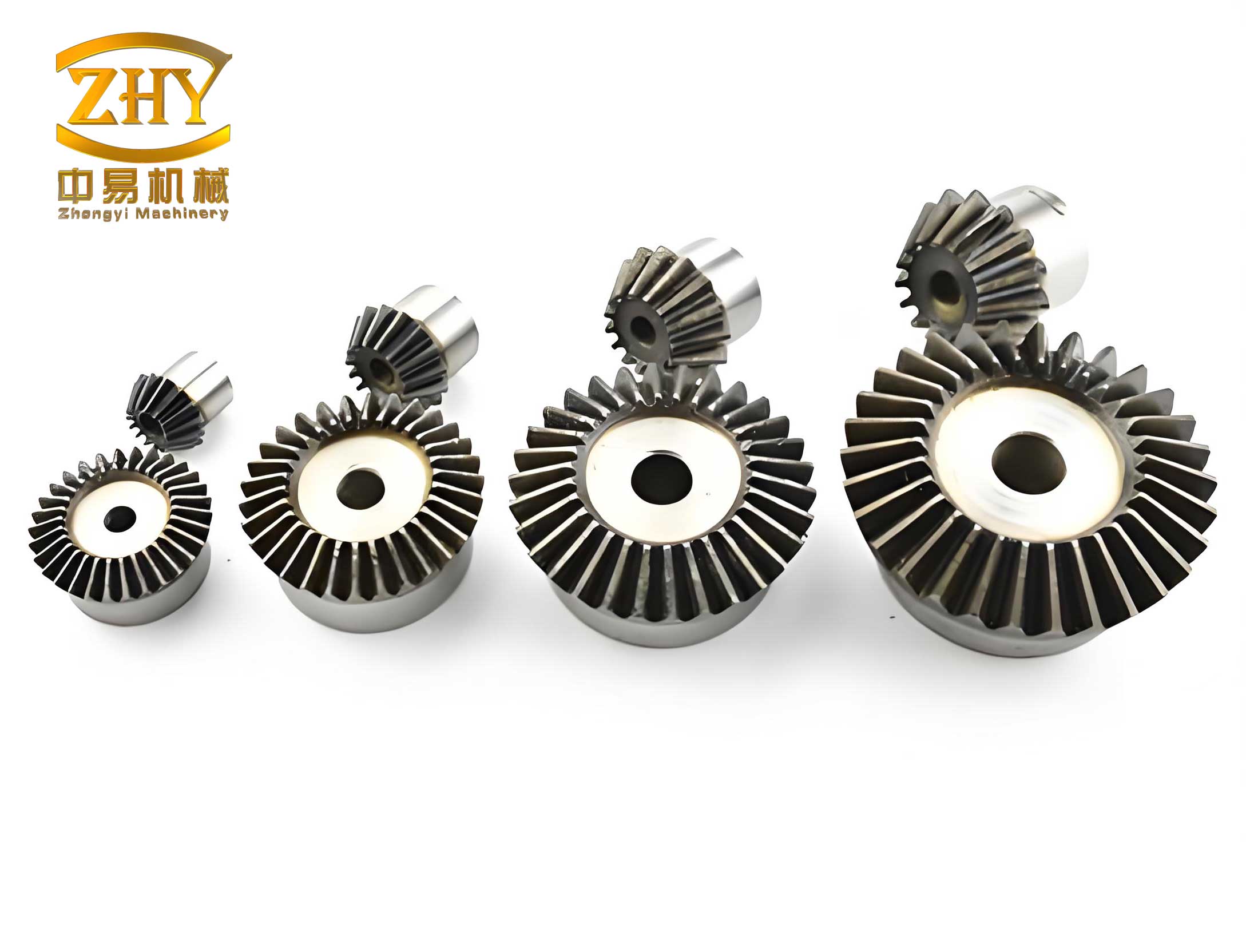
1. Common Failure Modes of Scraper Reducer Bevel Gears
Failures in bevel gear pairs manifest in distinct forms, each signaling specific underlying issues. A systematic categorization aids in diagnosis and prevention.
| Failure Mode | Primary Characteristics & Manifestations | Direct Consequences |
|---|---|---|
| Tooth Surface Wear | Progressive loss of material from the tooth flank. Includes adhesive wear (scuffing) and abrasive wear (scratching). Surface loses光泽, may show discoloration from overheating. | Increased backlash, loss of transmission accuracy, elevated noise and vibration, reduced efficiency. |
| Surface Fatigue (Pitting & Spalling) | Initiation of micro-cracks below the surface due to cyclic Hertzian contact stresses. Leads to material breakout, creating pits. Spalling is severe, large-scale flaking. | Rough operation, increased dynamic loads, can propagate to catastrophic failure. Significantly reduces load-carrying capacity. |
| Tooth Breakage | Complete fracture of a tooth, either at the root (bending fatigue) or through the tooth body (overload). Can be partial or total. | Immediate and catastrophic failure of the gear set, causing severe secondary damage to the entire reducer. |
| Bearing-Induced Failures | Wear, brinelling, or seizure of supporting bearings (typically tapered roller bearings). Often leads to improper shaft positioning. | Loss of precise bevel gear mesh alignment, inducing abnormal loading patterns on teeth, accelerating all other failure modes. |
The interaction between these modes is complex. For instance, improper bearing preload can misalign the bevel gear mesh, leading to localized high-stress concentrations that accelerate pitting, which in turn can act as a stress riser leading to tooth breakage.
2. Root Cause Analysis: A Multi-Factorial Perspective
The failure of a bevel gear is rarely due to a single cause. It is typically the result of a chain of interrelated factors spanning design, manufacturing, operation, and maintenance.
2.1 Design and Manufacturing Flaws
The foundation of reliability is laid during the design and manufacturing stages. Compromises here predispose the bevel gear to premature failure.
- Material Deficiencies: Inadequate steel grade, improper forging leading to grain flow discontinuities, or non-metallic inclusions act as internal stress concentrators. The core hardness and case hardness depth after carburizing must be meticulously controlled. A simplified model for bending stress at the tooth root, derived from the Lewis formula, highlights the importance of material strength:
$$ \sigma_b = \frac{F_t}{b m_n} \cdot \frac{1}{Y_F Y_\beta Y_\epsilon} $$
Where \( \sigma_b \) is bending stress, \( F_t \) is tangential load, \( b \) is face width, \( m_n \) is normal module, and \( Y_F, Y_\beta, Y_\epsilon \) are form factor, helix angle factor, and contact ratio factor, respectively. A lower material endurance limit \( \sigma_{FP} \) relative to \( \sigma_b \) guarantees fatigue failure. - Heat Treatment Imperfections: Non-uniform carburizing, excessive retained austenite, or grinding burns can create a weak subsurface layer prone to spalling. The residual stress profile after heat treatment is critical for resisting contact fatigue.
- Geometric Inaccuracies: Errors in tooth profile (involute/modified involute for spiral bevel gears), lead, and pitch can result in poor contact patterns and edge loading. This drastically increases localized contact stress, governed by the Hertzian stress equation:
$$ \sigma_H = Z_E \sqrt{\frac{F_t}{b d_1} \cdot \frac{u \pm 1}{u} \cdot \frac{1}{\cos^2\alpha_t}} $$
Here, \( Z_E \) is the elasticity factor, \( d_1 \) is the pinion reference diameter, \( u \) is the gear ratio, and \( \alpha_t \) is the transverse pressure angle. Small geometric errors can cause significant spikes in \( \sigma_H \), exceeding the material’s allowable contact stress \( \sigma_{HP} \).
2.2 Assembly and Installation Errors
A perfectly manufactured bevel gear set can be ruined during assembly. Precision alignment is non-negotiable.
- Shaft Misalignment: Non-parallelism and offset errors between the pinion and gear shafts destroy the theoretical conjugate action. The load distribution across the tooth face becomes highly uneven. The effective face width \( b_{eff} \) in the stress calculations reduces, causing a proportional increase in stress:
$$ \sigma_{b, actual} \propto \frac{1}{b_{eff}}, \quad \sigma_{H, actual} \propto \frac{1}{\sqrt{b_{eff}}} $$
where \( b_{eff} << b \) (the nominal face width). - Incorrect Backlash and Bearing Preload: Insufficient backlash leads to binding and overheating; excessive backlash causes impact loads during torque reversal. Incorrect tapered bearing preload leads to either excessive rolling friction and heat generation (over-preload) or axial play and loss of positioning (under-preload), both destabilizing the bevel gear mesh.
2.3 Operational and Environmental Assaults
The coal mine environment presents a “perfect storm” of conditions hostile to precision gearing.
- Contaminated Lubrication: Coal dust, silica, and moisture ingress are the primary agents of abrasive wear. The wear volume \( V \) can be modeled by a modified Archard’s equation:
$$ V = k \cdot \frac{W \cdot s}{H} \cdot C_{contam} $$
Where \( k \) is a wear coefficient, \( W \) is load, \( s \) is sliding distance, \( H \) is material hardness, and \( C_{contam} \) is a severe contamination factor (>1). - Shock and Overload Conditions: Blockages in the conveyor, sudden coal surges, or chain breakages impose dynamic loads far exceeding the design torque. The safety factor \( S_F \) against bending fatigue is challenged:
$$ S_F = \frac{\sigma_{FP}}{\sigma_b \cdot K_A \cdot K_V \cdot K_{F\beta} \cdot K_{F\alpha}} $$
The application factor \( K_A \) for shock loads can be very high, drastically reducing \( S_F \). If \( S_F \) falls below 1.0, immediate or rapid progressive failure is likely. - Thermal Cycling and Moisture: Temperature fluctuations cause differential expansion, potentially altering clearances. Moisture leads to oil emulsification and corrosion on tooth flanks, creating pits that initiate fatigue cracks.
2.4 Inadequate Maintenance Practices
Maintenance is the frontline defense against failure. A reactive “run-to-failure” approach guarantees high costs.
- Irregular or Incorrect Lubrication: Using the wrong oil viscosity grade, extended oil drain intervals, and failing to monitor oil condition (via particle count, moisture, and spectroscopy) allow wear modes to accelerate unchecked.
- Lack of Predictive Monitoring: Relying solely on visual inspection during infrequent shutdowns misses the opportunity to detect developing faults through vibration analysis, thermography, or oil analysis.
- Ignoring Early Warning Signs: Dismissing increases in operating temperature, changes in sound (increased whining or knocking), or minor oil leaks allows a manageable issue to escalate into a major failure.
| Root Cause Category | Specific Factors | Primary Effect on Bevel Gear |
|---|---|---|
| Design/Manufacturing | Poor material, improper heat treatment, profile errors. | Low intrinsic strength & fatigue resistance, poor mesh geometry. |
| Assembly/Installation | Shaft misalignment, incorrect backlash/preload. | Highly uneven load distribution, induced cyclic stresses. |
| Operation/Environment | Contaminants, shock loads, thermal/moisture cycles. | Abrasive wear, bending overload, corrosion, altered clearances. |
| Maintenance | Poor lubrication, no condition monitoring, ignored warnings. | Accelerates all wear and fatigue processes, misses intervention points. |
3. A Systematic Prevention and Mitigation Strategy
Preventing bevel gear failures requires a holistic, life-cycle management approach that addresses each root cause category. The goal is to shift from reactive repair to proactive reliability management.
3.1 Enhancement at Source: Design and Procurement
- Specification Upgrades: Mandate the use of high-cleanliness alloy steels (e.g., AISI 8620, 9310) with strict controls on inclusions. Specify deep case carburizing with a “compressive” residual stress profile. Require tooth flank modifications (profile and lead crowning) to accommodate inevitable slight deflections and misalignments under load.
- Advanced Manufacturing & QA: Source bevel gears from manufacturers utilizing state-of-the-art gear grinding (e.g., continuous generating grind) and 100% inspection via gear measuring centers. Certificates of Conformance must include detailed reports on heat treatment charts and gear geometry.
- Design for Serviceability: Advocate for reducer designs that facilitate easier in-situ inspection and adjustment of bevel gear mesh and bearing preload, even in confined underground spaces.
3.2 Precision in Assembly and Commissioning
- Standardized Assembly Procedures: Develop and enforce detailed assembly protocols using precision alignment tools (laser shaft alignment systems). The final installed position must be verified against nominal values.
$$ \text{Alignment Tolerance} \leq \pm 0.05 \, \text{mm offset}, \quad \leq \pm 0.05 \, \text{mm/m angularity} $$ - Controlled Setup: Use the “pinion setting method” or “gear setting method” with precise gauging to establish the correct pinion head setting distance and gear mounting distance. Backlash must be set per manufacturer spec, typically:
$$ \text{Backlash (recommended)} = 0.10 \cdot m_n + 0.02 \, \text{mm to} \, 0.15 \cdot m_n + 0.03 \, \text{mm} $$
Bearing preload must be set using the specified rotational torque method or measured spacer method. - Run-in and Initial Inspection: Implement a controlled run-in procedure under reduced load to allow the bevel gear contact pattern to naturally develop and stabilize. Inspect the initial contact pattern using marking compound and document it as a baseline.
3.3 Robust Operational and Condition-Based Maintenance
This is the most critical ongoing phase for ensuring bevel gear longevity.
- Contamination Control: Implement a multi-tiered sealing strategy (e.g., labyrinth seals with grease purges) to exclude coal dust. Use high-quality, synthetic gear oils with excellent thermal stability and demulsibility. Install and maintain effective breathers and desiccant filters. The target oil cleanliness for a heavily loaded bevel gear should be ISO 4406 17/15/13 or better.
- Condition Monitoring Program: Deploy a suite of sensors and analysis techniques:
- Vibration Analysis: Monitor high-frequency vibration signatures (acceleration enveloping) to detect early-stage pitting and bearing defects. Track gear mesh frequency (GMF) sidebands.
$$ \text{GMF} = \frac{N \cdot \text{RPM}}{60} $$
Where \( N \) is the number of teeth on the gear being monitored. - Oil Analysis: Perform routine oil analysis to track wear metals (Fe, Cr, Ni from gears/bearings), particle count, and moisture content. Trend analysis is key.
- Thermography: Use infrared cameras during operation to identify abnormal temperature gradients across the reducer housing, indicating potential overloading or lubrication issues.
- Vibration Analysis: Monitor high-frequency vibration signatures (acceleration enveloping) to detect early-stage pitting and bearing defects. Track gear mesh frequency (GMF) sidebands.
- Predictive Maintenance Scheduling: Use data from condition monitoring to move from time-based to condition-based maintenance. Plan interventions during scheduled production stops before a functional failure occurs. The remaining useful life (RUL) can be estimated using models that integrate wear and fatigue damage:
$$ D_{fatigue} = \sum_{i=1}^{n} \frac{n_i}{N_i} $$
Where \( n_i \) is the number of cycles at a given stress level \( \sigma_i \), and \( N_i \) is the number of cycles to failure at that stress level (from the S-N curve). Failure is predicted when \( D_{fatigue} \to 1 \).
3.4 Data-Driven Feedback and Continuous Improvement
- Failure Analysis Protocol: For every bevel gear failure, conduct a formal root cause analysis (RCA). Metallurgical examination of failed parts is essential to distinguish between bending fatigue, contact fatigue, and abrasive wear.
- Life Cycle Cost (LCC) Optimization: Shift the procurement focus from initial purchase price to total life cycle cost. A more expensive, high-performance bevel gear set with double the service life but costing only 50% more is a far better economic choice when downtime costs are factored in.
$$ \text{LCC} = C_{acq} + C_{inst} + C_{energy} + \sum (C_{maintenance} + C_{downtime}) + C_{disposal} $$
Investments in quality, sealing, and monitoring directly reduce \( C_{downtime} \) and \( C_{maintenance} \). - Knowledge Management: Maintain a detailed database of all bevel gear failures, repairs, inspection findings, and lubrication histories. Use this data to refine specifications, maintenance intervals, and operational guidelines.
| Prevention Phase | Key Actions | Expected Outcome for Bevel Gears |
|---|---|---|
| Design & Procurement | Upgraded material/heat treat specs, advanced manufacturing QA. | Higher intrinsic fatigue strength, optimal initial geometry. |
| Assembly & Commissioning | Precision alignment, controlled setup and run-in. | Perfect initial mesh contact, even load distribution from start. |
| Operation & Maintenance | Aggressive contamination control, condition monitoring (vibration, oil). | Minimized abrasive wear, early fault detection, predictive scheduling. |
| Analysis & Improvement | RCA on every failure, LCC-based decisions, knowledge database. | Closed-loop learning, continuous specification and practice improvement. |
4. Conclusion
The reliability of the bevel gear pair in a coal mine scraper reducer is not a matter of chance but the result of deliberate, systematic engineering and management practices. The harsh operating environment makes these components inherently vulnerable, but this vulnerability can be effectively managed. The journey begins with specifying and procuring high-integrity bevel gears, is secured through meticulous assembly, and is sustained through a rigorous regime of contamination control, lubrication management, and advanced condition monitoring. By integrating data from vibration, oil analysis, and thermography into a predictive maintenance framework, we can anticipate failures and intervene proactively. Ultimately, viewing the bevel gear not as a commodity but as a critical system whose health is directly linked to production and safety outcomes fosters a culture of precision and care. This holistic, life-cycle-oriented approach is the most effective strategy to minimize unplanned downtime, reduce repair costs, and ensure the safe, continuous flow of material that is the lifeblood of the mining operation.