
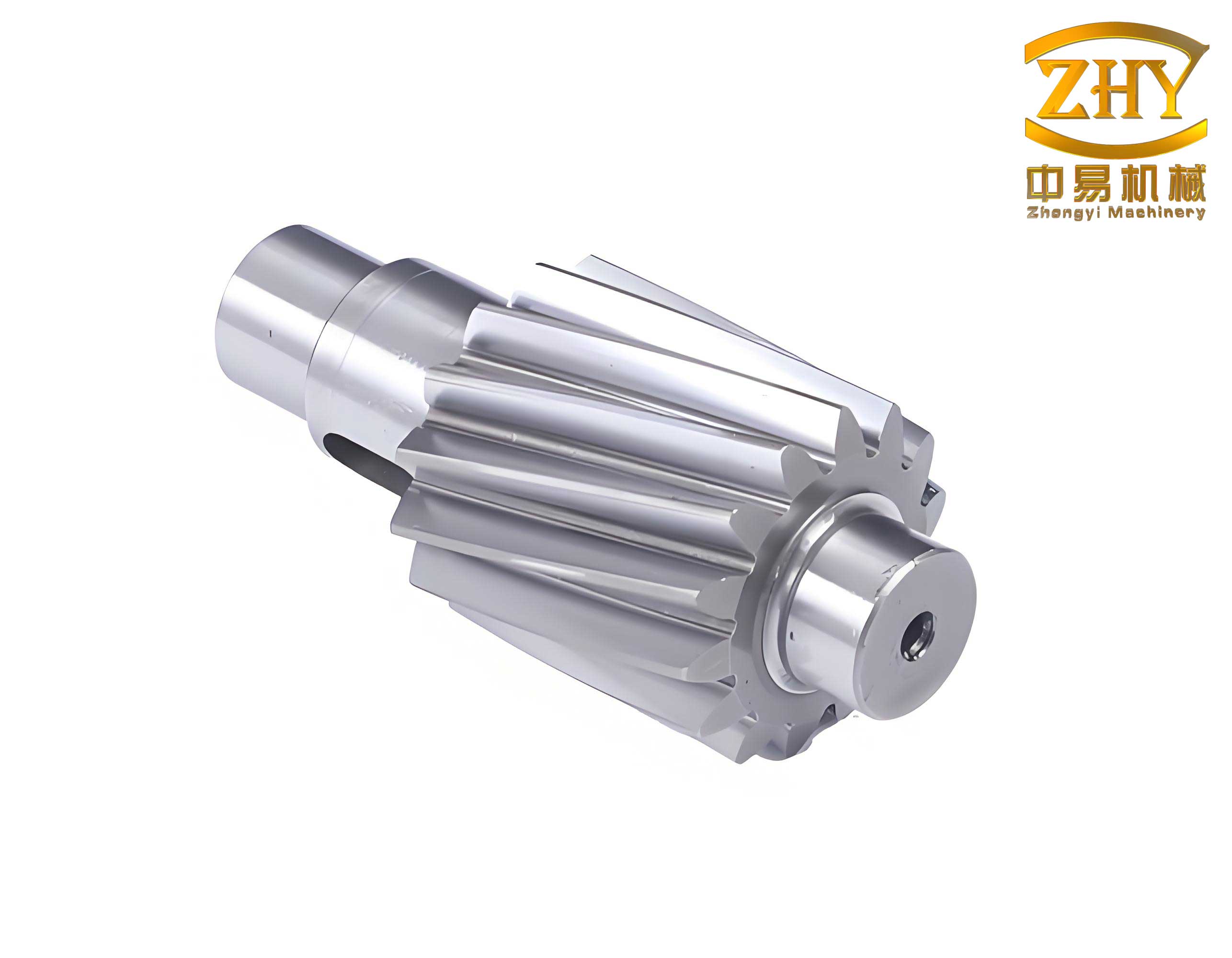
Gear shaft systems are fundamental components in a vast array of industrial machinery, automotive drivetrains, and aerospace applications, prized for their efficient power transmission and reliability. However, the inherent dynamics of meshing gears, compounded by manufacturing imperfections, misalignment, and operational loads, inevitably generate significant vibration and noise. This vibration is spectrally complex, typically comprising the gear mesh frequency (GMF), its higher-order harmonics, shaft rotational frequencies, and associated sidebands arising from modulation effects. Persistent and severe vibration accelerates fatigue failure in gear teeth, bearings, and supporting structures, leading to reduced operational lifespan, increased maintenance costs, and potential safety hazards. Consequently, effective vibration control in gear shaft systems remains a critical research and engineering challenge.
Traditional approaches to mitigating gear vibration span both design-stage optimization and passive damping techniques. Dynamic modeling and parametric optimization, including gear tooth profiling and micro-geometry modifications, aim to minimize vibration at the design source. Passive damping methods, such as constrained layer damping treatments applied directly to gear webs, damping rings, or tuned dampers, dissipate vibrational energy through material hysteresis. While beneficial, these methods often add non-negligible mass, may be limited to attenuating specific resonant modes, and can be difficult to apply within strict weight and space constraints of precision gear shaft assemblies. Active vibration control strategies, employing piezoelectric or electromagnetic actuators with sophisticated control algorithms, have demonstrated high performance but at the cost of system complexity, significant power requirements, and sensitivity to tuning, often targeting narrow frequency bands. This investigation focuses on evaluating a passive, non-intrusive viscous damping solution designed specifically for integration into rotating gear shaft systems, offering broadband attenuation without altering the primary structural design or adding significant rotating mass.
Theoretical Background and Damper Working Principle
The dynamic response of a gear pair mounted on compliant shafts and bearings can be represented by a simplified two-degree-of-freedom model per transverse direction. Consider a gear shaft system consisting of a driving pinion (Gear 1) and a driven gear (Gear 2). The equations of motion for the transverse vibrations (e.g., in the y-direction) of the gear masses, considering gear mesh interaction, can be expressed as:
$$m_1 \ddot{y}_1 + c_{b1} \dot{y}_1 + k_{b1} y_1 + F_m = 0$$
$$m_2 \ddot{y}_2 + c_{b2} \dot{y}_2 + k_{b2} y_2 – F_m = 0$$
Here, $m_i$, $c_{bi}$, and $k_{bi}$ represent the mass, effective damping, and effective stiffness of the bearing support for the $i$-th gear shaft ($i=1,2$). The term $F_m$ is the dynamic mesh force arising from the interaction between the two gears. This force is a primary excitation source and is a function of the static transmission error (STE), time-varying mesh stiffness $k_m(t)$, and mesh damping $c_m$:
$$F_m = c_m (\dot{y}_1 – \dot{y}_2 – \dot{e}) + k_m(t) (y_1 – y_2 – e)$$
In this equation, $e(t)$ represents the static transmission error, which includes geometric errors and deflections. The periodic fluctuation of $k_m(t)$ and the excitation from $e(t)$ are key sources of vibration at the mesh frequency and its harmonics.
The proposed mitigation strategy involves augmenting the system damping. A viscous damper, when attached to a gear shaft, acts as an additional velocity-proportional damping element. If such a damper with damping coefficient $c_d$ is attached to the first gear shaft, the modified equation for that shaft becomes:
$$m_1 \ddot{y}_1 + (c_{b1} + c_d) \dot{y}_1 + k_{b1} y_1 + F_m = 0$$
The increased damping term $(c_{b1} + c_d)$ directly opposes the vibratory velocity $\dot{y}_1$. In the frequency domain, increased damping reduces the amplitude of the system’s response near resonance frequencies and broadens the effective attenuation bandwidth. Crucially, a well-designed viscous damper provides damping that is effective across a wide frequency range, unlike tuned absorbers which target specific frequencies. The damper’s effectiveness stems from dissipating kinetic energy from the vibrating gear shaft into heat via the shear of a high-viscosity fluid.
Design and Integration of the Viscous Damper for Gear Shafts
The viscous damper developed for this study is a passive device engineered for seamless integration into existing gear shaft system layouts. Its core design principle is to provide substantial damping without carrying any static load or interfering with the normal rotation of the gear shaft.
The damper assembly consists of a central piston, a sealed cylindrical housing, a dedicated support bearing, and a chamber filled with a high-viscosity silicone-based damping fluid. The housing is fixed rigidly to the stationary machine frame or baseplate. The piston is connected not directly to the rotating gear shaft, but to an intermediate component that is coupled to the shaft via a low-friction bearing (e.g., a deep-groove ball bearing). This bearing allows the gear shaft to rotate freely while transmitting transverse vibrational motions from the shaft to the damper’s piston.
The operational principle is straightforward: when the gear shaft vibrates laterally due to mesh forces or imbalances, these motions are transferred through the bearing to the damper piston. The piston, in turn, moves within the stationary housing filled with viscous fluid. The shear forces generated between the moving piston surfaces and the stationary fluid convert the mechanical vibrational energy of the gear shaft into heat, thereby attenuating the vibration amplitude. Key advantages of this configuration for gear shaft applications include: 1) Non-rotating Mass: The damper piston and housing are stationary, adding no unbalanced rotating mass to the gear shaft. 2) Load-Independent Operation: It provides damping force only in response to dynamic vibratory velocity, not static loads, thus not affecting the primary load path of the gear shaft supports. 3) Broadband Attenuation: The damping force is proportional to velocity across a wide frequency spectrum, making it effective for both mesh harmonics and other forced or resonant vibrations in the gear shaft system. 4) Flexible Installation: The damper can be mounted at various axial locations along a gear shaft where space permits and vibration levels are high.
Experimental Setup and Methodology
A dedicated test rig was constructed to empirically evaluate the vibration attenuation performance of the viscous damper on a gear shaft system under controlled conditions.
Gear Shaft Test Rig Configuration
The test rig features a single-stage, parallel-shaft gearbox. The gear pair consists of spur gears with a 1.5:1 ratio. The pinion (driving gear) has 20 teeth, and the gear (driven gear) has 30 teeth, both with a module of 3 mm. The input and output gear shafts are supported by rolling element bearings spaced 300 mm apart (center-to-center). A DC motor, connected to the input gear shaft via a flexible coupling to isolate motor vibrations, provides the driving torque. The motor speed is controlled by a variable-speed drive, allowing operation up to 10,000 RPM. A drip lubrication system ensures adequate lubrication of the gear mesh during testing.
Instrumentation and Data Acquisition
Vibration response was measured using uni-axial piezoelectric accelerometers mounted on the bearing housings in the horizontal direction, orthogonal to the gear shaft axes. Two primary measurement points were defined: Measurement Point 1 (MP1) on the input shaft bearing housing, and Measurement Point 2 (MP2) on the output shaft bearing housing. A photoelectric tachometer provided a once-per-revolution signal from the input shaft for accurate rotational speed tracking and order analysis. All signals were simultaneously acquired using a multi-channel data acquisition system with 24-bit resolution. Data was sampled at 12.8 kHz and processed using standard signal analysis techniques. Time-domain metrics such as Root Mean Square (RMS) velocity/acceleration and kurtosis were calculated. Frequency domain analysis was performed using Power Spectral Density (PSD) estimates to identify dominant frequency components and assess attenuation across the spectrum.
Test Matrix and Damper Configurations
A series of tests were conducted to isolate the effects of the damper. The baseline condition involved running the gear shaft system without any damper installed. Subsequently, tests were performed with the viscous damper installed in three distinct configurations to understand its influence:
- Configuration A: A single damper attached to the output gear shaft.
- Configuration B: A single damper attached to the input gear shaft.
- Configuration C: Two identical dampers, one attached to the input gear shaft and one to the output gear shaft.
For each configuration, the gear shaft system was operated at a constant input speed. To evaluate performance across a speed range, additional tests were conducted at multiple input speeds with Configuration C. The primary operational speed for detailed comparison was set at an input shaft speed ($n_1$) of 600 RPM (10 Hz), resulting in an output shaft speed ($n_2$) of 400 RPM (6.67 Hz). The corresponding fundamental gear mesh frequency (GMF) is:
$$f_{mesh} = \frac{Z_1 \cdot n_1}{60} = \frac{20 \cdot 600}{60} = 200 \text{ Hz}$$
This GMF and its harmonics serve as key markers in the spectral analysis.
Experimental Results and Analysis
Baseline Vibration Characteristics of the Gear Shaft System
Initial tests without dampers established the baseline vibration signature. At 600 RPM input speed, the time-domain acceleration signals showed significant impulsive content and amplitude modulation, indicative of typical gear meshing impacts and possibly slight misalignment. The frequency spectra were rich in content. Notably, while the fundamental GMF at 200 Hz was present, its amplitude was relatively low. Prominent peaks were observed at higher harmonics of the GMF (400 Hz, 600 Hz, 800 Hz, etc.), along with sideband structures around these harmonics spaced at the shaft rotational frequencies. Furthermore, high-frequency resonant peaks were identified above 1500 Hz, correlated through impact testing and Finite Element Analysis (FEA) with the natural modes of the gearbox housing and the gear shafts themselves. For instance, a peak near 1460 Hz aligned with a housing bending mode, and content around 62-74 Hz corresponded to the first lateral bending mode of the output gear shaft. This complex baseline signature underscores the need for a broadband damping solution.
Vibration Attenuation with a Single Damper on the Output Gear Shaft
Installing a single viscous damper on the output gear shaft (Configuration A) resulted in a dramatic reduction in vibration levels. The time-domain waveforms showed visibly reduced peak amplitudes and less modulation. Quantitative analysis revealed substantial decreases in the RMS acceleration levels at both measurement points, proving that damping applied to one gear shaft benefits the vibration response of the entire mating pair.
The following table summarizes the key time-domain metric changes for Configuration A compared to the baseline:
| Measurement Point | Baseline RMS Accel. (m/s²) | Config. A RMS Accel. (m/s²) | Reduction | Baseline Kurtosis | Config. A Kurtosis |
|---|---|---|---|---|---|
| MP1 (Input Shaft) | 4.50 | 2.27 | 49.6% | 21.21 | 11.99 |
| MP2 (Output Shaft) | 4.24 | 2.30 | 45.8% | 27.06 | 12.79 |
The reduction in kurtosis, a measure of the impulsiveness of the signal, indicates a smoother operation with fewer extreme vibration events. Spectral plots demonstrated broadband attenuation. For example, at MP1, the high-frequency resonant peak near 2002.5 Hz was attenuated by over 82%. Similar significant reductions were observed across multiple GMF harmonics and sidebands, confirming the damper’s wideband effectiveness on the gear shaft dynamics.
Comparative Analysis of Different Damper Configurations on the Gear Shafts
To systematically evaluate the influence of damper placement, tests for Configurations B (damper on input gear shaft) and C (dampers on both gear shafts) were conducted at the same 600 RPM operating condition. The results are compellingly summarized in the comparative table below, which focuses on the vibration reduction at the 700 Hz frequency component (the 3.5th harmonic of GMF) and the overall RMS levels.
| Configuration | Description | MP1: Accel. at 700 Hz (m/s²) | Reduction | MP2: Accel. at 700 Hz (m/s²) | Reduction | MP1: Overall RMS (m/s²) | Reduction | MP2: Overall RMS (m/s²) | Reduction |
|---|---|---|---|---|---|
| Baseline | No Damper | 1.70 | — | 1.42 | — | 4.50 | — | 4.24 | — |
| A | Damper on Output Gear Shaft | 0.60 | 64.7% | 0.42 | 70.4% | 2.27 | 49.6% | 2.30 | 45.8% |
| B | Damper on Input Gear Shaft | 0.12 | 92.9% | 0.15 | 89.4% | 2.00 | 55.6% | 2.36 | 44.3% |
| C | Dampers on Both Gear Shafts | 0.04 | 97.6% | 0.025 | 98.2% | 1.75 | 61.1% | 1.54 | 63.7% |
The data leads to several critical conclusions regarding gear shaft vibration control:
- Single Damper Efficacy: Both Configurations A and B provided substantial and comparable overall vibration reduction (~45-56% RMS reduction). This confirms that applying viscous damping to either the input or output gear shaft effectively suppresses vibrations transmitted through the mesh, benefiting the entire gear pair. The damper shows a slightly stronger influence on the gear shaft to which it is directly attached.
- Optimal Attenuation: Configuration C, with dampers on both gear shafts, consistently yielded the best performance. The RMS reductions exceeded 60%, and the attenuation of specific harmonic components like the 700 Hz tone approached or exceeded 98%. This demonstrates that simultaneously controlling the vibratory motion of both gear shafts in the mesh pair is the most effective strategy for minimizing the dynamic mesh force excitation at its source.
- Broadband Performance: The spectral comparisons across all configurations showed not just reduction at the selected 700 Hz harmonic, but consistent attenuation across the entire measured spectrum, from low-frequency shaft-related modulations to high-frequency housing resonances. This validates the viscous damper as a true broadband solution for complex gear shaft vibration spectra.
Performance Evaluation Across Different Gear Shaft Rotational Speeds
The robustness of the damping solution was tested by evaluating Configuration C (dampers on both shafts) across a range of input speeds. As expected, the baseline vibration levels of the gear shaft system increased with rotational speed due to higher dynamic forces. The viscous damper configuration, however, maintained excellent and consistent relative performance.
| Input Shaft Speed (RPM) | MP1 RMS Baseline (m/s²) | MP1 RMS with Dampers (m/s²) | Reduction | MP2 RMS Baseline (m/s²) | MP2 RMS with Dampers (m/s²) | Reduction |
|---|---|---|---|---|---|---|
| 600 | 4.50 | 1.75 | 61.1% | 4.24 | 1.54 | 63.7% |
| 750 | 7.27 | 2.64 | 63.7% | 6.49 | 2.14 | 67.0% |
| 900 | 11.04 | 3.91 | 64.6% | 10.21 | 3.73 | 63.5% |
The table clearly shows that the percentage reduction in RMS acceleration remains stable at approximately 63-67% across the tested speed range. This demonstrates that the viscous damping mechanism is effective regardless of the specific excitation frequency (GMF and its harmonics scale with speed), providing reliable vibration control for gear shaft systems operating under variable speed conditions.
Discussion and Implications for Gear Shaft System Design
The experimental findings have significant implications for the design and maintenance of gear shaft systems in industrial applications. The demonstrated broadband attenuation addresses a key limitation of many traditional methods. The damper’s ability to reduce vibrations across a spectrum encompassing mesh harmonics, sidebands, and structural resonances means it can mitigate vibration from multiple potential faults (e.g., slight wear, misalignment, load fluctuations) simultaneously, without requiring diagnosis or tuning to a specific frequency.
The non-intrusive nature of the design is a major practical advantage. Since the damper does not add mass to the rotating gear shaft and does not alter the primary load-bearing structure, it can be retrofitted to existing machinery during overhaul or proactively installed on new designs without major re-engineering. This offers a cost-effective path to enhanced reliability and reduced noise emission.
The comparison between single and dual damper configurations provides valuable guidance for engineers. For applications where space or cost is extremely constrained, a single damper on either the input or output gear shaft provides substantial benefit. However, for optimal performance, especially in high-power or critical applications, installing dampers on both gear shafts in the mesh pair is recommended to maximally damp the relative vibratory motion that generates noise and dynamic loads.
Conclusion
This comprehensive experimental investigation conclusively demonstrates the efficacy of a specially designed viscous damper for attenuating vibration in gear shaft systems. The key outcomes are:
- The viscous damper provides substantial, broadband vibration reduction across the complex frequency spectrum characteristic of gear mesh dynamics, including harmonics, sidebands, and structural resonances.
- A single damper installed on either the input or output gear shaft delivers significant overall vibration attenuation (45-56% RMS reduction), benefiting the entire gear pair.
- The most effective configuration involves installing dampers on both gear shafts in the mesh, achieving over 60% RMS reduction and near-elimination of specific harmonic tones.
- The damper’s performance is consistent across a range of operational speeds, proving its suitability for variable-speed gear shaft applications.
- The solution is passive, non-intrusive, and does not add rotating mass, making it a highly practical and reliable option for both retrofitting existing machinery and integrating into new gear shaft system designs.
This work validates the viscous damper as a powerful tool for enhancing the performance, durability, and acoustic characteristics of gear-driven systems. Future work could explore optimized damper tuning for specific gear geometries, integration with health monitoring systems, and long-term durability testing under industrial operating conditions.