
As an engineer specializing in materials science and failure analysis, I have encountered numerous cases of component failures in automotive systems. One particularly critical component is the gear shaft within the transmission system. The gear shaft plays a pivotal role in transmitting torque and rotational motion, and its failure can lead to catastrophic breakdowns, safety hazards, and significant economic losses. In this comprehensive study, I delve into the fracture failure analysis of an automotive transmission gear shaft, employing a multi-faceted approach to uncover the root causes and propose mitigation strategies. The gear shaft under investigation failed after only eight months of service in a passenger vehicle, prompting a detailed examination to prevent recurrence. Through this analysis, I aim to highlight the importance of rigorous quality control and design considerations for gear shafts in automotive applications.
The transmission system in a vehicle is designed to match engine characteristics with driving demands, and the gear shaft is subjected to complex dynamic loads, including centrifugal forces from rotating masses, cyclic gas inertia forces, and reciprocating inertia forces. These stresses can induce fatigue, especially in regions of geometric discontinuity. In this case, the failed gear shaft was specified to be made of 35 steel, a common medium-carbon steel used for such applications due to its balance of strength and toughness. However, premature failure indicates potential issues in material properties, manufacturing processes, or operational conditions. My investigation utilizes macroscopic examination, chemical composition analysis, mechanical testing, and microstructural evaluation to build a holistic understanding of the failure. Throughout this report, I will frequently refer to the gear shaft as the focal point, emphasizing its criticality in transmission systems.
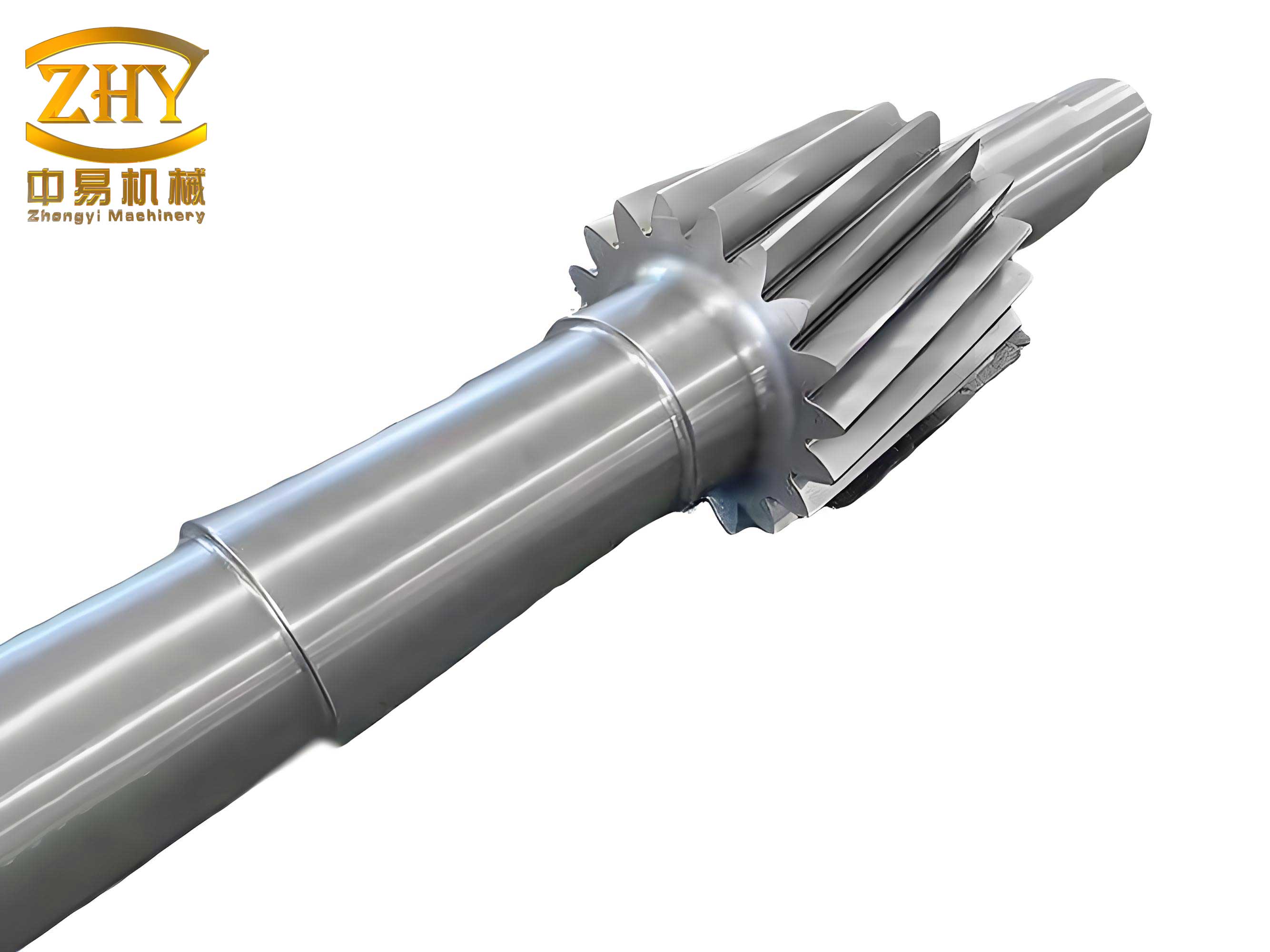
To begin, I obtained the fractured gear shaft sample from the vehicle transmission. The gear shaft exhibited a clear break near the threaded region where it interfaces with a nut. This location is inherently prone to stress concentration due to the sudden change in geometry. My first step involved documenting the macroscopic features using high-resolution digital photography. The fracture surface revealed distinct zones: a smooth, flat area indicative of fatigue crack propagation, followed by a rough,撕裂 region representing final overload failure. The crack origin was identified at the root of a thread on one side, extending transversely before transitioning to longitudinal splitting. This pattern suggests that the gear shaft experienced bending-torsion loading, with fatigue initiating at a stress raiser. No obvious plastic deformation or manufacturing defects were visible to the naked eye, directing my focus toward material integrity and microstructural details.
Chemical composition analysis is fundamental to verify material conformity. I used plasma emission spectroscopy to determine the elemental content of the gear shaft. The results are summarized in Table 1, compared with the requirements from the Chinese national standard GB/T699 for quality carbon structural steel (35 steel). This standard is widely referenced for类似 materials, ensuring consistency in performance expectations.
| Element | Measured Value | Standard Range (GB/T699 for 35 Steel) |
|---|---|---|
| C | 0.37 | 0.32–0.39 |
| Si | 0.25 | 0.17–0.37 |
| Mn | 0.71 | 0.50–0.80 |
| P | 0.008 | ≤0.035 |
| S | 0.006 | ≤0.035 |
| Fe | Balance | Balance |
The data confirm that the chemical composition of the gear shaft falls within the specified limits, ruling out gross compositional deviations as a direct cause of failure. This aligns with expectations for 35 steel, which typically offers good hardenability and mechanical properties when properly heat-treated. However, chemistry alone does not guarantee performance; heat treatment and microstructure play crucial roles in determining the final properties of the gear shaft.
Next, I proceeded to evaluate the mechanical properties of the gear shaft material. Tensile and impact tests were conducted at room temperature according to international standards (analogous to GB/T 228-2010 and GB/T 229-2007). Specimens were machined from the intact sections of the gear shaft to avoid the fracture-affected zone. The results are presented in Table 2, alongside the minimum requirements from GB/T699-2008 for 35 steel. The mechanical behavior of the gear shaft is critical for withstanding operational stresses, and any deficiency can predispose it to failure.
| Mechanical Property | Measured Value | Standard Requirement (GB/T699-2008 for 35 Steel) |
|---|---|---|
| Yield Strength (MPa) | 330 | ≥315 |
| Tensile Strength (MPa) | 525 | ≥530 |
| Elongation (%) | 32 | ≥20 |
| Reduction of Area (%) | 48 | ≥45 |
| Impact Energy (J) | 32 | ≥55 |
The tensile strength and impact energy of the gear shaft material are below the standard requirements. Specifically, the tensile strength is 525 MPa versus the required 530 MPa, and the impact energy is 32 J versus 55 J. While the difference in tensile strength may seem marginal, it indicates that the material did not achieve the expected strength level, possibly due to suboptimal heat treatment. More significantly, the low impact energy suggests reduced toughness, making the gear shaft more susceptible to crack initiation and propagation under dynamic loads. This deficiency in mechanical properties is a key finding that likely contributed to the failure of the gear shaft.
To understand the microstructural basis of these properties, I prepared metallographic samples from regions near the fracture origin, including the thread root and the core of the gear shaft. After sectioning, grinding, polishing, and etching with nital, the samples were examined using optical microscopy and scanning electron microscopy (SEM). The microstructure consistently revealed a matrix of tempered sorbite (回火索氏体), which is typical for quenched and tempered medium-carbon steels like 35 steel. Tempered sorbite consists of fine carbides dispersed in a ferrite matrix, providing a good combination of strength and ductility. However, the effectiveness of this structure depends on the tempering parameters. I observed no evidence of porosity, inclusions, or other冶金 defects in both the thread root and core areas. Additionally, there was no decarburization at the surface, which could have weakened the gear shaft. The microstructural uniformity indicates that the material was sound from a冶金 perspective, but the mechanical test results suggest that the heat treatment might not have been optimized to achieve the desired properties for this gear shaft.
The fracture surface was examined in detail using SEM to characterize the failure mode. The crack origin area, located at the thread root, showed signs of wear and fretting, consistent with stress concentration and cyclic sliding. At higher magnification, fatigue striations were visible, indicating progressive crack growth under cyclic loading. The depth of the fatigue zone from the surface was approximately 2 mm, after which the crack transitioned to fast fracture. The propagation region exhibited dimpled morphology, characteristic of microvoid coalescence and ductile tearing. The final fracture area showed a mix of dimples and cleavage-like features, suggesting overload under complex stress states. Importantly, no large inclusions or defects were found on the fracture surface, corroborating the metallographic findings. The overall fracture morphology confirms that the gear shaft failed by fatigue initiating at the stress-concentrated thread root, followed by rapid crack propagation once the critical crack size was reached.
To quantify the stress concentration effect at the thread root, I consider the theoretical stress concentration factor \( K_t \), which for a threaded geometry can be approximated by formulas such as:
$$ K_t = 1 + 2\sqrt{\frac{a}{\rho}} $$
where \( a \) is the notch depth and \( \rho \) is the root radius. In practice, for standard threads, \( K_t \) can range from 2 to 5, significantly amplifying the nominal stress. For the gear shaft under cyclic loading, the actual stress at the thread root, \( \sigma_{actual} \), is given by:
$$ \sigma_{actual} = K_t \cdot \sigma_{nominal} $$
where \( \sigma_{nominal} \) is the stress calculated from applied loads. If the material’s endurance limit \( \sigma_e \) is exceeded due to this amplification, fatigue cracks can initiate. The endurance limit for 35 steel in a fully reversed bending condition is typically around 200-250 MPa, but this value is reduced by factors like surface finish, size, and loading type. Given the low impact energy of this gear shaft, its resistance to crack initiation and propagation is compromised, exacerbating the effect of stress concentration.
The fatigue crack growth behavior can be described by the Paris law, which relates the crack growth rate \( da/dN \) to the stress intensity factor range \( \Delta K \):
$$ \frac{da}{dN} = C (\Delta K)^m $$
where \( C \) and \( m \) are material constants. For steels, \( m \) is often between 2 and 4. In this gear shaft, the initial crack likely grew slowly according to this law until it reached a critical size, after which unstable fracture occurred. The transition from fatigue to overload is governed by the fracture toughness \( K_{IC} \) of the material. The measured low impact energy correlates with reduced fracture toughness, lowering the critical crack size and accelerating failure. Thus, the combination of high cyclic stress at the thread root and inferior material toughness created a perfect storm for the gear shaft failure.
Further analysis involves evaluating the operational stresses on the gear shaft. In a transmission system, the gear shaft experiences bending moments from gear forces, torsional shear from torque transmission, and axial loads from mounting. The resultant stress state is multiaxial and cyclic. Using simple beam theory, the bending stress \( \sigma_b \) at the thread root can be estimated as:
$$ \sigma_b = \frac{M y}{I} $$
where \( M \) is the bending moment, \( y \) is the distance from the neutral axis, and \( I \) is the area moment of inertia. For a cylindrical gear shaft, \( I = \frac{\pi d^4}{64} \), where \( d \) is the diameter. The torsional stress \( \tau \) is given by:
$$ \tau = \frac{T r}{J} $$
with \( T \) as the torque, \( r \) as the radius, and \( J = \frac{\pi d^4}{32} \) as the polar moment of inertia. Under combined loading, an equivalent stress such as the von Mises stress \( \sigma_{vm} \) can be used:
$$ \sigma_{vm} = \sqrt{\sigma_b^2 + 3\tau^2} $$
This equivalent stress, when multiplied by \( K_t \), should remain below the material’s yield strength under static conditions and below the endurance limit under cyclic conditions. For the failed gear shaft, the calculated stresses likely approached or exceeded these limits due to the stress concentration, especially given the material’s lower tensile strength. This aligns with the observed fatigue initiation at the thread root.
To summarize the findings, the failure of the automotive transmission gear shaft was primarily driven by two factors: inadequate mechanical properties (specifically tensile strength and impact energy) and high cyclic stresses concentrated at the thread root. The chemical composition was within specifications, and the microstructure was sound, indicating that the material selection was appropriate but the heat treatment process可能 did not achieve the optimal properties. The fatigue crack initiated at the stress raiser, propagated through a small region, and then led to catastrophic fracture. This underscores the importance of ensuring that gear shafts meet not only compositional standards but also rigorous mechanical property requirements, particularly toughness, to withstand dynamic loads.
Based on this analysis, I propose several改进 measures to prevent similar failures in future gear shafts. First, the heat treatment process for 35 steel gear shafts should be carefully controlled to achieve the desired tempered sorbite structure with enhanced strength and toughness. This may involve optimizing quenching media, tempering temperature, and time to balance properties. Second, design modifications can reduce stress concentration at the thread root. For example, increasing the root radius, using finer thread pitches, or incorporating fillets can lower \( K_t \). Third, surface treatments such as shot peening or nitriding can introduce compressive residual stresses, improving fatigue resistance. Fourth, stringent non-destructive testing (e.g., ultrasonic or magnetic particle inspection) should be implemented to detect any subsurface defects in gear shafts before assembly. Finally, regular maintenance and monitoring of transmission systems can help identify early signs of wear or damage.
In conclusion, the fracture failure analysis of this automotive transmission gear shaft reveals a interplay between material properties and design stresses. The gear shaft, while chemically compliant, fell short in mechanical performance, making it vulnerable to fatigue under operational conditions. By addressing these issues through improved manufacturing and design practices, the reliability and lifespan of gear shafts can be significantly enhanced. This case study serves as a reminder that even minor deviations in material properties can have major consequences in critical components like the gear shaft, warranting continuous attention in quality assurance and engineering design.
To further elaborate on the material science aspects, let’s consider the relationship between microstructure and mechanical properties in 35 steel. The tempered sorbite structure is achieved by quenching from the austenitizing temperature to form martensite, followed by tempering to precipitate carbides and relieve stresses. The tempering temperature directly influences strength and toughness; lower tempering temperatures yield higher strength but lower toughness, and vice versa. For the gear shaft in question, the mechanical test results suggest that the tempering might have been at a higher temperature, reducing strength but not sufficiently improving toughness. This can be quantified using empirical relationships. For example, the tensile strength \( \sigma_u \) of tempered steels often follows a Hall-Petch type dependence on grain size, but more directly, it correlates with tempering parameters. A common approximation for the yield strength \( \sigma_y \) after tempering is:
$$ \sigma_y = \sigma_0 + k_y d^{-1/2} – \alpha T $$
where \( \sigma_0 \) is a lattice friction stress, \( k_y \) is a constant, \( d \) is grain size, \( \alpha \) is a coefficient, and \( T \) is tempering temperature. However, this is simplified; actual models account for carbide size and distribution. The impact energy \( E_{impact} \) is more sensitive to microstructural features and impurities. For 35 steel, the presence of even small amounts of phosphorous or sulfur can embrittle the grain boundaries, though in this case, those elements were within limits. Thus, the low impact energy points to可能的 issues in the quenching step, such as incomplete transformation or retained austenite, which can reduce toughness.
Another aspect is the effect of cyclic loading frequency and mean stress on fatigue life. The gear shaft in a transmission operates under variable amplitude loading, but for analysis, we can consider a constant amplitude scenario. The fatigue life \( N_f \) can be estimated using the Basquin equation:
$$ \sigma_a = \sigma_f’ (2N_f)^b $$
where \( \sigma_a \) is the stress amplitude, \( \sigma_f’ \) is the fatigue strength coefficient, and \( b \) is the fatigue strength exponent. For 35 steel, typical values of \( \sigma_f’ \) and \( b \) can be derived from S-N curves. With the actual stress amplitude at the thread root, the predicted life can be compared to the eight-month service life. Given the low tensile strength, the fatigue strength of this gear shaft material is likely reduced, shortening its life. Moreover, the presence of mean stress (from static loads) further modifies the fatigue limit according to the Goodman relation:
$$ \sigma_a = \sigma_e \left(1 – \frac{\sigma_m}{\sigma_u}\right) $$
where \( \sigma_m \) is the mean stress and \( \sigma_e \) is the endurance limit for fully reversed loading. If the mean stress is tensile, as in preloaded threads, the allowable stress amplitude decreases, promoting fatigue. This likely contributed to the early failure of the gear shaft.
In terms of改进, computational tools like finite element analysis (FEA) can be employed to simulate stress distributions in gear shafts under load. By modeling the thread geometry with realistic boundary conditions, designers can identify high-stress regions and optimize the shape to minimize \( K_t \). Additionally, material selection can be revisited; while 35 steel is common, alternative steels like 40Cr or 42CrMo offer higher strength and toughness, though at increased cost. For high-performance applications, such upgrades might be justified to ensure reliability. Furthermore, manufacturing processes like precision forging or grinding can improve surface finish, reducing the likelihood of crack initiation. The gear shaft should also be subjected to rigorous testing, including fatigue testing under simulated operating conditions, to validate its durability.
To encapsulate the key points, I present a summary table of the failure analysis findings and recommendations specific to the gear shaft:
| Aspect | Findings | Recommendations |
|---|---|---|
| Chemical Composition | Conforms to GB/T699 for 35 steel. | Maintain strict compositional control. |
| Mechanical Properties | Tensile strength and impact energy below standard. | Optimize heat treatment to achieve required properties; consider using Charpy V-notch testing as a quality check. |
| Microstructure | Tempered sorbite without defects. | Ensure consistent heat treatment cycles; monitor microstructure for uniformity. |
| Fracture Morphology | Fatigue initiation at thread root, followed by overload. | Redesign thread geometry to reduce stress concentration; implement surface hardening treatments. |
| Stress Analysis | High cyclic stress at stress raiser due to bending and torsion. | Use FEA to optimize design; consider increasing shaft diameter or adding fillets. |
| Operational Factors | Dynamic loads in transmission environment. | Incorporate fatigue life predictions in design; regular inspection of gear shafts in service. |
This comprehensive analysis underscores the multifaceted nature of gear shaft failures. By integrating materials engineering, mechanical design, and operational insights, we can develop more robust transmission components. The gear shaft, as a linchpin in the power train, demands unwavering attention to detail in all stages from material selection to final assembly. Through continuous improvement and adherence to best practices, the automotive industry can mitigate such failures and enhance vehicle safety and performance.