
The ongoing advancement in polymer technology has significantly influenced the design paradigms within power transmission systems. A prominent trend, often termed “plastic-for-metal substitution,” is increasingly evident in gear drives operating under medium to low loads. A specific and valuable application of this concept is found in crossed-axis drives, where a plastic helical gear is employed to mate with a steel worm, effectively replacing the traditional bronze or cast iron worm gear. This hybrid worm gear drive configuration offers benefits such as reduced weight, lower noise, inherent corrosion resistance, and cost-effectiveness in mass production.
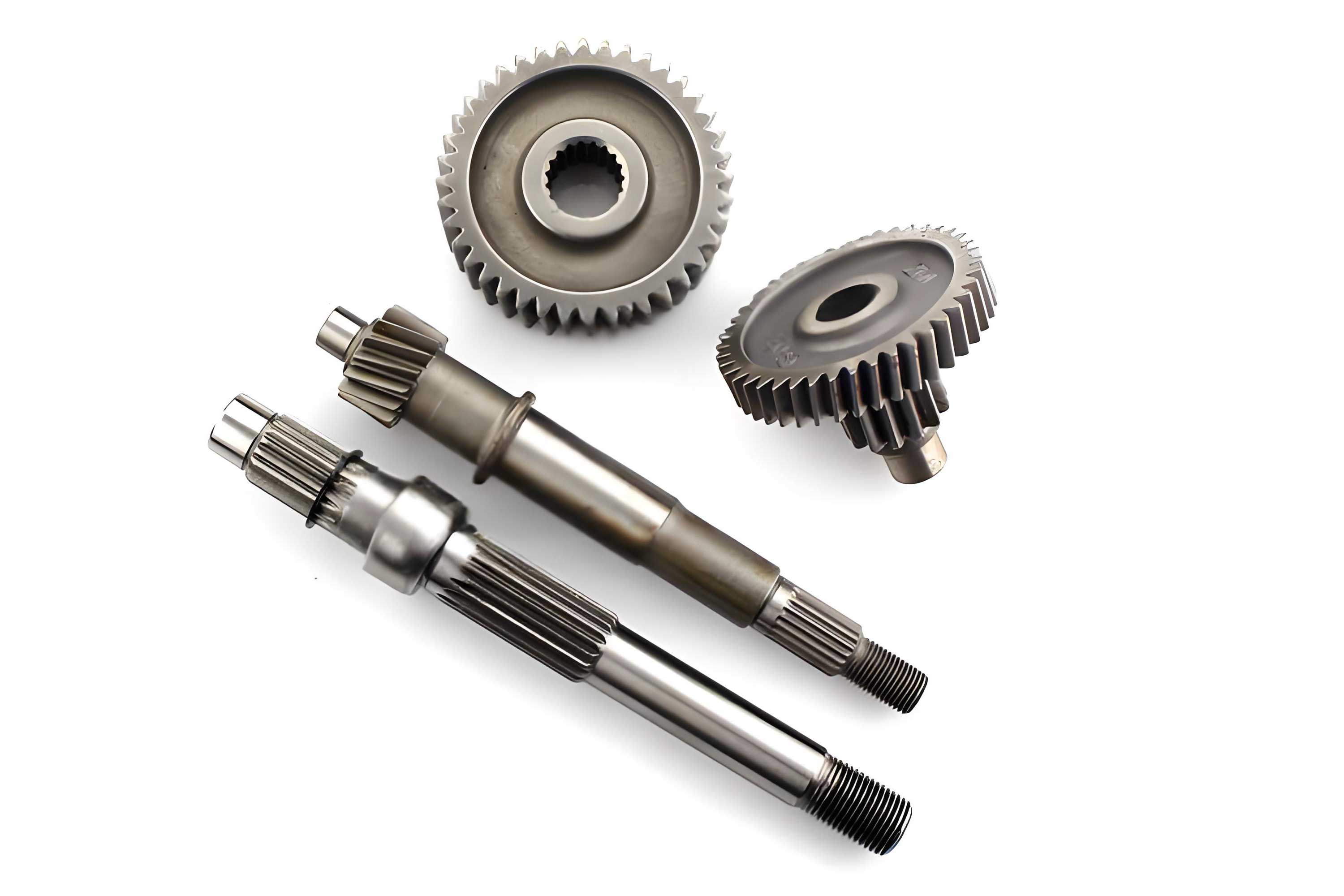
However, the successful implementation of such hybrid worm gear drives presents distinct engineering challenges. The material properties of metals and plastics differ drastically in terms of elastic modulus, strength, thermal conductivity, and wear characteristics. Plastic gears exhibit complex damage modes under cyclic loading, including tooth bending fatigue, pitting, wear, and thermal failure, making the accurate prediction of their service life considerably more difficult than for their metal counterparts. This life prediction is crucial for reliable design. Therefore, developing a robust methodology for analyzing the fatigue life of the plastic component in a steel-plastic worm gear drive is of substantial practical importance. This article details a comprehensive approach combining dynamic simulation and standard-based fatigue analysis to address this challenge, validated through physical testing.
Fundamentals of the Worm and Helical Gear Mesh
The kinematic pair formed by a worm and a helical gear, while functionally similar to a classic worm gear set, has specific geometric requirements for proper meshing. In a standard worm gear set, the worm’s axial parameters (axial module, axial pressure angle) are standard, and its thread profile is commonly an Archimedean spiral. In contrast, when a worm mates with a standard involute helical gear, the worm must be designed with standard *normal* parameters. The correct meshing conditions for this hybrid worm gear drive are:
- The normal module ($m_n$) and normal pressure angle ($\alpha_n$) of the worm and the helical gear must be equal.
- The lead angle of the worm ($\gamma$) at the reference diameter must be equal in magnitude and opposite in hand to the helix angle of the helical gear ($\beta$).
- Both members must have the same hand of helix.
The fundamental gear geometry relationship governing this condition is the equality of normal circular pitches:
$$ p_{n1} = p_{n2} $$
$$ \pi m_{n1} = \pi m_{n2} $$
Thus, $m_{n1} = m_{n2}$.
Due to the significant disparity in material strength between steel and engineering plastics, a balanced design is essential to prevent premature failure of the plastic gear. This is typically achieved through profile shift (modification). The basic principle is to reduce the tooth thickness of the stronger steel worm and increase the tooth thickness of the weaker plastic helical gear. A common rule of thumb is to allocate the working circular thickness at the pitch circle in a ratio between 60:40 to 70:30 (plastic:steel). Furthermore, using a lower normal pressure angle (e.g., 10° to 15°) increases the contact ratio, distributing the load over more teeth and reducing the stress on individual plastic gear teeth. Based on these principles, the primary design parameters for the case study worm gear drive are summarized below.
| Parameter | Worm (Driver) | Helical Gear (Driven) |
|---|---|---|
| Number of Threads/Teeth | 1 | 39 |
| Material | Medium Carbon Steel | POM (Polyoxymethylene) |
| Normal Module, $m_n$ (mm) | 1.0 | 1.0 |
| Normal Pressure Angle, $\alpha_n$ (°) | 14.5 | 14.5 |
| Helix/Lead Angle & Hand | 9.2974° (R) | 9.2974° (R) |
| Reference Diameter (mm) | 6.181 | 39.519 |
| Center Distance (mm) | 22.85 | |
| Young’s Modulus, $E$ (MPa) | 2.10e5 | 2.85e3 |
| Tensile Strength (MPa) | 600 | 61 |
Development of a Rigid-Flexible Dynamic Model
To accurately capture the dynamic stresses within the plastic gear, a multi-body dynamics (MBD) simulation model was developed using RecurDyn software. The core of this methodology is the creation of a rigid-flexible coupled model.
Model Preparation: The steel worm, due to its significantly higher stiffness and strength, is appropriately modeled as a rigid body. The POM helical gear, being the component of interest for stress and fatigue analysis, is converted into a flexible body. Its precise geometry was meshed with finite elements using HyperMesh, generating a modal-neutral file containing the gear’s mass and stiffness characteristics. This flexible body representation allows the gear to elastically deform under load, which is critical for obtaining realistic time-varying stress distributions.
Contact Force Modeling in MBD: The interaction between the worm and the gear teeth is governed by a contact force algorithm. RecurDyn employs a modified Hertzian contact theory model. When two bodies penetrate each other by a virtual depth $\delta$, a contact force $f_n$ is generated. This force consists of an elastic (spring) component and a damping (dissipative) component:
$$ f_n = k \delta^{m_1} + c \frac{\dot{\delta}}{|\dot{\delta}|} |\dot{\delta}|^{m_2} \delta^{m_3} $$
where $k$ is the contact stiffness coefficient, $c$ is the damping coefficient, $\dot{\delta}$ is the penetration velocity, and $m_1$, $m_2$, $m_3$ are exponents for stiffness, damping, and indentation, respectively.
The contact stiffness $k$ is a critical parameter derived from the material properties and local geometry at the contact point:
$$ \frac{1}{E^*} = \frac{1-\mu_1^2}{E_1} + \frac{1-\mu_2^2}{E_2} $$
$$ \frac{1}{R^*} = \frac{1}{R_1} + \frac{1}{R_2} $$
$$ k = \frac{4}{3} E^* \sqrt{R^*} $$
Here, $E_1$, $E_2$, $\mu_1$, $\mu_2$, $R_1$, and $R_2$ are the Young’s moduli, Poisson’s ratios, and contact radii of curvature for the worm and gear tooth surfaces at the meshing point. For this worm gear drive, using the material properties from the table and estimated radii at the pitch point, the contact stiffness was calculated to be approximately $k = 7.57 \times 10^3$ N/mm. A damping coefficient $c$ of 1.5 N·s/mm and a static/kinetic friction coefficient pair of 0.13/0.09 were applied based on empirical tuning and lubricated contact conditions.
Dynamic Loading Conditions: The driving condition for the worm gear drive was defined based on the application’s specifications. A rotational velocity of 428.83 rad/s (approximately 4095 RPM) was applied to the steel worm shaft using a step function to avoid numerical discontinuity: $\omega(t) = \text{STEP}(t, 0, 0, 0.1, 428.83)$. A constant resistive torque of 4.2 N·m was applied to the plastic helical gear, also ramped up over 0.1 seconds.
Dynamic Simulation Results and Stress Analysis
The transient dynamic simulation was run for a sufficient duration to capture several meshing cycles after the initial ramp-up. The primary output was the time-history of the dynamic contact forces between the worm and the gear teeth. The force profile exhibited periodic fluctuations superimposed on a steady mean value, reflecting the changing number of tooth pairs in contact and the elastic vibrations of the flexible plastic gear.
| Force Component | Theoretical Value (N) | Simulation Mean Value (N) | Error (%) |
|---|---|---|---|
| Tangential Force (Gear) | 216.31 | 223.55 | 3.24 |
| Radial Force | 55.94 | 58.79 | 4.85 |
| Axial Force | 36.59 | 37.95 | 3.58 |
The close agreement (within 5%) between the simulated mean forces and the forces calculated from classic gear theory validates the basic kinematic and load-sharing accuracy of the dynamic worm gear drive model.
The most critical result from the flexible-body dynamics simulation is the transient stress field within the plastic helical gear. The maximum contact (Hertzian) stress on the gear tooth flank was extracted. The theoretical maximum contact stress $\sigma_H$ for a gear pair can be estimated by:
$$ \sigma_H = Z_E Z_\epsilon \sqrt{ \frac{2 T_2 K}{d_2^2 b} \cdot \frac{u+1}{u} } $$
or in a form consolidated for a specific geometry:
$$ \sigma_H = Z_E Z_P \sqrt{ \frac{T_2 K}{a^3} } $$
where $Z_E$ is the elasticity factor, $Z_\epsilon$ is the contact ratio factor, $Z_P$ is a geometry factor (approx. 2.7 for this case), $T_2$ is the gear torque, $K$ is the load factor, $d_2$ is the gear pitch diameter, $b$ is the face width, $u$ is the gear ratio, and $a$ is the center distance. For the given 4.2 N·m load, the theoretical contact stress was approximately 49.7 MPa.
The dynamic simulation produced a maximum contact stress value of 48.32 MPa on the plastic gear tooth flank, showing excellent correlation (within 3%) with the theoretical calculation. This stress occurs in a localized region where the worm thread makes contact, confirming the model’s ability to accurately predict the critical loading condition for fatigue analysis.
Fatigue Life Assessment Methodology
Since the operating stress (48.32 MPa) is well below the tensile yield strength of POM (71 MPa), failure is governed by high-cycle fatigue. The nominal stress approach (Stress-Life or S-N approach) is therefore applicable for life prediction.
Step 1: Fatigue Strength Check
A preliminary check ensures the design stress is below the permissible fatigue limit. The allowable contact stress $\sigma_{HP}$ is:
$$ \sigma_{HP} = \frac{\sigma_{H \lim N} \cdot Z_R}{S_{H \min}} $$
For plastic gears, the roughness factor $Z_R \approx 1$. Using a minimum safety factor $S_{H \min} = 1.3$ and a fatigue limit $\sigma_{H \lim N}$ derived from material data, the allowable stress is approximately 54.6 MPa. Since $\sigma_H = 48.32 \text{ MPa} < \sigma_{HP}$, the design passes the basic fatigue check.
Step 2: Constructing the S-N Curve for POM
The core of fatigue life prediction is the material’s S-N curve, which relates stress amplitude to the number of cycles to failure. For plastic gears, the German standard VDI 2736 provides authoritative reference data. The standard gives characteristic contact stress values for POM gears at various life cycles under specific conditions.
| Cycles to Failure, $N$ | Contact Stress Amplitude, $S$ (MPa) |
|---|---|
| 1.0e5 | 95 |
| 1.0e6 | 71 |
| 1.0e7 | 50 |
| 1.0e8 | 34 |
The S-N relationship is commonly described by the Basquin equation:
$$ S^m \cdot N = C $$
where $m$ and $C$ are material constants. Taking logarithms linearizes the relationship:
$$ \log(S) = a + b \log(N) $$
with $a = \log(C)/m$ and $b = -1/m$. Performing a least-squares linear regression on the VDI 2736 data points yields the constants for POM in this worm gear drive application:
$$ m = 6.707, \quad C = 2.172 \times 10^{18} $$
Thus, the fitted S-N curve equation is:
$$ S^{6.707} \cdot N = 2.172 \times 10^{18} $$
This curve, with a regression fit quality (R²) of 0.9962, serves as the fundamental input for the stress-based fatigue calculation.
Step 3: Fatigue Simulation Based on Stress History
The dynamic stress time-history from the RecurDyn simulation for one complete loading cycle was imported into the software’s Durability module. The fitted S-N curve for POM was assigned as the material fatigue property. Using the stress-life approach and the Palmgren-Miner linear damage accumulation rule, the fatigue life of the entire plastic helical gear was computed. The critical location, as expected, was identified at the tooth root fillet and the initial contact zone on the tooth flank—areas of highest stress concentration. The simulation predicted a minimum fatigue life of 11,334 complete loading cycles before the initiation of a fatigue crack at these critical points.
Experimental Validation via Fatigue Bench Testing
To validate the simulation-based life prediction, a series of physical fatigue tests were conducted. A dedicated test bench was constructed, consisting of the worm gear drive unit mounted in a fixture, with its output shaft connected to a hysteresis brake for precise torque loading. A programmable controller managed the test cycle: applying the 4.2 N·m load for 432 seconds (representing one duty cycle), followed by a 600-second cooling period to mitigate motor heating, and repeating this sequence until failure.
Four identical prototype units were subjected to this test regimen. The primary failure mode observed in all tested plastic helical gears was surface pitting and initial cracking in the contact region on the tooth flank, aligning with the simulation’s prediction of the critical zone. The fatigue lives recorded from the experiments are listed below.
| Sample No. | Predicted Life (Cycles) | Experimental Life (Cycles) | Deviation (%) |
|---|---|---|---|
| #1 | 11,334 | 11,746 | +3.6 |
| #2 | 11,867 | +4.7 | |
| #3 | 11,595 | +2.3 | |
| #4 | 11,708 | +3.3 |
The experimental results show a consistent and close correlation with the simulation prediction. The average deviation is less than 4%, which is well within an acceptable range for fatigue life estimation in engineering design. This strong agreement confirms the accuracy and reliability of the proposed integrated methodology for analyzing hybrid worm gear drives.
Conclusions and Engineering Implications
This investigation presents a validated framework for predicting the fatigue life of plastic helical gears operating in hybrid steel-plastic worm gear drives. The key conclusions are:
- Rigid-Flexible Dynamics is Essential: Modeling the plastic gear as a flexible body within a multi-body dynamics simulation is crucial for capturing realistic time-varying stress states that result from elastic deformation and dynamic interactions in the worm gear drive. This provides a far more accurate load history for fatigue analysis than static or purely kinematic models.
- Standard-Based Material Data is Reliable: The S-N curve for POM, constructed from the guideline values in VDI 2736, proved to be highly effective for fatigue life prediction when used in conjunction with accurate dynamic stress inputs.
- Methodology Validation: The fatigue life predicted by the simulation-driven stress-life approach showed excellent agreement (within ~4%) with actual bench test results, verifying the model’s predictive capability.
- Practical Value: This integrated approach—combining detailed dynamic simulation of the worm gear drive with standardized plastic material fatigue data—provides a powerful tool for designers. It enables the performance and durability of such hybrid drives to be assessed virtually, significantly reducing the need for costly and time-consuming physical prototype iterations during the development phase.
The methodology is not limited to POM or the specific geometry studied; it can be extended to other polymer materials and gear geometries by incorporating the appropriate dynamic models and material-specific S-N data, offering a general pathway for the reliable design of advanced polymer-based power transmission systems like the worm gear drive.