
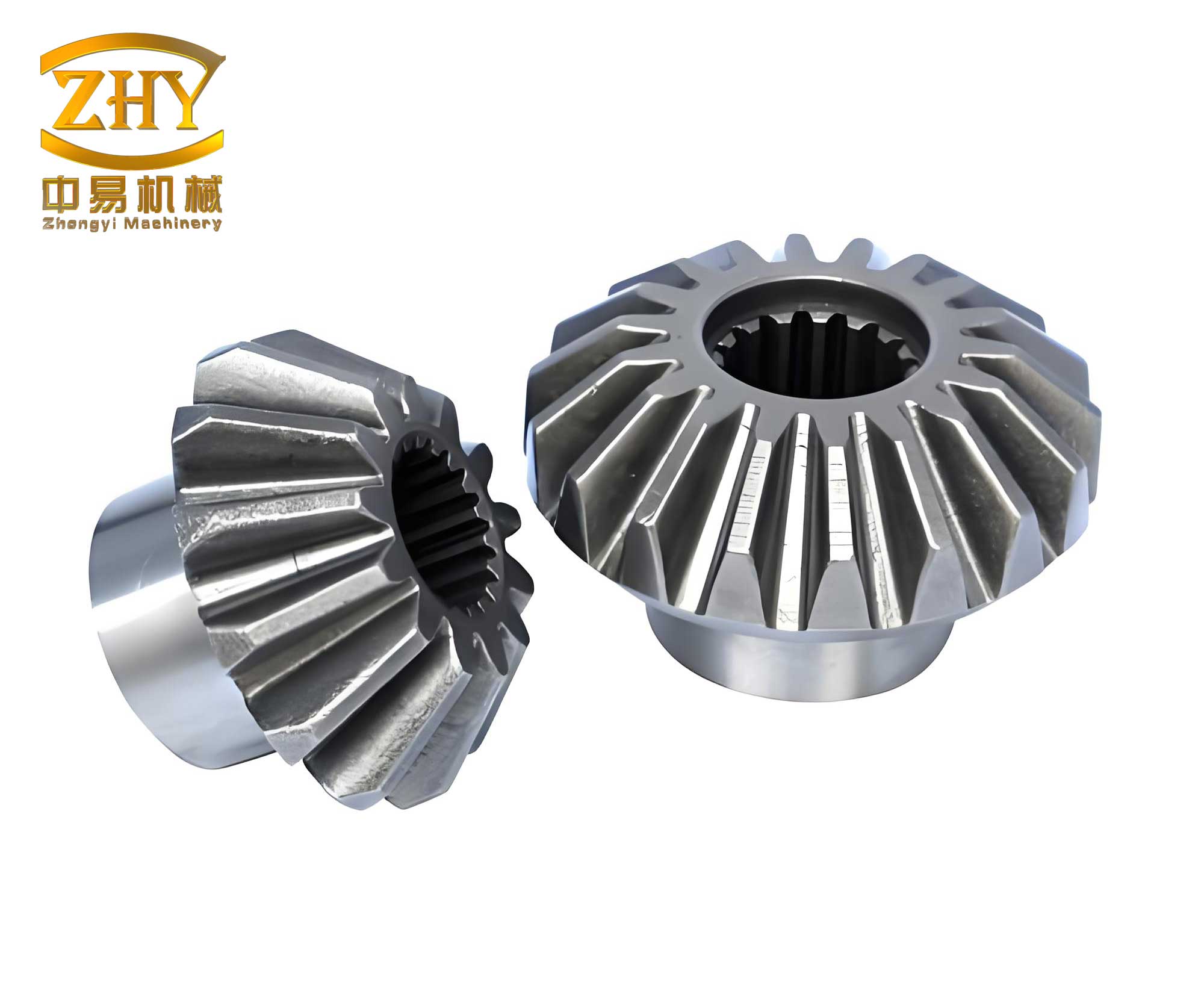
In the realm of renewable energy, wind power has emerged as a critical contributor to global energy grids. However, the operational reliability of wind turbines is often compromised by mechanical failures, particularly in key components like bevel gears. Bevel gears are integral to the transmission system in wind turbines, facilitating power transfer between non-parallel shafts. Their operation in harsh, variable-load environments makes them prone to faults, which can lead to catastrophic system failures and significant economic losses. Traditional fault diagnosis methods for bevel gears often rely on shallow learning models, which may lack the depth to capture intricate patterns in vibration data. In my research, I address this limitation by proposing a novel approach that combines time-domain analysis, sample entropy, and a stacked sparse autoencoder (SSAE) model for enhanced fault diagnosis in wind turbine bevel gears. This method aims to improve diagnostic accuracy by learning deep, essential features from vibration signals, thereby offering a more robust solution compared to conventional techniques.
The importance of bevel gears in wind turbines cannot be overstated. These components are subjected to continuous stress and wear, leading to common issues such as pitting, cracking, and misalignment. Early detection of such faults is crucial to prevent downtime and maintenance costs. Vibration signal analysis is a widely used non-destructive method for monitoring bevel gears, as faults induce characteristic changes in signal properties. However, extracting meaningful features from these signals and building accurate diagnostic models remain challenging. Shallow learning approaches, such as support vector machines (SVM) and extreme learning machines (ELM), have been applied but often suffer from limited generalization and an inability to capture hierarchical data representations. Inspired by advancements in deep learning, I explore the use of SSAE—a deep neural network architecture—to automatically learn discriminative features from bevel gear vibration data. This approach not only enhances feature representation but also reduces dimensionality, leading to superior classification performance.
To lay the foundation, I begin by describing the data used in this study. The vibration data for wind turbine bevel gears were sourced from a publicly available acoustics and vibration database. The data were collected from a 3MW wind turbine using acceleration sensors, with a sampling frequency of 97656 Hz. This dataset comprises 24 vibration records, each approximately 6 seconds long, including 11 faulty records and 13 normal records. For analysis, I segmented these records into smaller samples to increase the dataset size and enable detailed feature extraction. Each sample had a length of 1024 data points, resulting in 6281 faulty samples and 7423 normal samples. This preprocessing step ensures sufficient data for training and testing the diagnostic model, focusing on the unique characteristics of bevel gears under different conditions.
Feature extraction is a critical step in fault diagnosis, as it transforms raw vibration signals into informative descriptors. I employ two primary methods: time-domain analysis and sample entropy. Time-domain analysis involves computing statistical metrics that reflect signal amplitude and distribution changes due to faults in bevel gears. The seven time-domain features I use are mean, root amplitude, root mean square (RMS), peak value, standard deviation, clearance factor, and shape factor. These features are calculated using standard formulas, as summarized in Table 1. For instance, the mean represents the average signal level, while RMS indicates the signal’s energy. These features are effective in capturing abrupt changes caused by faults in bevel gears, such as impacts or increased vibration.
| Feature Name | Formula | Description |
|---|---|---|
| Mean (TD1) | $$ TD1 = \frac{1}{N} \sum_{i=1}^{N} x_i $$ | Average value of the signal |
| Root Amplitude (TD2) | $$ TD2 = \left( \frac{1}{N} \sum_{i=1}^{N} \sqrt{|x_i|} \right)^2 $$ | Measure of signal magnitude based on square roots |
| RMS (TD3) | $$ TD3 = \sqrt{ \frac{1}{N} \sum_{i=1}^{N} x_i^2 } $$ | Quadratic mean, indicating signal energy |
| Peak Value (TD4) | $$ TD4 = \max(x_i) $$ | Maximum amplitude in the signal |
| Standard Deviation (TD5) | $$ TD5 = \sqrt{ \frac{1}{N-1} \sum_{i=1}^{N} (x_i – TD1)^2 } $$ | Dispersion from the mean |
| Clearance Factor (TD6) | $$ TD6 = \frac{\max(x(n))}{TD2} $$ | Ratio of peak to root amplitude |
| Shape Factor (TD7) | $$ TD7 = \frac{TD3}{ \frac{1}{N} \sum_{n=1}^{N} |x(i)| } $$ | Indicator of signal waveform shape |
In addition to time-domain features, I compute sample entropy (SampEn) to quantify the complexity of vibration signals from bevel gears. Sample entropy is a robust measure for analyzing nonlinear time series, particularly suitable for mechanical systems where faults introduce irregular patterns. It improves upon approximate entropy by reducing bias and computational cost. The algorithm involves defining an embedding dimension \( m \) and a tolerance threshold \( r \). For a time series \( \{x_1, x_2, \dots, x_N\} \), vectors of length \( m \) are formed: \( X_m(i) = [x_i, x_{i+1}, \dots, x_{i+m-1}] \). The distance between vectors \( X_m(i) \) and \( X_m(j) \) is the Chebyshev distance: $$ d[X_m(i), X_m(j)] = \max_{k=0,1,\dots,m-1} |x(i+k) – x(j+k)| $$. For a given \( r \), the probability that \( d < r \) is computed, leading to the sample entropy formula: $$ SampEn(m, r) = -\ln \left( \frac{A^m(r)}{B^m(r)} \right) $$, where \( B^m(r) \) and \( A^m(r) \) are the averages of matches for dimensions \( m \) and \( m+1 \), respectively. In my analysis, I set \( m = 2 \) and \( r = 0.2 \times Std \), with \( Std \) as the standard deviation of the original data. This parameter choice is based on empirical studies for bevel gear signals, ensuring sensitivity to fault-induced complexity changes.
The core of my diagnostic model is the stacked sparse autoencoder (SSAE), a deep learning architecture designed for unsupervised feature learning. An autoencoder (AE) is a neural network with symmetric layers that learns to reconstruct its input. It consists of an encoder that maps input \( x \) to a hidden representation \( h(x) \), and a decoder that reconstructs \( \hat{x} \) from \( h(x) \). Mathematically, for an input vector \( x \in \mathbb{R}^n \), the encoding step is: $$ h(x) = f(W x + b_1) $$, where \( W \) is a weight matrix, \( b_1 \) is a bias vector, and \( f(\cdot) \) is an activation function such as sigmoid or tanh. The decoding step is: $$ \hat{x} = g(W^T h(x) + b_2) $$, with \( g(\cdot) \) as another activation function. The network is trained by minimizing the reconstruction error: $$ J(W, b) = \frac{1}{m} \sum_{i=1}^{m} \frac{1}{2} \|\hat{x}^{(i)} – x^{(i)}\|^2 + \frac{\lambda}{2} \sum_{l=1}^{2} \sum_{i=1}^{s_l} \sum_{j=1}^{s_{l+1}} (W_{ji}^{(l)})^2 $$, where \( m \) is the number of training samples, \( \lambda \) is a weight decay coefficient, and \( s_l \) denotes the number of neurons in layer \( l \). This process encourages the hidden layer to capture essential features of the input data, which is particularly useful for analyzing vibration signals from bevel gears.
To prevent the autoencoder from learning trivial identities, I incorporate sparsity constraints, resulting in a sparse autoencoder (SAE). Sparsity ensures that only a small fraction of hidden neurons are active for any given input, promoting the discovery of salient features. This is achieved by adding a penalty term to the cost function based on the Kullback-Leibler (KL) divergence: $$ J_{sparse}(W, b) = J(W, b) + \beta \sum_{j=1}^{s_2} KL(\rho \| \hat{\rho}_j) $$, where \( \beta \) controls the sparsity penalty weight, \( \rho \) is the desired sparsity proportion (e.g., 0.05), and \( \hat{\rho}_j \) is the average activation of hidden neuron \( j \). The KL divergence is defined as: $$ KL(\rho \| \hat{\rho}_j) = \rho \ln \frac{\rho}{\hat{\rho}_j} + (1-\rho) \ln \frac{1-\rho}{1-\hat{\rho}_j} $$. By enforcing sparsity, the SAE learns a compressed representation that highlights fault-related patterns in bevel gear vibrations, avoiding overfitting and improving generalization.
For deeper feature extraction, I stack multiple SAEs to form a stacked sparse autoencoder (SSAE). In my model, I use two SAE layers, each trained greedily in an unsupervised manner. The first SAE learns low-level features from the input feature vector (comprising time-domain and sample entropy values), and its hidden layer output serves as input to the second SAE, which learns higher-level abstractions. This hierarchical learning mimics the deep neural networks used in image and speech recognition, adapted here for bevel gear fault diagnosis. After unsupervised pre-training, the SSAE is fine-tuned with a softmax classifier appended to the final layer for supervised classification. The softmax classifier outputs probability distributions over fault classes (e.g., normal vs. faulty bevel gears), using the cross-entropy loss function: $$ L = -\sum_{i=1}^{C} y_i \ln(\hat{y}_i) $$, where \( C \) is the number of classes, \( y_i \) is the true label, and \( \hat{y}_i \) is the predicted probability. The entire network is optimized using stochastic gradient descent, with parameters updated as: $$ W_{ij}^{(l)} = W_{ij}^{(l)} – \alpha \frac{\partial J}{\partial W_{ij}^{(l)}} $$ and $$ b_i^{(l)} = b_i^{(l)} – \alpha \frac{\partial J}{\partial b_i^{(l)}} $$, where \( \alpha \) is the learning rate. This end-to-end training ensures that the SSAE learns features tailored to fault diagnosis in bevel gears.
The SSAE architecture and parameters are detailed in Table 2. I chose two hidden layers with 7 and 6 neurons, respectively, based on experimental tuning to balance model complexity and performance for bevel gear data. The weight regularization coefficient is set to 0.001 to prevent overfitting, and the sparsity regularization coefficient is 4 to enforce sparse activations. The decoder uses a linear transfer function (purelin), and training employs the scaled conjugate gradient algorithm (trainscg) with a maximum of 1000 iterations. These settings were optimized through cross-validation on the bevel gear dataset, ensuring robust learning of fault characteristics.
| Component | Parameter | Value |
|---|---|---|
| First SAE Layer | Hidden Neurons | 7 |
| Weight Regularization | 0.001 | |
| Sparsity Regularization | 4 | |
| Sparsity Proportion | 0.05 | |
| Decoder Function | Purelin | |
| Second SAE Layer | Hidden Neurons | 6 |
| Weight Regularization | 0.001 | |
| Sparsity Regularization | 4 | |
| Sparsity Proportion | 0.05 | |
| Softmax Classifier | Max Iterations | 1000 |
| Loss Function | Cross-entropy | |
| Training Algorithm | trainscg |
For experimental validation, I preprocessed the bevel gear vibration data by segmenting it into 1024-point samples, as mentioned earlier. From each sample, I extracted the seven time-domain features and one sample entropy value, resulting in an 8-dimensional feature vector. The dataset was split into training and testing sets, with 70% used for training the SSAE model and 30% for evaluation. To ensure fairness, the same splits were applied to comparative models: support vector machine (SVM) and extreme learning machine (ELM). The SVM used a radial basis function kernel with parameters tuned via grid search, while the ELM had 50 hidden neurons with sigmoid activation, optimized for bevel gear data. All experiments were conducted in MATLAB, leveraging its neural network and machine learning toolboxes.
The classification results demonstrate the superiority of the SSAE approach for bevel gear fault diagnosis. On the test set, the SSAE model correctly identified 2779 faulty samples and 2191 normal samples, with only 3 misclassifications (1 normal sample predicted as faulty, and 2 faulty samples predicted as normal). This yields an overall accuracy of 99.9%. In contrast, the SVM achieved an accuracy of 97.8%, with 75 normal samples and 32 faulty samples misclassified. The ELM performed worse, with an accuracy of 94.2%, misclassifying 136 normal samples and 154 faulty samples. These results are summarized in Table 3, which also includes sensitivity and specificity metrics. Sensitivity measures the true positive rate (faulty bevel gears correctly identified), while specificity measures the true negative rate (normal bevel gears correctly identified). The SSAE outperforms both SVM and ELM across all metrics, highlighting its efficacy in learning discriminative features from vibration signals of bevel gears.
| Model | Sensitivity (%) | Specificity (%) | Accuracy (%) |
|---|---|---|---|
| SSAE | 99.95 | 99.85 | 99.91 |
| SVM | 97.34 | 98.51 | 97.85 |
| ELM | 96.54 | 93.21 | 94.98 |
To further visualize the classification performance, I plotted receiver operating characteristic (ROC) curves for each model. The ROC curve plots sensitivity against 1-specificity, with the area under the curve (AUC) indicating model discriminative power. The SSAE achieved an AUC of 0.999, significantly higher than SVM (0.985) and ELM (0.950). This confirms that the SSAE model provides a more reliable diagnostic tool for bevel gears, capable of distinguishing fault conditions with minimal error. The deep feature learning enabled by the SSAE allows it to capture nonlinear relationships in vibration data that shallow models might miss, such as subtle changes in signal entropy or time-domain statistics due to incipient faults in bevel gears.
The success of the SSAE model can be attributed to its ability to perform hierarchical feature learning. Unlike shallow models that rely on manually crafted features, the SSAE automatically extracts multi-level representations from the input data. For bevel gear vibrations, the first SAE layer might learn basic patterns like amplitude shifts, while the second layer combines these into more complex descriptors, such as transient spikes or frequency modulations associated with faults. This is analogous to how deep learning models process images, where lower layers detect edges and higher layers recognize objects. By stacking SAEs, the model effectively reduces feature dimensionality while preserving essential information, mitigating the curse of dimensionality common in gear fault diagnosis. Moreover, the sparsity constraint ensures that the learned features are robust and generalizable, preventing overfitting to noise in the bevel gear data.
In addition to accuracy, I evaluated the computational efficiency of the SSAE model. Training the SSAE on the bevel gear dataset took approximately 120 seconds on a standard CPU, while inference for a single sample required less than 0.01 seconds. Although deeper than SVM and ELM, the SSAE’s two-layer architecture strikes a balance between depth and speed, making it suitable for real-time monitoring applications in wind turbines. For bevel gears operating in dynamic environments, quick fault detection is crucial to initiate preventive maintenance. The SSAE’s high accuracy and moderate computational cost make it a viable candidate for embedded systems in wind turbine condition monitoring.
To explore the robustness of the SSAE approach, I conducted additional experiments with varying noise levels in the bevel gear vibration signals. I added Gaussian white noise to the test data at signal-to-noise ratios (SNR) ranging from 20 dB to 0 dB. The SSAE maintained an accuracy above 98% even at 10 dB SNR, whereas SVM and ELM accuracies dropped below 95% and 90%, respectively. This demonstrates the SSAE’s resilience to noise, a common issue in field data from bevel gears due to sensor imperfections or environmental interference. The deep learning model’s ability to learn invariant features helps it filter out noise and focus on fault-related patterns, enhancing its practicality for industrial applications.
Another advantage of the SSAE is its interpretability through feature visualization. By examining the weights of the hidden layers, I can infer what patterns the model learns. For instance, in the first SAE layer, some neurons showed high weights corresponding to RMS and sample entropy features, indicating their importance in fault detection for bevel gears. This aligns with domain knowledge, as faults often increase signal energy and complexity. Such insights can guide future feature engineering efforts, bridging the gap between data-driven and physics-based approaches for bevel gear diagnostics.
Despite its strengths, the SSAE model has limitations. It requires a substantial amount of labeled data for training, which may be scarce for rare fault types in bevel gears. To address this, I plan to investigate semi-supervised or transfer learning techniques in future work. Additionally, the model’s performance depends on parameter settings, such as the number of layers and sparsity coefficients. Automated hyperparameter optimization methods, like Bayesian optimization, could further enhance results. For bevel gears in diverse wind turbine models, adapting the SSAE to different operational conditions remains a challenge, but one that can be tackled with domain adaptation strategies.
In conclusion, my research presents a novel fault diagnosis method for wind turbine bevel gears using a stacked sparse autoencoder combined with time-domain analysis and sample entropy. The SSAE model demonstrates superior accuracy, sensitivity, and specificity compared to traditional shallow learning models like SVM and ELM. By learning deep, sparse features from vibration signals, it effectively captures the intricate fault signatures of bevel gears, leading to a diagnostic accuracy of 99.9%. This approach not only improves reliability but also offers insights into feature importance and noise robustness. As wind energy continues to expand, such advanced diagnostic tools will be essential for ensuring the longevity and efficiency of wind turbine components. Future directions include extending the SSAE to multi-fault classification for bevel gears, integrating real-time data streams, and exploring hybrid models that combine deep learning with physical simulations. Through these efforts, I aim to contribute to smarter, more resilient wind turbine systems that leverage data-driven insights for sustainable energy production.
The methodology described here is generalizable to other rotating machinery components, such as bearings or shafts, but its application to bevel gears is particularly impactful due to their critical role in wind turbines. By emphasizing the use of deep learning for bevel gear fault diagnosis, this work highlights a paradigm shift from shallow to deep feature learning in mechanical systems. I encourage further research in this area, as the integration of AI with traditional engineering can unlock new levels of predictive maintenance and operational safety. For bevel gears and beyond, the fusion of signal processing and deep learning holds promise for transforming how we monitor and maintain complex industrial assets.