
The continuous advancement of modern industry demands higher performance from mechanical transmission systems, particularly in applications involving heavy loads and high speeds where efficiency, reliability, and precision are paramount. The variable hyperbolic circular-arc-tooth-trace (VH-CATT) cylindrical gear is an innovative gear design that addresses these needs. Gears produced using this principle offer significant advantages, including high load-bearing capacity, excellent transmission efficiency, smooth operation, minimal axial thrust, and relative insensitivity to center distance variations. These attributes make the VH-CATT cylindrical gear a promising candidate for critical applications in sectors such as heavy machinery, marine propulsion, and high-power industrial drives.
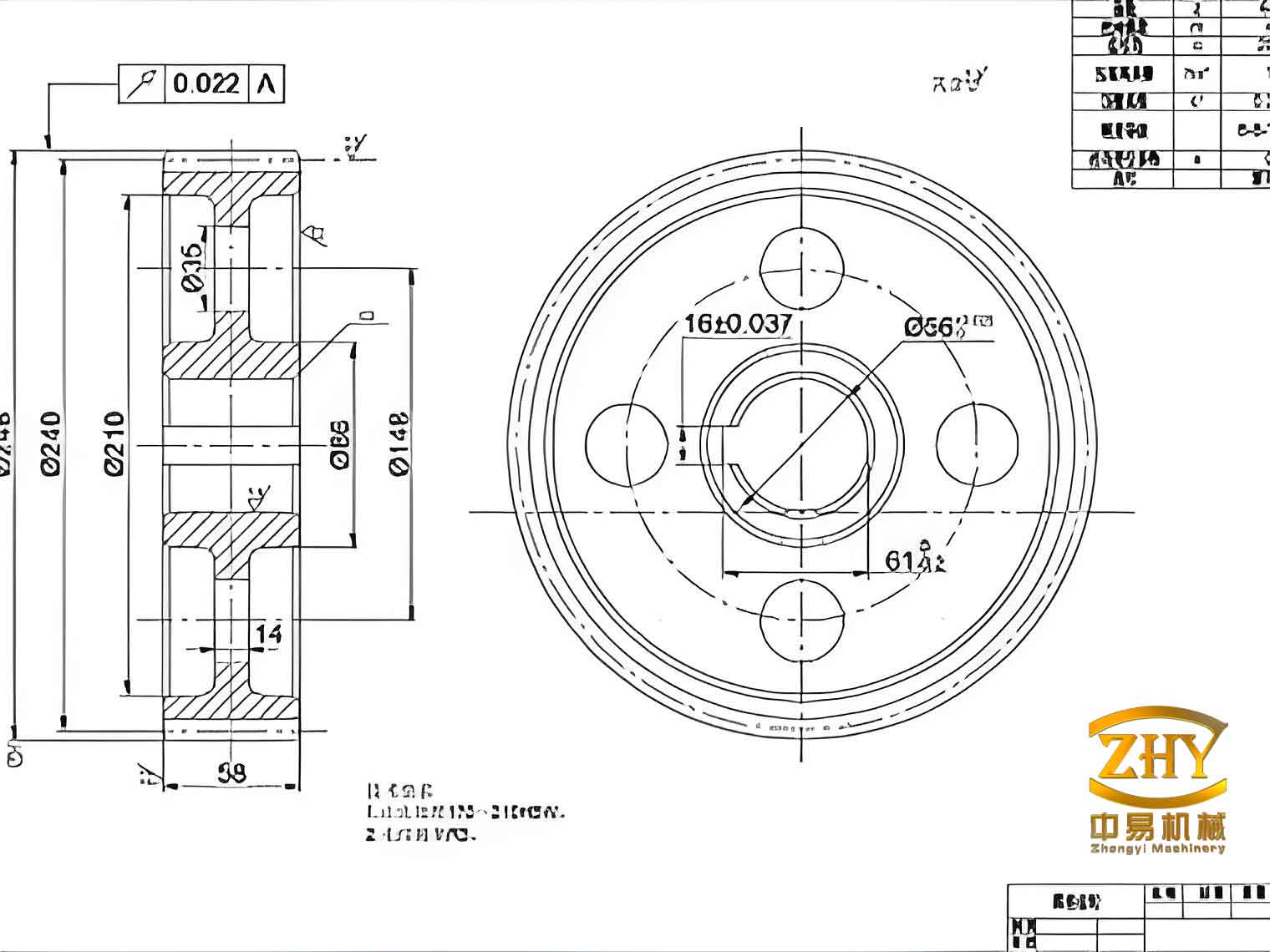
However, the manufacturing of high-precision VH-CATT cylindrical gears presents a significant challenge. While possible on high-end multi-axis CNC machining centers, this approach is often economically inefficient due to functional redundancy and associated high costs. More importantly, such methods typically involve approximations in the generation process, introducing inherent profile errors that compromise the superior meshing characteristics of the VH-CATT design. Consequently, the development of a dedicated, economically viable machine tool capable of precise and efficient generation is essential for the practical adoption of this advanced cylindrical gear technology.
This study focuses on the static and dynamic characteristic analysis of a self-developed specialized machine tool designed explicitly for machining VH-CATT cylindrical gears. The structural integrity and dynamic performance of a machine tool are fundamental to its machining accuracy, surface finish quality, and operational stability. A comprehensive finite element analysis (FEA) of the entire machine assembly, as opposed to individual components, provides a holistic understanding of its mechanical behavior under operational loads. This analysis is crucial for validating the initial structural design, identifying potential weaknesses, and providing a scientific foundation for subsequent optimization.
To this end, a detailed three-dimensional model of the specialized cylindrical gear machine tool was created. The machine’s primary functional modules include the main spindle assembly, the spindle drive reducer, the large-diameter cutter head (facing milling head), the machine bed, the indexing reducer, the indexing mechanism unit, the cutting tool inserts, the column slide, and the cross-slide (X-Y table).
The gear generation principle of this machine is based on precise spatial conjugate motion, utilizing a rotating large-diameter cutter head to form the tooth profile and the unique variable hyperbolic circular arc tooth trace. The fundamental kinematic relationship between the workpiece (gear blank) and the tool is defined by the following equation to ensure a standard involute profile at the gear’s mid-plane:
$$
V = \omega_1 \times r
$$
where \(V\) is the linear velocity of the workpiece relative to the cutter head, \(\omega_1\) is the rotational speed of the gear blank, and \(r\) is the pitch circle radius of the cylindrical gear being machined.
Finite Element Modeling and Material Properties
To ensure computational efficiency while maintaining result accuracy, the full assembly model was judiciously simplified for finite element analysis. Minor geometric features such as small fillets, chamfers, and holes with negligible impact on global stiffness were suppressed. Components of lesser structural importance were represented by simplified mass blocks with equivalent volume and approximate external dimensions.
The contacts between components were carefully modeled to simulate real assembly conditions. Bonded contact was used for bolted connections and permanently fixed interfaces. “No Separation” contact was applied to simulate the connection between linear guideways and their carriages, allowing for stiffness transfer while preventing separation. The model was meshed using a combination of hex-dominant elements for bulky, regular parts like the bed and cutter head, and tetrahedral elements for more complex geometries. A mesh independence study was conducted, resulting in a final high-quality mesh with over 1.8 million nodes.
The material properties assigned to key components are summarized in Table 1. The selection focuses on common engineering materials with appropriate strength, stiffness, and damping characteristics for a machine tool structure.
| Component | Primary Material | Density, ρ (kg/m³) | Elastic Modulus, E (GPa) | Poisson’s Ratio, μ |
|---|---|---|---|---|
| Machine Bed | Q235 Steel | 7850 | 205 | 0.28 |
| Column & Cross Slide | HT250 Cast Iron | 7340 | 155 | 0.27 |
| Guideways & Ballscrews | GCr15 Bearing Steel | 7800 | 208 | 0.30 |
| Gear Blank | 40Cr Alloy Steel | 7820 | 206 | 0.29 |
| Cutter Inserts | W6Mo5Cr4V2Co5 HSS | 8150 | 230 | 0.30 |
| Other Structural Parts | 45# Steel | 7890 | 209 | 0.269 |
Static Characteristic Analysis Under Gravity and Milling Forces
The static stiffness of a machine tool directly influences its ability to maintain geometric accuracy under load. The analysis was conducted in two critical states: under self-weight only, and under the combined action of self-weight and simulated milling forces.
1. Gravity Load Analysis: A fixed constraint was applied to the bottom of the machine bed, and standard earth gravity (9800 mm/s²) was applied to the entire assembly. The results, shown as total deformation, indicate that the maximum displacement of approximately 70 μm occurs at the handle of the indexing mechanism clamping device. The deformation of other components on the column assembly is generally within the range of 30-60 μm. This analysis confirms that the overall structural design, particularly the cantilevered indexing unit for the cylindrical gear blank, possesses sufficient inherent stiffness to maintain its configuration under its own weight, validating the basic design premise before introducing process loads.
2. Determination of Milling Forces: For the static and subsequent dynamic analyses, a representative milling force was calculated. The target workpiece was defined as a cylindrical gear with a module \(m = 6\) mm, 18 teeth (\(Z=18\)), made from 40Cr steel, to be machined with an 8-tooth face milling cutter. The main cutting force (\(F_{c1}\)) was estimated using an empirical power formula for milling with high-speed steel cutters:
$$
F_{c1} = C_F \cdot a_p^{0.72} \cdot a_f^{0.86} \cdot a_e \cdot d_0^{-0.86} \cdot Z \cdot K_{Fc}
$$
Where:
\(C_F\) is the specific cutting force coefficient.
\(a_p\) is the depth of cut (set to 3 mm for this analysis).
\(a_f\) is the feed per tooth (set to 0.02 mm/z).
\(a_e\) is the width of cut (engaged arc length, set to 60 mm).
\(d_0\) is the cutter diameter.
\(Z\) is the number of teeth on the cutter.
\(K_{Fc}\) is a product of correction factors for material, rake angle, and lead angle.
The total correction factor is \(K_{Fc} = K_{mFc} \cdot K_{\gamma Fc} \cdot K_{\kappa Fc}\). For a 40Cr workpiece (with tensile strength \(\sigma_b\)), a standard rake angle, and a 90° lead angle, the values are:
$$
K_{mFc} = \left( \frac{\sigma_b}{0.638} \right)^{0.3}, \quad K_{\gamma Fc} = 0.85, \quad K_{\kappa Fc} = 1.04
$$
Substituting the parameters yields a calculated main cutting force \(F_{c1} \approx 353 \text{ N}\). To account for peak loads during machining, a factor of 1.6 is applied to define the applied load: \(F_c = 1.6 \times F_{c1} = 565 \text{ N}\). This force is decomposed into components relative to the machine coordinate system for a climb milling operation:
$$
\begin{aligned}
F_x &= 0.9 F_c = 508.5 \text{ N} \\
F_y &= 0.4 F_c = 226.0 \text{ N} \\
F_z &= 0.8 F_c = 452.0 \text{ N}
\end{aligned}
$$
3. Combined Load Static Analysis: The force components were applied as distributed loads on the cutting edges of the tool inserts. Equal and opposite reaction forces were applied to the cylindrical gear blank fixture. The analysis was solved with both the milling forces and gravity active, and the bed fully constrained.
The results, detailed in Table 2, show the directional and total deformation maxima. The maximum total deformation remains concentrated on the indexing mechanism handle, but the overall pattern shows the column assembly and connected components as the most compliant section of the structure. The deformation magnitudes, particularly in the X-direction (the direction of the cantilever), are significant for precision gear machining. This identifies the column and indexing unit connection as the primary structural weakness in terms of static stiffness for this cylindrical gear machine tool. Potential solutions include reducing the depth of cut (\(a_p\)) during process planning, or structurally reinforcing the column-to-indexing unit interface in a design iteration.
| Direction | Maximum Deformation (μm) | Location |
|---|---|---|
| X-direction (longitudinal) | 49.2 | Indexing Mechanism Handle |
| Y-direction (transverse) | 13.4 | Indexing Mechanism Handle |
| Z-direction (vertical) | 7.5 | Indexing Mechanism Handle |
| Total Deformation | 46.7 | Indexing Mechanism Handle |
Dynamic Characteristic Analysis: Modal and Harmonic Response
The dynamic behavior of a machine tool determines its susceptibility to vibration, which is a critical factor for surface finish, tool life, and dimensional accuracy, especially in fine-pitch cylindrical gear generation.
1. Modal Analysis: A fixed-base modal analysis was performed to extract the natural frequencies and mode shapes of the machine tool assembly. The first six modes, which are most relevant to excitation from cutting forces, were calculated. The results are summarized in Table 3.
| Mode Order | Natural Frequency (Hz) | Dominant Mode Shape Description |
|---|---|---|
| 1 | 52.15 | Rocking/bending of the upper column and indexing unit about the Y-axis (front-to-back). |
| 2 | 59.97 | Swaying of the upper column and indexing unit along the Y-axis (side-to-side). |
| 3 | 88.75 | Front-to-back rocking of the spindle drive reducer and its support column. |
| 4 | 107.95 | Torsional vibration of the column and indexing unit about the Z-axis. |
| 5 | 128.18 | Vertical torsional/bending vibration of the indexing mechanism assembly. |
| 6 | 133.13 | Combined side-to-side sway of the spindle assembly and minor vertical motion of the indexing unit. |
The analysis clearly identifies the upper section of the column, the spindle support structure, and the connection points of the indexing mechanism as the most dynamically flexible regions of the cylindrical gear machine. These are the critical areas for potential dynamic stiffening.
2. Harmonic Response Analysis: While modal analysis reveals free-vibration characteristics, harmonic response analysis predicts the steady-state vibrational response under sustained periodic excitation, such as that generated by intermittent tooth engagement in gear milling. The excitation frequency (\(f_e\)) during stable machining is given by:
$$
f_e = \frac{N \cdot Z_t}{60}
$$
where \(N\) is the cutter head rotational speed (400 rpm for this design) and \(Z_t\) is the number of teeth on the cutter (8). This yields \(f_e = 53.3\) Hz.
Notably, this operational excitation frequency is very close to the first two natural frequencies (52.15 Hz and 59.97 Hz), indicating a high risk of resonance. A harmonic response analysis was performed using the mode superposition method. The previously calculated milling force components (\(F_x, F_y, F_z\)) were applied as harmonic loads at the tool-workpiece interface, sweeping a frequency range from 0 to 86 Hz, which encompasses the first six modes.
The resulting amplitude-frequency curves for the three principal directions at a point on the tool holder are shown conceptually (maximum values are described). The curves exhibit distinct peaks at approximately 52 Hz and 60 Hz, corroborating the modal analysis results. The peak amplitudes, particularly in the Y-direction at 60 Hz, are significant. The close proximity of the intended operating speed (53.3 Hz) to the first natural mode poses a serious challenge. To avoid resonant amplification of vibrations during the machining of the cylindrical gear, the operational parameters must be modified. This can be achieved by altering the cutter head speed (\(N\)) or the number of cutter teeth (\(Z_t\)) to shift the excitation frequency away from the structural resonances. Alternatively, the structural design itself requires modification to increase the first natural frequency substantially above the intended operational excitation range.
Conclusion and Design Implications
This comprehensive finite element analysis of a specialized machine tool for variable hyperbolic circular-arc-tooth-trace cylindrical gears provides critical insights into its structural performance. The static analysis under combined loads successfully identified the column and indexing unit assembly as the primary stiffness bottleneck, with maximum deformation localized in the cantilevered sections. This pinpoints the area requiring reinforcement in future design iterations to enhance the geometric accuracy of the machined cylindrical gear.
The dynamic analysis revealed a more critical finding: the machine’s first natural frequency (52.15 Hz) lies dangerously close to the theoretical excitation frequency (53.3 Hz) generated under the designed milling parameters for the cylindrical gear. This alignment creates a high risk of resonant vibration during operation, which would severely degrade surface finish, increase tool wear, and cause dimensional inaccuracies in the gear teeth.
The results lead to two primary pathways for improvement:
1. Process Parameter Optimization: As an immediate measure, the machining process for the cylindrical gear can be altered by changing the cutter head speed or the number of cutter inserts to move the tooth-passing frequency away from the identified natural frequencies.
2. Structural Redesign: For a fundamental solution, the machine structure, particularly the column and its connection to the indexing unit, must be redesigned to increase its dynamic stiffness. The goal is to elevate the first natural frequency significantly above all expected operational excitation frequencies. This could involve using ribbed structures, strategic use of damping materials, or alternative column geometries.
This study establishes a validated analytical framework and provides essential reference data for the ongoing development and optimization of dedicated machine tools for advanced cylindrical gear manufacturing, specifically targeting the high-performance VH-CATT cylindrical gear design. The methodologies employed are directly applicable to the analysis and improvement of other types of specialized gear production equipment.