
In modern mechanical transmission systems, helical gears are widely adopted due to their superior characteristics, such as smooth operation, high load capacity, and reduced noise and vibration compared to spur gears. The inherent helical tooth engagement allows for a gradual load transfer, contributing to these advantages. However, in practical applications, factors including manufacturing errors, assembly inaccuracies, and elastic deformations under load can induce edge loading, high contact stress concentrations, and undesirable meshing impacts. These issues ultimately compromise the performance, reliability, and acoustic behavior of the helical gear drive. To mitigate these adverse effects and optimize transmission quality, gear modification techniques are essential. Among these, profile modification, which involves deliberately altering the ideal involute profile near the tooth tips and/or roots, is a highly effective method for compensating for deflections and improving load distribution.
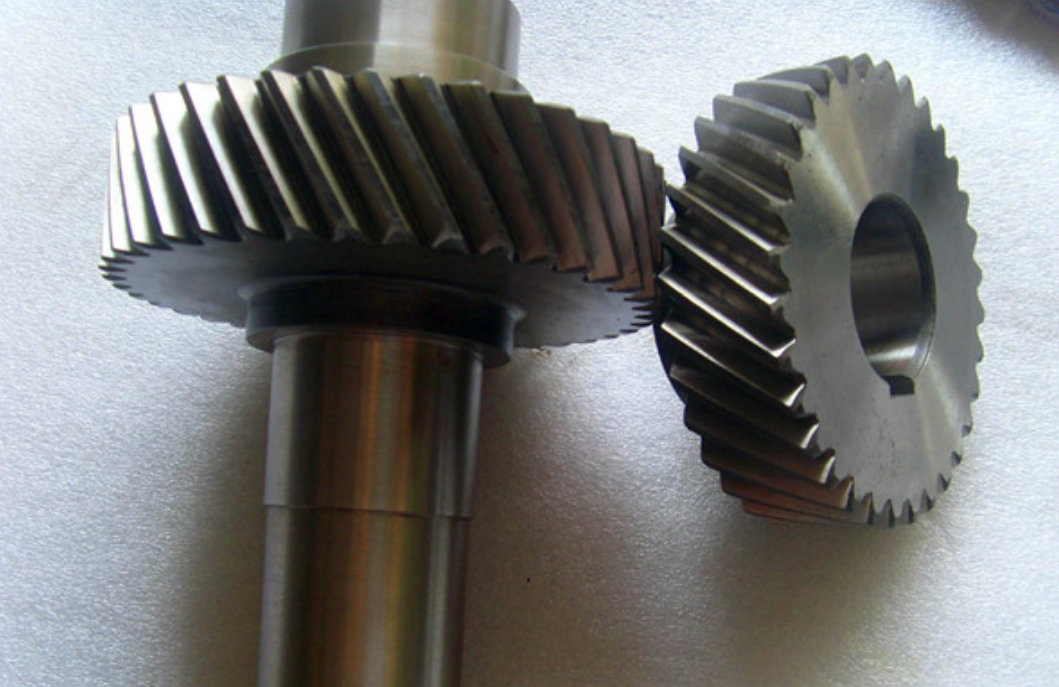
This paper focuses on an advanced methodology for determining precise profile modification parameters for helical gears through the application of Finite Element Analysis (FEA). Traditional empirical formulas or simplified analytical models often fail to capture the complex three-dimensional contact and deformation behavior of a loaded helical gear pair. Therefore, this study leverages the power of FEA to simulate the realistic meshing process and extract accurate deformation data directly from a high-fidelity model. A primary contribution of this work is the proposal and implementation of a novel two-step correction method. This method accounts for the changes in the tooth surface geometry and root fillet after the initial modification, ensuring the final proposed modification values are optimal under the actual loaded condition of the modified gear. A comprehensive full-tooth FE model is constructed, and detailed procedures for extracting modification amounts and performing the secondary correction are presented. Finally, a comparative analysis of the contact stress, contact pattern, and stress distribution before and after modification is conducted to thoroughly validate the effectiveness of the proposed helical gear profile modification approach.
Precise Modeling of Standard and Modified Helical Gears
The foundation of any accurate finite element analysis lies in the geometric precision of the model. For helical gears, generating a true, mathematical involute tooth form with the correct helix angle is crucial. In this study, a parametric modeling approach within CAD software (exemplified by Pro/E) is employed. Key parameters such as normal module, pressure angle, number of teeth, helix angle, and profile shift coefficient are defined as independent variables. Using relation tools, dependent dimensions (e.g., base diameter, tip diameter) are linked to these parameters via formulas. The involute curve and the helix are generated using precise equation-driven curves.
A critical step for ensuring high model fidelity is the tooth generation method. Instead of simple extrudes or sweeps, a blend-sweep cut operation is utilized. This method involves creating a series of cross-sectional sketches (profiles) at multiple angular positions along the gear blank and blending them along the helical path. Using a sufficiently high number of sections (more than five, with nine used in this research) significantly enhances the accuracy of the resulting helical gear tooth geometry, closely approximating the theoretical form.
Modeling the Modified Helical Gear
The modified gear shares the same fundamental geometry (base helix, reference diameters) as the standard gear, with deviations applied only to the active profile regions. The modification is applied to the pinion. The model is created by altering the original sketches of the standard gear. Based on calculated modification parameters (discussed in Section 4), the offset distance from the standard involute at various points along the profile is computed with high precision (on the order of 1×10⁻⁵ mm). A parabolic curve is typically chosen for the modification curve. The new points defining the modified profile are fitted with a smooth curve to generate the adjusted transverse tooth profile sketch, which is then used in the same blend-sweep process.
The basic geometric parameters for the helical gear pair analyzed in this paper are listed in Table 1. The material properties for both gears are provided in Table 2.
| Parameter | Pinion (Gear 1) | Gear (Gear 2) | Unit |
|---|---|---|---|
| Number of Teeth, Z | 28 | 32 | – |
| Normal Module, mₙ | 2 | mm | |
| Normal Pressure Angle, αₙ | 20 | ° | |
| Profile Shift Coefficient, x | 0 | 0 | – |
| Helix Angle, β | 16° 15′ 6″ | ° | |
| Face Width, B | 16.5 | 14.5 | mm |
| Material | Elastic Modulus, E | Poisson’s Ratio, ν | Density, ρ |
|---|---|---|---|
| Low-Carbon Steel | 205 GPa | 0.3 | 7800 kg/m³ |
Establishment of the Finite Element Model
Geometry Preparation and Meshing Strategy
To balance computational efficiency and result accuracy, a full-tooth simplified model is created. The principle of Saint-Venant suggests that localized contact stresses are not significantly affected by boundary conditions applied at a reasonable distance. Therefore, while the overall gear body structure is maintained, teeth far from the contact zone can be simplified. In this model, only the tooth pairs actively engaged in meshing, plus one adjacent tooth on each side, are modeled with full detail to capture load sharing effects and ensure boundary condition isolation. The remaining part of the gear body is retained but can have a coarser mesh.
For contact analysis, the quality of the mesh in the contact region is paramount. Hexahedral (brick) elements are preferred over tetrahedral elements as they generally provide better accuracy and convergence behavior for stress analysis, especially in contact simulations. To generate a high-quality hexahedral mesh for the complex helical gear geometry, the model is first partitioned into several, more regularly shaped volumes using virtual topology operations within the preprocessor (e.g., ANSYS Workbench). This partitioning, as conceptually shown in Figure 1, creates mappable regions suitable for a structured sweep mesh. The final meshed model results in a predominantly hexahedral element structure, as illustrated in Figure 2, with refinement concentrated in the potential contact areas on the tooth flanks.
Analysis Settings for Modification Extraction
The primary goal of the first FE run is to extract the elastic deformation data required to calculate the modification amount. In actual operation, the larger gear (Gear 2) is the driver. However, for ease of result extraction related to pinion deformation, the roles can be conceptually swapped in this step. The boundary conditions are set as follows:
• Pinion (Gear 1): A cylindrical support condition is applied to its inner bore, constraining radial and axial displacements but freeing the tangential (rotational) degree of freedom. A torque T₁ = 120,000 N·mm is applied to the bore.
• Gear (Gear 2): A fixed support condition is applied to its inner bore, constraining all degrees of freedom.
• Contact Definitions: Only the tooth pairs that are theoretically in contact under load (e.g., positions ② and ③ in Figure 3(a) for the entry side) are defined as frictional contact pairs. The potential initial contact point at the tip of the pinion (point ① in Figure 3(a)) is intentionally left as a “free” or “no contact” zone to simulate the interference condition.
Analysis Settings for Verification of Modification
After implementing the modification, a second FE analysis is performed to verify its effectiveness under simulated real working conditions. The boundary conditions mirror the actual drive scenario:
• Gear (Gear 2 – Driver): A cylindrical support is applied to its bore, and the input torque T₂ = 137,143 N·mm is applied.
• Pinion (Gear 1 – Driven): A fixed support condition is applied to its bore.
• Contact Definitions: All flank surfaces of the teeth in the mesh cycle are set to be in potential contact, allowing the solver to determine the actual contact area based on the modified geometry and applied load.
Calculation and Iterative Correction of Modification Parameters
Profile modification involves three key aspects: the amount of modification (δ), the length of the modified zone (L), and the shape of the modification curve. This paper focuses on the precise determination of the modification amount using FEA.
Tip Relief Amount (Pinion)
During meshing entry of an ideal, rigid helical gear pair, contact begins precisely at the theoretical start of active profile (SAP) on the driven gear. However, due to the combined elastic deformations (bending, shear, contact) of the loaded tooth pairs already in contact, the pinion tooth tip will interfere with the gear tooth root at the moment of entry, causing an impact. This interference amount, Δ₁, represents the required tip relief for the pinion. In the FEA setup for extracting Δ₁ (see Figure 3(a)), contact is enforced at points ② and ③, while the entry point ① is free. After solving, the displacement results are transformed into a cylindrical coordinate system centered on the pinion axis. The tangential displacement of the specific node on the pinion tip (point A in Figure 3(a)) that would initially contact the gear is extracted as Δ₁.
Root Relief Amount (Pinion)
Similarly, during meshing exit, deformations in the contacting tooth pairs can cause the gear tooth tip to dig into the pinion tooth root, leading to scraping. For practicality and cost, modification is typically applied only to the pinion. The interference amount at the pinion root, Δ₂, is the required root relief. In the corresponding FEA (see Figure 3(b)), contact is enforced at points ① and ②, while the exit point ③ near the pinion root is left free. The tangential displacement of the node on the pinion root that would be contacted by the gear tooth tip (point B) is extracted as Δ₂.
Two-Step Correction for Modification Amount
An initial modification based on Δ₁ and Δ₂ from the standard gear model is applied. However, this modification changes the stiffness and geometry of the tooth, including the root fillet transition. Consequently, the deformation behavior under load changes. Therefore, a secondary FE analysis is performed on the initially modified helical gear model using the same boundary conditions as in Sections 3.1 and 3.2. New interference amounts Δ₁’ and Δ₂’ are extracted. As expected, these values differ from the initial ones. The final, more accurate modification amounts are taken from this second iteration. The results of this process are summarized in Table 3.
| Calculation Step | Tip Relief Amount Δ₁ | Root Relief Amount Δ₂ |
|---|---|---|
| Initial Calculation (Standard Gear) | 16.2 μm | 14.0 μm |
| Secondary Correction (Modified Gear) | 17.3 μm | 15.0 μm |
Modification Length and Curve
For this helical gear pair with a transverse contact ratio ε_α, a short relief type is appropriate. The length of modification is typically a function of the base pitch. The tip relief length l_t and root relief length l_r can be determined by:
$$ l_t = l_r = \frac{(ε_α – 1)}{2} p_{bt} $$
where $p_{bt}$ is the transverse base pitch.
The modification profile follows a parabolic curve for a smooth transition. The equation governing the offset $y$ at a distance $x$ from the start of the modification zone is:
$$ y = δ \left[ 1 – \left( \frac{x}{L} \right)^2 \right] $$
where $δ$ is the maximum modification amount (Δ₁ or Δ₂) and $L$ is the modification length (l_t or l_r).
Convergence and Data Reliability Verification
Prior to relying on FEA results, it is crucial to verify the model’s correctness. A convergence study on mesh density and a check against classical theory are performed.
Theoretical Contact Stress Calculation
To establish a benchmark, the theoretical maximum contact (Hertzian) stress for a simplified case is calculated. Considering the complex line contact of a helical gear, a simplified model of a cylinder (representing the gear) pressing against another cylinder (the pinion) at the pitch point is used. The equivalent radius of curvature ρ at the pitch point is:
$$ \frac{1}{ρ} = \frac{1}{ρ_1} ± \frac{1}{ρ_2} $$
The sign depends on external or internal contact. For two external gears, the formula becomes:
$$ \frac{1}{ρ} = \frac{1}{ρ_1} + \frac{1}{ρ_2} $$
where $ρ_1 = \frac{d_1 \sin α_t}{2}$ and $ρ_2 = \frac{d_2 \sin α_t}{2}$.
The Hertzian contact stress formula is:
$$ σ_H = \sqrt{ \frac{F}{\pi B} \cdot \frac{1}{\frac{1-ν_1^2}{E_1} + \frac{1-ν_2^2}{E_2}} \cdot \frac{1}{ρ} } $$
For the pinion torque T₁ = 60,000 N·mm, the tangential force $F_t = 2T_1 / d_1$. The normal force acting on the tooth is $F = F_t / (\cos α_t \cos β)$. Assuming a contact length B equal to the face width of the narrower gear (14.5 mm), and using the material properties from Table 2, the theoretical contact stress is calculated to be approximately 735 MPa.
FEA Convergence and Validation
The finite element model of the standard helical gear pair is solved with the applied torque of 60,000 N·mm. The mesh size in the contact region is systematically refined. The maximum contact pressure on the pinion flank converges to a stable value of around 720 MPa as the mesh is refined, which shows excellent agreement with the simplified theoretical value of 735 MPa. This close correlation validates the accuracy of the 3D FE model, including its geometry, material properties, boundary conditions, and contact definition.
Analysis of Modification Effectiveness
With the final modified helical gear model created using the twice-corrected parameters, a full verification analysis under the nominal load (T₂ = 137,143 N·mm) is conducted. The results are compared with those from the unmodified gear analysis.
Variation of Tooth Flank Stresses
The principal stress state on the tooth flank is a key indicator of loading severity and risk of fatigue failure. The maximum principal stress (usually tensile) on the pinion flank is tracked throughout the mesh cycle. A comparison between the modified and unmodified helical gear reveals a significant reduction in the peak principal stress values, particularly at the entry and exit points of the mesh. This reduction directly indicates a smoother load transfer, diminished stress concentrations at the tooth tips and roots, and consequently, a lower potential for pitting and crack initiation.
Contact Pattern and Contact Stress Distribution
The contact pattern, which is the area on the tooth flank that actually comes under load, is a critical performance metric. For the unmodified helical gear, the contact pattern extends from the tip boundary of the pinion down to the root boundary where the gear tip makes contact. This indicates edge loading. After profile modification, the contact pattern contracts towards the pitch line region. The extreme ends (pinion tip and the corresponding gear tip contact area on the pinion) are effectively relieved and no longer participate in bearing significant load, as intended.
A more detailed examination involves analyzing the contact pressure distribution along the contact lines at specific rotational angles (e.g., 7° and 21° into the mesh cycle). For the unmodified helical gear, the contact pressure distribution along a contact line shows distinct, sharp peaks near the root and tip ends, with maximum values reaching 1390 MPa and 1630 MPa, respectively. This is a clear signature of detrimental edge contact. In contrast, the modified helical gear exhibits a smooth, “dome-shaped” pressure distribution along the contact line. The pressure gradually increases from the ends to a maximum near the center of the active profile and then decreases smoothly. The peak values are reduced to 1251 MPa and 1210 MPa for the analyzed positions. This demonstrates that the proposed modification method successfully eliminates edge contact, promotes a more uniform and favorable load distribution across the tooth flank, and reduces the maximum contact stress, thereby enhancing the meshing performance and durability of the helical gear pair.
Conclusion
This study presents a comprehensive and practical FEA-based methodology for the precise design of profile modifications for helical gears. The core of the approach involves extracting elastic deformation data directly from a high-fidelity, full-tooth finite element model under load. The proposed two-step correction process is a significant refinement, as it accounts for the change in tooth compliance and geometry after the initial modification, leading to more accurate and reliable final modification values.
The effectiveness of the derived modification is rigorously validated through a multi-faceted comparison with the unmodified helical gear. The analysis demonstrates substantial improvements: a reduction in peak flank principal stresses, a contraction of the contact pattern away from the edges towards the pitch line, and the elimination of high-stress peaks along the contact lines in favor of a smooth, parabolic stress distribution. These combined results confirm that the precise profile modification, as determined by the outlined FEA process, can significantly enhance the meshing performance of helical gears. It mitigates entry and exit impacts, prevents detrimental edge loading, improves load distribution, reduces maximum contact stress, and contributes to increased transmission smoothness, reduced noise, and potentially longer service life. This methodology provides a valuable, simulation-driven tool for the optimal design of high-performance helical gear transmissions in demanding applications.