
In the field of mechanical power transmission, the quest for higher efficiency, greater load capacity, and smoother operation is perpetual. Among various gear types, the cylindrical gear with variable hyperbolic circular-arc-tooth-trace (VH-CATT) represents a significant innovation. This design departs from conventional involute profiles by employing a tooth trace that follows a variable hyperbolic arc along the face width. This unique geometry confers several advantages over traditional spur or helical gears, including improved meshing characteristics, a higher contact ratio, the absence of axial thrust forces, enhanced load-bearing capacity, and superior transmission efficiency, making it particularly promising for demanding applications in aerospace, transportation, and high-performance machinery.
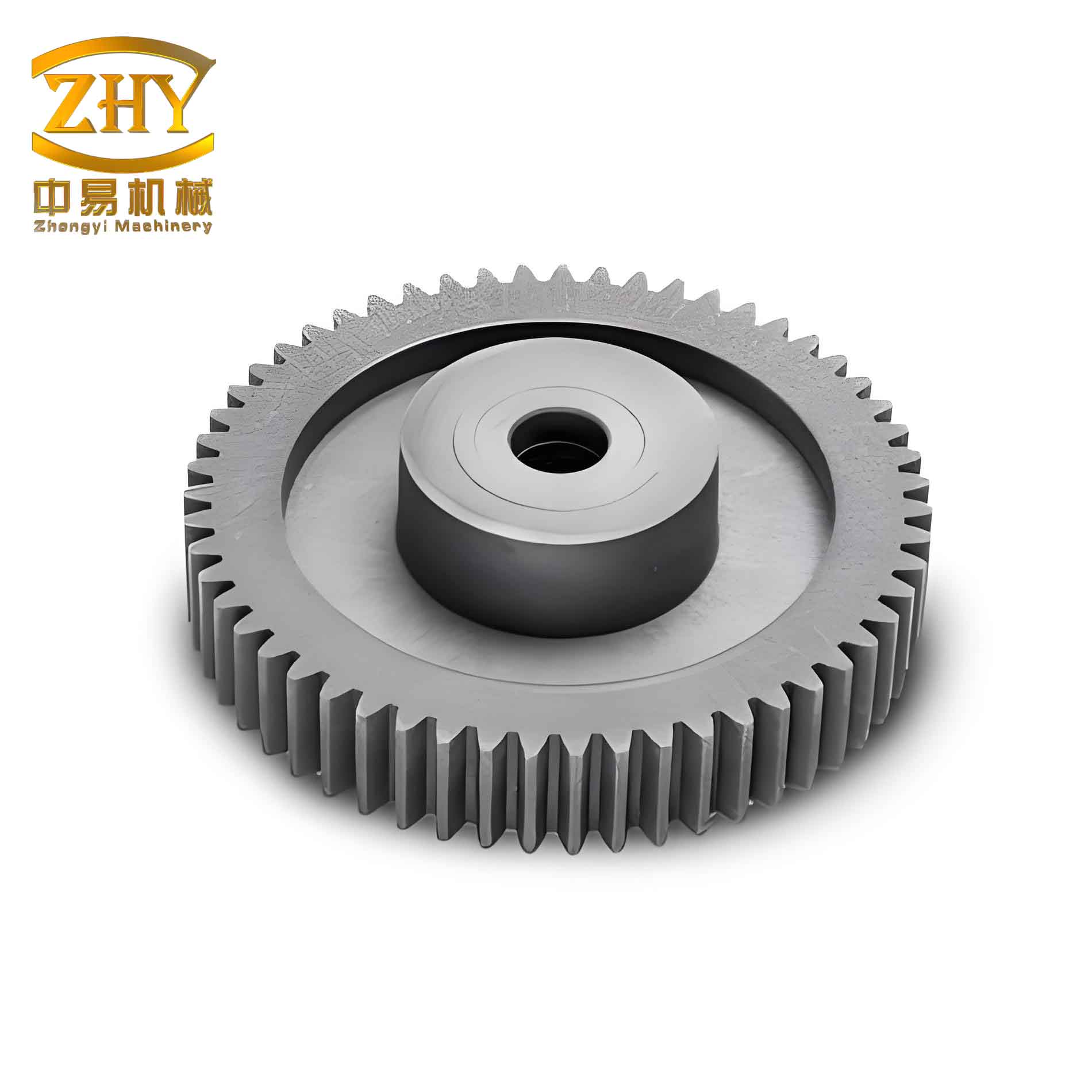
However, the practical performance of any gear system, including the advanced VH-CATT cylindrical gear, is profoundly influenced by its lubrication regime. In real-world applications, gears rarely operate in a perfect state of full-film elastohydrodynamic lubrication (EHL). Instead, they frequently function under mixed lubrication conditions. In this regime, the load is shared between a thin, often non-continuous, lubricant film and the direct contact of surface asperities. This coexistence leads to complex friction mechanisms where viscous shear within the lubricant and boundary friction from asperity interactions both contribute to the total frictional force. This not only affects the wear and potential for surface failures like scuffing but also directly governs the power losses and, consequently, the overall transmission efficiency of the gear system. Therefore, accurately modeling the friction coefficient under mixed lubrication is paramount for predicting performance, optimizing design, and ensuring reliability. This analysis focuses on establishing a comprehensive model for the friction characteristics and transmission efficiency of the VH-CATT cylindrical gear under such realistic mixed lubrication conditions.
Theoretical Foundation: Contact and Lubrication Modeling for VH-CATT Cylindrical Gears
The analysis begins with a detailed understanding of the instantaneous contact conditions between meshing teeth of the VH-CATT cylindrical gear pair. The complex tooth surface geometry necessitates the use of tooth contact analysis (TCA) to determine the precise location, kinematics, and geometry of contact throughout the mesh cycle. The fundamental condition for conjugate contact is the equality of position vectors and unit normal vectors at the contact point between the pinion and gear surfaces, expressed in a fixed coordinate system.
$$
\begin{cases}
\boldsymbol{r}_p^{(m)}(u_p, \theta_p, \varphi_p, \psi_p) = \boldsymbol{r}_g^{(m)}(u_g, \theta_g, \varphi_g, \psi_g) \\
\boldsymbol{n}_p^{(m)}(\theta_p, \varphi_p, \psi_p) = \boldsymbol{n}_g^{(m)}(\theta_g, \varphi_g, \psi_g)
\end{cases}
$$
Here, $\boldsymbol{r}$ and $\boldsymbol{n}$ denote the position and unit normal vectors, while $u$, $\theta$, $\varphi$, and $\psi$ are various surface and motion parameters for the pinion (p) and gear (g). Solving this system yields the contact path and the essential parameters for subsequent lubrication analysis. The kinematic velocities at the contact point are crucial. The absolute velocities of a point on each surface are given by $\boldsymbol{v}_i^{(m)} = \boldsymbol{\omega}_i^{(m)} \times \boldsymbol{r}_i^{(m)}$. The relative sliding velocity $\boldsymbol{v}_r$, which is responsible for friction, and the entrainment velocity $\boldsymbol{u}_e$, which drives lubricant into the contact zone, are derived from the tangential components of these absolute velocities:
$$
\boldsymbol{v}_r = \boldsymbol{v}_{pT}^{(m)} – \boldsymbol{v}_{gT}^{(m)}, \quad \boldsymbol{u}_e = \frac{\boldsymbol{v}_{pT}^{(m)} + \boldsymbol{v}_{gT}^{(m)}}{2}
$$
The contact form for the VH-CATT cylindrical gear is theoretically a point, which under load deforms elastically to form an elliptical contact area. The dimensions of this ellipse, semi-major axis $a$ and semi-minor axis $b$, are determined by the applied load $w$ and the sum of the principal curvatures $(A+B)$ of the contacting surfaces:
$$
a = k_a \left[ \frac{3w}{2E'(A+B)} \right]^{1/3}, \quad b = k_b \left[ \frac{3w}{2E'(A+B)} \right]^{1/3}
$$
where $E’$ is the effective elastic modulus and $k_a, k_b$ are parameters related to the ellipticity of the contact. The total contact ratio of this cylindrical gear is the sum of the transverse and face contact ratios, often resulting in a value greater than one, leading to multi-tooth contact and a periodic load distribution among the mating teeth. This load sharing must be accounted for in the friction model. A typical set of basic parameters for a VH-CATT cylindrical gear pair is summarized in the table below.
| Parameter | Pinion (Gear 1) | Gear (Gear 2) |
|---|---|---|
| Number of Teeth, $z$ | 17 | 23 |
| Module, $m_n$ (mm) | 4 | 4 |
| Pressure Angle, $\alpha_n$ (°) | 20 | 20 |
| Face Width, $B$ (mm) | 28 | 28 |
| Tool Radius, $R_T$ (mm) | 400 | 400 |
| Young’s Modulus, $E$ (GPa) | 203 | 203 |
| Poisson’s Ratio, $\nu$ | 0.3 | 0.3 |
Mixed Lubrication Model and Friction Coefficient Formulation
Under mixed lubrication, the total normal load $F_n$ acting on the gear teeth contact is supported partly by the hydrodynamic pressure in the lubricant film ($F_h$) and partly by the direct contact of surface asperities ($F_a$), as described by the load-sharing concept: $F_n = F_h + F_a$. The asperity load $F_a$ is typically calculated using statistical models, such as the Greenwood-Williamson (GW) model, which requires characterization of the surface roughness. For the cylindrical gear analysis, measured surface topography data is used, where asperities are modeled as spherical peaks with a defined height distribution and radius.
The lubricant film load $F_h$ and pressure distribution are obtained by solving the system of equations governing elastohydrodynamic lubrication (EHL), modified to account for rough surfaces. The generalized Reynolds equation governs the fluid flow:
$$
\frac{\partial}{\partial x}\left( \frac{\rho h^3}{\eta} \frac{\partial p}{\partial x} \right) + \frac{\partial}{\partial y}\left( \frac{\rho h^3}{\eta} \frac{\partial p}{\partial y} \right) = 12 u_e \frac{\partial (\rho h)}{\partial x} + 12 \frac{\partial (\rho h)}{\partial t}
$$
The film thickness equation $h(x,y)$ incorporates both the macroscopic geometric gap and the microscopic surface roughness $\delta(x,y)$:
$$
h(x,y) = h_0(t) + \frac{x^2}{2R_x} + \frac{y^2}{2R_y} + v(x,y) + \delta_1(x,y) + \delta_2(x,y)
$$
where $v(x,y)$ is the elastic deformation. The lubricant’s piezoviscous response is modeled using an exponential relationship, such as:
$$
\eta(p) = \eta_0 \exp\left\{ (\ln \eta_0 + 9.67) \left[ -1 + (1 + 5.1 \times 10^{-9} p)^{0.68} \right] \right\}
$$
The total friction force $F$ in the mixed lubrication regime is the sum of the asperity contact friction force $F_c$ and the viscous shear force $F_{\tau}$ within the lubricant film: $F = F_c + F_{\tau}$. The asperity friction is often simplified as $F_c = f_c \cdot F_a$, where $f_c$ is a boundary friction coefficient. The viscous shear stress $\tau$ for a non-Newtonian fluid is described by the Ree-Eyring model: $\dot{\gamma} = (\tau_0 / \eta) \sinh(\tau / \tau_0)$, where $\tau_0$ is the characteristic shear stress. Integrating the shear stress over the film area $A_E$ gives the viscous friction force.
Therefore, the instantaneous mixed lubrication friction coefficient $\mu_{mix}$ for the cylindrical gear contact is formulated as:
$$
\mu_{mix} = \frac{F}{F_n} = \frac{f_c \cdot F_a + \int_{A_E} \tau \, dA}{F_n} \approx \frac{f_c \cdot p_a + \tau_0 \cdot \text{arcsinh}\left( \frac{\eta u_s}{\tau_0 h} \right) \cdot A_E / A}{p}
$$
where $p_a$ is the average asperity contact pressure, $p$ is the total contact pressure, $u_s$ is the sliding velocity, and $h$ is the average film thickness.
Analysis of Frictional Behavior and Stribeck Curves
Applying the developed model to the VH-CATT cylindrical gear reveals distinct frictional behavior throughout the meshing cycle. The friction coefficient varies significantly from the start to the end of engagement. It typically shows a pattern of first decreasing, reaching a minimum near the pitch point, and then increasing again. This is directly linked to the kinematics: near the pitch point, the sliding velocity $v_r$ is minimal (approaching pure rolling), leading to lower viscous shear and thus a lower friction coefficient. The single-to-double tooth contact transitions also cause noticeable fluctuations in the coefficient due to sudden changes in load per tooth.
The influence of operational parameters is systematic. Increasing the rotational speed generally reduces the friction coefficient because the higher entrainment velocity $u_e$ promotes the formation of a thicker lubricant film, enhancing fluid film lubrication. Conversely, increasing the lubricant’s dynamic viscosity $\eta_0$ increases the friction coefficient, primarily by increasing the viscous shear stress within the film. The effect of load is most pronounced around the pitch point; higher normal loads increase the friction coefficient in this region by reducing the film thickness and increasing the share of boundary friction.
The quintessential tool for analyzing lubrication regime transitions is the Stribeck curve, which plots the friction coefficient against a dimensionless parameter like the Hersey number ($\eta u_e / p$) or simply the entrainment speed. For the cylindrical gear under study, generating this curve elucidates the effects of various parameters on the friction regime.
| Parameter Variation | Effect on Stribeck Curve & Lubrication Regime |
|---|---|
| Increased Load ($F_n$) | Curve shifts left. Mixed lubrication region expands towards lower speeds. Boundary and mixed lubrication friction coefficients may decrease slightly due to increased contact area. |
| Increased Roughness (height $\delta_s$) | Curve shifts right and upward. Boundary lubrication regime expands. Friction increases in low-speed region, and transition to EHL occurs at higher speeds. |
| Increased Lubricant Viscosity ($\eta_0$) | Curve shifts left and upward in the EHL region. Transition from boundary to mixed lubrication occurs at lower speeds, but the EHL friction level is higher due to greater shear. |
| Increased Asperity Radius ($\beta$) / Decreased Density ($n$) | Curve shifts left. Smoother topography facilitates earlier formation of a protective film, promoting mixed lubrication at lower speeds. |
The Stribeck curve clearly delineates three zones: a high-friction boundary lubrication zone at very low speeds, a mixed lubrication zone with a characteristic minimum, and an elastohydrodynamic lubrication zone where friction rises gradually with speed due to increasing viscous drag.
Transmission Efficiency Model and Parametric Study
The transmission efficiency of the cylindrical gear system is directly impacted by the friction losses at the tooth contacts. The instantaneous sliding friction power loss $P_f(\varphi_i)$ at a meshing position $\varphi_i$ is calculated by summing the product of the local sliding friction force and sliding velocity over all discrete contact points:
$$
P_f(\varphi_i) = \sum_{j=1}^{n(i)} F_{f_j}(\varphi_i) \cdot u_s^{(M_j)}(\varphi_i)
$$
where $F_{f_j} = \mu_{mix}(\varphi_i) \cdot F_{n_j}(\varphi_i)$. The instantaneous meshing efficiency $\eta(\varphi_i)$ is then:
$$
\eta(\varphi_i) = 1 – \frac{P_f(\varphi_i)}{P_{in}}
$$
where $P_{in}$ is the input power. Averaging this over a complete mesh cycle gives the average gear pair efficiency.
Analysis shows that the instantaneous efficiency follows a trend inverse to the friction coefficient: it is lowest at the start and end of engagement (high sliding) and highest around the pitch point (near pure rolling). The overall transmission efficiency as a function of input speed exhibits a clear trend: it increases with speed, initially rapidly as the system moves out of the high-friction boundary regime, and then asymptotically approaches a stable high value in the EHL-dominated regime.
The influence of lubricant viscosity and surface roughness is critical at low speeds. At low rotational speeds, using a low-viscosity oil results in lower efficiency because it fails to generate an adequate film, leading to dominant and high boundary friction. At high speeds, however, this same low-viscosity oil can yield higher efficiency because the viscous shear losses in the now-established EHL film are lower. Surface roughness, particularly the asperity height $\delta_s$, has a prolonged effect across a wider speed range compared to asperity density, significantly impacting efficiency in the mixed lubrication regime. Smoother surfaces consistently promote higher efficiency by reducing asperity interaction.
Experimental Correlation and Conclusion
Theoretical models require validation. Experimental tests on a VH-CATT cylindrical gear pair in a power-circulating test rig provide measured data for input/output torque and efficiency across a range of speeds. The measured average transmission efficiency shows the same characteristic rise with speed as predicted by the model. While absolute values may differ due to additional losses from bearings, seals, and windage not accounted for in the pure tooth friction model, the trend correlation validates the fundamental accuracy of the mixed lubrication friction and efficiency analysis for this cylindrical gear design.
In conclusion, the friction and transmission performance of cylindrical gears with a variable hyperbolic circular-arc-tooth-trace under mixed lubrication is a complex interplay of geometry, kinematics, surface topography, and lubricant properties. The developed model, integrating loaded tooth contact analysis, mixed-EHL theory, and statistical roughness, provides a robust framework for analysis. Key findings include: the friction coefficient is minimum at the pitch point and highly sensitive to load there; the Stribeck curve is significantly influenced by load (shifting it left), roughness (shifting it right/up), and viscosity (shifting it left/up); and transmission efficiency improves with speed, with lubricant viscosity and surface finish being critical design parameters for optimizing low-speed performance. This comprehensive understanding enables better design and application of these advanced cylindrical gears for high-efficiency, high-reliability transmission systems.